










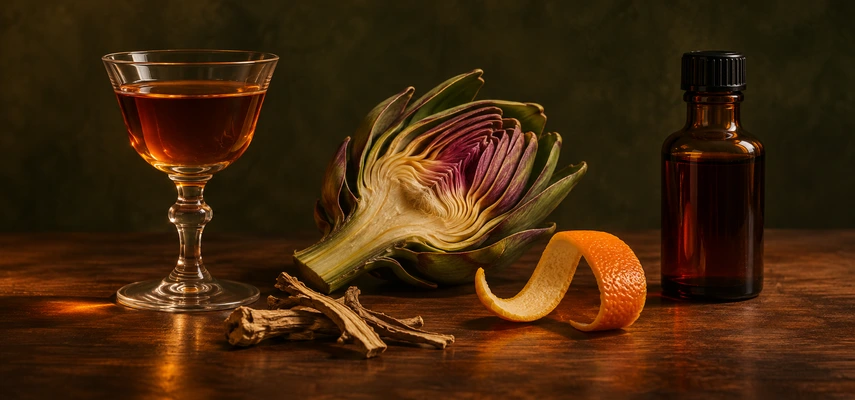

Amaro and cocktail bitters can both be brown, herbal and bitter, yet a recipe may call for a full measure of one and only a few dashes of the other. That is not a fussy distinction invented to fill a bar cupboard. Concentration, strength and intended role can differ substantially.
The word bitter also does not mean the drink contains no sugar. Many bitter spirits combine sweetness with assertive bitterness. Learning to recognise those as separate dimensions makes the category easier to understand and makes cocktail balance much less mysterious.
This lesson follows the bitter ingredients, their extraction and the producer’s final blending decisions. The useful question is not simply how bitter is it, but which kind of bitter character is present and how the product is designed to be used.
Amaro and cocktail bitters are related, not interchangeable
Amaro, Italian for bitter, is commonly used for a diverse family of bittersweet botanical drinks. Products vary in alcoholic strength, sweetness, aromatic direction, colour and intensity. The term should not be treated as one universally fixed international recipe.
Cocktail bitters are concentrated flavouring preparations intended to season drinks, often used in dashes. Traditional aromatic examples commonly have high alcoholic strength and intense flavour. Their purpose is different from supplying the bulk of a normal mixed-drink measure.
There are exceptions and modern variants in both areas. A product name alone does not establish exact ABV or dose. Still, the broad distinction between a drinking-strength bitter aperitif or amaro and a concentrated cocktail seasoning is an important starting point.
Think of the difference between adding a vegetable to a dish and seasoning it with a concentrated extract. Both can affect flavour, but substituting equal volumes would not preserve the same balance. The analogy is about concentration, not a claim that the two spirits share identical ingredients.
The base carries the botanical character
A comparatively neutral alcohol base allows the selected botanicals to define the profile. The alcohol-water mixture also acts as an extraction medium. Its composition affects which compounds are dissolved from roots, bark, peel or other plant material.
Some products use a more characterful alcoholic foundation or blend different components. The final identity can therefore reflect both the base and the added botanicals. Do not assume that every herbal bitter begins with one identical neutral spirit.
The base has already been produced through fermentation and distillation. Soaking gentian in it is a flavour-extraction stage, not the origin of the ethanol. Keeping those stages separate helps explain why a distillery can buy its base alcohol yet still perform substantial formulation work.
Gentian supplies a root-based bitter reference
Gentian is an important botanical source of bitterness. The root, rather than a photograph of the yellow flower, is the relevant production reference. It can contribute a distinctive bitter foundation alongside other aromatic material.
The producer’s chosen extraction controls how that contribution appears. A root’s presence in a recipe does not establish its proportion, extraction time or final intensity. It also does not mean the finished drink tastes exactly like chewing the raw ingredient.
Suze’s owner account describes gentian maceration, distillation of part of that material and subsequent blending. It is a particularly useful example because it shows how bitter extraction and aromatic distillation can serve different purposes within one product.
The explanation should stop where the disclosure stops. A secret botanical bouquet should remain undisclosed in the article rather than being filled out with an attractive but invented list of plants.
Quinine, bitter orange and artichoke broaden the range
Quinine, associated with cinchona bark, is another important bitter reference. Its bitterness is not the same sensory experience as the resinous aroma of juniper or the sweet-seeming aroma of anise. Grouping all three as simply herbal loses useful distinctions.
Bitter orange can supply both citrus aroma and bitter components, depending on the material and extraction. Peel, pith and juice are different sources. A bright orange aroma does not necessarily establish sourness, just as bitterness does not reveal sugar content.
Artichoke is associated with particular bitter-spirit styles. Campari Group’s Cynar account identifies it within a broader infusion. This does not mean the finished drink should be described as a glass of artichoke cooking water or that the entire recipe is publicly known.
These are key ingredient references, not a rule that every amaro contains all four. A producer may emphasise one bitter foundation and build a different aromatic balance around it. Distinguish the family of possible sources from the actual disclosed recipe.
Maceration extracts bitterness into the liquid
Many important bitter compounds are not sufficiently volatile to be carried through ordinary spirit distillation as the main bitter fraction. Maceration, soaking botanicals in an alcoholic liquid, is therefore a useful route for extracting and retaining bitterness.
Time, temperature, alcohol strength and ingredient preparation all matter. A root cut into small pieces presents a different extraction opportunity from a large intact piece. Conditions that suit a tough root may be excessive for a delicate peel.
Separate extracts allow independent control before blending. A producer can adjust bitter foundation, citrus accent and spice without requiring every botanical to share the same extraction schedule. This is one reason a recipe’s method can matter as much as its list of ingredients.
Filtration then separates solids where appropriate. Removing plant fragments does not necessarily remove dissolved bitterness. A clear liquid can remain intensely bitter because visibility and dissolved composition are different questions.
Redistillation adds aromatic possibilities
Redistillation can obtain volatile aromatic material from botanicals or their extracts. It should not be described as the universal way of transferring all the bitterness from every root into a clear distillate. Selection during distillation changes the composition.
A producer can blend a bitter macerate with a fragrant distillate. The two components need not be rivals: one can provide the non-volatile bitter foundation while the other adds a different aromatic layer. Suze’s disclosed method gives a concrete example of this complementary approach.
Cuts and equipment choices affect the retained aroma. A distillate may contain a recognisable botanical impression without matching the taste of the original infusion. This is the same extraction-versus-volatility distinction encountered in gin and aniseed spirits.
When asked why a bitter drink uses maceration, explain the transfer of soluble bitter material. When asked why it also uses a distillate, explain the aromatic selection. Giving both stages the same vague purpose misses the most interesting part.
Sugar and colour are separate formulation choices
Sugar can balance the perception of bitterness and affect texture. It does not remove every bitter compound or make the product cease to be bitter. A drink can be quite sweet and still have a strongly bitter finish.
Likewise, dry-seeming and low-sugar are not always interchangeable tasting claims. Strong bitterness, alcohol and aromatic intensity influence the overall impression. A precise comparison separates sweetness on the palate from bitter intensity and from aroma.
Colour can come from extracted botanicals, permitted colouring such as caramel, or other allowed handling. Dark brown appearance does not prove long barrel ageing. Many botanical formulations acquire colour without undergoing the maturation history associated with a dark whisky.
The EU bitter-spirit framework also distinguishes formal categories from casual style names, and permits bitter terminology in relevant liqueur descriptions. A legal category and an everyday amaro grouping are related but not perfectly identical maps.
Cocktail bitters are concentrated seasoning
Classic cocktail bitters are often high-strength, concentrated and intensely bitter, with additional aromatic layers. A dash can make a noticeable change because flavour concentration is high. Their role is not measured simply by how much liquid they contribute to the glass.
Angostura’s producer description presents its aromatic bitters as a flavouring for drinks and food. That supports the seasoning comparison. It does not justify copying promotional claims about digestion or treating the product as a health remedy.
A cocktail bitter can contribute spice, citrus or herbal aroma as well as bitterness. The recipe’s dash instruction therefore changes several sensory dimensions at once. Replacing it with the same volume of a mild amaro may leave the intended aromatic structure missing.
The reverse substitution can be even more dramatic: replacing a full measure of amaro with a full measure of concentrated bitters can overwhelm the drink. Equal volume does not mean equal flavour contribution, alcohol contribution or sweetness.
Compare the products through their function
For an amaro comparison, note strength, sweetness, bitter intensity, aromatic direction and finish. Then connect those observations to known ingredients and methods. Do not invent a botanical merely because a tasting note resembles it.
For cocktail bitters, consider the intended small dose and the change it makes within a recipe. A concentrated bitter’s function is easiest to understand in relation to the other components: base spirit, sweetener, aromatised wine or citrus, depending on the drink.
The same producer may offer both an amaro and aromatic bitters. Brand identity does not make the products interchangeable. Read the individual bottle and the recipe role before deciding what can reasonably substitute for what.
What to remember
Gentian, quinine, bitter orange and artichoke are important bitter references. Maceration can transfer bitter compounds; redistillation can provide complementary volatile aroma. Sugar and colour are further decisions rather than proof of an absence of bitterness or a long barrel age.
Amaro covers diverse drinking styles, while cocktail bitters commonly provide concentrated, high-strength seasoning in small doses. Explain both composition and function. The right comparison asks what the ingredient does in the glass, not merely whether the label contains the word bitter.
Continue your study
To compare aniseed and bitter botanical extraction, read Aniseed Spirits Explained: Pastis, Absinthe, and Botanical Flavor. To consider sweetness and base choices in liqueurs, read Liqueurs Explained: Spirit Bases, Flavorings, Sweetness, and Cream Liqueurs. To follow bitter seasoning into cocktail balance, read Cocktail Balance Explained: Strong vs. Weak, Sweet vs. Sour and Bitter.
Knowledge check: 10 original practice questions
Independent TFE questions, not official WSET examination items. Choose one answer per question; explanations follow separately.
1. How are classic cocktail bitters commonly used?
- Only as a non-alcoholic mixer
- In small concentrated doses as seasoning
- Always as the largest liquid component
- Only to convert starch
2. Why is maceration useful for a bitter spirit?
- It guarantees all pigments disappear
- It extracts soluble bitter material into the liquid
- It creates alcohol from roots
- It makes every compound volatile
3. Which plant part is especially relevant to gentian bitters?
- Root
- Only its flower petals
- Only oak bark
- Only grain starch
4. Which bitter compound is associated with cinchona?
- Quinine
- Vanillin
- Lactose
- Anethole
5. Which ingredient has a documented connection with Cynar?
- Grape pomace
- Blue agave
- Artichoke
- Malted rye
6. What does a brown amaro colour prove?
- No exact barrel-age history by itself
- At least ten years in oak
- Only new charred oak
- No colouring or extracts
7. Which comparison is most informative?
- Brand name alone
- Strength, sweetness, bitterness, aroma and known method
- Number of secret ingredients guessed
- Darkness alone
8. Can a bitter drink also contain substantial sweetness?
- Only if no botanicals were used
- No, they are chemically impossible together
- Yes, bitterness and sweetness can coexist
- Only if it contains no alcohol
9. Why is equal-volume substitution between amaro and cocktail bitters unreliable?
- Volume never affects any cocktail
- Both contain exactly the same sugar
- Concentration, sweetness and strength can differ greatly
- Both always have identical recipes
10. Why might a producer blend a macerate and a distillate?
- To combine bitter extraction with selected aromatic character
- To eliminate the need for any base alcohol
- To guarantee no flavour remains
- To turn every product into vodka
Answers and explanations
1. B — In small concentrated doses as seasoning. High concentration means a dash can substantially affect aroma and bitterness within a recipe. Mapping: LO3.
2. B — It extracts soluble bitter material into the liquid. Soaking transfers compounds that do not necessarily pass through ordinary distillation as the bitter fraction. Mapping: LO3.
3. A — Root. Gentian root supplies a key bitter production reference, rather than the yellow flower shown in many illustrations. Mapping: LO3.
4. A — Quinine. Quinine is an important bitter reference associated with cinchona bark, distinct from anise aroma or wood vanilla. Mapping: LO3.
5. C — Artichoke. The owner identifies artichoke within a broader infusion; the full recipe should not be invented. Mapping: LO3.
6. A — No exact barrel-age history by itself. Botanical extraction and permitted colouring can create brown appearance without long barrel maturation. Mapping: LO3.
7. B — Strength, sweetness, bitterness, aroma and known method. Those dimensions connect sensory observations with disclosed production without inventing recipes. Mapping: LO3.
8. C — Yes, bitterness and sweetness can coexist. Sugar can balance perception while bitter compounds remain present and noticeable. Mapping: LO3.
9. C — Concentration, sweetness and strength can differ greatly. A measure of drinking amaro and a dash of concentrated bitters serve different formulation roles. Mapping: LO3.
10. A — To combine bitter extraction with selected aromatic character. The components can supply complementary non-volatile bitterness and volatile aromatic contributions. Mapping: LO3.












