The digital root, X, of a number, n, is calculated: find X as the sum of the digits of n find a new X by summing the digits of X, repeating un
Continue ReadingC++: Character Codes
Given a character value in your language, print its code (could be ASCII code, Unicode code, or whatever your language uses). For example, the char
Continue ReadingC++: Sort a Range of Elements
On line 8, we create a std::array of ints that we wish to sort. On line 10, we call the standard alrogithm std::sort, which sorts the range of elem
Continue ReadingC++: Swap Values
On lines 6–7, we create two std::string objects whose values we wish to swap. However, this sample will also apply to any other swappable type. O
Continue ReadingC++: Horner’s Rule for Polynomial Evaluation
A fast scheme for evaluating a polynomial such as: when . is to arrange the computation as follows: And compute the result f
Continue ReadingC++: Execute a System Command
In this task, the goal is to run either the ls (dir on Windows) system command, or the pause system command. Works with: Visual C++ version 2005 sys
Continue ReadingC++: Input Loop
Read from a text stream either word-by-word or line-by-line until the stream runs out of data. The stream will have an unknown amount of data on it.
Continue ReadingC++: What is the name of the “–>” operator?
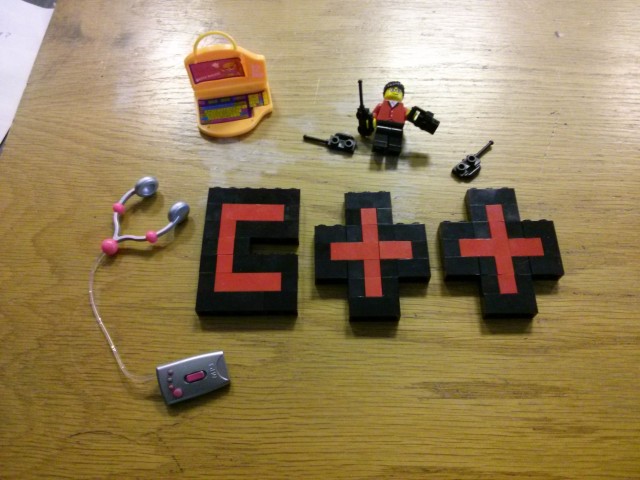
After reading Hidden Features and Dark Corners of C++/STL on comp.lang.c++.moderated, I was completely surprised that it compiled and worked in both V
Continue ReadingC++: Munching Squares
Render a graphical pattern where each pixel is colored by the value of 'x xor y' from an arbitrary color table. #include <windows.h> #
Continue ReadingC++: Hello World Web Server
The browser is the new GUI ! The task is to serve our standard text "Goodbye, World!" to http://localhost:8080/ so that it can be viewed with a we
Continue Reading