
Image credit Unsplash
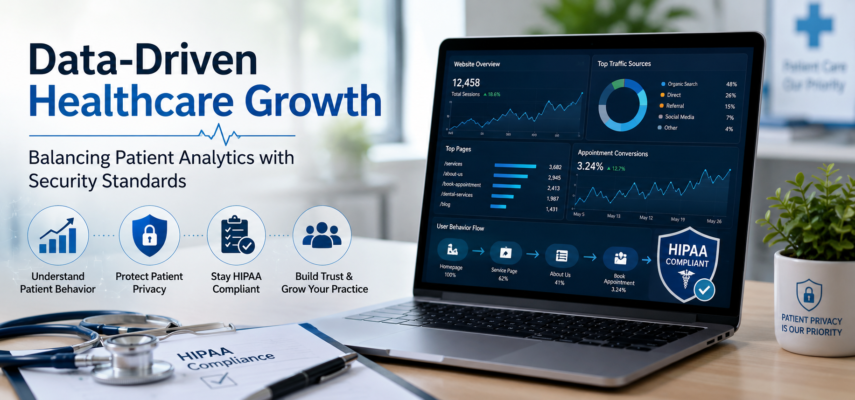
In the competitive healthcare landscape, growing your practice is a top priority. You want to attract new patients, improve their online experience, and understand which services are most in demand. Data analytics offers powerful insights to achieve these goals, showing you how people find your website and what they do once they arrive.
But for any medical, dental, or wellness practice, there’s a critical catch: patient privacy. Balancing the drive for data-informed growth with the strict requirements of patient data security is one of the biggest challenges modern healthcare providers face.
The Power of Patient Data in Modern Healthcare
To improve your patients’ experience and your practice’s performance, start by understanding patient behavior. Analytics can reveal which marketing channels bring in the most qualified leads, which pages on your website are most engaging, and where potential patients might drop off before booking an appointment. This information is invaluable for refining your marketing budget, optimizing your website’s user flow, and ensuring your content addresses your community’s actual needs.
Using this data effectively helps practices move from guesswork to strategy. For instance, if analytics show a high volume of searches for “emergency dental services” on your site, you can create more prominent content and calls to action for that specific need. This data-driven approach is key to transforming patient care delivery and making your practice more responsive and successful.
Navigating the Complexities of HIPAA
For any healthcare organization in the United States, the Health Insurance Portability and Accountability Act (HIPAA) is the law. It sets the standard for protecting sensitive patient data, known as Protected Health Information (PHI). This is where many practices unintentionally run into trouble. Standard analytics tools, like the ones most businesses use, are not designed for healthcare. They often collect and transmit user data, including IP addresses, to third-party servers.
When a user’s visit can be linked to their identity and their interaction with a healthcare site, that data can become PHI. Transmitting it to a non-compliant third party is a HIPAA violation. That is why using a truly HIPAA-compliant analytics solution isn’t just an option; it’s a necessity for any practice that wants to use website data responsibly. These specialized systems are built to gather valuable insights without compromising patient privacy.
The Risks of Non-Compliant Analytics
Ignoring compliance isn’t a risk worth taking. A HIPAA violation can lead to severe consequences, from substantial financial penalties to irreparable damage to your practice’s reputation. Patients trust you with their health, and that trust extends to their personal information. A data breach or privacy violation can shatter that confidence overnight, leading patients to seek care elsewhere.
Beyond the direct penalties, increased scrutiny on data privacy means regulatory bodies are actively enforcing these rules. The role of data security is more critical than ever, as even an unintentional violation through a website analytics tool can trigger an audit and high legal costs. Protecting your practice means ensuring every piece of technology you use, including your analytics platform, meets these stringent security standards.
Key Features of a Secure Analytics Platform
So, what should you look for when choosing an analytics provider? A secure, healthcare-focused platform will have several essential features designed to protect both your patients and your practice.
- Business Associate Agreement (BAA): Any vendor that handles PHI on your behalf must sign a BAA. This legal contract obligates the vendor to uphold HIPAA security standards. If a provider won’t sign a BAA, they are not a viable option.
- Data De-identification: The platform should automatically de-identify data, stripping out personal identifiers like IP addresses before they are stored or analyzed.
- Secure Infrastructure: All data should be collected, transmitted, and stored in a secure, encrypted environment. This prevents unauthorized access at every stage.
- No Third-Party Data Sharing: A compliant platform will not share your website’s data with other companies. The information is for your practice’s eyes only.
These features ensure you can benefit from data analytics without crossing the compliance line. They allow you to grow your practice on a foundation of trust and security.
Ultimately, data-driven growth and patient privacy are not mutually exclusive goals. With the right tools and a commitment to security, your practice can leverage powerful analytics to improve operations and patient care while upholding the highest standards of confidentiality. It’s about growing smarter, not just bigger.