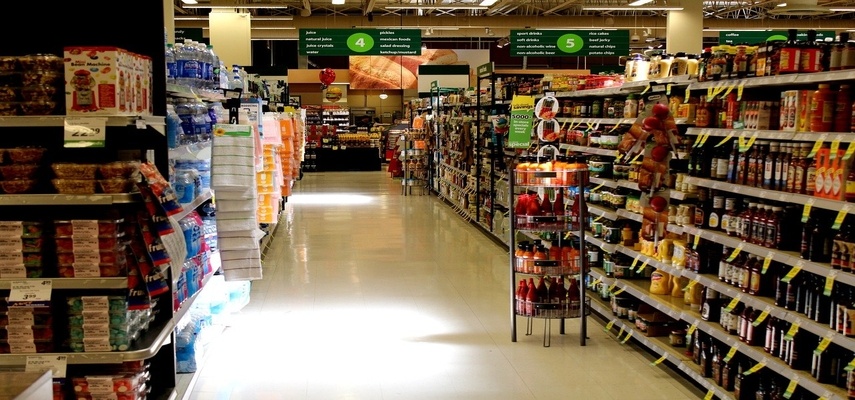
Retail design is a structured discipline that combines spatial planning, visual merchandising, and environmental control. The objective is to guide customer movement, highlight products, and create a consistent brand experience. Every design decision affects how customers interact with the space and, ultimately, how they make purchasing decisions.
Effective retail environments are not built on aesthetics alone. They rely on measurable factors such as visibility, accessibility, and sensory balance. These elements work together to improve engagement and increase conversion rates.
Spatial Layout and Customer Flow
The layout of a retail space determines how customers navigate the environment. Poor layouts create confusion, while well-structured layouts guide movement naturally.
Common layout models include grid, loop, and free-flow designs. Each serves a different purpose depending on the type of retail operation.
- Grid layout: Maximizes product exposure in high-density environments
- Loop layout: Guides customers through a predefined path
- Free-flow layout: Encourages exploration in boutique settings
Pathways should be wide enough to prevent congestion but structured enough to maintain direction. Entry points must provide immediate visual clarity, allowing customers to understand the space within seconds.
Zoning is also critical. High-demand products should be placed in accessible areas, while complementary items can be positioned deeper within the space to encourage movement.
Visual Hierarchy and Product Presentation
Visual hierarchy determines how customers process information. It controls what they see first and how they interpret product displays.
Large focal points should be used to anchor attention. These can include feature displays, promotional areas, or branded installations. Secondary elements support these focal points without competing for attention.
Lighting, contrast, and placement all contribute to hierarchy. Products at eye level receive the most attention, while lower or higher placements require additional emphasis.
Display consistency improves clarity. When products are arranged using a predictable structure, customers can navigate the space more efficiently.
Lighting and Highlighting Techniques
Lighting is one of the most influential factors in retail design. It affects product perception, color accuracy, and overall atmosphere.
Layered lighting is the most effective approach. This includes ambient lighting for general visibility, task lighting for specific areas, and accent lighting to highlight key products.
Accent lighting can also be used for branding elements. Features like neon name signs provide both illumination and visual identity. These elements draw attention without requiring additional physical space.
Light intensity and temperature must be controlled. Excessively bright lighting can create discomfort, while low lighting reduces visibility. Balanced lighting ensures that products are clearly visible without overwhelming the environment.
Material Selection and Surface Design
Materials influence both durability and perception. Retail spaces experience high foot traffic, so surfaces must withstand wear while maintaining appearance.
Common materials include wood, metal, glass, and composite panels. Each provides different visual and functional properties.
Surface finishes should be consistent. Mixing too many textures can create visual noise. Instead, materials should be selected based on how they interact with lighting and surrounding elements.
Flooring is particularly important. It must provide durability, safety, and visual continuity. Patterns can be used to guide movement, but they must not distract from product displays.
Environmental Quality and Air Management
Environmental conditions directly affect customer comfort and dwell time. Poor air quality or ventilation can reduce the time customers spend in a store.
Airflow systems must maintain consistent temperature and remove airborne particles. This is especially important in enclosed retail environments with high occupancy.
Solutions such as those offered by Zehnder support controlled air quality by filtering contaminants and maintaining stable airflow. These systems improve both comfort and operational conditions.
Temperature consistency is also critical. Fluctuations can create discomfort and negatively impact the shopping experience.
Sensory Balance and Customer Experience
Retail design must manage multiple sensory inputs. Visual, auditory, and environmental elements must be balanced to avoid overstimulation.
Sound levels should be controlled. Background music can enhance atmosphere but must not interfere with communication or concentration.
Scent can also influence perception. Subtle, consistent scents can reinforce brand identity, but excessive use can create discomfort.
- Controlled lighting: Prevents visual fatigue
- Balanced acoustics: Maintains clarity without noise overload
- Stable environment: Supports longer customer engagement
Sensory balance ensures that customers remain comfortable while navigating the space.
Technology Integration in Retail Design
Modern retail spaces increasingly rely on technology. Digital displays, interactive kiosks, and automated systems enhance both functionality and engagement.
Technology should be integrated seamlessly. It must support the design rather than dominate it.
Data collection is another benefit. Sensors and tracking systems provide insights into customer movement and behavior. This data can be used to refine layouts and improve efficiency.
Connectivity is essential. Systems must operate reliably without disrupting the customer experience.
Flexibility and Scalability in Design
Retail environments must adapt to changing needs. Seasonal displays, promotions, and product updates require flexible design systems.
Modular fixtures allow for quick reconfiguration. This reduces downtime and supports dynamic merchandising strategies.
Scalability is also important. As businesses expand, design elements must be replicable across multiple locations.
Consistency across locations reinforces brand identity while allowing for localized adjustments.
Conclusion
Enhancing retail spaces requires a combination of spatial planning, visual hierarchy, and environmental control. Each element must be designed to support both customer experience and operational efficiency.
Lighting, materials, airflow, and technology all contribute to a structured environment that guides customer behavior. When these elements are aligned, retail spaces become more effective at engaging customers and driving sales.
In practical terms, successful retail design is not about adding more features. It is about optimizing existing elements to create a cohesive and efficient system that supports both the brand and the customer.