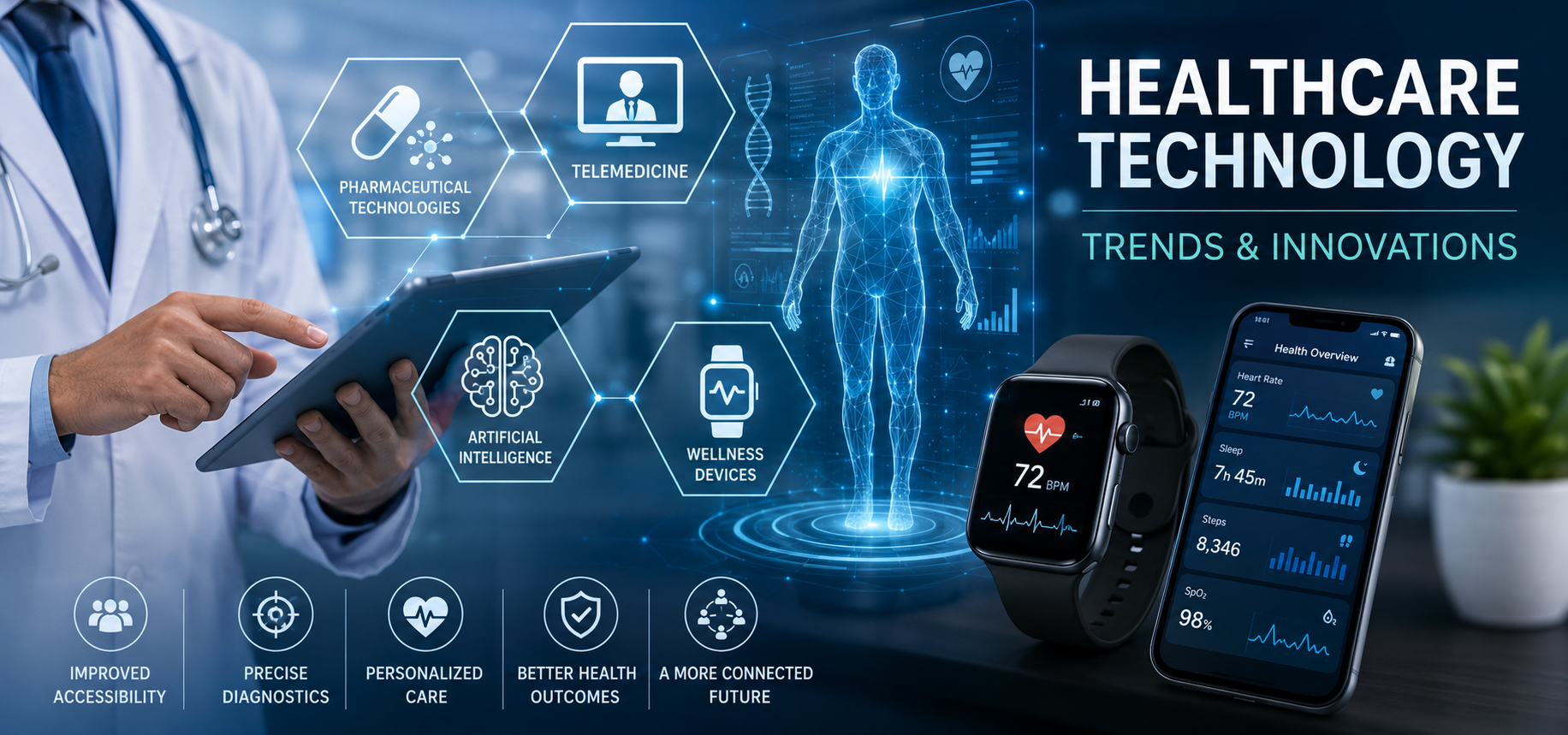

Rapid innovation and technological advancements fuel a significant shift in the healthcare industry. Such innovations are improving patient care, diagnostics accuracy, and accessibility to treatment.
As of late 2024, several trends are paving the way for the future of healthcare, and we can’t wait to share them with you. Stick around to learn how wearable devices, AI, and other innovations are changing how we see and approach healthcare.
- Pharmaceutical Manufacturing Technologies
Pharmaceutical manufacturing advancements refer to the improvements in the precision, accuracy, and personalization of health, wellness, and medicine products, such as drugs and supplements.
Dietary supplements, which are commonly used to support general wellness and daily routines, are one such example.
More refined supplement forms, such as capsules result from more precise manufacturing methods that help ensure higher concentration, consistency, and purity in products that have been around for a while.
Such methods ensure that the product is dosed accurately, stable under various conditions, and delivered inside the body in a more targeted way, supporting better absorption and effectiveness.
- Telemedicine
Telemedicine refers to remote diagnosis and treatment through communication tech and software. Though initially met with skepticism, telemedicine is becoming a healthcare trend, with increasingly more people preferring online consultations with specialists.
Video consultations, phone calls, live support (often done with chatbots), and apps help educate people, provide valuable insight, and point them in the right direction, be it to self-treat or consider an in-person visit with a healthcare professional.
- Artificial Intelligence
As arguably the most popular health and wellness tech today, AI is claimed to have numerous applications despite still being in its infancy and is broadly considered to play an integral role in the future of healthcare.
AI’s ability to analyze and break down large volumes of data allows it to find connections and patterns that a regular person might miss.
These capabilities are slowly making their way into the field of diagnostics and treatment, helping healthcare professionals gain a deeper understanding of their patients. For example, here is a quote from a 2019 paper:
“Given the rapid advances in AI for imaging analysis, it seems likely that most radiology and pathology images will be examined at some point by a machine. Speech and text recognition are already employed for tasks like patient communication and capture of clinical notes, and their usage will increase.”
Five years later, these predictions are slowly becoming reality, particularly when interpreting medical imaging, such as X-rays, MRIs, and CT scans.
- Wellness Devices
Health and wellness technology is rapidly gaining popularity among health and fitness-oriented people, driven by the demand for personalized health insights and real-time monitoring of various markers, such as heart rate variability.
Wellness tech, such as smartwatches, rings, and heart rate monitors, are equipped with advanced sensors that can monitor:
- Surface body temperature
- Heart rate
- Irregular heartbeats
- Movement (such as steps taken)
- Caloric expenditure
- Cardiovascular capacity and blood oxygen levels
- Sleep duration and quality
- Electrodermal activity of the skin
These data points can help users detect early illness, potential health issues, activity level, fitness health, and stress levels. Often, such devices come with built-in feedback mechanisms to inform users what potential steps to take.
Conclusion
As healthcare technology evolves, innovations like telemedicine, AI, and CBD technologies are transforming patient care and treatment. From diagnostics to wellness monitoring, these technologies enhance the precision and personalization of healthcare services.
These advancements improve accessibility, diagnostics, and personalization, paving the way for a more efficient healthcare system.
Keeping up with these trends ensures better health outcomes and a more connected future in medicine.