











Madeira combines two things that can pull a wine in opposite directions: substantial richness and striking freshness. Its grapes, fortification timing and distinctive maturation help explain that balance. The wine isn’t simply Port warmed up, and its grape names aren’t interchangeable labels for the same liquid at different sugar settings.
Follow the island’s growing conditions, compare the familiar varieties and then separate estufagem from canteiro. Once those pieces are clear, age and harvest terms become useful information rather than impressive numbers floating around a bottle.
An Atlantic island creates a particular growing problem
Madeira lies in the Atlantic west of the African coast, within Portugal’s autonomous region. Its protected origin has its own production framework. Don’t confuse Madeira’s fortified wine with every other wine produced on the islands or assume that all local wine follows the same maturation route.
The institute’s regional account describes steep terrain, volcanic soils, small holdings and terraces known as poios. Maritime influence, altitude, aspect and exposure create meaningful site variation. A warm south-facing parcel and a higher or more exposed northern setting don’t supply identical ripening conditions.
Humidity and rainfall make fruit health and canopy management important. Water availability still needs attention at the site level; a humid island doesn’t remove every irrigation question. Traditional levadas channel water through the landscape, while steep, fragmented vineyards create labour and access constraints. The growing environment influences both the fruit and the cost of obtaining it.
Vineyard choices need to serve the intended wine
Traditional latada training spreads vines horizontally, while other training systems can suit different terrain. Height, canopy arrangement, airflow, crop and fruit exposure affect ripening and disease pressure. The appropriate choice depends on the site rather than one universal ideal imported from another region.
Growers must match varieties and planting material to their conditions, then manage nutrition, water, hazards and harvest timing. Healthy, suitably ripe grapes remain important even though the wine will later receive spirit and heat. Neither fortification nor maturation is a reliable substitute for good starting material.
Small parcels and difficult access can increase labour per unit of fruit. A producer buying from several growers must also manage relationships, traceability and differing lots. Those practical details help explain why vineyard geography belongs in a price answer as well as a style explanation.
Sercial: start at the drier, fresher end
Sercial is associated with high acidity and the dry end of Madeira’s familiar style spectrum. Site and ripening matter: a grape with strong acidity still needs enough flavour for the intended wine. Dry here also needs Madeira context rather than an assumption of exactly the same sugar level as a dry still white elsewhere.
In tasting, consider how acidity, alcohol, residual sweetness and developed character fit together. A leaner expression can be intense without feeling heavy. Nutty or citrus-related impressions may be relevant, but the label doesn’t require you to find a predetermined aroma in every bottle.
For a comparison, describe what makes the wine feel dry rather than simply repeating the word. Acidity can change the perception of remaining sugar, while development adds aroma and flavour without necessarily adding sweetness. That distinction becomes especially useful beside a richer Malvasia.
Verdelho: a different balance of acidity and richness
Verdelho commonly occupies the medium-dry part of the Madeira spectrum. The institute describes a somewhat fuller expression than Sercial, while actual body and balance remain matters for tasting. Don’t turn a typical association into a fixed sensory grade or compulsory weight.
Fermentation and fortification decisions work with the grape’s character to establish the intended sweetness. Maturation then adds another layer. A developed Verdelho can therefore combine freshness with richness without being either a sweetened Sercial or a less successful Bual.
Ask what the actual wine offers: defined fruit or development, sufficient freshness, integrated alcohol and a convincing finish. More sweetness isn’t an automatic improvement, and the drier option doesn’t win by default. The wine’s purpose and execution matter together.
Bual and Malvasia: richness needs structure
Boal, often labelled Bual, is associated with a medium-rich or medium-sweet expression. Its balance can combine dried-fruit or nutty development with enough acidity to keep the palate moving. The relationship between sugar, flavour and freshness matters more than sweetness in isolation.
Malvasia, associated with Malmsey, occupies the richer end. Madeira includes distinct Malvasia material, so avoid presenting the name as one globally identical grape with a single growing requirement. A richer wine still needs definition and integration rather than just high viscosity.
These familiar associations are useful starting points, not proof of the measured sugar or the wine’s quality. Compare the actual wines across the palate, including how acidity and alcohol interact with richness. A sweet wine can be balanced and energetic; a less sweet one can still feel awkward if its components don’t fit.
Tinta Negra prevents the four-grape story becoming misleading
Tinta Negra is an important part of Madeira production and can supply wines across the sweetness spectrum. Its versatility means that a bottle without one of the four familiar white-grape names isn’t automatically an inferior imitation or a different category of drink.
Handling, selection, fortification, maturation and blending still influence its expression. Some wines emphasise accessibility and consistency; others make a more developed or individual proposition. Assess those choices and the actual bottle rather than treating a grape hierarchy as a finished quality judgement.
The grape name also doesn’t explain every colour difference. Pressing, skin contact, oxidation, heat and time can all influence appearance. Madeira needs a production explanation with several interacting factors, not a colour chart that pretends to identify everything instantly.
Fortification timing connects fermentation with sweetness
The Madeira production guide describes fermentation followed by addition of vinous alcohol at 96% ABV. The point of interruption helps preserve the desired amount of grape sugar. A fermentation allowed to proceed further generally leaves less, all else equal.
Pressing, extraction where used, vessel choice, temperature and yeast management help establish the wine before fortification. Different varieties and intended styles can require different decisions. A commercial recipe must follow the actual wine and applicable controls rather than borrowing a typical Port spirit ratio.
Alcohol, sweetness and body remain separate observations. Spirit raises strength; it isn’t a spoonful of sugar. A high-acid sweet wine may feel fresher than expected, while warmth can remain evident even when sweetness softens its impression. Tasting should preserve those distinctions instead of collapsing them into “rich”.
Estufagem: controlled heating with defined conditions
Estufagem uses deliberate heating as part of Madeira’s production. The official production rules, still identified on the institute’s regulation page, set a maximum of 50°C and a minimum three-month process. The institute describes heated stainless-steel vessels as a common implementation.
The producer needs controlled temperature, suitable handling and subsequent maturation or preparation. A minimum heating period doesn’t mean the wine is automatically ready for immediate release. Other holding, finishing and category requirements still matter.
This route can support a more efficient production timetable than long canteiro ageing, but equipment, energy, monitoring and stocks still have costs. A successful wine needs balance and an appropriate expression of development; using heat doesn’t remove the need for sound fruit and careful decisions.
Canteiro: casks, warm conditions and time
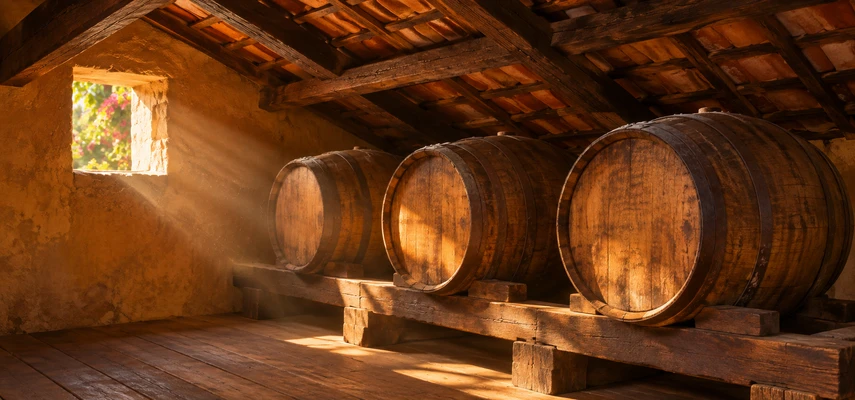
Canteiro involves maturation in wood, with casks resting on supporting beams in conditions that encourage gradual development. Warmer upper cellar spaces are a familiar arrangement. It is cask ageing, not storage in bottles, despite an awkward English heading on one institute page.
The production framework distinguishes its minimum wood period from later release eligibility. The institute explains a minimum two years in cask and commercialisation only after at least three years counted from the specified point after harvest. Longer-labelled categories require their own conditions; don’t treat those figures as an explanation of every mature bottling.
Madeira Wine Company’s account illustrates how a producer manages both heated and canteiro routes. It describes its own timetable, not the compulsory schedule for every house. Time, cellar position, vessel and stock selection help explain differences within the broader method.
Heat and oxygen are part of the intended style
Controlled heat and oxidative development can deepen colour and generate distinctive developed character. Evaporation and concentration add another dimension. That is a particular production objective, not a general instruction that any wine improves when overheated or left exposed to air.
For quality, look for integrated development, flavour definition, balance and persistence. Powerful concentration can become tiring if freshness and alcohol don’t fit. For further bottle-ageing, ask what could improve after the substantial maturation already completed, rather than assume durability guarantees indefinite improvement.
Finishing and blending can bring selected lots into a coherent final expression. Clarification or filtration needs to suit the wine and its stability requirements. A romantic claim that nothing happened after the barrel isn’t a substitute for understanding the actual product.
Read harvest, age and variety claims separately
Madeira’s label categories include age indications, harvest-related terms, variety and richness information. An age-indicated blend isn’t the same claim as one harvest year. Read the complete label and bottling information before calculating a wine’s history.
Colheita requires at least five continuous years in wood under the relevant framework. Frasqueira or Garrafeira has a different canteiro, variety, quality and minimum twenty-year wood-ageing proposition. Neither term is a translation of Port Vintage, and Port’s Colheita conditions shouldn’t be transferred automatically to Madeira.
PDO identifies protected origin, while Sherry labels such as Fino or Cream, French Vins Doux Naturels’ appellation and style terms, and Rutherglen Muscat’s Classic, Grand and Rare categories belong to separate frameworks. Similar developed aromas don’t create identical label rules. Establish the relevant system before comparing the claim.
Connect the island’s supply with the business model
Supply depends on eligible grapes, small holdings, harvest conditions, purchases and mature stocks. Demand depends on customer knowledge, occasions, tourism, exports and competing wines. Costs include vineyard labour, grape purchases, spirit, equipment, energy where used, casks, evaporation, storage, finance, packaging and transport.
A grower selling fruit differs from an estate retaining it. A merchant or producer buying from several holdings must coordinate supply and stock selection; a co-operative model can share services. Conglomerate ownership can provide investment or distribution. Wine brands may combine different arrangements, so a brand name doesn’t reveal every production relationship.
Marketing connects product, price position, people, placement and promotion. An accessible blend and a long-aged small release need different explanations and channels. Visitors, restaurants, specialists and export distributors impose different margins and service requirements. Long holding raises costs, but customers still need a reason to buy.
IVBAM oversees Madeira within its own framework. The IVDP for Port and Douro, Consejo Regulador de Jerez and Muscat of Rutherglen Network have different roles and territories. Collective identity and certification influence the market without creating a shared worldwide fortified-wine regulator.
Taste freshness, richness and development independently
Record clarity, colour depth and hue, plus sediment or other appearance features. Assess nose condition before aroma strength and specific character. Developed aromas belong in context: don’t call every nutty note a fault or assume every darker wine is older than every paler one.
On the palate separate sweetness, acidity, tannin quantity and texture where relevant, alcohol warmth and body. Distinguish flavour strength from flavour character, note viscosity and other tactile features, and follow the persistence of identifiable flavour. Acidity can be striking in a wine that still contains substantial sugar.
Make one scale choice where instructed; illustrative descriptors guide observation rather than require every example. Explain quality through balance, definition, integration and persistence. Justify bottle-ageing suitability independently, identifying a likely improvement and its support rather than treating heat-ageing as a promise of immortality.
Use French vins doux naturels and Rutherglen Muscat and fortified production methods to test the production explanation. Separate the effects of fermentation, fortification and maturation, then explain which differences matter to sweetness, flavour, quality and the resources tied up before sale.
Original Diploma practice
These original exercises use indicative points and outline answers, not official questions or marks. Suggested wines and grades are sourcing targets; no actual tasting or verified bottle grades are claimed.
Question 1: compare two production routes
Compare estufagem and canteiro through operations, temperature management, containers, time, release conditions and costs. Explain why method alone doesn’t establish quality.
Indicative points: controlled heating; wood; minimum versus actual; eligibility; energy; capital. Outline answer: The routes create different development conditions and production timetables. Successful execution and balance matter alongside the controls, not simply the prestige attached to a method.
Question 2: explain the familiar grape spectrum
Compare Sercial, Verdelho, Bual and Malvasia as Madeira study examples. Include typical sweetness associations, acidity, fortification timing and the limits of predicting a bottle from its grape name.
Indicative points: dry to rich; residual sugar; harvest; interruption; maturation; actual tasting. Outline answer: The varieties offer useful associations, while production choices establish the actual wine. Sugar and freshness need separate observations and an integrated balance assessment.
Question 3: evaluate two label assumptions
A buyer says all Madeira is made from four white grapes and a Colheita date means the same thing as Vintage Port. Evaluate the statement and identify the information still needed.
Indicative points: Tinta Negra; other grapes; origin; wood versus bottle; category; bottling date. Outline answer: The four-grape shorthand omits important production, while a harvest date doesn’t erase different maturation rules. Read the actual category before explaining development or further ageing.
Analytical tasting preparation: preserve the Madeira alternatives
Plan essential selections of an inexpensive Madeira without an age statement targeting acceptable quality; Sercial or Verdelho targeting very-good-to-outstanding; and Boal/Bual or Malvasia/Malmsey targeting very-good-to-outstanding. Colheita targeting outstanding quality is optional. Neither every grape nor an optional harvest bottling becomes compulsory in one session.
Indicative points: essential versus optional; alternatives; acidity and sweetness; development; quality; ageing. Outline answer: Conceal identities and write complete supported notes before the reveal. Keep proposed target grades separate from actual conclusions, then use the production history to test the explanation.











