











French Vins Doux Naturels and Rutherglen Muscat share an important production idea: spirit preserves grape sweetness before fermentation consumes it all. What follows can be strikingly different. A youthful floral Muscat, a fruit-focused fortified Grenache and a deeply developed Australian Muscat need separate explanations of grapes, extraction and maturation.
The name Vin Doux Naturel can be misleading if translated too casually. “Natural” doesn’t mean no added alcohol. It identifies a particular sweet-wine tradition in which fortification is part of the process. Start there, then follow each wine into its own vineyard and cellar.
Fortified Grenache: locate the actual French origin
Fortified Grenache has important homes in southern France, notably Roussillon appellations such as Banyuls, Maury and Rivesaltes, with Rasteau providing a Rhône comparison. The Roussillon interprofessional guide distinguishes its protected origins and styles. Fortified Grenache is a study grouping, not one appellation with one identical recipe.
Mediterranean warmth and sunshine help grapes reach useful ripeness, while water availability, wind, exposure and harvest weather affect the result. Steeper coastal vineyards around Banyuls create different access and labour demands from other southern settings. Schist, limestone and other soils occur across the broader landscape; don’t assign one rock, climate or vineyard system to every Grenache VDN.
Growers must manage crop, canopy and fruit health for the intended wine. Drought can restrict vine function, while rain at the wrong time can threaten ripe fruit. Rooting conditions, planting material and appropriate water management matter. High sugar alone isn’t the complete objective: flavour, acidity and usable fruit need to support the eventual sweetness and spirit.
Grenache extraction and mutage shape the young wine
Grenache Noir provides an important red foundation, while other Grenache colours and permitted grapes contribute within their own appellation conditions. Don’t assume every VDN bearing a familiar regional name must be red, entirely Grenache Noir or blended in the same proportions.
Extraction determines how much colour, flavour and tannin enters the wine. Pre-fermentation contact, fermentation temperature and cap management can serve different objectives. Mutage on the skins, or sur grains, permits a different extraction relationship from fortifying separated fermenting liquid. Longer contact isn’t automatically better if the resulting tannin overwhelms the fruit.
Fortification interrupts fermentation, preserving some grape sugar. A relatively high-strength neutral grape-derived alcohol can limit the volume needed while protecting the intended fruit expression, subject to the applicable rules. Spirit type, timing and analysis need to be explained for the actual wine rather than copied from Port’s 77% example.
After fortification, pressing, selection, clarification and storage continue to matter. A producer seeking youthful fruit needs a different oxygen and maturation strategy from one aiming for a developed oxidative expression. Neither choice releases the producer from the need for stability and sound handling.
Grenat and Rimage aren’t synonyms for old oxidative wine
Fruit-focused expressions such as Grenat or Rimage can retain red or dark-fruit character and colour through their handling and earlier bottling proposition. A Banyuls Rimage producer sheet illustrates a specific Grenache Noir bottling, not a compulsory blend for every Banyuls style.
Oxidative maturation can instead produce deeper developed character, with dried fruit, nuts or rancio-related impressions. Containers, oxygen exposure, cellar conditions and time influence that direction. Some traditional handling uses outdoor vessels or deliberately demanding conditions; it isn’t permission to describe every VDN as sun-baked in a glass demijohn.
For quality, assess whether fruit, sugar, alcohol, tannin and development are integrated and persistent. For further bottle-ageing, distinguish a wine with the structure and fruit to develop from one already released at a satisfying mature stage. A Grenache name or old-looking colour doesn’t establish either conclusion automatically.
French fortified Muscat: aroma begins in the grape
French fortified Muscat includes several southern appellations rather than a single growing place. Muscat de Rivesaltes, Muscat de Frontignan and Muscat de Beaumes-de-Venise provide useful contrasts. Other names, including Lunel, Mireval, Saint-Jean-de-Minervois and Muscat du Cap Corse, require their own geographical and production context.
INAO’s Muscat de Beaumes-de-Venise account identifies its Rhône setting and Muscat à Petits Grains foundation, including colour variation. Muscat de Rivesaltes can combine Muscat à Petits Grains and Muscat d’Alexandrie. A shared Muscat description doesn’t prove that all appellations permit the same grapes or only one colour.
Warm conditions support ripeness and aromatic development, while coastal influence, elevation, exposure and soils modify the growing environment. The Frontignan account describes local shelter and maritime moderation. Growers still need to manage crop, canopy, water and disease, preserving healthy aromatic fruit rather than pursuing sugar concentration without limit.
Preserve Muscat character through the cellar decisions
Gentle handling and appropriate pressing can support clean aromatic expression. Skin contact, where chosen and permitted, changes extraction; clarification and fermentation conditions influence the material available for fortification. A producer needs enough fruit character and freshness to balance the intended sweetness.
Mutage during fermentation retains grape sugar. Controlled handling after that point can help preserve floral, citrus or fresh-fruit expression in a younger style. The process isn’t the same as a late-harvest unfortified dessert wine or the addition of a sweet component to an already dry base.
Not every French Muscat must follow an identical storage timetable or show exactly the same aroma. Ageing and producer choices can change the expression. A youthful aromatic wine can be successful without acquiring dark oxidative notes; development isn’t a mandatory upgrade for every bottle.
Assess quality through aromatic definition, balance, integration and flavour persistence. Assess bottle-ageing separately by explaining what improvement is plausible and what supports it. A delicate floral expression may be best enjoyed for present freshness, while another wine can justify a different conclusion. A grape’s perfume doesn’t promise longevity by itself.
Rutherglen Muscat: a different vineyard objective
Rutherglen lies in north-eastern Victoria, Australia, near the Murray River. Wine Australia’s regional profile describes warm summer days, cooler nights and generally long, dry autumns, with spring frost and rain at harvest among the hazards. It isn’t a French Mediterranean appellation transplanted to the other hemisphere.
The regional landscape includes relatively gentle terrain and soils ranging from red loam over clay to sandier settings nearer the river. Soil water, rooting conditions and canopy management affect ripening. Warmth and an extended season can concentrate fruit and sugar, but crop balance and health still need attention.
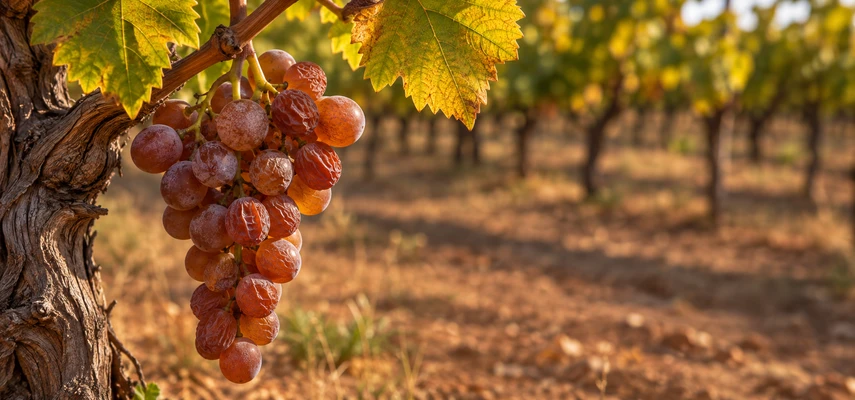
The relevant Muscat is Muscat à Petits Grains Rouges, locally called Brown Muscat. Extended ripening and some shrivelling can produce concentrated material for the intended style. The Stanton & Killeen producer sheet describes its own fruit and early-fortification route. That isn’t proof every producer harvests on the same day or seeks identical dehydration.
Leaving ripe fruit longer creates risks as well as concentration. Autumn rain, disease, birds, heat or unsuitable vine conditions can reduce usable yield. Growers need to decide how much additional flavour and sugar are worth the exposure. A concentrated end product doesn’t mean the harvest was effortless.
Follow Rutherglen’s short fermentation and maturation
Crushing and skin contact provide opportunities for flavour and colour extraction. A short fermentation followed by early fortification can retain high grape sugar and Muscat character. Neutral grape-derived spirit needs to fit the wine; obvious warmth without sufficient flavour or balance isn’t an achievement simply because the style is fortified.
Old oak casks can allow gradual development without the strong new-oak flavour expected from a small fresh barrel. Time, cellar warmth, oxygen and evaporation can increase concentration and developed character. This differs from treating every wine to Madeira’s controlled estufagem process.
Blending can combine older, concentrated components with younger material that brings freshness and fruit. Modified solera arrangements are one option; selection from separate parcels is another. The Australian fortified-wine code recognises these possibilities rather than requiring one identical Sherry-style transfer system for every house.
Pfeiffer’s Rutherglen Muscat account illustrates a producer presenting a younger style for drinking now. A producer’s recommendation applies to that wine, not every Rutherglen bottling. It does help challenge the assumption that every sweet fortified wine needs more years in the customer’s cellar.
Understand Rutherglen’s tiered vocabulary
Rutherglen Muscat, Classic, Grand and Rare communicate different levels of development, richness and complexity within the collective classification context. Age contributes, but these aren’t interchangeable with exact single-harvest dates or a promise that every component shares one birthday. House style also matters.
For quality, investigate the balance between sweetness, concentration, acidity, alcohol and flavour. Raisin, floral, nutty, caramel-like or other developed impressions can combine differently across wines. More viscosity doesn’t automatically mean more flavour definition, and a darker colour isn’t enough to justify the highest conclusion.
For further bottle-ageing, explain what improvement remains plausible after the producer’s maturation and blending. Many wines are released for enjoyment in their finished expression. An older category can require substantial capital and stock without needing additional consumer storage to make it worthwhile.
Compare the business models through their actual pressures
For fortified Grenache, French fortified Muscat and Rutherglen Muscat, supply depends on eligible fruit, yields, selection and stocks. A steep Banyuls vineyard, an aromatic Muscat crop and late-concentrated Australian fruit face different production constraints. Mature stock introduces a further limit when a product needs developed components that cannot be replaced by the latest harvest alone.
Demand depends on customer understanding, occasions, alternatives and price expectations. Younger aromatic French Muscat can communicate freshness; a fruit-focused Grenache can offer a different proposition from an oxidative bottle; an older Rutherglen release can emphasise concentration and house history. These are possible positioning choices, not compulsory descriptions of every producer.
Costs include vineyard labour, bought fruit, spirit, cellar equipment, containers, holding, evaporation, finance, packaging, transport and selling. For Grenache, steep-site access can add labour; for French Muscat, aromatic fruit quality and careful handling need investment; for older Rutherglen stock, long holding and losses matter. Explain which costs differ rather than repeat that all fortified wine is expensive to make.
A grower selling grapes differs from an estate retaining fruit. A merchant buying wine or components can assemble a range; a co-operative can pool processing and market access. Conglomerate ownership can supply finance and distribution. Wine brands may overlap those arrangements in each grouping, so ownership is a commercial explanation rather than a sensory grade.
Marketing connects product, price position, people, placement and promotion. A restaurant needs staff able to explain sweetness and service; a specialist retailer may tell a more detailed production story; visitors and direct customers need a convincing reason to buy. The route affects margins and selling costs, while appropriate promotion must match the wine rather than rely on old age as the entire argument.
Keep origin, institutions and label systems separate
French PDOs establish protected origin and applicable conditions. VDN appellation and style terms such as Grenat, Rimage, Ambré or Tuilé need their own context. Maury Sec is a useful reminder that a familiar place name can also identify a dry-wine proposition; don’t label every wine from the locality fortified and sweet.
Rutherglen is an Australian GI, with its Muscat classification and collective identity operating within a different system. The Muscat of Rutherglen Network isn’t a French appellation regulator. The Consejo Regulador de Jerez, IVDP and IVBAM likewise have different territories and responsibilities, rather than shared authority over every wine discussed here.
Sherry labels such as Fino and Cream distinguish their own maturation and sweetness routes. Port labels such as Vintage and Colheita describe different harvest and maturation propositions; Madeira labels add their own variety, richness and heat-ageing context. Don’t transfer their age or sweetness conditions into French VDN or Rutherglen simply because the wines share spirit addition.
Taste sweetness, tannin and development without shortcuts
Record clarity, colour depth and hue, plus sediment or other appearance features. Assess nose condition before aroma strength and specific character. Primary floral fruit, dark-fruit concentration and developed nutty character deserve separate observations, even when more than one appears in the same wine.
On the palate separate sweetness, acidity, tannin quantity and texture where relevant, alcohol warmth and body. Grenache reds may require a different tannin explanation from an aromatic pale Muscat. Distinguish flavour strength from flavour character, note viscosity and other tactile features, and follow the persistence of identifiable flavour.
Make one scale choice where instructed; illustrative descriptors guide observation rather than require every example. Explain quality through balance, definition, integration and persistence. Justify bottle-ageing suitability independently by identifying likely improvement and supporting components. The production history helps explain the wine; it doesn’t replace the evidence needed to judge it.
Use D5 fortified exam practice and fortified production methods to test the production explanation. Separate the effects of fermentation, fortification and maturation, then explain which differences matter to sweetness, flavour, quality and the resources tied up before sale.
Original Diploma practice
These original exercises use indicative points and outline answers, not official questions or marks. Proposed wines and quality levels are sourcing targets; no actual tasting or verified bottle grades are claimed.
Question 1: compare two Grenache directions
Compare a youthful fruit-focused Grenache VDN with an oxidative expression. Include grapes, extraction, mutage, oxygen, maturation, likely style and the evidence needed for further ageing.
Indicative points: appellation context; skins; arrest; fruit preservation; development; structure. Outline answer: A shared fortification principle can lead to different outcomes through extraction and maturation choices. Neither direction establishes quality automatically or makes every dark wine old.
Question 2: compare French and Australian Muscat
Compare a youthful French fortified Muscat with a developed Rutherglen Muscat. Explain growing conditions, harvest objectives, fermentation, spirit, storage and blending without assuming identical grapes or rules.
Indicative points: site; aromatic fruit; concentration; early arrest; casks; balance. Outline answer: The wines share sweetness preservation but differ in raw material and maturation objectives. Explain those causes before judging the actual balance, quality and ageing suitability.
Question 3: evaluate a category and price claim
A seller claims Rare Muscat, VORS Sherry and twenty-year-old Tawny are the same international grade and that the highest price proves the best wine. Evaluate the argument.
Indicative points: separate frameworks; category criteria; stocks; costs; demand; tasting. Outline answer: Similar mature-wine propositions don’t create identical controls or sensory outcomes. Production costs and market demand help explain price, while quality needs its own evidence.
Analytical tasting preparation: preserve the essential choices
Source a Muscat VDN from any appellation targeting good quality; a Banyuls or Maury targeting good-to-very-good quality, which may be oxidative or non-oxidative; and Rutherglen Muscat targeting very-good-to-outstanding. These reflect essential selections. Both French Grenache maturation routes can make a useful additional comparison without becoming two compulsory bottles under that row.
Indicative points: alternatives; origin; full notes; sweetness and tannin; quality; ageing. Outline answer: Conceal identities and justify conclusions before the reveal. Keep the proposed target grades separate from actual tasting evidence and test how vineyard, extraction and maturation choices account for the observations.












