










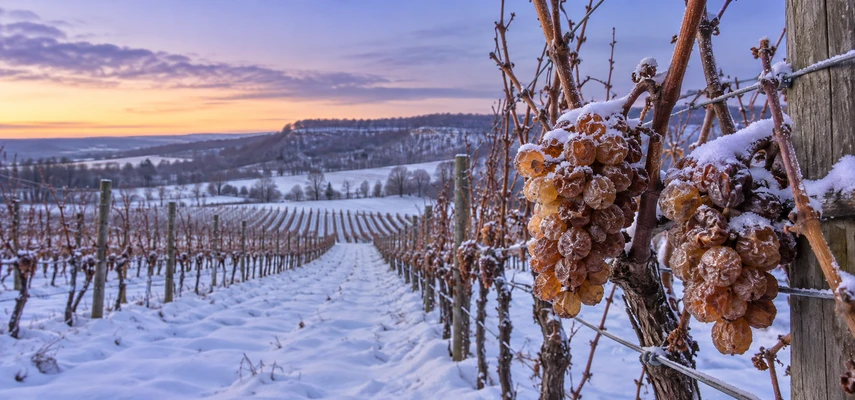

Ontario wines are often introduced with frozen grapes, tiny bottles and a very cold night. Icewine deserves that attention, but it can’t explain an entire province. Riesling, Chardonnay, Cabernet Franc, Pinot Noir and other grapes support a much broader range of styles, with differences between Niagara’s lakeside vineyards, escarpment settings and Ontario’s other regions.
For Diploma study, start with the growing environment, then follow the decisions into the cellar and market. The useful question isn’t whether Canada is cold. It’s how a particular site provides enough growing opportunity, how a producer manages the remaining risks and whether the finished wine delivers its intended balance.
Locate Niagara within Ontario’s wider wine picture
Ontario’s Niagara Peninsula wine region lies in southern Ontario, with Lake Ontario to its north and the Niagara Escarpment shaping important growing settings. It isn’t the Niagara Escarpment AVA in New York. The Ontario Wine Appellation Authority’s regional account distinguishes broad physiographic settings and a range of grapes rather than a single uniform vineyard.
The Authority also recognises Lake Erie North Shore and Prince Edward County. The former occupies southwestern Ontario beside the comparatively shallow, summer-warming Lake Erie. The latter lies towards Lake Ontario’s eastern end, with cooler growing conditions and important Chardonnay and Pinot Noir references. Prince Edward County is in Ontario; it isn’t the province of Prince Edward Island.
Other Ontario plantings can qualify for the broader Ontario designation when they meet its conditions. The appellation overview is a useful geographical starting point. A vineyard outside one of the better-known named areas isn’t automatically outside all regulated wine production.
Explain what the lakes and escarpment change
Lake Ontario’s substantial water mass moderates nearby temperatures. Water can slow spring warming and release stored warmth later in the year. Air circulation, slope, relative elevation and distance from the shore change how strongly a vineyard experiences those effects. The escarpment adds relief and varied exposure; it doesn’t distribute identical weather to every parcel.
Bench sites, lower plains and river or lakeshore settings therefore need comparison on their own terms. Beamsville Bench, Twenty Mile Bench and Short Hills Bench are useful references alongside areas such as Four Mile Creek, Niagara Lakeshore and Niagara River. These names help locate differences in growing conditions. They don’t require every producer to make the same grape, style or quality level.
Glacially influenced soils include different combinations of clay, silt, sand and stony materials over sedimentary bedrock. Drainage, depth and water storage can affect growth and crop balance. Limestone isn’t a flavour ingredient delivered directly into the glass, and lower yields don’t automatically mean better wine if the fruit remains unbalanced or unhealthy.
Lake moderation also has limits. A winter freeze can injure buds or wood, a spring frost can damage new shoots and summer humidity can favour disease. Describing the broad climate as cool is a beginning, not a complete explanation of a vineyard’s year.
Match grape material with the actual parcel
Riesling and Chardonnay are important white references, with Cabernet Franc, Pinot Noir, Gamay and other varieties widening the red discussion. Vidal’s suitability for Icewine gives it a distinct role, while native-derived or hybrid grapes shouldn’t simply be assigned an automatic quality judgement. Eligibility for a particular regulated designation is a separate legal question.
Temperature affects growth, ripening and acid retention. Sunlight supports photosynthesis, while aspect and exposure change bunch temperature. Water availability depends on rainfall, soil storage, rooting and any irrigation arrangements. Nutrient availability influences vigour and crop balance. A poorly drained site after rain and a shallow site during drought require different responses even within a humid regional description.
Weather creates frost, hail, heat, drought and harvest-rain risks. Downy and powdery mildew and bunch rot remain possible where conditions allow. Vineyard establishment considers exposure, drainage, access, slope and training. Planting materials should match variety, clone, rootstock, soil and water conditions. The goal is a viable crop of suitable fruit, rather than simply planting a fashionable variety and hoping the lake will finish the work.
Nutrient and water management follows observation and analysis within applicable rules. Canopy management balances productive leaf area, airflow and fruit protection. Harvest timing balances flavour, sugar, acidity, phenolic maturity and health. Hazard management includes erosion control, appropriate frost precautions and access planning. Pest and disease management combines monitoring, canopy work and proportionate intervention.
The provincial government’s winter-injury guidance explains why acclimation, variety and vine condition matter alongside the temperature reached. Injury assessment can inform pruning and crop expectations. A single cold-night number doesn’t establish the same outcome for every vineyard, and damage to wood can have consequences beyond one harvest.
Give table wines their own production objectives
Winemaking approaches begin with the target style. Careful grape transportation limits crushing, oxidation and unwanted fermentation. Reception should separate origins, varieties, health and ripeness. Processing and pressing affect yield and phenolic pickup. Fresh Riesling, textured Chardonnay and a selected red lot need different decisions despite sharing an Ontario origin.
Pre-fermentation clarification adjusts white-juice solids for the intended fermentation. Must adjustments require analysis and legal permission. Alcoholic fermentation decisions include yeast, temperature, vessel and nutrient management. A producer can preserve aromatic Riesling with a different vessel and temperature plan from a barrel-fermented Chardonnay; retained sugar needs a clear balance and stability objective.
Extraction and pressing should suit skin and seed maturity. Cabernet Franc and Pinot Noir can require different handling, with fruit health and ripeness more useful than a blanket demand for darker colour. Malolactic conversion and subsequent maturation should fit acidity, texture and microbial stability. Wood maturation involves vessel age, size, toast and time. Lees maturation can build texture, with oxygen and microbiological condition monitored. Blending eligible lots can improve balance while preserving origin and category entitlement.
Finishing adjustments, sulfur dioxide and filtration depend on analysis and stability needs. Post-fermentation clarification removes unwanted material; stabilisation considers protein and tartrate risks. Microbiological safeguards should fit analysis, retained sugar and distribution. Packaging and closures should protect the intended drinking period. Wine transportation requires suitable temperature management, including warehouses and final delivery. Preserving fragrance matters just as much after bottling as it did during fermentation.
Understand Icewine as concentration with a weather risk
For Icewine, grapes remain on the vine until they freeze naturally. Pressing frozen fruit holds back much of its water as ice, yielding a small quantity of concentrated juice. It’s a concentration route, not fortification and not a requirement for noble rot. Waiting also exposes fruit to losses, wildlife, deterioration and uncertain suitable weather.
The current Ontario regulation requires naturally vine-frozen eligible grapes, picked at an air temperature of −8°C or lower, followed by immediate continuous pressing. Juice must reach at least 32°Brix after each pressing, measured after transfer to the fermentation vessel, and the combined must must average at least 35°Brix. Those are different tests; neither is the finished wine’s residual sugar.
The regulation allows specified vinifera grapes or Vidal, with further origin, processing and compositional conditions. Don’t replace that detail with a claim that any sweet wine or any artificially frozen fruit qualifies. For production or an exact entitlement question, check the full current category requirements rather than treating this study outline as a complete cellar compliance checklist.
Concentrated must can be demanding for yeast, while the intended finished style needs sweetness, acidity and fruit in balance. Low juice recovery, extended vineyard exposure, rapid cold-weather logistics and careful cellar work help explain cost. A small bottle reflects a particular product and serving pattern, not proof of quality by packaging alone.
Read VQA origin and certification accurately
The Authority’s labelling account distinguishes 100% Ontario-grown sourcing for VQA Ontario from more specific regional and subappellation claims. Its Niagara Peninsula example permits a limited proportion from elsewhere in Ontario, while its subappellation example requires all grapes from the named subappellation. Variety, vintage and special wine-category conditions must also be checked separately.
VQA certification includes assessment under the programme’s requirements. It doesn’t award a WSET tasting grade or promise that every certified bottle will suit every customer. Wider Canadian wine labels and wines using other sourcing categories should be distinguished from a specific VQA Ontario claim.
International recognition and trade rules, national Canadian law, Ontario requirements and local controls interact. Industry associations and regional bodies promote and represent producers, while authorised agencies establish legal entitlement. A geographical indication communicates origin under conditions; PDO and PGI are EU frameworks rather than classifications automatically assigned to Ontario regions. Wines without a specific GI claim still face applicable production and labelling rules. Reserve, estate-related wording and sustainability expressions need their actual conditions rather than an automatic tasting grade.
Evaluate the business behind the style
Supply depends on healthy fruit, weather losses, contracts and stocks held for maturation. Demand differs between accessible regional wines, selected-site table wines and specialist Icewine. Costs include vineyard labour, winter protection, sorting, low juice recovery, temperature control, vessels, storage, insurance and finance. Legislation affects sourcing, claims and distribution; currency exchange changes export returns. Waiting longer for frozen fruit delays certainty about both saleable quantity and cost per bottle.
A grower may supply fruit, while an estate can coordinate vineyard and cellar decisions. A broker connects parties; a merchant sources wine or grapes; a winery provides production capacity. A virtual winery contracts production, and a custom crush facility supplies agreed services. A cooperative can share equipment and market access; a conglomerate may coordinate businesses. These are possible functions, not equal-prevalence claims. Contracts should allocate origin evidence, fruit quality, picking arrangements, weather losses and payment.
Importing into another market adds freight, compliance and currency exposure. Retail needs clear origin, style and price information; HoReCa buyers require service training. Direct-to-consumer sales can retain revenue but add hospitality, customer acquisition and fulfilment costs. Mature and emerging markets contain varied customers. Provincial distribution arrangements and export routes need their own assessment instead of assuming one direct-sales model fits every destination.
Wine brands can lead with producer, grape, vineyard or appellation. Marketing concepts begin with a target customer; marketing options include comparative flights, technical notes and vineyard visits. The five Ps connect product, price, people, place and promotion. Ontario’s Icewine recognition can open a conversation, while the broader table-wine range needs equally clear communication about style, value and occasion.
Compare the evidence here with British Columbia as a regional case, then apply the regional comparison framework to the comparison. Compare growing conditions, production decisions, style, quality and the commercial reasons for price. Establish the differences rather than assuming that one familiar name must be better.
Original Diploma practice
These original exercises practise explanation and evaluation. They aren’t official examination questions, marking schemes or accounts of actual bottles tasted.
Question 1: explain an Ontario site comparison
Compare a Niagara bench vineyard with a lower lakeshore setting, explaining opportunities and risks for a suitable table-wine programme.
Reasoned outline: Establish distance from water, slope, aspect, soil depth, drainage and grape. Connect moderation, frost risk, vigour, canopy and harvest with style and costs. Include disease and winter injury rather than assuming protection. The lake and escarpment modify conditions without producing one universal vineyard plan.
Question 2: separate three Icewine measurements
A buyer says the harvest temperature, 35°Brix must requirement and finished residual sugar describe the same thing. Evaluate the claim.
Reasoned outline: Distinguish naturally frozen harvest conditions, individual pressing and average must-sugar tests, then the finished wine’s sugar after fermentation. Explain concentration, yeast demands and balance. Temperature, must concentration and finished sweetness answer different questions.
Question 3: evaluate an Icewine profit assumption
A producer expects a higher retail price to make leaving more fruit for Icewine automatically more profitable. Evaluate the plan.
Reasoned outline: Compare waiting risk, fruit loss, low recovery, labour, press capacity, cellar demands, packaging, finance and actual demand. Assess alternative table-wine sales and distribution margins. A high bottle price doesn’t remove yield risk or guarantee profit.
Analytical tasting preparation: compare Canadian styles
The official recommended-sample programme, printed page 23, includes Canadian white Icewine at very good or outstanding quality as an essential selection. It also lists Canadian red wine at very good quality as optional. Ontario examples can serve those comparisons, but the national row doesn’t require an Ontario bottle specifically or a separate compulsory Niagara table wine.
Write full systematic descriptions blind. Justify quality through balance, length, intensity and complexity using actual fruit, structure and development evidence. Assess bottle-ageing suitability separately, considering retained fruit and integration rather than sweetness, acidity or regional reputation alone. These are proposed selections and methods, not actual tasting results or predetermined official bottle grades.












