










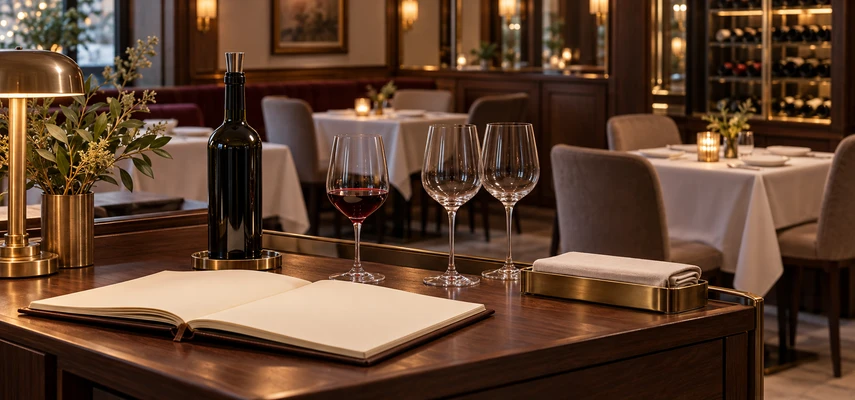

A restaurant doesn’t buy a wine simply because it tastes good. The bottle also has to fit the food, guests, price structure, service and storage. A brilliant wine with no clear place on the list may be harder to sell to the buyer than a less unusual bottle that solves a specific problem.
Selling wine to restaurants and bars therefore means understanding the economics of the on-trade: wine sold for consumption on the premises. The venue supplies space, service and an occasion alongside the liquid. Its menu price cannot be compared with a shop price as though both businesses perform exactly the same work.
The WSET Diploma specification distinguishes specialist and general bars, plus non-destination, casual and fine-dining restaurant settings. These categories help explain commercial needs rather than rank the seriousness of their customers. A carefully chosen short list can serve its venue better than a vast cellar that nobody knows how to sell.
Start with the venue’s reason for buying
A buyer needs a wine to perform a role: a dependable house pour, a match for particular food, an accessible step up in price or a distinctive bottle that expresses the venue’s identity. The supplier should identify the role before presenting the entire portfolio.
Ask about guests, sales mix, current gaps and practical constraints. A wine may duplicate a successful existing line without adding enough value to justify another stock item. Another may introduce a useful style but need staff support before it will sell. Explain the fit using the buyer’s operation rather than the producer’s enthusiasm alone.
Penn State’s guidance on getting wines into restaurants highlights the importance of an actual place for the wine on a list. Its historical research isn’t a source of current menu-price targets. The enduring commercial question is whether the wine suits this account and can move through it at workable terms.
A first listing is only the start. Reliable supply, accurate information and a manageable ordering process support repeat business. A restaurant unable to replace a sold-out favourite may have to retrain staff, alter its list or disappoint guests. Those disruptions have a cost even when no separate invoice appears.
Specialist bars sell exploration as part of the experience
Specialist bars make wine, or a defined part of wine, central to their offer. Guests may arrive expecting discovery, knowledgeable guidance and a range beyond the familiar. Interesting origins, styles and producers can help the venue differentiate itself.
That proposition needs staff knowledge and careful curation. A large by-the-glass range can encourage experimentation while creating open-bottle management and stock-turn challenges. The supplier’s useful support might include concise technical information, staff tasting and a clear explanation of the wine’s role, rather than a long recital of awards.
A specialist may accept a wine that needs explanation if its guests value that discovery and the team can present it confidently. That doesn’t remove the need for price fit and return. An obscure bottle sitting unopened for months isn’t automatically an expression of commercial success.
General bars need wine that works within a broader offer
General bars sell wine alongside other drinks and occasions. Beer, spirits, cocktails or entertainment may be the principal reason for a visit. Wine choices often need to be legible, dependable and straightforward to serve within a busy operation.
A focused range can cover key preferences without creating too many slow-moving lines. Clear descriptions and simple staff recommendations help guests choose. A supplier should consider available refrigeration, storage, glassware and the team’s time as well as the wine’s sensory profile.
Don’t assume general bars can sell only basic wine. A premium choice can work when it suits customers and service, but the case needs evidence. Evaluate expected demand and support rather than transferring a specialist bar’s range into a different setting unchanged.
Restaurant occasions influence the wine proposition
Non-destination restaurants serve occasions where the wine programme is unlikely to be the main reason for the visit. A convenient meal, location or broader service may drive demand. A concise list that fits the food and gives guests confidence can be more useful than a complex selection requiring extensive explanation.
Casual dining generally combines an approachable experience with a manageable spend and operating rhythm. Wine needs to work with the menu, party sizes and expected pace. By-the-glass options can suit guests who want different styles or don’t want a full bottle, while dependable house choices help staff serve efficiently.
Fine dining may support specialist service, pairings, mature bottles and a more extensive cellar. It can also require substantial capital, training, glassware, storage and time at the table. A high menu price reflects a proposition that costs money to deliver; it doesn’t reveal net profit on its own.
These descriptions aren’t rigid laws. A casual venue can have an ambitious wine list, and a fine-dining restaurant can deliberately keep one short. Explain how the actual customer occasion and service model affect selection and cost. Format alone doesn’t predict the exact list, margin or sales volume.
A wine list is a stock decision
Every listed wine can commit buying attention, storage, staff knowledge and cash. More lines create more choice but may divide sales among slow-moving items. A buyer needs to balance coverage of styles and price points with the capacity to manage the range.
The WSET account of a sommelier’s responsibilities includes buying, stock management, staff training and guest advice. Those tasks connect the cellar with the dining room. A technically excellent list can fail in practice if its stock records are inaccurate or staff can’t guide a guest through it.
Consider both cash amount and stock turn. A rare bottle may produce an attractive gross amount when sold but occupy money for a long time. A regular house wine may earn less per transaction while selling repeatedly. Neither measure alone establishes the better result for the venue.
Supply arrangements also affect working capital. Large minimum orders might lower an apparent unit price while increasing inventory and storage pressure. Smaller frequent deliveries may cost more but reduce cash tied up. Compare the full service and reliability rather than isolating one bottle discount.
By-the-glass sales need a recovery calculation
A by-the-glass offer lowers the guest’s commitment and allows different preferences at one table. It can support discovery and food matching. For the venue, the economics depend on saleable pours, price, handling and what happens to the remainder.
Use an original simplified example. A 750 mL bottle costs 12 currency units and is sold in 150 mL measures at 6 each, excluding sales tax. Five fully sold measures generate 30, leaving a gross amount of 18 after the stated bottle cost. The gross margin on that boundary is 60%, before service and other operating costs.
If only four measures sell and the remaining measure is discarded, revenue is 24 and the gross amount is 12. Margin becomes 50%. The wine’s purchase cost hasn’t changed, but the result has. Overpouring, samples, spillage and unsold remainders can all reduce saleable recovery and should be handled consistently in the calculation.
These are hypothetical measures and prices, not a legal serving-size instruction or a universal target. Real permissions, measures and tax treatment need checking. The model demonstrates why dividing bottle volume by an ideal measure isn’t enough to forecast actual receipts.
Preservation helps only within a working service system
Open-bottle management can include matching range to demand, recording opening, suitable storage and appropriate preservation methods. The WSET discussion of by-the-glass service explores how preservation can support broader choices. Its commercial examples don’t make any device a guarantee of quality or profitable sales.
Evaluate equipment, consumables, training and use alongside the wine saved. The appropriate method depends on the product, closure, service and expected time before another sale. There is no single safe promise that every opened wine remains equally attractive for a fixed number of days.
Preserving a bottle cannot create demand for it. An ambitious glass list still needs a reason for each wine, knowledgeable presentation and monitoring of actual sales. A smaller well-run selection may outperform an extensive one whose equipment and training are poorly matched to the operation.
Menu price must support more than the bottle
On-trade costs include premises, staff, glassware, washing, breakage, storage, administration and the service associated with the sale. The gross difference between purchase and menu price must contribute to those costs before net profit can be identified.
Markup and gross margin remain different calculations. Buy at 12 and sell the bottle at 36, excluding sales tax: the difference is 24, the markup is 200% and gross margin is about66.7%. None is a net-profit percentage. Nor does that hypothetical multiplier establish an industry rule for every bottle or venue.
Applying one multiplier mechanically can make a premium bottle unattractive to guests or leave an inexpensive sale contributing too little cash. A venue can evaluate percentage and absolute return, demand, list position and stock turn together. The resulting price structure needs coherence as well as cost coverage.
For the producer or distributor, work back from the account’s realistic selling proposition. A price that forces the wine into an unsuitable menu position can prevent a listing even if the wine is admired. Offering a discount may help, but its effect on the supplier’s own return and sustainable service must also be evaluated.
Supplier support should solve operating problems
Useful support can include staff education, accurate product details, suitable samples, reliable delivery and notice of changes in vintage or availability. Keep it proportionate and compliant with the market’s rules. A supplier shouldn’t assume that any incentive or promotional activity is legally permitted everywhere.
Training is most effective when it helps a team answer practical guest questions: what does it taste like, what does it suit, and what is a reasonable alternative? Confidence can improve recommendations without pressuring guests to spend beyond their preference. The aim is repeat satisfaction, not one awkwardly expensive sale.
Service commitments need costing. Frequent small orders, special deliveries and payment terms require resources. An account with a prestigious name can still be a poor commercial fit if its net contribution doesn’t support the work or payment risk. Evaluate actual performance rather than treating reputation as a substitute for a budget.
Compare channels through their needs and constraints
A strong D2 answer links the venue to a mechanism. A specialist bar may value discovery but need tight open-bottle management. A general bar may need easy navigation and consistent supply. Fine dining may support complex service while carrying a costly cellar; a non-destination restaurant may benefit from a concise, dependable offer.
Then qualify the judgement with the actual guests, team, food and economics. Selling to the on-trade succeeds when the wine helps the venue serve its customers and earns enough, at workable stock turn, to support the resources involved. A good supplier makes that fit easier to recognise and deliver.
Use direct-to-consumer sales and wine supply and demand as tests of the business reasoning here: identify who bears a cost or risk, explain how the route to market changes it and distinguish revenue from the return retained by the producer.
Original Diploma practice
These original exercises are not official WSET questions and have no official mark allocations.
Question 1: calculate open-bottle loss
A 750 mL bottle costs12 and supplies five150 mL measures priced at6 each, excluding sales tax. Compare selling every measure with selling four and discarding one. Explain why the result isn’t net profit.
Indicative answer points: revenue; gross amount; margin; lost recovery; operating costs; hypothetical measures.
Outline answer: Five measures generate30, leaving18 after bottle cost and a60% gross margin. Four generate24, leaving12 and a50% gross margin. The discarded portion reduces receipts while bottle cost remains12. Staff, premises, equipment and other costs still need payment. These simplified measures are not a statement of legal serving requirements.
Question 2: compare specialist and general bars
A supplier proposes the same extensive unfamiliar by-the-glass range for a specialist wine bar and a general bar. Evaluate the proposal.
Indicative answer points: customer occasion; staff expertise; range navigation; demand; preservation; stock and service.
Outline answer: The specialist may attract exploration and have the staff to explain unfamiliar choices, but still needs sufficient demand and open-bottle control. A general bar may benefit from a focused, legible selection fitting its wider drinks offer and service pace. Test actual customers, facilities and team capability before deciding. One range isn’t automatically appropriate for both settings.
Question 3: assess a prestigious account
A winery is offered a fine-dining listing requiring small frequent deliveries, extended payment and substantial staff support. Evaluate the opportunity beyond the account’s reputation.
Indicative answer points: target fit; actual sales; net receipt; service costs; cash and credit; continuity; alternatives.
Outline answer: The listing may provide relevant exposure and explain the wine well, but estimate realistic volume and net contribution after support and delivery. Assess working capital, payment risk and the capacity to maintain service. Compare the opportunity with alternative accounts and clarify expectations. Prestige is a possible benefit, not evidence that the arrangement is profitable or suitable.











