










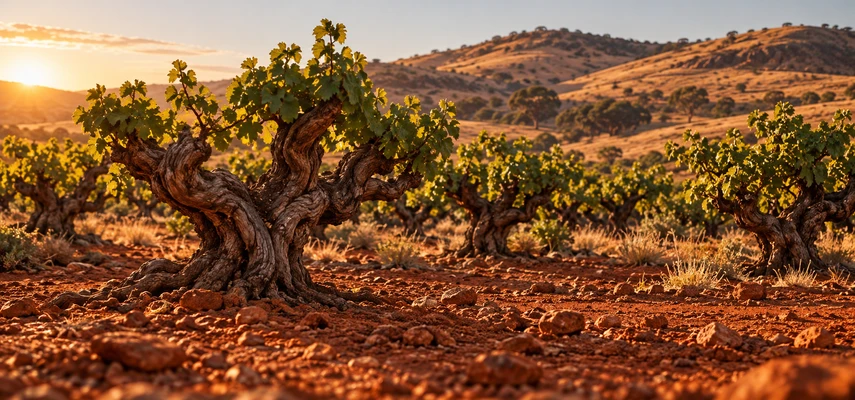

If a producer changes “Syrah” to “Shiraz” on a label, has the grape changed? No. Syrah vs. Shiraz begins with one fixed fact: these are names for the same variety. The interesting differences come from growing conditions, ripeness and production, plus the style a producer wants the chosen name to suggest.
This is Article #11 of The TFE Guide to WSET Level 2 Wine, Part II: The Eight Principal Grape Varieties. We’ll compare the Northern Rhône with Australia, then retain the other prescribed French origins. The aim is to explain the movement from peppery freshness to richer black fruit without inventing two botanical identities.
What WSET Level 2 expects you to know
LO3 covers this variety’s characteristics, environmental influences, winemaking, ageing and prescribed regional styles. The current specification names Pays d’Oc, Crozes-Hermitage, Hermitage, Côte Rôtie and Minervois in France; and South Eastern Australia, Barossa Valley and Hunter Valley in Australia.
Other regions make important wines from the grape, but they shouldn’t replace this assigned list. Learn the exact pairings first, then use additional background as enrichment rather than quietly expanding what you think the examination requires.
One grape, two names, several useful style clues
Syrah is the French name, while Shiraz is especially associated with Australia. Producers elsewhere may also choose between them to suggest a particular stylistic intention. That naming habit is useful context, not a universal legal rule stating exactly how warm the vineyard was or how much alcohol the wine contains.
The variety is black-skinned and capable of deeply coloured, tannic reds with pronounced fruit. Blackberry and black plum are useful associations; pepper, floral and other savoury notes can also appear. Their prominence varies with conditions and the particular wine.
Typical still wines are dry, with medium to full body and varying alcohol. Acidity and tannin can provide substantial structure, especially in fresher expressions. Don’t treat “Shiraz” as a synonym for sweet, just because ripe black fruit or oak can create a generous impression.
Climate: compare the mechanism before the country
In relatively cooler or moderate conditions, the grape can show fresher black fruit, pepper and a firmer acid impression. Warmer ripening can support richer fruit, fuller body and higher potential alcohol. These tendencies explain a useful Northern Rhône–Barossa comparison without defining every French or Australian wine.
Harvest timing and site modify the picture. A warm region can contain cooler sites, while a well-exposed slope can help ripen grapes in a cooler setting. The producer also decides what level of ripeness best suits the intended style. Waiting longer isn’t automatically an improvement if freshness or balance suffers.
Wine Australia’s Shiraz guide emphasizes the range of regional expressions. Australia supplies both rich and more restrained styles, so using “Australian” as a substitute for a tasting description loses much of the useful information.
Skins, tannin and extraction
The grape’s skins supply colour, tannin and flavour compounds during red fermentation. Extraction choices influence how much enters the liquid and how the resulting structure feels. Contact time, temperature and cap management matter alongside the condition of the fruit.
A producer seeking a supple fruit-led wine can handle the material differently from one aiming for greater structure and development. More extraction doesn’t automatically produce better balance. As in Cabernet, tannin level and tannin texture are separate observations.
This helps explain why two dark wines can feel different. One may have firm, grippy tannins and fresh acidity; another may feel broader and rounder even if it also contains substantial tannin. Don’t let deep colour answer the body, acidity and texture questions in advance.
Northern Rhône: a grape association worth fixing firmly
Crozes-Hermitage, Hermitage and Côte Rôtie are the three prescribed Northern Rhône origins. Their red wines are Syrah-associated, although regional rules can allow particular blending components. Don’t claim every red from the area is necessarily a pure single-variety wine.
The Rhône wine body’s variety material explains the regional role. More northerly conditions and suitable slopes help provide a context for structured wines with fresh black fruit, pepper and, in some examples, floral or savoury detail.
Learn these names as a group, but don’t flatten them into identical wines. A broad regional comparison is useful; a compulsory aroma assigned to every bottle from an appellation is much less reliable. Producer, vintage, site and maturation remain important.
Crozes-Hermitage, Hermitage and Côte Rôtie
Crozes-Hermitage supplies an important range of Syrah-based reds, including relatively approachable examples and more ambitious wines. The official appellation overview distinguishes its red and white production, a reminder that a place name can make more than one kind of wine.
Hermitage is an important source of concentrated, structured reds with potential for development. Don’t confuse the similar names Hermitage and Crozes-Hermitage or treat one as an alternative spelling of the other. Their geographical identities matter even though Syrah connects them.
Côte Rôtie is another key Syrah-associated origin, often discussed through its steep sites and aromatic complexity. Viognier can have a relevant permitted role in some blends, but that doesn’t turn the red wine into a white or mean the producer simply adds perfume. Detailed production proportions aren’t needed to remember the central association for this article.
France beyond the Northern Rhône
Pays d’Oc is the prescribed PGI association, providing a broader southern French context for varietal wines. Minervois, in Languedoc-Roussillon, is also required and can include Syrah within regional red blends. These names keep the lesson from becoming “all French Syrah is Northern Rhône.”
Warmer southern settings can support riper fruit and fuller styles, with blending and oak choices adding further variation. The grape’s identity remains the same even when the surrounding regional traditions differ.
When a question names a French origin, identify which part of the study map it belongs to before supplying a style. A Syrah-containing Minervois blend and a Northern Rhône Syrah reference needn’t have the same balance simply because both are French and contain the same variety.
Barossa Valley: a rich reference, not an entire country
Barossa Valley is the prescribed Australian origin associated with rich, ripe Shiraz. Black fruit, fuller body, substantial alcohol and oak influence are useful reference features in many examples. Tannins may feel ripe and rounded, but that doesn’t mean they are absent.
Suitable warmth helps develop the fruit, while producer choices determine how concentrated or restrained the final wine becomes. Some old-vine examples are important, but “old vine” alone doesn’t supply a universal legal age threshold or guarantee quality. Vineyard condition and the actual wine still matter.
Compare a specified Barossa example with a specified Northern Rhône wine by naming fruit ripeness, acidity, body, alcohol and production differences. Don’t simply write “Shiraz is bigger than Syrah.” The names don’t make the grapes biologically different, and the comparison needs evidence from the examples.
Hunter Valley: keep another Australian style in view
Hunter Valley is also prescribed and prevents Barossa from swallowing the whole Australian lesson. Its Shiraz can offer a different balance, including more medium-bodied and savoury expressions, with some wines developing further in bottle.
The region’s growing conditions and harvest decisions create their own practical context. Don’t assume a map position alone predicts exactly the same ripe-fruit profile as Barossa. Weather, site and production remain part of the explanation, just as they do in France.
For revision, attach a contrast to the pair rather than memorizing two unrelated Australian names. Barossa supplies the familiar richer reference; Hunter reminds you of diversity and different maturation possibilities. Neither should become a statement that every wine must match one fixed description.
South Eastern Australia: broad origin, broad possibilities
South Eastern Australia is a large geographical indication, not a small vineyard site with one temperature and one soil. It can appear on wines made from broadly sourced fruit, including accessible, fruit-led Shiraz intended for early drinking.
The larger origin helps explain why price, concentration and production can differ from a more specific, ambitious regional bottling. But broad origin isn’t itself a fault. Describe the intended style and the wine’s quality separately rather than assuming a bigger map area automatically means an unsuccessful wine.
This distinction is useful across the series: a broad geographical indication and a named local region provide different levels of origin information. Neither replaces your structural or aromatic description.
Oak, blending and bottle ageing
Oak can add vanilla, toast, spice or other secondary associations. New versus older wood, vessel size and duration affect the result. Peppery grape character shouldn’t automatically be attributed to oak, and conspicuous vanilla isn’t proof the grapes grew in a hotter region.
Blending can add complementary fruit, structure or complexity. In some contexts Syrah appears with Grenache and other varieties; Australian Shiraz may also appear in blends, including with Cabernet Sauvignon. The blend’s actual components matter more than a generic assumption about which country supposedly blends and which doesn’t.
Suitable concentrated, balanced examples can develop dried-fruit, leather, earthy or other mature character, while many fruit-led wines suit earlier drinking. WSET’s ageing discussion makes clear that time doesn’t improve every bottle. Assess the particular wine’s balance and purpose.
Common mistakes and exam traps
Syrah and Shiraz are the same grape, while Petite Sirah isn’t simply a smaller-bunch spelling of either name. Northern Rhône reds are Syrah-associated; Grenache becomes especially important in the Southern Rhône lesson. Barossa doesn’t represent every Australian style, and pepper, sweetness, alcohol and oak are separate observations.
Finally, keep Hermitage distinct from Crozes-Hermitage and retain Pays d’Oc, Minervois, Hunter Valley and South Eastern Australia alongside the famous headline regions. Small omissions in a regional list can undo an otherwise clear understanding of the grape.
Knowledge check: 10 original practice questions
Choose one answer each. These independent questions support LO3 and relevant production comparisons.
1. What is the relationship between Syrah and Shiraz?
- Names for the same grape variety.
- Unrelated black and white grapes.
- A grape and an oak type.
- Two compulsory sweetness levels.
2. Which group contains the prescribed Northern Rhône origins?
- Sancerre, Chablis, Alsace.
- Crozes-Hermitage, Hermitage, Côte Rôtie.
- Rioja, Priorat, Navarra.
- Mosel, Rheingau, Pfalz.
3. Which is a useful warmer, riper style tendency?
- Automatic absence of alcohol.
- Mandatory sweetness.
- Fuller body and riper black-fruit impressions.
- A botanical change into a different grape.
4. Which Australian region supplies a classic richer Shiraz reference?
- Mosel.
- Sancerre.
- Tokaj.
- Barossa Valley.
5. Which other Australian region is prescribed for this grape?
- Hunter Valley.
- Rheingau.
- Pomerol.
- Gavi.
6. What is South Eastern Australia in this lesson?
- A single vineyard.
- A broad geographical indication.
- A grape mutation.
- A sweetness term.
7. Which southern French origin is prescribed alongside Pays d’Oc?
- Chablis.
- Pouilly-Fumé.
- Minervois.
- Alsace.
8. Which statement about pepper and oak is sound?
- All pepper character proves new oak.
- Oak always removes fruit.
- Vanilla proves a particular vineyard temperature.
- Peppery grape character and oak-derived aromas should be considered separately.
9. What does deep colour establish directly?
- Colour intensity, rather than automatic sweetness, body or quality.
- A fixed sugar level.
- A guarantee of low acidity.
- A requirement for long ageing.
10. Which comparison method is most useful?
- Assume names create different varieties.
- Compare fruit ripeness, acidity, body, alcohol and production in the specified wines.
- Treat every Australian wine as identical.
- Ignore regional origins altogether.
Answers and explanations
1. A — Variety identity; LO3. Naming conventions can suggest style, but they don’t create separate botanical varieties.
2. B — French geography; LO3. These three are the prescribed Northern Rhône Syrah associations.
3. C — Climate and style; LO3. Greater ripeness can support richer fruit and body without guaranteeing sweetness or quality.
4. D — Australia; LO3. Barossa Valley is the familiar richer Shiraz reference in the assigned list.
5. A — Australia; LO3. Hunter Valley supplies another prescribed regional style and helps show Australia’s diversity.
6. B — Origin scale; LO3. It is a broad GI, so it shouldn’t be treated as one uniformly defined vineyard site.
7. C — France; LO3. Minervois is the required additional French origin, with relevant red-blending context.
8. D — Aroma origins; LO3. A pepper association doesn’t automatically establish a barrel treatment.
9. A — Description; LO3 foundation. Colour is its own dimension and doesn’t directly answer the other structural questions.
10. B — Comparison; LO3. Separate observations and relevant mechanisms produce a defensible contrast without national stereotypes.
One-page revision summary
| Association | Essential fact | Useful comparison |
|---|---|---|
| Syrah/Shiraz | Same variety | Naming style clues aren’t botanical differences |
| Northern Rhône | Crozes-Hermitage, Hermitage, Côte Rôtie | Fresh black fruit, pepper and structure in suitable examples |
| Southern France | Pays d’Oc, Minervois | Broader sourcing and relevant blends |
| Barossa Valley | Important ripe Shiraz reference | Rich fruit and fuller body, with producer variation |
| Hunter Valley | Prescribed Australian association | Different regional balance and possible development |
| South Eastern Australia | Broad GI | Accessible fruit-led styles among varied possibilities |
| Production | Extraction, oak, blending and ageing matter | More extraction or oak isn’t automatic quality |
Hold the grape identity steady, then change the growing and production conditions in your explanation. The names can vary while the reasoning remains consistent.












