











Why does Cabernet Sauvignon often feel firmer than Merlot, and why can a Bordeaux blend taste different from a Napa Cabernet? Cabernet Sauvignon explained through its skins, ripening needs and production choices turns those comparisons into a connected story. The grape supplies a strong framework; place and handling decide how that framework feels.
This is Article #8 of The TFE Guide to WSET Level 2 Wine, Part II: The Eight Principal Grape Varieties. We’ll connect black-fruit character, acidity and tannin to climate, blending, oak and the prescribed origins. “Powerful red” is too vague to explain either the grape or the differences between its wines.
What WSET Level 2 expects you to know
The current specification places Cabernet Sauvignon in LO3. You need its growing and sensory characteristics, production influences, regional styles, comparisons and relevant Bordeaux label terms. The US list includes Oakville, Rutherford and Calistoga within Napa Valley; those shouldn’t vanish behind the better-known regional name.
Use the same framework as the white-grape articles, adding tannin and red-wine extraction. Ask whether the fruit ripened suitably, how firm the structure is, what oak contributes and whether blending changes the balance. That’s more reliable than assuming all expensive Cabernets taste the same.
The grape: small berries, substantial structure
Cabernet Sauvignon is a black variety associated with thick skins, deep colour, substantial tannin and relatively high acidity. Blackcurrant is a particularly useful fruit association, alongside other black fruit. Herbaceous notes can also appear, especially when the fruit is less ripe.
It ripens relatively late, which helps explain the importance of sufficient warmth and a long enough season. In a marginal setting, sugar, flavour and tannin development may not reach the desired balance. A suitable moderate or warm site can therefore be more useful than a location selected solely for a famous regional name.
Warmth isn’t an unlimited benefit. Excessive heat or drought can create problems, and very ripe fruit can lead toward higher potential alcohol and cooked-fruit impressions. The target is appropriate ripeness for the style, not the highest possible sugar reading. Wine Australia’s Cabernet guide explains the variety’s growing requirements and structure.
Fruit, acid, tannin, alcohol and body
Typical dry Cabernet wines can be medium- to full-bodied, often with high tannin and noticeable acidity. Riper examples can feel fuller and show more alcohol, while a cooler or less ripe reference may feel leaner and more herbaceous. These aren’t quality verdicts by themselves.
Distinguish tannin quantity from texture. A wine can have substantial but ripe, fine-feeling tannins, or a harder, more astringent impression. “High tannin” describes a level; it doesn’t automatically mean rough or unpleasant. Acidity can make the mouth water at the same time that tannin grips the gums.
Blackcurrant character also doesn’t establish sweetness. Most familiar still examples are dry. Ripe fruit, oak aromas and alcohol can influence the overall impression without proving sugar remains. Keep the same separate observations you used for Chardonnay and Sauvignon Blanc, rather than allowing a dark colour to answer every question.
Extraction and oak: building on the raw material
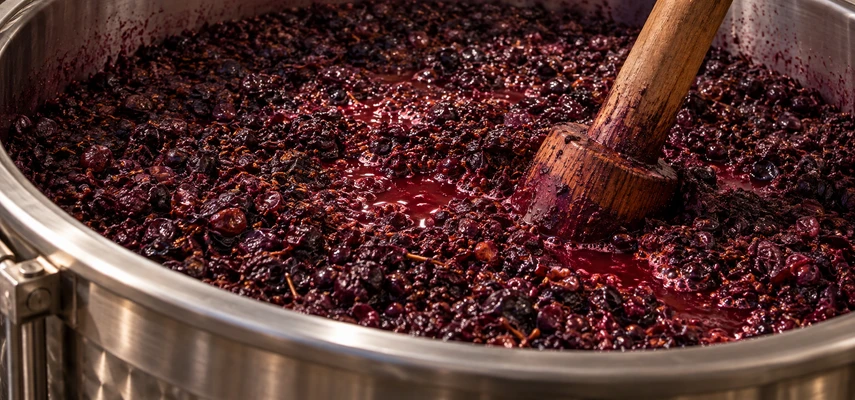
Red fermentation with skins extracts colour, tannin and flavour. The producer can influence extraction through temperature, contact time and cap management. More vigorous extraction doesn’t automatically make a better Cabernet, especially if the fruit contains harsh, insufficiently developed tannins.
Oak maturation is common in many ambitious styles and can contribute cedar, vanilla, toast or spice associations. New and old wood, vessel size and the period of contact affect the result. A prominent oak smell isn’t proof of greater grape quality, and an older barrel can serve a different role from a small new one.
Malolactic conversion is usual in red production and reduces acidity, although it needn’t create an obvious buttery aroma in Cabernet. Blending can then adjust structure, fruit and complexity. Treat these as separate decisions rather than one indivisible recipe called “serious red wine.”
Bordeaux: think of Cabernet as part of a team
Bordeaux is the broad regional association. Cabernet Sauvignon is especially important in Left Bank blends, often alongside Merlot and other permitted varieties. Merlot can contribute a softer, fruitier impression and help balance Cabernet’s firmer structure. The blend’s exact proportions and style depend on the producer and season.
Learn Haut-Médoc, Pauillac and Margaux as important prescribed Left Bank associations. Graves and Pessac-Léognan are also on Cabernet’s list. They’re geographical names, not separate grapes or sweetness categories. Their wines aren’t required to be pure Cabernet Sauvignon simply because Cabernet matters there.
Well-drained gravel sites can help provide suitable conditions for this later-ripening variety. Weather and vintage still affect outcomes, so Bordeaux isn’t one permanently identical tasting note. A season that challenges Cabernet may make the availability of other blending components especially valuable.
WSET’s Bordeaux and Napa comparison considers contrasting Cabernet contexts. For study, compare a specified Bordeaux blend with a specified ripe Napa example rather than claiming one continent always makes restrained wines and another always makes enormous ones.
Bordeaux labels: origin and classifications
Bordeaux and Bordeaux Supérieur are important terms, alongside Cru Bourgeois and Grand Cru Classé. They concern different parts of the region’s appellation or classification framework. They aren’t interchangeable decorations meaning “extra oak.”
Bordeaux Supérieur involves additional production requirements compared with the basic appellation, but it doesn’t mean the wine comes from every prestigious named commune. Cru Bourgeois and Grand Cru Classé belong to particular classification contexts, which Article #25 will compare in more detail. Don’t transfer Burgundy’s vineyard hierarchy wholesale to Bordeaux.
France’s prescribed Cabernet list also includes Pays d’Oc, a southern PGI associated with broader sourcing and varietally labelled wines. That is a useful reminder that French Cabernet isn’t limited to classified Bordeaux. The grape can appear at different quality levels, prices and intended drinking ages.
California, Napa Valley and its named subregions
California is a broad prescribed origin, with Napa Valley and Sonoma important more specific associations. Napa Cabernet can show ripe black fruit, substantial body and oak influence, but sites and producers vary. “Napa” isn’t a promise of identical alcohol, tannin or sweetness across every bottle.
Within Napa Valley, learn Oakville, Rutherford and Calistoga. All are prescribed nested geographical associations for Cabernet. They give more specific origin information than the broader Napa label; don’t treat them as three additional grape varieties or invent a compulsory flavour for each.
Warm inland conditions and cooling influences vary across the valley. This makes site an important part of the story even within a small geographical area. Sonoma likewise encompasses different conditions, so a broad regional name should prompt questions rather than end the explanation.
The practical comparison with Bordeaux concerns typical fruit ripeness, body, alcohol, tannin and blending or oak choices in the examples specified. If your answer only says “one is French and one is American,” you’ve identified the passports and left the wine unexplained.
Chile: a broad valley and more specific origins
Chile’s Central Valley is prescribed, with Maipo Valley and Colchagua Valley important Cabernet associations. Sufficient warmth can support ripeness and black-fruit concentration, while site and cooling influences affect the balance. Producers make both more accessible wines and ambitious examples with oak and structure.
Learn the broad-to-specific relationship rather than placing each name in a separate mental drawer. Central Valley is the larger reference; Maipo and Colchagua help make the origin more precise. Don’t confuse Chile’s Central Valley with a similarly named region in another country.
Herbaceous or mint-like associations can appear in some examples, but a single descriptor shouldn’t become proof of origin. Your first responsibility is to describe the wine accurately, then use the regional and production context to explain it.
Stellenbosch, Coonawarra and Margaret River
Stellenbosch is the prescribed South African Cabernet association. Its varied sites can support structured red wines, including blends and oak-matured examples. Learn the grape-region pairing without assuming the entire country shares one temperature or one finished style.
Australia’s prescribed origins are Coonawarra and Margaret River. Coonawarra is strongly associated with Cabernet and can show blackcurrant with mint or eucalyptus-like character. Those associations aren’t universal ingredients or a literal transfer of nearby plants into every bottle.
Margaret River has a maritime setting and is important for Cabernet and blends, including with Merlot. Suitable ripening conditions and freshness help explain its role. Compare the site influences and the specified wines rather than reducing both Australian regions to “hot, therefore jammy.”
Hawke’s Bay and the importance of ripening
Hawke’s Bay is the prescribed New Zealand Cabernet association. It provides suitable sites for Bordeaux-style red varieties within a country many students first associate with Sauvignon Blanc and Pinot Noir. The grape’s ripening needs help explain why site selection matters.
Cabernet may appear in blends, so don’t assume every relevant Hawke’s Bay red is a single-variety Cabernet. A useful answer identifies the Cabernet contribution and the possible influence of Merlot or other components. The country name doesn’t erase the production logic learned in Bordeaux.
Across all these regions, keep quality separate from size. A balanced, intense wine with persistent flavours can justify a stronger assessment than one whose alcohol or wood dominates its fruit. More body is a style difference, not an automatic extra mark for quality.
Bottle ageing and common exam traps
Some concentrated, balanced Cabernets can develop in bottle. Colour may shift toward garnet; tannins can feel softer; fresh black fruit can develop dried-fruit, tobacco, leather or other mature associations. Not every bottle is designed for prolonged storage, and a weak wine doesn’t become complex merely by waiting.
Cabernet Sauvignon isn’t Cabernet Franc, and Sauvignon Blanc isn’t its white-wine version. Left Bank Bordeaux blends aren’t necessarily pure Cabernet. Oak aromas aren’t grape aromas, high tannin doesn’t prove harshness, and dark colour doesn’t establish sweetness. Finally, memorize Oakville, Rutherford and Calistoga as nested Napa origins rather than losing them inside the larger name.
Knowledge check: 10 original practice questions
Choose one answer each. These independent questions support LO3 and related production concepts.
1. Which profile is a useful Cabernet Sauvignon reference?
- Blackcurrant, substantial tannin and relatively high acidity.
- Mandatory sweetness and no tannin.
- Always pale white colour.
- No fruit character and no acidity.
2. Why is sufficient ripening warmth important?
- Cabernet cannot contain acid.
- It is relatively late-ripening.
- Warmth always guarantees quality.
- The grape must be raisined for every wine.
3. Which Bordeaux group is especially relevant to Cabernet’s Left Bank associations?
- Sancerre, Touraine, Pouilly-Fumé.
- Chablis, Mâcon, Meursault.
- Haut-Médoc, Pauillac, Margaux.
- Mosel, Rheingau, Pfalz.
4. What can Merlot contribute to a Cabernet-based blend?
- Proof the wine must be white.
- Automatic sweetness.
- A legal guarantee of identical flavour every year.
- A softer fruit impression and complementary structure.
5. Which set consists of prescribed origins within Napa Valley?
- Oakville, Rutherford, Calistoga.
- Maipo, Colchagua, Casablanca.
- Coonawarra, Eden, Clare.
- Graves, Margaux, Pomerol.
6. Which Australian pair is prescribed for Cabernet Sauvignon?
- Mosel and Pfalz.
- Coonawarra and Margaret River.
- Sancerre and Touraine.
- Tokaj and Alsace.
7. Which Chilean pair is on the Cabernet list?
- Oregon and Sonoma.
- Walker Bay and Elgin.
- Maipo Valley and Colchagua Valley.
- Clare Valley and Eden Valley.
8. Which statement about tannin is sound?
- High tannin always means poor quality.
- Tannin is the same as sweetness.
- Tannin must disappear whenever acidity is high.
- Tannin level and tannin texture are distinct observations.
9. Which South African region is prescribed for Cabernet?
- Stellenbosch.
- Marlborough.
- Mendoza.
- Barolo.
10. Which New Zealand region is prescribed for Cabernet?
- Casablanca Valley.
- Hawke’s Bay.
- Napa Valley.
- Coonawarra.
Answers and explanations
1. A — Grape characteristics; LO3. Blackcurrant, tannin and acidity provide a useful reference without describing every bottle identically.
2. B — Growing conditions; LO3. Later ripening helps explain the need for a suitable season and site, rather than unlimited heat.
3. C — Bordeaux geography; LO3. These names belong to the prescribed Cabernet-associated Left Bank group.
4. D — Blending; LO3. Complementary fruit and structure can help balance Cabernet without requiring sweetness.
5. A — Napa geography; LO3. All three are prescribed more specific origins within Napa Valley.
6. B — Australia; LO3. Coonawarra and Margaret River are the assigned Cabernet associations.
7. C — Chile; LO3. Maipo and Colchagua are the more specific Chilean Cabernet origins named alongside Central Valley.
8. D — Structure; LO3. A high level can coexist with fine-feeling tannins; quantity alone doesn’t establish harshness.
9. A — South Africa; LO3. Stellenbosch is the required South African association for this grape.
10. B — New Zealand; LO3. Hawke’s Bay supplies the prescribed Cabernet context, including relevant blends.
One-page revision summary
| Country | Prescribed origins | Key connection |
|---|---|---|
| France | Pays d’Oc; Bordeaux; Haut-Médoc; Pauillac; Margaux; Graves; Pessac-Léognan | Later-ripening Cabernet, Left Bank blending, classifications |
| USA | California; Napa Valley; Oakville; Rutherford; Calistoga; Sonoma | Broad-to-specific origins; ripe fruit and varied sites |
| Chile | Central Valley; Maipo Valley; Colchagua Valley | Broad origin and specific Cabernet associations |
| South Africa | Stellenbosch | Structured reds and relevant blends |
| Australia | Coonawarra; Margaret River | Distinct growing contexts; black-fruit and structured styles |
| New Zealand | Hawke’s Bay | Suitable ripening sites and Bordeaux-style blends |
Remember the structure first: colour, black fruit, tannin and acidity. Then use ripeness, blending and oak to explain how each region turns that framework into a particular wine.












