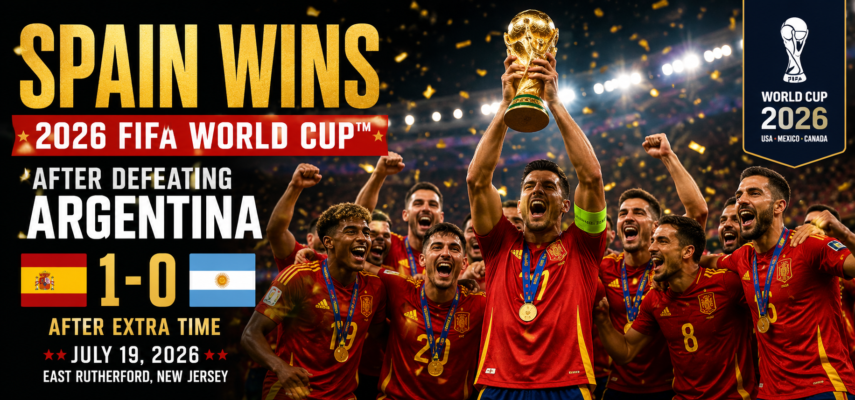
Spain lifted the 2026 FIFA World Cup on July 19 at East Rutherford, New Jersey, defeating Argentina 1-0 after extra time in a final that closed the first World Cup contested across three nations and featuring 48 teams. The tournament spanned the United States, Mexico, and Canada, producing a bracket of unprecedented size and a match slate that, according to ESPN, ran from mid-June through mid-July.

How the Expanded Fixture Slate Reshaped Fan Tracking
Jaan Girdeinis, a sports analyst with more than a decade covering iGaming and tournament engagement, argues that the 2026 edition changed the calculus for anyone attempting to follow a national team through the draw. With 48 teams generating a 32-team knockout bracket and six elimination rounds, the sheer volume of high-stakes matches exceeded anything produced by a previous World Cup.
The format, he notes, means fans are no longer tracking a single elimination path but weaving between simultaneous brackets from the round of 32 onward. Ahead of the biggest group-stage and knockout fixtures, a large share of the audience turns to best sports betting sites to weigh odds and futures on specific matchups — a pattern Girdeinis observes as an external behavior, one that reflects how deeply engaged followers use market signals to read tournament momentum.
The Format Mechanics Behind the 2026 Bracket
The expansion to 48 teams meant FIFA reorganized the group stage into 12 groups of four, with each nation playing three matches before the knockout picture resolved. The top two finishers in each group advanced automatically. Eight additional spots went to the best third-place finishers across all 12 groups, bringing the total advancing to the knockout rounds to 32.
That 32-team field created an extra round of elimination matches compared with previous editions, meaning teams needed to survive six knockout fixtures rather than four to claim the title. In those knockout matches, any draw after 90 minutes triggers 30 minutes of extra time, split into two 15-minute halves. If the score remains level after extra time, a penalty shootout decides the outcome.
Group Stage Highlights Across Three Host Nations
The group stage ran from June 11 through June 27, with matches distributed across 16 cities in the United States, Mexico, and Canada. Host venues included East Rutherford, Miami, Arlington, Atlanta, Seattle, Foxborough, Kansas City, and Inglewood in the United States, alongside Vancouver and Toronto in Canada and Mexico City in Mexico.
The most discussed individual performance of the group phase came from Lionel Messi, who scored a hat trick for Argentina in a 3-0 victory over Algeria in Kansas City on June 16. That result set the tone for Argentina’s group stage and foreshadowed their run deep into the knockout bracket. Spain, meanwhile, moved efficiently through their group, establishing themselves early as a title contender.
The Knockout Path From Round of 16 to the Semifinals
The round of 16 produced several results that reshaped expectations for the latter stages. Belgium eliminated the host United States 4-1 in Seattle on July 6. Norway, one of the tournament’s breakout sides, knocked out Brazil 2-1 in East Rutherford on July 5. England beat Mexico 3-2 in Mexico City on July 5, a result loaded with symbolism given the host nation setting.
The quarterfinals then set the semifinal bracket clearly. France defeated Morocco 2-0 in Foxborough on July 9. Spain beat Belgium 2-1 in Inglewood on July 10. England edged past Norway 2-1 after extra time in Miami Gardens on July 11. Argentina overcame Switzerland 3-1 after extra time in Kansas City that same day.
Both semifinal results came without penalty shootouts. Spain defeated France 2-0 in Arlington on July 14, a controlled performance that offered little for France to build on. Argentina beat England 2-1 in Atlanta on July 15 in a tighter contest, securing their place in the final against Spain.
The Final and Third-Place Match Results
The third-place playoff, played July 18 in Miami, was the tournament’s highest-scoring late-stage match. England beat France 6-4, with Bukayo Saka earning a player rating of 9 out of 10 for his contribution — one of the standout individual performances across any match in the knockout rounds.
The final itself, played July 19 at East Rutherford, was decided by a single goal. Spain defeated Argentina 1-0 after extra time. Messi’s player rating of 3 out of 10 told its own story about how thoroughly Spain contained Argentina’s most dangerous individual. The match went beyond 90 minutes without a goal and was resolved in the extra-time period, denying Argentina a second consecutive World Cup title.
Spain are the 2026 FIFA World Cup champions, confirmed by a 1-0 scoreline on July 19.
https://unsplash.com/id/foto/lapangan-sepak-bola-qCrKTET_09o