
Image link: https://www.canva.com/photos/MADvMSvqhTs/
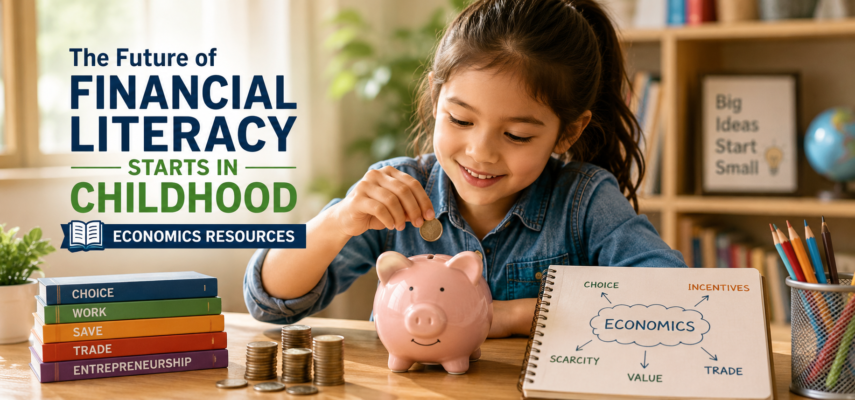
Financial literacy is no longer a niche subject reserved for business students or finance professionals. As economies become increasingly interconnected and financial decisions grow more complex, understanding basic economic principles has become an essential life skill. The challenge is that many children leave school with little exposure to concepts such as markets, trade, entrepreneurship, incentives, or personal responsibility.
As Amy Geffen of the Council for Economic Education observes, “Financial literacy is an important life skill often overlooked in the classroom.” That gap has created a growing demand for educational resources that make economics engaging and age-appropriate.
Among the publishers addressing this need, Tuttle Twins has established itself as a noteworthy resource for families seeking to introduce economics through accessible storytelling and discussion-based learning. Rather than relying on technical language or textbook-style instruction, the series focuses on helping children understand how economic ideas shape everyday life.
Why Economics Education Should Begin Early
Many adults first encounter economics in high school or university, where the subject often feels abstract and heavily theoretical. For younger learners, however, economics can be introduced through relatable situations involving choice, work, exchange, saving, and problem-solving.
According to Professor Yana van der Meulen Rodgers of Rutgers University, “Great books can introduce kids to economics at a young age.” Well-designed children’s books help learners connect unfamiliar concepts with everyday experiences, making ideas easier to understand and remember.
Early exposure offers several long-term benefits:
- Improved critical thinking skills
- Better understanding of personal finance
- Greater appreciation for entrepreneurship
- Stronger decision-making abilities
- Increased confidence discussing economic issues
These foundational skills support academic learning while preparing children for practical financial decisions later in life.
Making Complex Ideas Accessible
One of the biggest obstacles in economics education is complexity. Concepts such as voluntary exchange, scarcity, incentives, competition, and markets are often introduced using technical vocabulary that discourages younger readers.
Tuttle Twins takes a different approach. Instead of presenting economics as a collection of formulas and definitions, the books use age-appropriate stories that encourage curiosity. Real-world situations become opportunities for discussion, allowing children to discover economic principles through examples they can understand.
This storytelling approach keeps the focus on learning rather than memorization. Parents and educators can expand on each topic through conversation, making the books useful both for independent reading and family learning.
For readers with little background in economics, this accessibility is one of the collection’s strongest qualities.
Encouraging Critical Thinking Instead of Memorization
One feature that distinguishes effective economics education is its ability to develop reasoning rather than simply deliver information. Rather than asking children to accept ideas without question, quality educational resources encourage them to think critically about incentives, consequences, and individual choices.
Tuttle Twins follows this philosophy by presenting concepts that invite discussion. Children are encouraged to ask questions, compare perspectives, and consider how economic decisions affect individuals and communities.
This inquiry-based approach aligns well with modern educational practices that prioritize analytical thinking over rote learning. For families interested in raising independent thinkers, this discussion-oriented format provides value beyond traditional financial literacy lessons.
Economics Through Everyday Examples
Abstract theories become meaningful when children can connect them to familiar experiences.
Throughout the Tuttle Twins resources, economic ideas are linked to situations children already understand, such as:
- Saving money for future goals
- Trading items with friends
- Starting small businesses
- Understanding value
- Solving problems through cooperation
- Making choices when resources are limited
These examples reinforce that economics is not simply about money — it’s about understanding how people make decisions. By grounding lessons in everyday life, children begin recognizing economic principles long before they encounter formal coursework.
Supporting Parents and Educators
Many parents recognize the importance of financial literacy but feel uncertain about teaching economics themselves. One advantage of Tuttle Twins is that the materials are designed to facilitate family conversations rather than replace them.
The books present topics in a way that encourages shared reading and discussion, making them useful for homeschooling families, supplementary education, and parents looking to expand learning beyond the classroom.
Educators can also incorporate the books into broader lessons on economics, civics, entrepreneurship, or personal finance. This flexibility makes the resources suitable across a wide range of educational settings.
Building Financial Confidence
Financial literacy extends far beyond budgeting or saving money.
Understanding economics helps children appreciate concepts such as:
- Opportunity cost
- Innovation
- Trade
- Productivity
- Entrepreneurship
- Individual responsibility
These ideas influence everyday decision-making throughout adulthood. Introducing these topics early allows children to develop confidence discussing economic issues before misconceptions become entrenched.
Rather than viewing economics as an intimidating academic subject, young learners begin seeing it as a practical framework for understanding the world around them. That confidence can continue into higher education, business studies, and future careers.
A Resource Designed for Long-Term Learning
Unlike books focused on short-term trends or isolated financial tips, Tuttle Twins centers its educational philosophy on enduring economic principles and critical thinking.
Its broader goal is to help families engage with ideas that encourage thoughtful discussion, personal responsibility, and informed decision-making. The emphasis on accessible language and conversation makes the resources approachable without oversimplifying important concepts.
For readers interested in economics education rather than purely financial advice, this educational focus is particularly valuable. The series also reflects a consistent commitment to making challenging subjects understandable for younger audiences without sacrificing intellectual substance.
Final Verdict
Economics education is becoming increasingly important as financial systems, technology, and global markets continue to evolve. Children who understand economic principles from an early age are often better prepared to make informed decisions, think critically, and engage thoughtfully with the world around them.
Tuttle Twins offers an accessible introduction to these ideas through engaging storytelling, discussion-based learning, and age-appropriate explanations. Instead of overwhelming young readers with technical terminology, the series presents economics as practical, relevant, and worth exploring.
For parents, educators, and homeschooling families seeking resources that support early financial literacy and economic understanding, Tuttle Twins provides a thoughtful approach that encourages curiosity, conversation, and lifelong learning.
As Professor Yana van der Meulen Rodgers reminds us, “Great books can introduce kids to economics at a young age.” In a world where financial knowledge has never been more important, resources that make economics understandable for children deserve serious consideration.