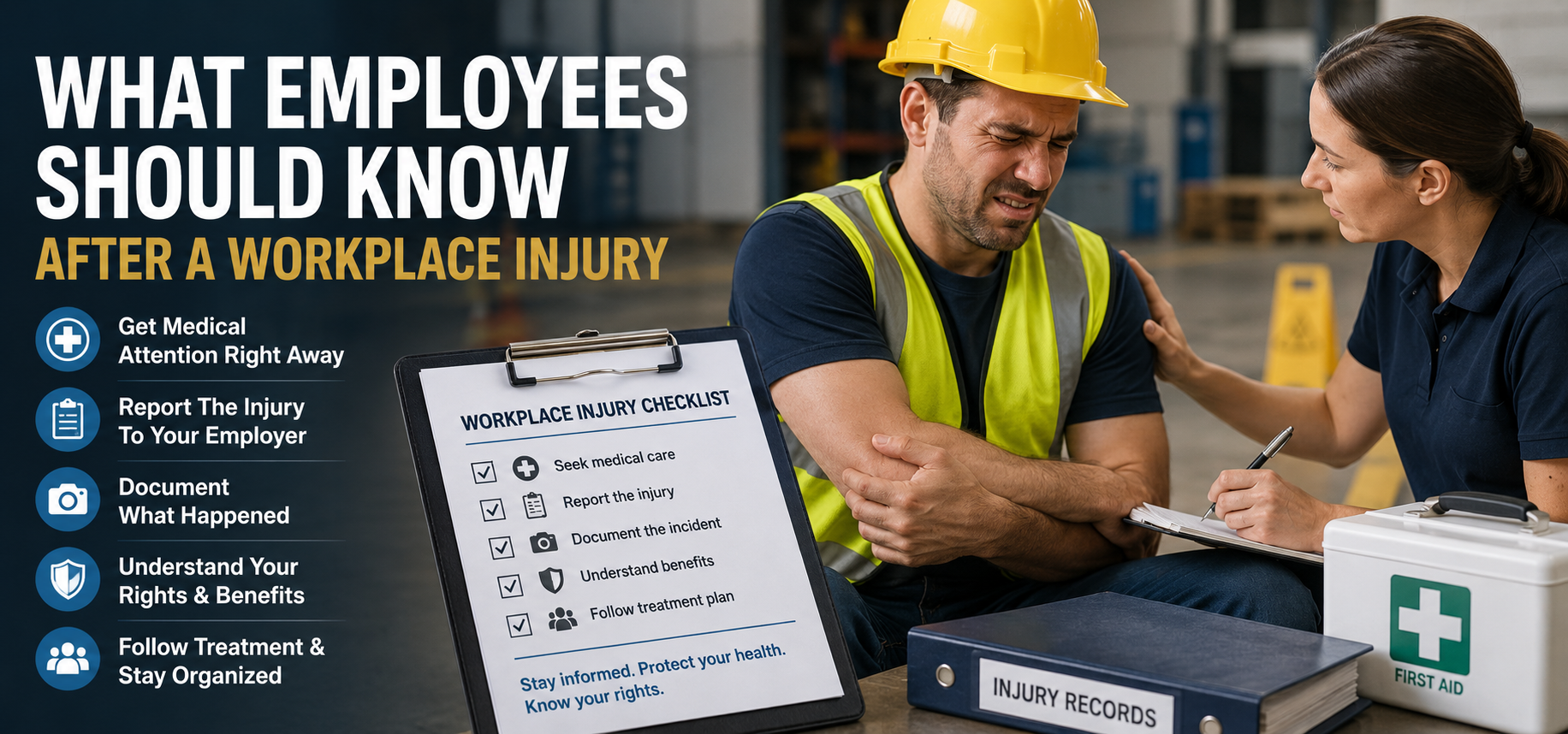
Workplace injuries can happen in almost any setting. An employee might get hurt on a construction site, in a warehouse, at a restaurant, inside an office, while driving for work, or even while working remotely. Some injuries are sudden and obvious, while others develop slowly over time.
What an employee does after getting hurt can affect their health, recovery, documentation, and ability to understand available benefits. While every situation is different, a few practical steps can help workers stay organized and protect themselves during a stressful time.
Get Medical Attention Right Away
The first priority after any workplace injury is medical care. If the injury is serious, emergency treatment may be necessary. Even if the injury seems minor, it is still important to take symptoms seriously.
Some injuries do not feel severe right away. Back strain, soft tissue injuries, repetitive stress issues, head injuries, and joint pain may worsen hours or days later. Getting checked by a medical professional can help identify problems early and create a record of treatment.
Medical documentation can also be important later. Records may show when the injury was evaluated, what symptoms were reported, what treatment was recommended, and whether work restrictions were needed. Employees should keep copies of discharge papers, doctor notes, prescriptions, referrals, and follow-up instructions.
Report The Injury To Your Employer
After seeking urgent medical care, employees should report the injury to their employer as soon as possible. This may mean notifying a supervisor, manager, human resources representative, or another designated person at the company.
Many workplaces have formal procedures for reporting injuries. Some require written incident reports, internal forms, or specific timelines. Waiting too long can create confusion about when the injury happened, where it occurred, or whether it was connected to work.
When reporting the injury, employees should be clear and factual. Include the date, time, location, and general description of what happened. If an incident report is created, it is a good idea to ask for a copy or at least confirm that the report was submitted.
Document What Happened
Good documentation can make the process easier to understand and follow. Employees should write down what happened as soon as they can, while the details are still fresh.
Useful information may include the date and time of the injury, the exact location, the task being performed, any equipment or substances involved, weather or floor conditions, and the names of any witnesses. Photos can also be helpful if there was a spill, broken equipment, unsafe condition, visible injury, or damaged protective gear.
Workers should also save communications related to the injury, including emails, text messages, claim forms, medical records, pay stubs, and notes from conversations with supervisors or insurance representatives. Keeping everything in one folder can help reduce stress if questions come up later.
Understand Workers’ Compensation Basics
Workers’ compensation is a system designed to help employees who are injured or become ill because of their job. Depending on the situation, it may help cover medical treatment, part of lost wages, rehabilitation, and other related benefits. The U.S. Department of Labor’s Office of Workers’ Compensation Programs describes these kinds of benefits as including wage replacement, medical treatment, vocational rehabilitation, and other support for covered workers.
The exact rules vary by state, industry, employer, and employment status. Deadlines, forms, medical provider rules, and benefit amounts can differ widely. That is why employees should not assume that every workplace injury process works the same way.
In many cases, workers’ compensation does not require proving that an employer intentionally caused the injury. However, the injury usually needs to be connected to work duties or the work environment. Employees should pay close attention to reporting requirements and respond promptly to requests for information.
This article is general information, not legal advice. Workers with specific questions should review the rules in their state or speak with a qualified professional.
Be Careful With Statements And Assumptions
After an injury, employees may be asked to explain what happened several times. They may speak with a supervisor, doctor, claims adjuster, or human resources representative. It is important to be honest and consistent.
Workers should avoid guessing about details they do not know. They should also be careful not to minimize symptoms just to seem cooperative. For example, saying “I’m fine” immediately after an accident may not reflect how the injury develops later.
It is acceptable to say that symptoms are still being evaluated or that more information will be available after a medical appointment. Clear, factual descriptions are better than assumptions. If something is uncertain, it is better to say so than to fill in gaps.
Follow The Treatment Plan
Recovery can take time, and following the medical plan is an important part of the process. Employees should attend follow-up appointments, complete recommended therapy, take prescribed medication as directed, and follow any work restrictions.
If a doctor says not to lift heavy objects, stand for long periods, drive, or perform certain tasks, those restrictions should be taken seriously. Ignoring them may worsen the injury and create confusion about recovery. Work restrictions can also matter for workplace records, since OSHA recordkeeping rules address work-related injuries that involve medical treatment, days away from work, restricted work, or transfer to another job.
Workers should keep copies of updated medical notes and provide required work-status information to the appropriate person at their workplace. If symptoms change or treatment is not helping, they should communicate that to their medical provider.
Know When To Seek Additional Guidance
Some workplace injury claims are straightforward. Others become more complicated. Benefits may be delayed, the injury may be disputed, paperwork may be confusing, or an employee may feel pressured to return before they are ready.
Questions can also arise when injuries involve long-term symptoms, permanent restrictions, multiple employers, third-party accidents, or unclear reporting procedures. In these situations, getting additional guidance can help workers better understand the process.
After reporting the injury and seeking medical care, workers may also want to review state-specific legal resources or speak with a workers’ compensation firm such as Waple & Houk to better understand their options if a claim becomes complicated.
The goal is not to turn every injury into a dispute. It is to make sure employees understand their rights, responsibilities, and next steps.
Protect Your Finances During Recovery
A workplace injury can affect more than physical health. Time away from work, medical appointments, transportation costs, and reduced income can put pressure on a household budget.
Employees should track medical bills, mileage to appointments, wage replacement payments, and any out-of-pocket costs related to the injury. It may also help to review essential monthly expenses and avoid unnecessary new debt during recovery.
If income is interrupted, workers may want to contact lenders, landlords, utility providers, or service companies before falling behind. Some may offer temporary hardship options or payment arrangements.
Prepare For Returning To Work
Returning to work should be handled carefully. Employees may need written medical clearance, modified duty, reduced hours, ergonomic adjustments, or temporary restrictions.
Clear communication can help prevent misunderstandings. Workers should understand what tasks they are allowed to perform and what tasks they should avoid. Employers should also be informed of any current restrictions from a medical provider.
Rushing back too soon can slow recovery or increase the risk of reinjury. A safe return should balance the employee’s health, the doctor’s recommendations, and the realities of the workplace.
Stay Organized And Prioritize Recovery
A workplace injury can be overwhelming, but practical steps can make the process easier. Employees should focus on health first, report the injury promptly, document what happened, follow medical advice, and keep careful records.
When the process becomes unclear or complicated, seeking reliable information can help workers make more confident decisions. Staying organized from the beginning gives employees a stronger foundation as they recover and move forward.