











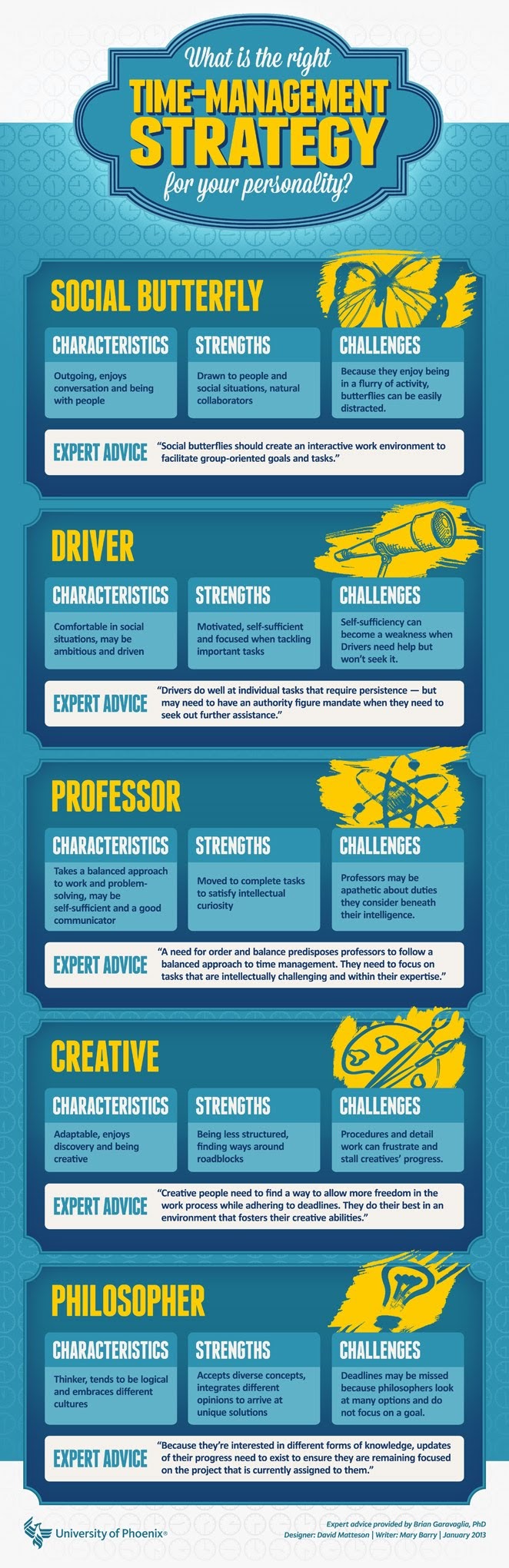
What is the right-time management strategy for your personality? This University of Phoenix infographic offers five informal descriptions, from the social butterfly to the philosopher. Rather than deciding which box defines you, look for a familiar working situation. You might enjoy a lively discussion while planning a project, then need quiet to finish the part you’re responsible for.
Choose a response to the task, not a permanent label
- Name the interruption: If conversations repeatedly break up a writing task, agree a period for focused work and a time to reconnect. The problem may be the arrangement of the day rather than anyone’s personality.
- Make help easier to request: For a task you’re trying to complete independently, decide what missing information would justify asking a colleague. That is more useful than waiting until the deadline to reveal the obstacle.
- Give exploration a stopping point: When considering several options, identify the decision and when it is needed. Record worthwhile alternatives without letting the search for another possibility replace making a choice.
The graphic’s types are conversation prompts, not a validated assessment or a basis for assigning someone work. Preferences can also differ between tasks and circumstances. Try one small adjustment, then ask whether it made the next piece of work easier to complete. If it didn’t, change the arrangement rather than blaming the label. For another set of practical approaches, see Powerful Productivity Techniques.












