










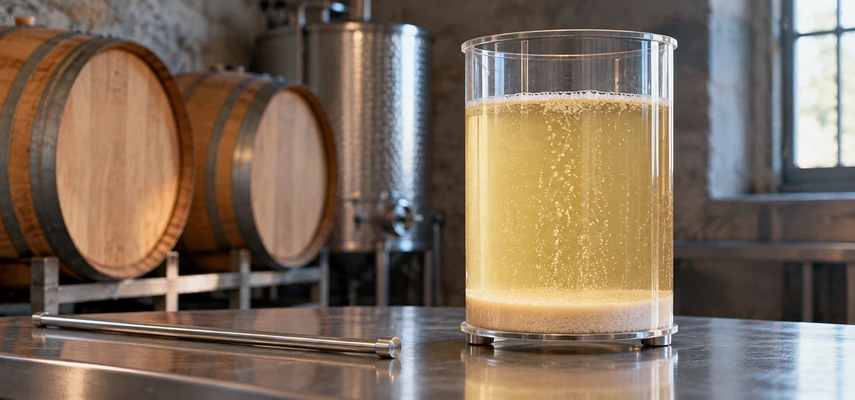

Two white wines made from the same variety can seem barely related. One is brisk and aromatic, with a clean, direct fruit profile. Another feels broader, with savoury detail and a different texture. White winemaking explains much of that difference through decisions about juice, yeast, temperature, vessels and what happens after the sugar has fermented.
There is no single recipe for a serious white wine. Stainless steel does not guarantee simplicity, and a barrel does not guarantee complexity. The useful question is how each decision changes the material and whether that change suits the intended wine. Several modest choices can combine into a substantial stylistic difference.
The official D1 specification connects fermentation choices with production outcomes. This article follows a principally juice-fermented route, while distinguishing skin and whole-fruit processes that belong to other styles. Knowing the boundary helps explain why superficially similar equipment can produce different wines.
White winemaking starts before yeast is added
Pressing and clarification establish the juice that enters fermentation. Gentle handling, deliberate skin contact, retained press fractions and the chosen solids level can all change that starting material. The winemaker must account for those choices before attributing every difference to the yeast or the barrel.
Most familiar white-wine routes separate juice from skins before alcoholic fermentation. However, skin-fermented white grapes can produce amber or orange styles with different phenolic and textural characteristics. White grapes do not make extended skin contact chemically irrelevant; they simply offer a different pigment and constituent profile from red grapes.
Clarification removes selected suspended material, but maximum clarity is not always the target. Solids can affect yeast nutrition and fermentation behaviour as well as aroma. AWRI’s juice-solids resource describes the tradeoff between fermentation performance and sensory outcomes. A suitable solids level depends on the material and the style.
Record the initial composition and condition. Sugar, acidity, pH, temperature and available nutrients influence what follows. A desirable flavour objective cannot substitute for a viable fermentation plan. Equally, obtaining a technically complete fermentation does not by itself establish that the resulting wine has the intended character.
Yeast choice affects performance and aroma
Alcoholic fermentation converts fermentable sugars principally into ethanol and carbon dioxide, with heat and many other products. Yeast strains differ in performance and in their influence on aroma compounds. Selecting a culture is therefore both a process decision and a potential stylistic decision.
Inoculation introduces a chosen yeast culture with known characteristics. The selection should suit the juice and intended conditions, including temperature, sugar level and nutrient demand. It improves control over the starting population but does not remove the need to monitor the ferment or guarantee the same result in every juice.
Spontaneous fermentation relies on microorganisms already associated with the grapes and winery. Populations can change during the process, and the organisms doing the early work need not complete the fermentation. It offers a different approach to microbial development, with uncertainty about timing and potential undesirable metabolites.
AWRI’s yeast-choice account discusses both inoculated and uninoculated options. Neither should be reduced to a quality slogan. A spontaneous ferment is not automatically a pure expression of vineyard geography, while a selected strain does not erase the composition of the grapes.
Nutrition and monitoring make the plan workable
Yeast assimilable nitrogen, or YAN, describes nitrogen available for yeast use rather than the must’s total nitrogen. Demand depends on the yeast and fermentation conditions. A result requires interpretation before deciding whether a supplement is useful; adding more without diagnosis can create another problem.
The AWRI YAN resource links nitrogen with fermentation progress and aroma. A healthy ferment also depends on other factors, so nitrogen is not a universal remedy for slow activity. Evaluate temperature, inhibitors, initial sugar, culture condition and the wider history rather than treating one number as the complete diagnosis.
Track progress and temperature consistently. A steady decline in an appropriate measure is more informative than an occasional glance at bubbles. Carbon dioxide can remain after active fermentation has slowed, so visible gas alone cannot confirm sugar consumption or completion. Laboratory confirmation matters when the intended wine should be dry.
If progress slows unexpectedly, investigate promptly. Waiting until a substantial alcohol concentration and depleted resources make the environment more difficult can complicate recovery. AWRI’s fermentation resources distinguish monitoring and diagnosis from a properly designed restart procedure. An educational comparison should not replace that diagnosis with a generic rescue recipe.
Temperature changes speed and sensory possibilities
Cooler fermentation is often chosen to support a fresh aromatic style. It changes yeast activity and the balance of compounds produced and retained. Excessively cold conditions can slow or hinder a strain that is poorly suited to them. Cooler is therefore a relative decision, not an unlimited route to better aroma.
Warmer conditions can support a different fermentation profile and may suit a broader style. Fermentation generates heat, so the liquid can warm beyond the original plan. Cooling capacity, vessel size and the rate of activity influence how well the producer maintains control. The AWRI temperature resource explains why heat production and yeast performance must be considered together.
Compare a large tank with many small barrels. The units differ in how easily temperature can be measured, adjusted and kept uniform. Small vessels create individual lots that need attention, while a large vessel concentrates volume in one fermentation. The tradeoff includes control, labour and the consequences if something goes wrong.
Avoid memorising a single ideal white-wine temperature. The target depends on the yeast, juice and intended style, and the appropriate range can change during the process. A good recommendation explains why a particular regime is proposed and which observations would require adjustment.
Vessel choice includes more than oak flavour
Stainless steel can provide a relatively neutral, cleanable vessel with useful temperature-control options. It suits many production scales and styles. Its neutrality allows grape and fermentation characteristics to remain prominent, but does not guarantee that the wine will be light-bodied or aromatically simple.
Oak barrels can contribute wood-derived compounds as well as a different environment for fermentation and subsequent contact. Size, age and use affect their contribution. New small barrels generally present different possibilities from large, well-used wooden vessels; the word oak is not a complete specification.
Barrel fermentation also involves filling, monitoring, sampling, cleaning and later handling across numerous units. It can support complexity or useful blending options, while increasing labour and tying up capital. Compare those costs with a sensory contribution the producer actually wants rather than treating expense as proof of quality.
Concrete and other vessels provide further combinations of shape, thermal behaviour, surface and oxygen management. Assess the actual construction and lining rather than assuming the material’s name establishes permeability or flavour. The practical question remains what conditions the wine experiences.
Manage oxygen for the stage of production
Oxygen can support particular yeast needs during active growth, while inappropriate exposure can alter desirable aroma or promote unwanted changes. The stage of fermentation matters. Aerating an active ferment for a defined purpose and leaving finished wine in an unfilled vessel are different operations.
Protective handling can involve managing transfers, vessel fill and suitable sulfur-dioxide use. The effectiveness of sulfur dioxide depends on the wine’s chemistry, including pH, and the forms available after binding. AWRI’s sulfur-dioxide guidance supports measurement-based decisions rather than an assumption that one addition provides lasting protection.
Lees and vessels also interact with oxygen. These interactions help explain why changing several operations at once can make a trial difficult to interpret. If the yeast, vessel, oxygen regime and lees contact all differ, the final sensory difference cannot automatically be assigned to the barrel.
Malolactic conversion can be encouraged or avoided
Malolactic fermentation, commonly shortened to MLF, involves bacteria converting malic acid into lactic acid and carbon dioxide. It is separate from alcoholic fermentation by yeast. It can reduce acidity and change flavour and texture, with the desirability depending on the starting wine and intended balance.
MLF encouragement may involve a suitable bacterial culture and conditions compatible with it. Temperature, pH, alcohol, sulfur dioxide and yeast-bacteria compatibility interact. AWRI’s white-wine MLF fact sheet explains why white wines can provide a challenging environment. Adding bacteria alone does not establish that conversion will finish.
MLF avoidance requires a continuing strategy where retention of malic acidity and a particular flavour profile are desired. Appropriate hygiene, temperature, microbial control and later stabilisation can contribute. A wine that did not undergo MLF in the cellar may still require protection against unwanted activity later.
Butteriness is not an inevitable result of every MLF. Diacetyl and its expression depend on microbial and handling choices, and other aromas can shape its perception. Evaluate actual flavour and acidity rather than identifying a process solely from one descriptor. Completion should be checked analytically where it is part of the production objective.
Lees contact changes texture with risks to manage
Fermentation lees contain yeast cells and other settled material. Over time, cell components can enter the wine, including through autolysis. Contact can alter texture and integration, but its value depends on the condition of the lees, the wine and the duration rather than the mere presence of sediment.
Bâtonnage is stirring that resuspends lees. It changes contact and can alter oxygen exposure during handling. More stirring is not automatically more complexity. AWRI’s lees-contact discussion describes sensory benefits alongside risks such as unwanted sulfur characters and excessive oxidative change.
Lees work need not involve a new oak barrel. Tank-aged wines can also remain on suitable lees, while oak flavour and lees-derived texture are different contributions. Compare the wine as it develops and retain the option to separate it from problematic material. A predetermined long contact period is less useful than evidence that the contact continues to help.
Distinguish whole-fruit and skin-fermentation routes
Extraction and cap management become different questions when white grapes ferment on skins. A floating mass of solids requires an appropriate management plan, whereas a clarified juice ferment has no comparable skin cap. Whole bunch additions introduce stems; whole berries can remain intact after destemming. Neither is synonymous with whole-bunch pressing, which separates juice before fermentation.
Carbonic maceration involves intracellular activity in intact berries under an oxygen-excluding atmosphere. Semi-carbonic maceration combines intact-fruit activity with conventional fermentation in released juice. Whole berry and bunch fermentation can include some intracellular activity without being a fully carbonic process. AWRI’s carbonic account distinguishes these routes, chiefly associated with red winemaking.
Co-fermentation means fermenting different varieties or lots together, rather than blending their finished wines. Its interactions and loss of later blending flexibility need evaluation. Must concentration changes the starting material before fermentation; it is not the same as extracting more skin compounds. These distinctions prevent a white-wine explanation from treating every technique as a compulsory step in one standard process.
Build a coherent style rather than a collection of treatments
For a fresh, fruit-led white, a producer might favour suitable juice separation, protective handling, a compatible yeast and a controlled fermentation, while avoiding MLF. A broader wine might use a different solids level, barrel fermentation, selected MLF and monitored lees contact. These are possible combinations, not mandatory recipes.
Compare the starting acidity, flavour and concentration before recommending the second route. Added texture can support a wine or obscure it, and reduced acidity can improve balance or remove needed freshness. Technical ambition becomes useful when each operation contributes to the intended result at a sustainable cost.
Connect this explanation with red winemaking and grape reception and pressing as linked parts of the same explanation. Trace the relevant growing or cellar decision through to its consequences, and identify the condition that could change the result rather than treating the relationship as automatic.
Original Diploma practice
These original exercises are not official WSET questions and have no official mark allocations.
Question 1: compare two fermentation plans
Compare a neutral tank fermentation with MLF avoided against barrel fermentation with MLF and lees stirring for the same white juice.
Indicative answer points: starting composition; temperature and yeast; wood and oxygen; acidity; texture; monitoring; labour and capital; no guaranteed quality ranking.
Outline answer: The first route can support direct fruit expression and retained malic acidity, provided fermentation and microbial control are suitable. The second introduces different vessel effects, acid conversion and lees handling that may broaden the wine. Whether those changes improve it depends on the starting flavour, acidity and concentration. Compare the resulting balance and costs, and recognise that changing several variables together prevents attributing the entire difference to oak alone.
Question 2: investigate a slow white ferment
A very clear juice fermented cold with an unfamiliar yeast slows unexpectedly. The manager proposes a large nutrient addition. Evaluate the response.
Indicative answer points: verify actual progress; strain temperature suitability; YAN and timing; solids and yeast needs; inhibitors and initial sugar; diagnosis before treatment; monitored recovery.
Outline answer: Measure progress and review the fermentation history before assuming nutrient deficiency. The chosen temperature may be unsuitable, the juice may offer limited resources, or another inhibitor may be involved. Interpret YAN in context, including when it was measured and how far fermentation has proceeded. A large indiscriminate addition may fail to address the cause. Design any intervention or restart around the diagnosis and check that sugar consumption resumes, rather than judging success from renewed bubbling alone.
Question 3: evaluate more lees stirring
A producer doubles stirring because another winery’s wine seemed richer. What information is needed before adopting the change?
Indicative answer points: different starting wines; lees condition; existing contact; oxygen and vessel; sulfur or oxidative risks; sensory trials; costs and timing.
Outline answer: Richness in another wine could reflect grapes, alcohol, vessel, MLF or several other choices. Assess whether the present wine needs a textural change and whether its lees remain suitable. Compare a controlled stirring treatment with the existing practice, monitoring aroma, freshness, texture and protection. More contact and handling can bring unwanted effects as well as benefits. Adopt the change only if the resulting balance and operational cost fit the producer’s objective.











