










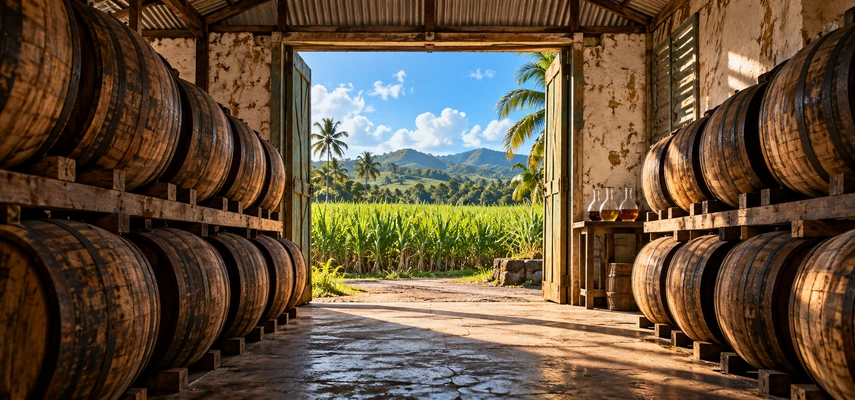

Rum regions are useful when a place name leads to a production question. Martinique might prompt you to ask about fresh cane juice. Jamaica might send you towards fermentation and esters. Guyana opens a conversation about an unusually varied collection of stills. None of those starting points is a promise that every bottle from the country tastes identical.
The approved study map extends beyond Caribbean islands into Central America and South America. Geography matters, but so do individual distilleries, brand owners, maturation sites and bottlers. A bottle may have a more complicated itinerary than its front label first suggests.
Use this lesson to attach a few important traditions to their locations, then test those traditions against actual production information. The aim is a map with reasons behind it, rather than a set of national adjectives memorised in isolation.
Read rum regions through production choices
Start with four questions: what form of cane was fermented, what character did fermentation develop, how was the spirit distilled, and what happened afterwards? The answers connect geography to the production chain you already know. They also make comparisons much more precise than light island versus dark island.
Historical groupings based on French, Spanish and British influence can provide context, but they have limits. Language does not operate a still. A modern producer can use equipment, fermentation practices or casks that complicate a broad inherited category.
Colour provides even less certainty. Charcoal filtration can make an aged rum clear, and caramel can deepen colour where permitted. An oak-aged sample from one country may be darker than a much older sample from another because the cask histories and finishing choices differ.
Martinique and Guadeloupe: the cane-juice connection
Rhum agricole is strongly associated with fresh cane juice and the French Caribbean. In Martinique, qualifying AOC production follows a specific origin and production framework. Do not apply that Martinique appellation automatically to every cane-juice rum made elsewhere.
Clément’s production account supplies a concrete example: fermented cane juice is distilled in a single-column system at a moderate strength. This route can retain an expressive herbal, grassy and fruity character. It is an especially useful counterexample to the claim that column distillation always makes near-neutral spirit.
Guadeloupe also has an important cane-juice rhum tradition. Its technical centre distinguishes juice-based agricole production from molasses-based production. That distinction prevents a second mistake: assuming that every rum made within a French-speaking territory must start with juice.
Unaged expressions make fermentation and distillation character particularly visible. Oak-aged examples add wood and maturation effects. Agricole therefore identifies something more useful than a colour category; both clear and brown expressions can belong to a cane-juice tradition.
Cuba and Puerto Rico: lightness is constructed
Cuba is a key reference for lighter rum traditions involving molasses, column distillation, maturation and blending. Light does not mean untouched by wood or entirely stripped of character. A blender can combine components with different aromatic weights to achieve the desired balance.
Havana Club describes molasses-derived aguardiente as a starting point for its Cuban rums. In this context, aguardiente is part of a specific rum-production story, not permission to treat every spirit bearing that Spanish word as the same product.
Puerto Rico is another important source of relatively light column-distilled rum styles. Controlled fermentation, rectification, oak maturation, blending and filtration can help build that profile. A pale example can therefore reflect several deliberate interventions rather than the absence of production work.
For comparison, ask whether light describes aroma intensity, body or the role a rum plays in a blend. It should not be used as a lazy synonym for young, cheap or low in alcohol. An aged rum can remain comparatively restrained while still showing wood-derived vanilla and spice.
Jamaica: fermentation can turn up the volume
Jamaica is particularly associated with characterful, ester-rich rum and pot-distillation traditions. Fermentation conditions and the selection of distillate can create pungent tropical-fruit impressions. Different marks allow substantial variation even before casks are considered.
Hampden describes extended fermentation with ambient yeasts and double-retort copper pot stills. This is a producer example with a clear cause-and-effect connection: fermentation develops a distinctive aromatic foundation, and distillation retains a deliberately expressive result.
Do not convert that example into a rule that every Jamaican rum has maximum ester intensity, uses identical fermentation or is entirely pot distilled. Nor does a powerful fruity aroma prove added fruit flavour. Fermentation-derived aroma is different from flavouring the finished rum with pineapple or banana.
In a blend, a relatively small amount of a heavy mark can make a noticeable contribution. That helps explain why highly characterful Jamaican components can appear in blended rums whose finished style is much less forceful than the individual component.
Barbados: contrasting distillates can work together
Barbados offers a valuable reference for blending pot- and column-distilled rum. The pot component can contribute weight and intensity, while a lighter column component changes the overall balance. Oak maturation then adds another layer of decisions rather than replacing the significance of the original distillates.
Mount Gay’s FAQ describes molasses fermentation and pot and/or column distillation. Its range demonstrates why a national tradition should leave room for individual products: a producer can offer a blend as well as releases highlighting a particular still type.
Useful broad descriptors might include balanced fruit, spice and wood, but they remain expectations rather than compulsory tasting answers. The more informative explanation identifies the components, casks and strength of the specific bottle being discussed.
Guyana: still identity is particularly revealing
Guyana, on South America’s mainland, is closely associated with Demerara rum. The name belongs to a producing region and tradition; it should not be used as a generic label for any dark rum that happens to smell of brown sugar.
Demerara Distillers’ still account includes metal columns, wooden pot equipment and a wooden Coffey still. This diversity can supply different marks and flavour profiles within one modern production operation. Guyanese rum is therefore a poor fit for the oversimplification that one country equals one still type.
Wooden stills are not maturation casks. Their construction and operation belong to distillation; later barrel ageing is a separate stage. Keeping those stages apart avoids the misleading explanation that a rum was aged in a still to acquire its identity.
Venezuela and Colombia: mainland traditions deserve attention
Venezuela is an important rum-producing country with a strong presence of oak-aged and blended styles. Molasses is an important raw material, and column production is significant, but national identity should not be used to exclude more characterful components or different equipment choices.
The study connection is between lighter and heavier distillates, oak influence and blending. Do not infer added sugar solely from a sweet-smelling profile or assume every Venezuelan expression uses precisely the same finishing practices. Those require product-specific evidence.
Colombia also belongs on the map. Fábrica de Licores de Antioquia identifies Ron Medellín as one of its rum traditions. Oak-aged styles illustrate the importance of maturation and blending alongside the distillation stage.
Keep Colombian rum separate from anise-flavoured aguardiente, another prominent Colombian spirit. A shared country of origin does not make the raw materials, flavouring method or category identical. This is exactly the sort of distinction a production-based study map helps preserve.
Panama, Nicaragua and Guatemala: three Central American entries
Panama has an established rum industry, including Ron Abuelo from Varela Hermanos. Lighter distillates and oak-aged blends are useful study reference points. The producer’s cask-finish and different-wood releases also show how much can vary within one house.
Nicaragua is associated with Flor de Caña. Its production description emphasises Bourbon-barrel ageing near San Cristóbal. Use the warehouse conditions and cask history to explain maturation; do not claim that volcanic scenery alone dictates a precise flavour in the finished glass.
Guatemala adds an important cane-syrup connection to the regional picture. Concentrated cane juice is often described as cane honey. It should be distinguished from molasses and from bee honey, as well as from fresh juice used without concentration.
Zacapa’s Sistema Solera account describes selected casks and repeated blending decisions. A solera-style presentation does not justify treating a prominent number as proof that every drop has that age. Read the producer’s explanation and the applicable label information instead.
Blended rums and non-distillery bottlings
A rum brand need not own the stills that made its contents. A non-distillery bottler can select purchased rum, arrange maturation, blend components and bottle under its own label. Distillation origin and bottling location answer different questions.
E&A Scheer provides a concrete example of a sourcing and blending specialist that is not a distillery. Its role helps explain how brands can obtain consistent blends or selected casks from different producing origins. Scheer itself distinguishes this work from operating a bottling service.
A single-origin rum, a blend of several countries and a single-cask bottling can all be legitimate presentations. Look for clear disclosure of origin, age meaning, maturation location, still or mark information and finishing where available. None of the three formats guarantees quality by itself.
What to remember
Connect Martinique and Guadeloupe with cane-juice traditions; Cuba and Puerto Rico with important lighter styles; Jamaica with expressive fermentation and pot-rum traditions; Barbados with pot/column blending; and Guyana with diverse still identities. Keep Venezuela, Colombia, Panama, Nicaragua and Guatemala on the same wider study map.
Treat every connection as a starting point for production questions. Then distinguish the distiller, blender and bottler. A place name becomes genuinely useful when it helps explain what happened to the cane before the rum reached the glass.
Continue your study
To revisit the mechanisms behind light and heavy marks, read How Rum Is Made: Sugar Cane, Molasses, Fermentation, and Distillation. To compare cachaça’s cane-juice foundation, read Cachaça Explained: Brazil’s Distinctive Sugar Cane Spirit. To challenge rum colour shortcuts through comparison, read How to Taste and Compare Spirits: A WSET Level 2 Revision Guide.
Knowledge check: 10 original practice questions
Independent TFE questions, not official WSET examination items. Choose one answer per question; explanations follow separately.
1. Which country is associated with Flor de Caña?
- Guyana
- Guadeloupe
- Nicaragua
- Guatemala
2. Which pair supplies important references for lighter column-rum traditions?
- Mexico and Ireland
- Cuba and Puerto Rico
- Jamaica and Cognac
- Scotland and Guyana
3. What should be checked on a non-distillery bottling?
- Whether all blends are prohibited
- Distillation origin and the bottler’s actual role
- Whether every cask was made at the office
- Only the bottler’s office country
4. Why is AOC Martinique not a generic name for all cane-juice rum?
- It has a specific origin and production framework
- It is a compulsory ageing colour
- It applies to any molasses spirit
- It simply means white rum
5. Which distinction matters in Colombia?
- Rum and anise-flavoured aguardiente are different categories
- All rum is made from grapes
- Rum must taste of anise
- All Colombian spirits are rum
6. What is an important Barbados production reference?
- Blending pot- and column-distilled components
- Distillation only from agave
- Prohibition of oak maturation
- Mandatory use of only fresh juice
7. In Guatemalan rum discussion, cane honey can mean what?
- Concentrated cane juice
- Always molasses after crystallisation
- A finished grape brandy
- Necessarily bee honey
8. Why is Guyana useful when studying still diversity?
- All rum there is identical
- It includes metal columns and heritage wooden equipment
- It prohibits every column still
- Wooden stills are ageing barrels
9. Hampden is a useful Jamaican example of which connection?
- Always neutral column spirit
- No fermentation before distillation
- Extended fermentation and characterful pot-distilled rum
- Only fresh grape juice
10. Which pair is especially associated with French Caribbean cane-juice rhum traditions?
- Martinique and Guadeloupe
- Venezuela and Colombia
- Panama and Nicaragua
- Cuba and Puerto Rico
Answers and explanations
1. C — Nicaragua. Flor de Caña is a Nicaraguan rum reference, while its actual cask and production disclosures explain particular products. Mapping: LO2.
2. B — Cuba and Puerto Rico. Cuba and Puerto Rico are important lighter-style references, while individual fermentation, ageing and blending still matter. Mapping: LO2.
3. B — Distillation origin and the bottler’s actual role. A bottler can source and select rum from elsewhere; origin, maturation, blending and bottling are separate pieces of information. Mapping: LO2.
4. A — It has a specific origin and production framework. Cane juice alone does not confer Martinique origin or compliance with its appellation requirements. Mapping: LO2.
5. A — Rum and anise-flavoured aguardiente are different categories. National origin alone does not establish category; Colombian rum should not be conflated with anise-flavoured aguardiente. Mapping: LO2.
6. A — Blending pot- and column-distilled components. Pot and column components can contribute contrasting character to a Barbados blend, with variation among products. Mapping: LO2.
7. A — Concentrated cane juice. Cane honey is a term used for syrup and should not automatically be equated with bee honey or molasses. Mapping: LO2.
8. B — It includes metal columns and heritage wooden equipment. Demerara Distillers describes varied metal and wooden equipment capable of producing distinct marks. Mapping: LO2.
9. C — Extended fermentation and characterful pot-distilled rum. Its declared fermentation and double-retort pot production help explain its ester-rich character without defining every Jamaican rum. Mapping: LO2.
10. A — Martinique and Guadeloupe. Martinique and Guadeloupe have important rhum agricole traditions; cane juice is the relevant production connection. Mapping: LO2.











