










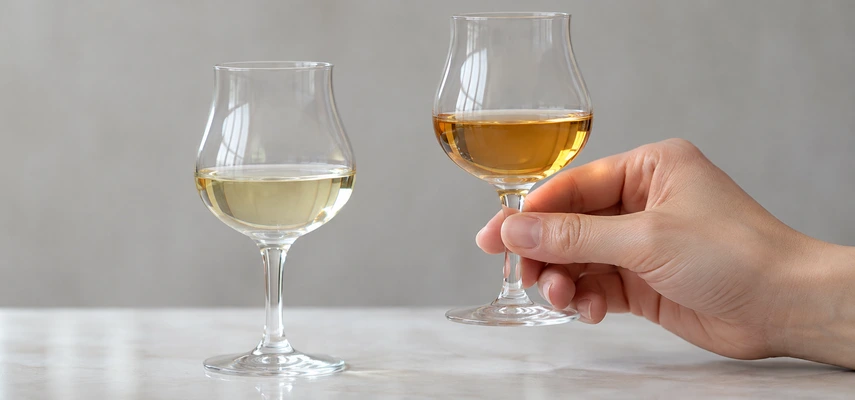

Sake quality becomes easier to discuss when a verdict has to earn its place. Saying that a sample is excellent tells the reader your conclusion. Explaining how its flavors develop, how its components fit together and what remains after a sip gives them something they can assess.
The task isn’t to make every attractive sake sound outstanding. It’s to distinguish degrees of achievement through evidence. A clean, straightforward bottle can do its job well without the depth of a more ambitious example. Equally, technical prestige doesn’t repair a disjointed palate.
What sake quality assessment asks you to do
The official Level 3 specification requires a quality level with supporting reasons. Use the Level 3 tasting reference for its exact conclusion vocabulary. These exercises are independent teaching cases, not official benchmark answers or a replacement for tutor calibration.
Make a complete descriptive note before selecting the conclusion. Then look for the strongest positive evidence and any meaningful limitations. This order discourages the common habit of choosing an impressive grade first and decorating it with general praise afterward.
The framework here considers balance, length, intensity and complexity. These are useful questions about the sample rather than a numerical formula. Four favorable adjectives don’t automatically add up to a particular level, and a style doesn’t need maximal weight or aroma to succeed.
Balance means relationships between components
Ask whether sweetness, acidity, umami, alcohol and flavor work together. A sweet sample may have sufficient freshness to feel lively; a dry sample may feel complete through savory depth and a clean finish. Neither balance requires equal numerical levels on every scale.
Describe the interaction. For instance, gentle acidity keeps a rounded sweet palate from feeling heavy, while integrated alcohol adds warmth without overwhelming delicate fruit. That statement explains a relationship. Merely calling the sake smooth doesn’t reveal which parts fit or why.
Notice domination too. If alcohol heat obscures flavor or bitterness outlasts all attractive character, record the limitation plainly. Consider service conditions before treating a muted aroma or unusual texture as intrinsic: an excessively cold sample may need an appropriate, controlled reassessment.
Length concerns what persists attractively
After the sip, attend to the remaining flavors and sensations. A long continuation of fruit, cereal and savory detail can support quality. A lingering burn without attractive flavor isn’t equivalent evidence, even if its physical sensation lasts a surprisingly long time.
Use the official finish scale for the description, then explain the quality implication in words. A refreshing, relatively brief finish can be appropriate in a simple style. It may still limit the argument for the highest level compared with a similarly balanced, more persistent sample.
Keep the observation proportional. You don’t need to invent a stopwatch threshold for every category. Instead, compare samples under consistent conditions and ask whether flavor fades quickly, holds its character or develops further. A specific description is more useful than unsupported precision.
Intensity and complexity answer different questions
Intensity concerns strength of expression. Complexity concerns distinguishable interest and development. A loud single pear-like note can be intense yet simple. A quieter sample may reveal fruit, cereal and delicate savory detail across nose, palate and finish without demanding a raised voice.
Avoid counting synonyms as separate layers. Apple, green apple and fresh apple may describe one coherent impression rather than three independent dimensions. On the other hand, distinguishable fruit, floral and mature nutty characteristics can provide a stronger basis for discussing breadth when actually perceived.
The JSS brewing explanation also cautions against treating rice polishing as a direct quality ranking. Production choices help explain style. They don’t substitute for assessing how successfully that style appears in the glass.
Practical exercise 1: compare two clean, simple samples
Arrange two sound straightforward sakes at comparable temperatures and hide the labels. Complete their descriptions independently. Compare balance and finish before discussing the identities. Don’t reward one merely because its category or packaging looks more expensive after the reveal.
Hypothetical sample A has clean cereal and pear-like character, integrated moderate alcohol and a short but pleasant finish. Sample B has similar simplicity but a slightly longer continuation of flavor and better integration between sweetness and freshness. Both are sound; B offers stronger positive evidence.
Model reasoning: A could reasonably support a good conclusion in this teaching case, while B may support very good if its persistence and definition are convincing. The exact boundary needs tutor calibration with actual samples. The exercise is about the evidence separating them, not memorizing those assignments.
Review question: can you name the feature that makes B stronger without mentioning its price? If your answer is only that it tastes premium, return to the notes. Identify a structural relationship or a difference in attractive persistence that another taster could check.
Practical exercise 2: compare power with precision
Select two aromatic examples that differ in palate development. Score neither until both notes are complete. This comparison is particularly useful when a pronounced nose tempts you to make the quality decision before taking the first sip.
Hypothetical sample C begins with pronounced tropical fruit but becomes hot and brief. Sample D has less forceful fruit and blossom, integrated texture and a long, clearly defined continuation. C’s initial impact is positive evidence of intensity, but its limitations matter; D offers a more coherent quality argument.
Model reasoning: D’s balance and persistence support a higher conclusion than C in this case. Avoid claiming that restraint is always superior, because a powerful sample could also have integration and length. The point is to judge the complete performance rather than one dramatic moment.
Review question: underline each positive claim in your conclusion and match it to a descriptive observation. Then do the same for each criticism. Unsupported claims should prompt a careful retaste or a more modest statement, rather than an extra impressive descriptor.
Practical exercise 3: judge mature sake in context
Use an intentionally matured sake alongside a younger contrasting sample. The NRIB guide provides background on tasting and maturity. Darker color and developed aromas require context; they don’t automatically indicate damage or excellence.
Hypothetical mature sample E combines dried fruit, nuts and savory notes with integrated alcohol and a long attractive finish. It offers several coherent dimensions. Sample F is dominated by stale harshness, with little attractive flavor remaining. Calling both complex because both are old would miss the important difference.
Model reasoning: E could support an outstanding conclusion if the complete actual note justifies exceptional balance, definition, development and persistence. F needs a condition discussion before a favorable quality argument. Age is history; successful integration is an observation. Don’t allow the first to stand in for the second.
Review question: which developed characteristics remain attractive, and what evidence distinguishes them from deterioration? Record uncertainty if condition is ambiguous. A diagnosis based on one isolated aroma can be less reliable than a coherent account of the whole sample.
Practical exercise 4: separate preference from achievement
Compare a dry savory sake with a sweet lower-alcohol example. First state which you personally prefer, in a separate private note. Then assess each against the same questions about integration, persistence and development. This makes personal preference visible rather than letting it quietly become the marking scheme.
Hypothetical sample G is dry, firm and savory with a clean sustained finish. Sample H is sweet, rounded and fresh with gentle alcohol and clear fruit. Either may be successful in its intended expression. Sweetness alone doesn’t lower quality, and dryness doesn’t make an automatic claim to seriousness.
Model reasoning: support the conclusion for each sample independently. You can prefer G while recognizing stronger length in H, or prefer H while finding G more complex. Professional assessment becomes useful when it can explain achievement even outside the assessor’s usual drinking choices.
Review question: replace personal words such as boring or delicious with observations and relationships. This doesn’t require joyless prose. It simply makes the quality judgment intelligible to someone whose preferences differ from yours.
Build a defensible concluding paragraph
Start with the selected quality level, then give the strongest supporting reasons. Include a limitation when it materially explains why the sake doesn’t reach a higher level. Two or three precise sentences often communicate more than an enthusiastic paragraph repeating the word balanced.
For example, a good sample might have clean, clearly defined cereal and pear character with integrated alcohol, but limited development and a relatively brief finish. The positive evidence supports success, while the limitations explain the ceiling. This is an original model of reasoning, not a compulsory official wording.
After a tutor-led comparison, record the disagreement that taught you most. Perhaps you mistook alcoholic persistence for length or assumed every mature aroma was a fault. Turn that into a focused retasting objective. Calibration improves through specific corrections, not by simply tasting more bottles without reviewing the notes.
Quality reasoning rests on the observations developed in systematic tasting. Keep it separate from production identification, then test the requested conclusion under the timed practice framework.
One-page revision summary
State a quality level and support it with observations. Explain balance as a relationship, distinguish attractive length from lingering heat, and separate intensity from complexity. Practice clean simplicity, aromatic power, maturity and contrasting sweetness levels. Keep prestige and preference visible but separate from the evidence, and use tutor feedback to calibrate close judgments.
Knowledge check: 10 original practice questions
Independent TFE questions, not official WSET examination items. Choose one answer per question; explanations follow separately.
1. A sample has a pronounced pear aroma but little development. What follows?
2. Which claim needs correction?
3. Why avoid three apple synonyms as proof of complexity?
4. Which best explains balance?
5. What should precede the quality conclusion?
6. What is a useful limitation in a conclusion?
7. Two tasters disagree between adjacent levels. What helps most?
8. Why compare mature samples in context?
9. Which supports a positive length argument?
10. Which comparison separates preference from assessment?
Answers and explanations
1. B — Intensity alone does not demonstrate complexity.. The strength of one impression differs from the number and development of distinguishable characteristics. Mapping: Unit 2 LO1.
2. C — Daiginjo is automatically outstanding.. Category requirements do not guarantee the quality of the actual bottle or its condition. Mapping: Unit 2 LO1.
3. C — They may describe one impression rather than distinct layers.. Breadth and development need distinguishable evidence rather than a long list of similar words. Mapping: Unit 2 LO1.
4. A — Acidity refreshes a rounded sweet palate without overwhelming its flavor.. The relationship between components explains why the sample feels integrated. Mapping: Unit 2 LO1.
5. D — A complete sensory description.. A description provides the observations from which a defensible conclusion can be drawn. Mapping: Unit 2 LO1.
6. A — Clean flavors fade quickly and show little development.. Specific sensory limitations help explain why a successful sake may not justify a higher quality level. Mapping: Unit 2 LO1.
7. D — Comparing supporting observations with tutor calibration.. Evidence-based discussion clarifies the boundary better than prestige or automatic generosity. Mapping: Unit 2 LO1.
8. B — Development can be intended; condition still needs assessment.. Intentional development and deterioration require distinct judgments based on the complete sample. Mapping: Unit 2 LO1.
9. C — Attractive flavors continuing after the sip.. Quality reasoning should distinguish attractive flavor persistence from an unpleasant lingering sensation. Mapping: Unit 2 LO1.
10. B — Both dry and sweet samples are evaluated for integration and persistence.. Different expressions can succeed, so preference should not replace a consistent assessment method. Mapping: Unit 2 LO1.












