










The sake exam rewards connected understanding: what the brewer changes, how that change works and what it can mean in the glass. Revision becomes
Continue ReadingWSET Level 3 Blind Tasting Practice: Recognizing Sake Production Techniques
Blind tasting sake asks you to connect what you perceive with a plausible production explanation. The useful question isn't whether you can perfor
Continue ReadingHow to Assess Sake Quality: Balance, Complexity, and Evidence
Sake quality becomes easier to discuss when a verdict has to earn its place. Saying that a sample is excellent tells the reader your conclusion. E
Continue ReadingThe WSET Level 3 Systematic Approach to Tasting Sake Explained

Tasting sake systematically means giving each sample a fair chance to tell you what it is like. A consistent order reduces omissions and makes com
Continue ReadingWhy Japanese Sake Regions Taste Different: Rice, Water, Climate, and Brewing Traditions
Why do sake regions taste different when brewers across Japan can obtain similar rice, yeast and equipment? The answer involves both regional reso
Continue ReadingHow to Understand and Describe Sake: A WSET Level 1 Beginner’s Guide
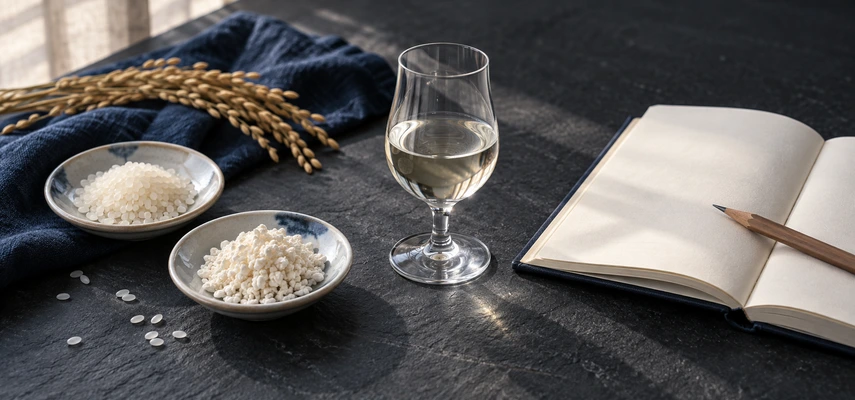
A grape arrives with sugar ready for yeast. A rice grain arrives with a problem: its energy is mostly locked in starch. To understand and describe
Continue ReadingHow to Understand and Evaluate Sake: The WSET Level 2 Framework

How can a grain that tastes mostly of starch become a drink that suggests melon, steamed rice or roasted nuts? To understand and evaluate sake, fo
Continue Reading








