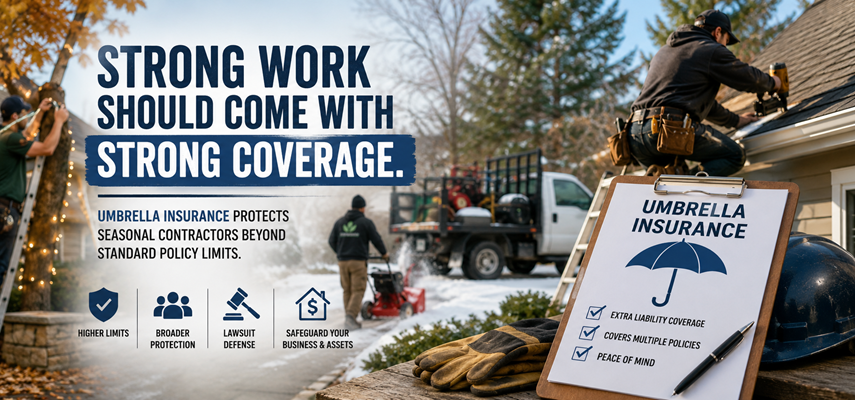
Seasonal work comes with its own rhythm. You take on projects for a few months, hustle hard, and then move on. But the liability that follows a job doesn’t always disappear with the season. One accident, one lawsuit, one claim that exceeds your standard policy limits, and you could face financial exposure that lingers long after the work is done. That’s exactly why more seasonal contractors are turning to umbrella insurance as a smart layer of protection. If you rely on seasonal contracts to earn a living, this coverage deserves a serious look.
Why Seasonal Contractors Face Unique Liability Risks
Seasonal contractors operate in a compressed window of time, which means more pressure, faster turnaround, and sometimes less room for caution. Landscapers, roofers, snow removal crews, and holiday lighting installers all share a common thread: they work in high-exposure environments with relatively short project cycles.
Unlike year-round contractors who spread their risk across a longer stretch of work, seasonal contractors often take on multiple jobs in quick succession. As a result, the chances of an incident, whether it’s property damage, a client injury, or equipment-related liability, stack up faster than you might expect.
The Gap Between Standard Coverage and Real-World Claims
Most seasonal contractors carry general liability insurance, and that’s a solid start. But standard policies come with limits. A single serious claim, such as a lawsuit from a client whose property sustained major damage or a third party injured during your work, can easily exceed a $1 million policy. At that point, you’re personally responsible for the difference. Contractor umbrella insurance exists specifically to bridge that gap and protect your personal and business assets when a claim goes beyond what your base policy covers.
Why Short-Term Work Doesn’t Mean Short-Term Risk
Here’s something a lot of seasonal contractors overlook: your liability exposure doesn’t end the day the job wraps up. A deck you built in the summer could fail the following spring. A landscape drainage project completed in the fall could lead to flooding complaints months later. Lawsuits have a way of arriving long after the work is finished, which means the coverage you carried during that season still needs to be strong enough to protect you retroactively.
What Umbrella Insurance Covers for Contractors
Contractor umbrella insurance acts as an extra layer of protection that sits above your existing liability policies. It doesn’t replace your general liability or commercial auto coverage. Instead, it kicks in after those policies reach their limits.
For seasonal contractors, this is particularly useful. You may carry multiple underlying policies, including general liability, auto, and workers’ compensation. Umbrella coverage ties them together under one higher ceiling. So if a claim involves both a vehicle accident and property damage, your umbrella policy can cover the excess across both situations rather than leaving you exposed on either front.
How It Works on Top of Existing Policies
Think of your existing policies as a first line of defense. Your general liability policy might cover up to $1 million per occurrence. If a lawsuit results in a $2.5 million judgment, your base policy pays the first million, and your umbrella policy covers the remaining $1.5 million, up to its own limit.
One thing worth noting: umbrella policies typically require that you maintain certain minimum limits on your underlying coverage. Before you purchase a policy, review what minimums your insurer expects. This keeps the coverage ladder intact and avoids gaps that could leave you partially unprotected.
Key Benefits of Umbrella Coverage for Seasonal Work
The most obvious benefit is higher coverage limits, but that’s just the beginning. Umbrella policies also tend to cover certain claims that your underlying policies might exclude or limit. Depending on the policy, this can include personal injury claims like defamation or wrongful entry, which aren’t always part of a standard general liability policy.
For seasonal contractors, this broader coverage is genuinely valuable. You interact with a lot of different clients, property owners, and bystanders during peak season. More interactions mean more opportunities for something unexpected to happen. A wider safety net means you don’t have to rely on a narrow set of covered scenarios.
Plus, umbrella insurance is often surprisingly affordable relative to the amount of coverage you get. A $1 million to $5 million umbrella policy can cost a few hundred dollars annually in many cases, depending on your industry and risk profile. That cost-to-coverage ratio is hard to ignore, especially for contractors who want strong protection without dramatically higher premiums on every individual policy.
How Much Umbrella Coverage Do Seasonal Contractors Actually Need?
There’s no single answer that fits every contractor, but a few factors can point you in the right direction. Start by considering the nature of your work. A solo contractor who does residential holiday lighting has a different risk profile than a crew of roofers working on commercial properties. The higher the stakes of the work, the more coverage you should seriously consider.
Next, think about your assets. Umbrella insurance doesn’t just protect your business; it also shields your personal assets if a judgment exceeds your business coverage. Your home, savings, and future earnings can all be at risk in a major lawsuit. A coverage amount that roughly matches or exceeds your total personal and business assets is a reasonable baseline for most seasonal contractors.
Finally, consider the types of contracts you sign. Some clients, particularly commercial ones, may require contractors to carry a minimum level of umbrella coverage before they’ll hire you. In that case, the contract itself tells you the floor, and you can decide from there whether additional coverage makes sense.
Tips for Securing the Best Umbrella Policy as a Seasonal Contractor
Start by reviewing your current underlying policies before you shop for umbrella coverage. Know your existing limits, coverage types, and any exclusions. This gives you a clear picture of where your protection currently stands and what gaps need to be filled.
Work with an insurance professional who has direct experience with contractors. Not all umbrella policies are created equal, and the specific language in your policy matters a great deal. Someone who understands contractor liability can help you identify coverage nuances that a general insurance agent might miss.
Also, don’t set your umbrella coverage and forget it. Your risk profile changes from season to season. If you expand your team, take on larger contracts, or move into a new type of seasonal work, revisit your policy. Coverage that made sense two years ago may not reflect the scale of your current operations. An annual review keeps your protection aligned with the reality of your business.
Conclusion
Seasonal work doesn’t come with a reduced risk of liability. In fact, the compressed timelines and high-activity nature of seasonal contracting can increase your exposure, not reduce it. Umbrella insurance gives you the coverage headroom to handle serious claims without putting your business or personal finances on the line. For seasonal contractors who want to protect what they’ve built, adding this layer of coverage is one of the most practical decisions you can make.