










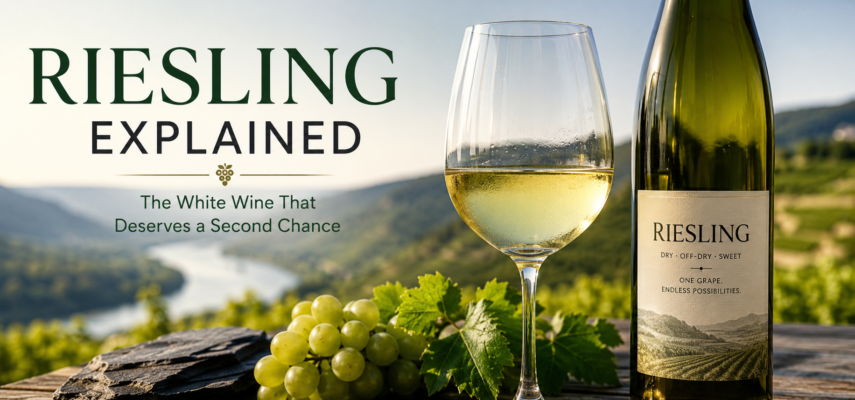
Riesling may be the most misunderstood white wine in the world.
For many casual drinkers, the word “Riesling” immediately means one thing: sweet. That reputation is not entirely wrong, because Riesling can make some of the greatest sweet wines on earth. But it is also incomplete. Riesling can be bone-dry, lightly sweet, sparkling, intensely mineral, floral, citrusy, age-worthy, affordable, serious, playful, and incredibly food-friendly.
In other words, Riesling is not one style of wine. It is a grape with a wide emotional range.
It can be delicate and refreshing. It can be powerful and complex. It can taste like lime, green apple, peach, honey, flowers, wet stone, or sometimes even a slightly smoky, petrol-like aroma that serious Riesling lovers often prize in aged examples. What connects the best Rieslings is not sweetness. It is acidity, purity, and clarity.
Riesling is one of the great white wine grapes because it does something few wines do well: it can be intensely flavorful without feeling heavy.
What Is Riesling?
Riesling is a white grape variety most closely associated with Germany, particularly regions such as the Mosel, Rheingau, Rheinhessen, and Pfalz. The grape is believed to have originated in the Rhine region, and it has been documented in Germany for centuries.
Unlike Chardonnay, which is often shaped by oak, butteriness, and winemaking choices, Riesling is usually about the grape and the place. It is rarely heavily oaked, and many examples are fermented in stainless steel or neutral vessels to preserve freshness and aroma. That makes Riesling one of the clearest “terroir” grapes in the wine world: it often tastes very specifically like where it was grown.
A Riesling from Germany’s Mosel might be light, delicate, floral, and electric with acidity. A Riesling from Alsace in France may be fuller-bodied, drier, and more powerful. Australian Riesling, especially from Clare Valley or Eden Valley, often shows intense lime, citrus, and floral notes.
The same grape can feel completely different depending on climate, soil, producer, and style.
What Does Riesling Taste Like?
Riesling is usually aromatic, meaning you can smell a lot before you even taste it. Common aromas and flavors include:
Lime, lemon, green apple, peach, apricot, pear, orange blossom, jasmine, honey, ginger, slate, wet stone, and sometimes petrol or kerosene-like notes in aged bottles.
That last note sounds strange, but it is one of Riesling’s famous signatures. As some Rieslings age, they can develop a smoky, waxy, petrol-like aroma connected to a compound known as TDN. In small amounts, many wine lovers consider it part of the grape’s charm.
Young Riesling is often bright, crisp, and fruit-driven. Older Riesling can become more honeyed, smoky, savory, and layered.
The most important feature, though, is acidity. Riesling has naturally high acidity, which gives it energy and freshness. That acidity is why even sweet Riesling can taste balanced rather than syrupy. It is also why Riesling can age so well.
Is Riesling Always Sweet?
No. This is the biggest misconception.
Riesling can be dry, off-dry, medium-sweet, or very sweet. In fact, some of the best dry white wines in the world are made from Riesling.
The confusion comes from the fact that many popular Rieslings, especially in the U.S. market, have historically had some sweetness. But sweetness is only one possible expression of the grape. A bottle labeled “Trocken” from Germany means dry. Alsace Riesling is often dry. Austrian Riesling is usually dry. Australian Riesling is commonly dry and sharply citrus-driven.
The key is learning how to read the bottle.
If you want dry Riesling, look for words like:
Trocken, Grosses Gewächs, Alsace Riesling, Austria Riesling, Clare Valley Riesling, Eden Valley Riesling.
If you want something lightly sweet or balanced between fruit and freshness, look for German Kabinett or Spätlese styles, though these terms can vary depending on whether the wine is labeled dry.
If you want a dessert wine, look for Auslese, Beerenauslese, Trockenbeerenauslese, or Eiswein.
Why Riesling Is So Food-Friendly
Riesling is one of the best food-pairing wines because it has three major advantages: acidity, aroma, and flexibility.
The acidity cuts through rich food. The fruit and floral notes work well with spice. A little sweetness can soften heat, salt, and intensity. This makes Riesling especially useful with foods that can be difficult for other wines.
Great pairings include:
Spicy Thai food, Indian curry, Sichuan dishes, sushi, pork, roast chicken, duck, ham, sausages, shellfish, crab, lobster, fish tacos, goat cheese, blue cheese, apple-based dishes, and salty snacks.
Dry Riesling works beautifully with seafood, chicken, vegetables, and lighter pork dishes. Off-dry Riesling is excellent with spicy food. Sweeter Riesling can pair with fruit desserts, blue cheese, or foie gras.
This is one of the reasons sommeliers love Riesling. It solves problems at the table.
Major Riesling Regions
Germany
Germany is Riesling’s spiritual home. The grape is deeply tied to German wine culture, and many of the world’s most famous examples come from regions along river valleys where steep vineyards capture sunlight in a cool climate.
The Mosel is known for light-bodied, delicate, high-acid Rieslings with floral, apple, citrus, and slate-like mineral notes. The Rheingau often produces slightly broader, more structured Rieslings. Pfalz Rieslings can be riper, fuller, and more generous. Rheinhessen offers a wide range, from simple everyday bottles to serious dry wines.
German Riesling can be dry or sweet, simple or profound. The best bottles combine fruit, acidity, minerality, and balance.
Alsace, France
Alsace sits in eastern France near the German border, and Riesling is one of its great grapes. Alsace Riesling is often dry, fuller-bodied, and more powerful than many German examples. It can show citrus, stone fruit, flowers, spice, and a firm mineral edge.
If German Riesling is often about delicacy and tension, Alsace Riesling is often about structure and intensity.
Austria
Austria produces some outstanding dry Riesling, especially from regions such as Wachau, Kamptal, and Kremstal. Austrian Riesling tends to be dry, precise, mineral, and age-worthy. It can be lean and citrusy in cooler examples or richer and more textured in warmer sites.
These wines are often excellent for people who think they do not like sweet Riesling.
Australia
Australia may surprise beginners, but it produces some of the world’s most distinctive dry Rieslings. Clare Valley and Eden Valley are especially important. Australian Riesling often shows lime, lemon, white flowers, and a clean, sharp finish.
These wines are usually dry, refreshing, and great with seafood or spicy food.
United States
In the United States, Riesling performs especially well in cooler regions. The Finger Lakes in New York is one of the most important American Riesling regions, producing dry, off-dry, and sweet styles. Washington State also makes approachable, fruit-driven Riesling, often at good value.
American Riesling can be a great entry point because many bottles are affordable and easy to enjoy.
Why Riesling Ages So Well
Riesling can age beautifully because of its acidity. Acidity acts like a backbone, helping the wine stay fresh over time. Sweetness, when present, can also help preserve the wine.
A young Riesling might taste like lime, apple, peach, and flowers. With age, it can develop notes of honey, beeswax, dried apricot, smoke, ginger, and petrol. Top Rieslings from strong producers and good vintages can age for decades.
This does not mean every Riesling should be aged. Many are made to drink young. But high-quality Riesling, especially from Germany, Austria, Alsace, and top Australian regions, can be one of the great cellar wines of the world.
How to Choose a Riesling
If you are new to Riesling, the easiest mistake is buying randomly. Because the grape comes in so many sweetness levels, it helps to know what style you want.
For dry Riesling, try:
German Trocken Riesling, Alsace Riesling, Austrian Riesling, Clare Valley Riesling, Eden Valley Riesling, or Finger Lakes dry Riesling.
For slightly sweet but balanced Riesling, try:
German Kabinett, off-dry Finger Lakes Riesling, or Washington State Riesling.
For dessert-style Riesling, try:
Auslese, Beerenauslese, Trockenbeerenauslese, or Eiswein.
For beginners, an off-dry Riesling is often the safest starting point. It gives you the grape’s fruit, aroma, and acidity without being too sharp or too sweet.
Riesling vs Chardonnay
Riesling and Chardonnay are both white wines, but they behave very differently.
Chardonnay is often about texture. It can be creamy, buttery, oaky, round, or rich. Riesling is usually about aroma and acidity. It tends to be lighter, more lifted, and more precise.
Chardonnay often tastes like apple, pear, lemon, butter, vanilla, toast, or tropical fruit depending on how it is made. Riesling more often tastes like citrus, peach, flowers, honey, and minerals.
If Chardonnay is a broad brushstroke, Riesling is a fine pen.
Riesling vs Sauvignon Blanc
Riesling and Sauvignon Blanc are both high-acid white wines, but they have different personalities.
Sauvignon Blanc is often grassy, herbal, citrusy, and sharp. Riesling is more floral, fruity, and mineral. Sauvignon Blanc can feel zesty and direct. Riesling can feel more layered and aromatic.
If you like Sauvignon Blanc but want something a little more elegant or complex, dry Riesling is a smart next step.
Common Riesling Myths
The first myth is that Riesling is always sweet. It is not.
The second myth is that sweet wine is unserious. Some of the greatest and longest-lived wines in the world are sweet Rieslings.
The third myth is that Riesling is only for beginners. In reality, Riesling is one of the grapes most admired by wine professionals because it is transparent, age-worthy, and expressive.
The fourth myth is that Riesling only pairs with dessert. In many cases, Riesling is better with spicy, salty, rich, or aromatic savory foods than it is with dessert.
What Makes Riesling Special?
Riesling is special because it combines opposites.
It can be sweet but refreshing. Light but intense. Simple but profound. Affordable but collectible. Easy to drink but intellectually fascinating.
It is one of the few wines that can satisfy both a beginner and a serious collector. A $15 Riesling can be delicious. A great aged Riesling can be unforgettable.
The grape’s greatest strength is balance. Riesling can carry sweetness because it has acidity. It can show fruit without becoming heavy. It can age without losing freshness. It can express place without needing oak or manipulation.
That is why Riesling deserves more attention than it often gets.
Final Thoughts
Riesling is not just “sweet white wine.” It is one of the most versatile and expressive grapes in the world.
For beginners, Riesling is worth learning because it teaches several important wine lessons at once: acidity matters, sweetness can be balanced, aroma can be complex, and white wine can age beautifully.
For experienced drinkers, Riesling offers endless depth. Germany, Alsace, Austria, Australia, the Finger Lakes, and Washington all show different sides of the grape.
The best way to understand Riesling is to taste across styles. Try one dry Riesling, one off-dry Riesling, and one sweeter Riesling. The range may surprise you.
Riesling is not one wine. It is a whole category of possibility.












