Nationwide, breast surgery techniques have evolved considerably over the past several decades, offering patients more options for reconstruction and surgical support than ever before. Innovations in medical materials have been developed around the world to assist healing, improve outcomes, and provide additional structural reinforcement during certain procedures. While these advancements have benefited many patients, no medical device or surgical product is entirely free from potential risks.
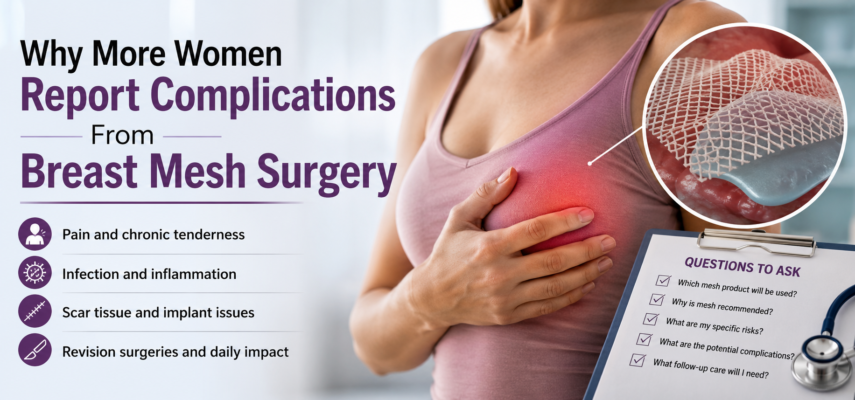
In recent years, more women have come forward to discuss health issues they experienced after procedures involving surgical mesh. Reports of pain, infection, inflammation, implant-related concerns, and repeat surgeries have contributed to ongoing conversations among patients, healthcare providers, and legal professionals. As awareness continues to increase, many women are seeking information about breast mesh complications, including how these issues may develop, what symptoms are commonly reported, and why concerns surrounding breast mesh surgery continue to receive attention nationwide.
Reported Problems
Patients often look up breast mesh complications after recovery stalls or symptoms become hard to ignore. Common reports include swelling, redness, chronic breast tenderness, fluid pockets, and thick scar formation near the surgical area. Some women also describe wound separation, implant displacement, skin thinning, or repeat surgery after mesh-assisted reconstruction.
Why Reports Rise
A rise in reports does not prove every mesh product performs poorly. Better awareness, fuller medical records, and patient support groups can increase documentation. Legal notices may also prompt people to connect later symptoms with prior surgery. Even so, repeated patterns matter. Similar complaints across many patients can help clinicians, researchers, and regulators identify safety signals.
Tissue Response
The body recognizes implanted mesh as foreign material. Some patients form a thin, flexible scar layer around it. Others develop dense capsules, chronic inflammation, or painful tightness. Mesh structure, pore size, coating, and placement depth can affect healing. Blood supply, immune function, and skin quality also shape the final tissue response.
Reconstruction Factors
Breast reconstruction often occurs after mastectomy, radiation, or cancer therapy. These treatments can leave tissue thin, stiff, and slower to repair. Radiation may reduce small-vessel blood flow, which limits oxygen delivery to healing skin. Chemotherapy can weaken immune defense during recovery. Mesh placed in fragile tissue may face higher mechanical stress.
Surgical Technique
Surgical planning has a major effect on the outcome. Mesh tension, implant position, pocket shape, and drain placement all influence healing. Folded or overly tight material may irritate surrounding tissue. Infection prevention is equally important. A small bacterial burden can trigger fluid buildup, redness, wound breakdown, or removal of the implanted support.
Patient Health
Individual health can change recovery after breast mesh surgery. Smoking reduces oxygen delivery. Diabetes can slow wound healing and increase the risk of infection. Higher body weight may add pressure across incision lines. Autoimmune disease, prior infections, and immune-suppressing medication also matter. A detailed medical review helps surgeons choose safer timing, technique, and implant size.
Pain Patterns
Postoperative pain should gradually lessen. Persistent burning, pulling, stabbing tenderness, or deep pressure may signal irritation or scar tightening. Some patients feel discomfort with arm movement, exercise, or side sleeping. Others notice pain near an implant edge. A symptom diary can help clinicians compare pain patterns with imaging and physical findings.
Infection Signs
Infection may appear soon after surgery or many months later. Warning signs include warmth, spreading redness, fever, drainage, odor, or sudden swelling. Fluid around an implant may require laboratory testing. Delayed infection can be harder to trace. Prompt care matters because untreated infection may lead to tissue loss or implant removal.
Revision Surgery
Some patients require revision surgery after mesh-related problems. A second operation may remove infected material, release tight scar tissue, reposition an implant, or repair damaged skin. Revision can reduce pain or restore breast shape, yet it brings added risk. Extra surgery may mean more scarring, longer recovery, higher cost, and emotional strain.
Data Gaps
Medical device tracking remains uneven. Some symptoms are treated in office visits without formal reports. Others appear in records under broad labels, including pain, inflammation, or infection. Product updates can also limit comparisons with older studies. Stronger registries would help researchers compare mesh types, surgical methods, patient factors, and long-term outcomes.
Questions To Ask
Patients considering breast mesh should ask clear questions before surgery. Which product will be used? Why is mesh recommended? What risks apply to this patient’s health history? How often has the surgeon removed similar material in the past? Written product details and operative notes can help patients track concerns if symptoms develop after recovery.
Conclusion
More women may report breast mesh surgery complications because awareness, documentation, and patient advocacy have improved. Still, the symptoms themselves should be taken seriously. Pain, infection, scar tightening, implant movement, and revision surgery can affect comfort, appearance, and daily function. Careful screening, plain-language consent, close follow-up, and stronger outcome data can help patients and clinicians make better surgical decisions.