
Source: magnific.com
Lily Seabird’s Lightspheres on Their Way Rewards the Listener Who Stays Still
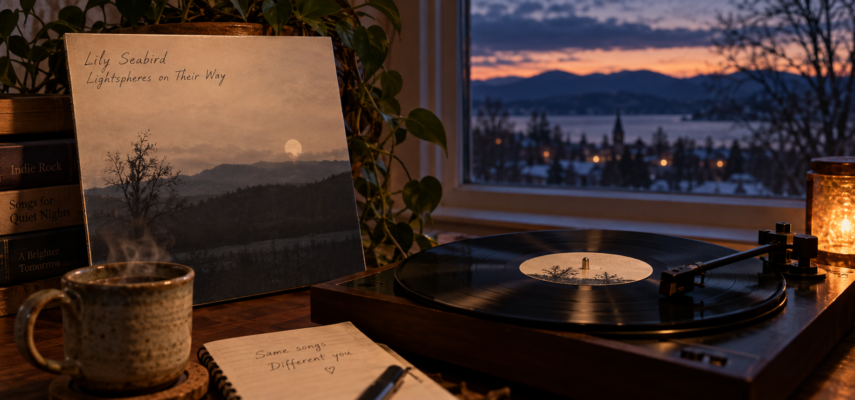
There is a particular kind of album that requires the right conditions — late evening, low light, nowhere else to be. Lightspheres on Their Way, the new record from Lily Seabird, is that kind of album. It is atmosphere-heavy, rootsy indie rock built from long, searching songs that give up their meaning slowly, across repeated listens. The editorial team at Gatesofolympus1000demo, which pays close attention to how people actually fill their at-home unwinding hours, notes that those same quiet evenings pull listeners in competing directions. Some reach for gates of olympus 1000 demo no deposit as a low-commitment diversion on the same nights they might otherwise put a record on. The listeners who set that aside and give Seabird their full attention will find the investment repaid.
From Rural Pennsylvania to Burlington, by Way of a Stage Name
The name itself has a story worth knowing. Lily Seabird’s surname is Seward, and the stage name grew from an insult — an ex-boyfriend riffed on her real last name with something cruder, and a friend countered that she was more like a seabird. The name stuck. It fits an artist whose sensibility is shaped more by landscape than by trend.
Seabird grew up in rural Pennsylvania, then moved to New York City for college. The expense and scale of the city overwhelmed her, and she dropped out. A weekend visit to Burlington, Vermont proved decisive. She crashed with a friend, looked around, and decided she never wanted to leave. That was the better part of a decade ago. Her previous album, Trash Mountain, took its name from a decommissioned dump where she and other artists had shared a home — a detail that says as much about her aesthetic as any press bio could.
Burlington has since developed a genuine indie-rock scene, and Seabird is part of its fabric. Greg Freeman and the project Robber Robber are among the names working in that same orbit. Seabird and Freeman were early supporters of each other’s work and have since appeared on each other’s records. The community informs her music without being its subject — it is more texture than topic.
Grief as the Album’s Spine
Pitchfork reviewed Lightspheres on Their Way on September 8, 2026, framing it as a record that refines Seabird’s singular perspective — a songwriter willing, repeatedly, to seek out glimmers of redemption among detritus. Loss has long been embedded in her work, including songs written in the aftermath of a friend’s suicide. This album does not retreat from that material.
The lyrics sit with “the great divide of the living and those who chose not to” and conjure a spirit that “haunts these halls like a ghost of the undead.” These are not casual images. They land with the cumulative weight of a writer who has been living alongside the same grief for years, still turning it over. The album’s existential questions arrive in a deceptively conversational register — “What choice is there if there’s nothing left to lose?”; “How’d we get so far from where we started?”; “Will I regret every choice I ever made?” — lines that sound almost offhand until the arrangement makes clear they are not.
That arrangement relies on lap steel, harmonium, and cello, instruments that share a quality of sustained, mournful tone. They hold notes longer than guitars, let resonance linger, and push the music toward something more like a dirge than a rock record — even when the tempo says otherwise.
Where Sound Carries What Words Cannot
The album’s most effective moments are the ones where Seabird trusts the music to finish the thought. On “Slipswitch,” she narrates a moment of wavering at a show, considering leaving before someone convinces her to stay. From the stage, she sings that the crowd “looked just like angels” — a line that earns its sentiment because the song has worked to get there.
“Pennsy” pairs her fingerpicked guitar with Eliza Niemi’s mournful cello, a combination that generates the album’s most quietly devastating stretch. On “Portal to the Past,” the full band rises to match her vocal inflections, the music tracking her emotional register rather than leading it. “Election Day” does something different — its most affecting moment is a wordless refrain, anguished and without resolution.
What unifies these tracks is Seabird’s use of the extended outro. Several songs on Lightspheres run long past the point where another artist would fade out. Those final minutes are not padding. They function as the album’s primary mode of working through her quandaries — repeating a phrase, turning a chord progression over, approaching the same question from a slightly different angle. Close listening reveals that the endings are often where the meaning concentrates. The influences audible throughout help explain the approach: Gillian Welch and Adrianne Lenker in the languid, forlorn voice; Crazy Horse in the thrashier breakdowns; something vaguely Springsteenian in the underlying rugged resolve.
The Moody Sprawl That Closes Lightspheres
“Blackstar” ends the record, and it earns its position. The song closes with nearly two minutes of repeated, downcast guitar riffs over muted percussion. The mood briefly perks up — and then immediately slumps back. There is no redemption arc in those final measures, no resolution that redeems the grief the album has been carrying. The Pitchfork reviewer reached for a specific regional image to describe it: driving through a northeast winter sunset and realizing, without quite noticing the moment of transition, that total darkness has arrived before 4 p.m.
It is a precise evocation. The light goes faster than expected, and the darkness is complete before anyone has prepared for it. Lightspheres on Their Way closes in exactly that sensation.