










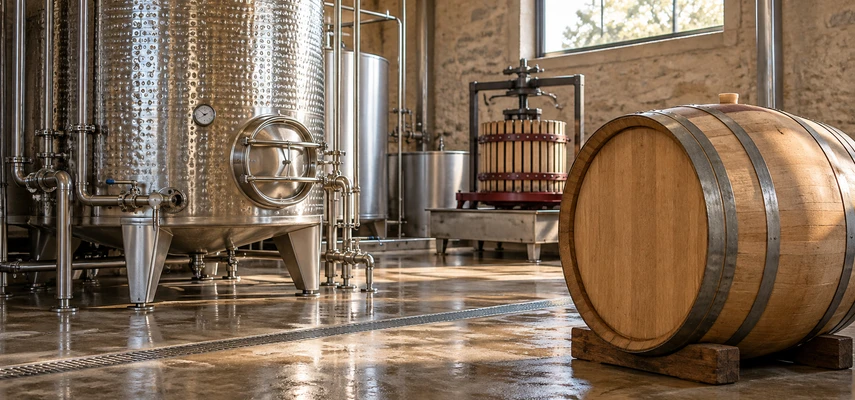

Put the same grapes into two wineries and you needn’t get the same wine. One producer might chase fresh citrus and a light texture; another might choose creamier flavours, oak and greater richness. How winemaking changes wine becomes easier to understand when you follow the decisions in order: what ferments, what stays in contact with it, where it rests and when it reaches the bottle.
This is Article #3 of The TFE Guide to WSET Level 2 Wine, Part I: Wine Fundamentals. It follows grapes from arrival to maturation, explaining the mechanisms behind familiar descriptions. “Buttery,” “tannic” and “oaked” should become clues you can reason through rather than adjectives to collect.
What WSET Level 2 expects you to know
Learning Outcome 2 covers alcoholic fermentation, the broad processes for red, rosé and white wines, production choices and changes during bottle ageing. The current official specification also assigns sugar and acid adjustments, vessels, oak options, malolactic conversion, lees and blending.
You don’t need to design a winery. You need to connect an action with its likely effect. Press before fermenting and you separate juice from skins early. Leave black-grape skins with the ferment and you can extract colour and tannin. Interrupt fermentation with sugar remaining and a sweet wine becomes possible. Each decision answers a different question.
Alcoholic fermentation: yeast does the conversion
Yeast converts sugar into alcohol and carbon dioxide, releasing heat along the way. The sugar is the yeast’s fuel; the grapes supply much of it. If most fermentable sugar is used, the wine can taste dry. If appreciable sugar remains, sweetness may be perceptible, depending on the wine’s overall balance.
This explains a useful distinction from Article #2. A ripe grape may have high potential alcohol because it contains abundant sugar. That doesn’t prove the final wine will be sweet. The same starting material can support different balances of alcohol and residual sugar, depending on what fermentation achieves.
Temperature matters because fermentation generates its own heat and yeast needs suitable conditions. Control helps keep the process on track as well as shaping aroma and extraction. A tank isn’t simply a bucket waiting for nature to finish the paperwork.
Crushing and pressing aren’t the same operation
Crushing breaks berries to release juice. Pressing separates liquid from grape solids by applying pressure. Producers can vary their approach, including pressing whole bunches, so the sequence is a broad framework rather than a requirement that every winery crush everything first.
For a typical white wine, grapes are pressed before alcoholic fermentation, and the separated juice ferments. For a typical red, fermentation takes place with the skins; pressing generally follows the period of skin contact. The difference explains why black-grape skins contribute so much to red wine’s appearance and texture.
The Bourgogne wine board’s white-winemaking guide describes that pressing-before-fermentation sequence. Remember the principle before worrying about every exception.
Red wine: extraction is a set of choices
Extraction moves colour, tannins and flavour compounds from skins and other solids into the liquid. Contact time, temperature and the handling of the floating cap of grape material influence what is extracted. Pumping liquid over the cap or pushing the cap down helps bring liquid and solids into contact.
More extraction isn’t automatically better. A producer seeking a supple, early-drinking red may make different choices from one seeking a firmer structure for maturation. The grape material matters too: rough, unripe tannins don’t become attractive merely because someone extracts more of them.
Red wines are generally fermented warmer than whites, helping extraction. However, extraction is more complicated than “twice the heat, twice the colour.” The Australian Wine Research Institute’s temperature guidance distinguishes the behaviour of different phenolic compounds and notes risks from excessive heat. For Level 2, retain the relationship while avoiding a false mathematical rule.
White and rosé wines: protect or limit contact
White winemakers commonly separate juice from skins early and use cooler fermentation to help retain fresh fruit character. A stainless steel tank can support that aim without adding oak flavour. But white wine isn’t one style: fermenting or maturing in oak, using lees or allowing malolactic conversion can produce a different result.
Rosé can gain colour through short contact between juice and black-grape skins, followed by separation and fermentation of the coloured juice. Less contact generally means less extraction than in a red-wine process. Colour alone doesn’t tell you whether the wine is dry or sweet.
Blending red and white wines is another rosé production route in relevant contexts, including some sparkling rosés. Don’t turn it into a universal legal permission for every region or assume all rosé is diluted red wine. The specification asks you to understand both short maceration and blending; detailed local rules belong with the relevant wines.
How sweet wine keeps its sugar
One route is to stop fermentation before all the fermentable sugar has been used. Cooling and removing yeast can be part of a controlled process; the producer must also prevent fermentation from restarting. Fortification can interrupt fermentation in certain styles, a subject we’ll return to in Article #21.
Another route is to add an appropriate sweetening component where regulations allow. This differs from adding sugar before fermentation to increase potential alcohol. Timing and purpose matter: sugar that yeast subsequently ferments doesn’t remain available to make the finished wine sweet.
Concentrated grapes, including those affected by noble rot or water loss, can supply unusually sugary juice. Concentrating the raw material and retaining sugar in the finished wine are related decisions, not identical operations. Keep the vineyard and fermentation stages separate in your explanation.
Adjustments: sugar and acidity answer different problems
In some circumstances and under applicable rules, sugar may be added before or during fermentation to raise potential alcohol. This is often called enrichment or chaptalisation. It doesn’t automatically sweeten a wine that subsequently ferments dry.
Acidity can also be adjusted to help achieve the intended balance. A producer may add acid where permitted or reduce excess acidity through an allowed process. These choices don’t erase the importance of vineyard conditions; they show why you shouldn’t reconstruct an entire growing season from a single sip.
For study, distinguish the objective of each adjustment. Ask whether the producer is changing potential alcohol, acid balance or final sweetness. The words “added sugar” aren’t enough to answer all three questions.
Stainless steel, concrete and oak
Stainless steel is useful when a producer wants a vessel without wood-derived flavours and with practical temperature control. Concrete can also hold fermenting or maturing wine without supplying oak aromas. Vessel design and handling still influence the result, so neither material guarantees a particular flavour profile.
Oak adds further possibilities. New wood generally provides more obvious oak character than repeatedly used wood. Small barrels expose more wine to wood relative to volume than large vessels, all else equal. Toasting the wood changes the range of aromas it can contribute, including associations with vanilla, spice and toast.
An old, large oak vessel may have a different role from a small new barrel: it can serve maturation without supplying an equally strong woody flavour. “Matured in oak” therefore doesn’t tell you exactly how the wine tastes. Ask about size, age and the intended effect.
Malolactic conversion and lees: two different routes to texture
Malolactic conversion is carried out by bacteria, which convert malic acid into lactic acid and carbon dioxide. It generally reduces acidity and can contribute buttery character. It isn’t the yeast-driven conversion of sugar into alcohol, despite the common alternative name “malolactic fermentation.”
A winemaker may encourage it for a rounder style or prevent it to retain acidity and a different aromatic profile. It’s common in red wines, though the buttery association is often more obvious in certain whites. The AWRI guidance on malolactic conversion explains the underlying process.
Lees are the sediment left after fermentation, including dead yeast cells. Keeping wine in contact with suitable lees, and sometimes stirring them, can influence texture and flavour. Lees contact and malolactic conversion are separate choices; either can occur without requiring the other or the use of new oak.
Blending, maturation and packaging
Blending combines components to achieve an aim. A producer might seek consistency between batches, a particular style or greater complexity. Components can differ by grape, vineyard or production treatment. A blend isn’t inherently inferior to a single-variety wine, and a varietal label doesn’t prove nothing was blended.
After fermentation, storage or maturation gives producers time to manage the wine before packaging. Some wines are intended to retain youthful fruit; others benefit from further development. Packaging is therefore a point in the production sequence, not evidence that every wine has reached an identical stage of maturity.
During bottle ageing, red colour commonly shifts away from youthful purple or ruby toward more garnet or tawny tones; white wines can become deeper and more golden. Tannins in reds may feel softer, while fresh fruit character can evolve toward dried fruit or savoury notes. These are possible developments rather than instructions to keep every bottle for decades. WSET’s ageing explanation makes that distinction clear.
Common mistakes and exam traps
Don’t confuse crushing with pressing, malolactic conversion with alcoholic fermentation, or lees with oak. A creamy wine doesn’t prove all three were involved. Nor does “old” mean better: a wine designed for fresh fruit may simply lose what made it attractive if stored too long.
Finally, distinguish description from judgment. More oak, more tannin and more alcohol aren’t automatic improvements. Ask whether the choices fit the intended style and the material available. Winemaking is a collection of decisions, not a contest to turn every control to maximum.
Related study guides
- Climate, ripening and vineyard decisions
- Chardonnay: Chablis to California
- Sparkling wines and their methods
- Port, Sherry and fortification
Knowledge check: 10 original practice questions
Choose one answer per question. All questions support LO2 and are independent practice material.
1. What does yeast principally produce from sugar during alcoholic fermentation?
- Alcohol and carbon dioxide.
- Oak tannin and cork.
- Malic acid and grape skins.
- Glass and sediment filters.
2. Which broad sequence is typical for white wine?
- Bottle, press, ferment.
- Press grapes, then ferment separated juice.
- Ferment with black skins for maximum red colour.
- Add oak before growing grapes.
3. What is extraction in red winemaking?
- Removing all flavour from a bottle.
- Cooling an empty tank.
- Moving compounds such as colour and tannin from solids into liquid.
- Turning lactic acid into sugar.
4. Which statement about rosé is correct?
- Its pink colour proves sweetness.
- All rosé must be a red-and-white blend.
- It cannot be made from black grapes.
- Short skin contact can supply its colour.
5. What does stopping fermentation with sugar remaining make possible?
- A wine with residual sweetness.
- Automatic removal of all alcohol.
- Conversion of every acid into tannin.
- A guarantee of dryness.
6. Why distinguish pre-fermentation enrichment from sweetening finished wine?
- They always have identical effects.
- Added sugar may be fermented into alcohol rather than remain as sweetness.
- Yeast cannot use added sugar.
- Enrichment always creates rosé.
7. Which oak option generally gives more obvious wood-derived character, all else equal?
- A very old vessel compared with the same vessel when new.
- Stainless steel compared with oak.
- New oak compared with repeatedly used oak.
- Concrete compared with new oak.
8. Which process involves bacteria converting malic acid into lactic acid?
- Pressing.
- Alcoholic fermentation.
- Skin extraction.
- Malolactic conversion.
9. What are lees?
- Fermentation sediment including dead yeast cells.
- A type of new oak.
- Grape seeds growing on roots.
- A synonym for added sugar.
10. Which is a legitimate purpose of blending?
- Proving a wine has no regional identity.
- Achieving consistency, complexity or an intended style.
- Guaranteeing every wine will age for decades.
- Eliminating the need to consider quality.
Answers and explanations
1. A — Fermentation; LO2. Yeast converts fermentable sugar into alcohol and carbon dioxide, while heat is also released.
2. B — White production; LO2. Early separation of juice and solids is the usual framework, although specific approaches vary.
3. C — Red production; LO2. Contact conditions influence how colour, tannin and other compounds enter the liquid.
4. D — Rosé production; LO2. Limited contact with black-grape skins can produce pink juice without the extraction typical of red wine.
5. A — Sweet production; LO2. Sugar remaining after fermentation can contribute sweetness; stability must still be managed.
6. B — Adjustments; LO2. Sugar used by yeast raises alcohol instead of remaining to sweeten a dry finished wine.
7. C — Oak options; LO2. New wood generally contributes more obvious oak character than repeatedly used wood.
8. D — Malolactic conversion; LO2. This bacterial acid conversion differs from yeast-driven alcoholic fermentation.
9. A — Lees; LO2. Suitable lees contact can influence texture and character without requiring oak or malolactic conversion.
10. B — Blending; LO2. Blending serves several positive production objectives and isn’t inherently a sign of inferior wine.
One-page revision summary
| Decision | Likely effect or purpose | Keep separate from |
|---|---|---|
| Alcoholic fermentation | Sugar becomes alcohol and carbon dioxide | Malolactic conversion |
| Press before fermenting | Separate juice from skins early | Red fermentation on skins |
| Skin contact and extraction | Transfer colour, tannin and flavour compounds | Automatic quality improvement |
| Cooler white fermentation | Help preserve fresh aromatic character | A universal rule for every wine |
| Stop fermentation or add sweetness | Retain or introduce sugar where appropriate | Enrichment to raise alcohol |
| Oak size, age and toast | Change wood influence and maturation choices | A single fixed “oaked” flavour |
| Malolactic conversion | Reduce acidity; may add buttery character | Yeast converting sugar |
| Lees contact | Influence texture and flavour | An obligatory oak treatment |
| Bottle ageing | Colour, tannin and aromas can evolve | A guarantee that every bottle improves |
For every production choice, name the action and then its effect. That habit will explain why two wines from one grape can taste different without requiring a different grape to enter the story.











