











A sparkling wine’s bubbles tell you that gas has been kept in the wine. They don’t tell you whether it should taste of fresh pear, fragrant grapes or toasted bread. Sparkling wine explained through production makes those differences much easier to predict. The interesting question is what happened before the cork came out.
This is Article #20 of The TFE Guide to WSET Level 2 Wine, Part IV: Sparkling and Fortified Wines. We’ll connect Champagne, Prosecco, Cava and Asti with their grapes, places and methods, then extend the picture to important producers elsewhere. Start with the process and the names become useful evidence rather than a list of party guests.
What WSET Level 2 expects you to know
The current WSET specification places sparkling wine in Learning Outcome 5. You need traditional-method and tank-method production, including dry and sweet styles; the principal regional examples; important grapes; and the terms Brut, Demi-Sec, Vintage, Non-Vintage, Traditional Method and Cap Classique.
Keep the core map in view: Champagne is French; Prosecco and Asti are Italian; Cava is Spanish. Chardonnay, Pinot Noir and Meunier are central Champagne grapes. Prosecco’s key variety is Glera; Asti’s is Muscat, commonly called Moscato in Italy. Chardonnay and Pinot Noir are also important in premium sparkling wines outside Champagne.
First, trap the gas
Alcoholic fermentation produces alcohol and carbon dioxide as yeast consumes sugar. In ordinary still-wine production much of that gas escapes. To make a fermentation-derived sparkling wine, the producer retains carbon dioxide under pressure so it dissolves in the liquid. When pressure falls at opening and pouring, gas can emerge as bubbles.
The container matters because it determines how the producer handles fermentation and the wine afterwards. Fermentation in individual bottles creates a different practical workflow from fermentation in a large pressure tank. Neither container magically guarantees quality. It offers a way to achieve a particular style, with different requirements for equipment, time and handling.
Cool-climate grapes are particularly useful for many sparkling styles: high acidity helps the finished wine feel fresh, while moderate grape sugar allows a suitable starting alcohol level. Some methods involve a further fermentation that adds alcohol. Picking fruit for a sparkling base wine therefore isn’t automatically the same decision as picking it for a powerful still wine.
Traditional method: two fermentations, then time
The traditional method starts with a still base wine. Grapes are pressed and the juice is fermented. Black grapes can contribute to white sparkling wine because colour is mainly in their skins; careful pressing limits extraction. Pinot Noir in a white Champagne isn’t a contradiction or a printing error.
Base wines can be blended to achieve the intended character. The producer then adds a measured quantity of sugar and yeast, bottles the wine and seals it. A second alcoholic fermentation happens inside the bottle. The trapped carbon dioxide dissolves into the wine, creating the pressure that will later deliver the sparkle.
After fermentation, spent yeast forms lees. Time in contact with those lees can develop bread, biscuit and toast-like characters through yeast breakdown. These are production-related flavours, distinct from the grape’s original fruit. A wine can combine citrus and apple with bread-like notes; the two sets of aromas tell different parts of its story.
Riddling, disgorgement and dosage have different jobs
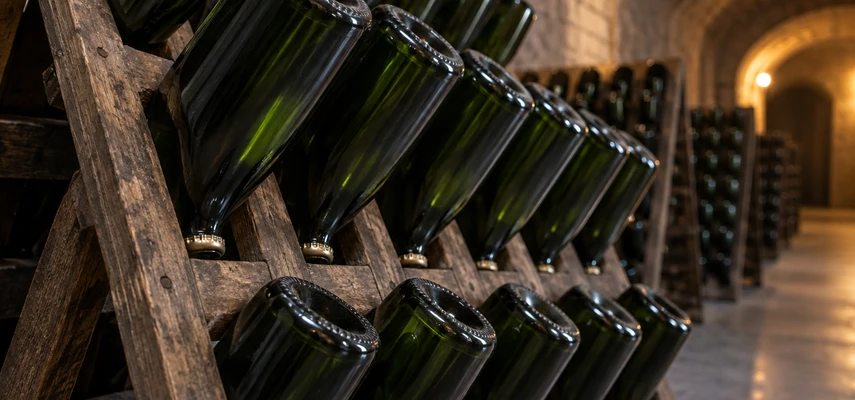
The lees must be removed without losing the wine’s sparkle. Riddling gradually moves the sediment towards the neck through changes in bottle position and rotation. It can be manual or mechanised. It gathers sediment; it doesn’t create the bubbles. Those came from fermentation, well before this stage.
Disgorgement removes the collected sediment, commonly by freezing a small plug in the neck and expelling it when the bottle is opened. The wine is then topped up. Dosage, when used, introduces wine and sugar to adjust the finished balance and sweetness before final closure. Think “move, remove, adjust”: three stages with three separate purposes.
The Champagne Comité’s production outline is useful for seeing those operations in sequence. Don’t confuse the sugar supplied before second fermentation with sugar used afterwards in dosage. The first feeds yeast; the latter can contribute to the sweetness you taste.
Dry tank-method wine: fresh fruit at a larger scale
For a typical dry tank-method sparkling wine, the producer first makes a still base wine, then adds sugar and yeast in a sealed pressure tank. A second fermentation creates carbon dioxide there. The wine is filtered and bottled under pressure so the gas is retained. The bottle is the final package rather than the second-fermentation vessel.
This approach suits styles that emphasise primary fruit and floral aromas, generally with little or no extended lees ageing. It avoids the need to handle sediment separately in every bottle. Compared with traditional-method production, it can be quicker and less costly, although vineyard quality, production care and market positioning still affect the finished wine and its price.
The key comparison is freshness versus deliberate lees development, not “tank equals poor.” If your aim is a clear pear-and-flower expression, lengthy bread-like development may be unnecessary. Choosing an efficient method that supports the intended character is a sensible production decision, rather than a failure to imitate Champagne.
Sweet Asti: don’t force a second fermentation into the story
The familiar sweet, low-alcohol Asti style uses aromatic Muscat grapes. In this variation of tank production, fermentation can begin from grape juice rather than from an already completed dry base wine. Carbon dioxide is retained during the process. Fermentation is stopped by chilling and the yeast is removed by filtration before all the sugar is consumed.
That explains three linked features: retained sugar creates sweetness, limited fermentation keeps alcohol relatively low, and captured gas provides sparkle. It also protects the grape’s pronounced floral and fresh-fruit character. “All sparkling wine needs two fermentations” is the trap. Asti provides the useful counterexample, as WSET’s production-method guide explains.
When a question specifies sweet Asti, answer for that familiar style. Don’t generalise the description into a claim that every possible wine produced under a broad regional name has precisely the same sweetness. The syllabus asks you to understand the important style and the mechanism that makes it possible.
Four regional anchors
Champagne comes from the Champagne region of France and uses the traditional method. Chardonnay, Pinot Noir and Meunier are the central varieties to remember. High acidity, citrus or apple fruit and lees-derived bread or toast can combine in the finished wine. Its regional name is protected; a traditional-method wine from another country doesn’t become Champagne by copying the process.
Prosecco comes from north-east Italy and centres on Glera. The usual tank-method style emphasises fresh pear, apple and floral notes, with less emphasis on extended lees character. Asti, in north-west Italy’s Piemonte, connects Muscat/Moscato with a markedly aromatic, sweet, lower-alcohol sparkling style. Don’t swap their grapes just because both names are Italian.
Cava is Spanish traditional-method sparkling wine. It commonly uses local Spanish grapes; its method can produce lees-related character alongside fruit. For this level, the indispensable distinction is Spanish Cava versus Italian tank-method Prosecco. Region and method together provide a stronger answer than either fact alone.
Traditional method beyond those names
Australia, New Zealand, South Africa and the USA also produce important sparkling wines, including premium traditional-method examples using Chardonnay and Pinot Noir. Suitable cooler growing areas help retain acidity. Production choices and lees ageing can create styles with the fruit-and-bread combination familiar from the method, without making them legally Champagne.
In South Africa, Cap Classique identifies traditional-method sparkling wine. Attach the term to the production method and country rather than treating it as a grape. The official WSET educator notes provide a useful regional comparison; the current specification remains the authority for required scope.
Practise predicting the glass
Imagine two unlabelled descriptions. One wine is fresh and floral with pear fruit and no obvious bread-like character. Another combines high acidity, citrus and persistent toast-like notes. The first description fits a fruit-focused tank approach; the second suggests meaningful lees development. Neither description alone proves a protected regional name. Use tasting expectations to support the production explanation, then use the label to establish origin.
Read the sweetness and vintage terms separately
Brut indicates a dry sparkling style; Demi-Sec indicates a sweeter style. Neither word tells you the grape variety or whether the wine is vintage. They describe a different dimension of the wine. Similarly, Traditional Method identifies production, while Cap Classique combines a South African context with that method.
Vintage generally identifies wine associated with a single harvest year under the applicable rules. Non-Vintage usually involves blending wines from more than one harvest to support a consistent style. NV doesn’t mean no one knows when the grapes grew, and vintage isn’t an automatic promise that you will prefer the wine. A skilled blend has its own purpose.
Before answering, identify what the question asks: grape, region, method, sweetness or vintage status. A tempting distractor often supplies a true fact from the wrong category. Glera cannot answer a question about sediment removal, and disgorgement cannot answer a question about sweetness terminology. Keeping those categories clear makes a long-looking topic surprisingly manageable.
Related study guides
Knowledge check: sparkling wine
Choose one answer for each question.
1. Where does second fermentation occur in the traditional method?
- In the bottle
- In an open grape basket
- Only in the vineyard
- In the dosage tank after opening
2. What is riddling intended to achieve?
- Create the first alcohol
- Gather sediment towards the neck
- Sweeten the grapes
- Freeze the entire wine
3. Which operation removes collected sediment?
- Blending
- Harvesting
- Disgorgement
- Dosage
4. Which grape is the main Prosecco association?
- Furmint
- Meunier
- Cabernet Sauvignon
- Glera
5. Why can traditional-method wine develop biscuit-like aromas?
- Contact with lees and yeast breakdown
- Mandatory biscuit addition
- Carbon dioxide tastes of biscuits
- Riddling grows new grapes
6. Which description suits familiar sweet Asti production?
- Fortification of a dry red
- Interrupted fermentation retaining grape sugar and gas
- Mandatory second fermentation in every bottle
- Complete drying followed by water addition
7. What does Cap Classique identify?
- An Italian grape
- Sweet fortified Spanish wine
- South African traditional-method sparkling wine
- A German harvest category
8. Which set contains the central Champagne grape associations?
- Glera, Furmint, Merlot
- Moscato, Chenin, Pinotage
- Cabernet, Carménère, Malbec
- Chardonnay, Pinot Noir, Meunier
9. Which style term is sweeter than Brut?
- Demi-Sec
- Non-Vintage
- Traditional Method
- Cap Classique
10. Why are many dry tank-method wines bottled under pressure?
- To create grape skins
- To retain dissolved carbon dioxide
- To remove all acidity
- To add lees automatically
Answers and explanations
1. A — Traditional method; LO5. Added sugar and yeast support a second fermentation in the bottle. Gas produced under the sealed closure dissolves into the wine and later provides the bubbles.
2. B — Sediment handling; LO5. Riddling collects sediment in the neck for subsequent removal. It happens after the bubble-producing fermentation, so it doesn’t create the sparkle.
3. C — Sediment removal; LO5. Disgorgement expels the accumulated deposit. Dosage comes afterwards and can adjust sweetness; the operations have different purposes.
4. D — Prosecco; LO5. Glera is the key variety for Prosecco. The name should connect north-east Italy with the usual fresh-fruited tank-method style.
5. A — Lees ageing; LO5. Breakdown of yeast during lees contact can contribute bread, biscuit and toast-like flavours. Those descriptions don’t imply the addition of baked food.
6. B — Sweet tank style; LO5. Stopping fermentation before all sugar is consumed retains sweetness and limits alcohol. Captured fermentation gas supplies the sparkle without requiring two fermentations.
7. C — Regional terminology; LO5. Cap Classique refers to South African traditional-method sparkling wine. It is neither a grape variety nor a general word for sweetness.
8. D — Champagne grapes; LO5. Chardonnay, Pinot Noir and Meunier are the central grapes to remember. Black grapes can contribute to white wine when skin-colour extraction is limited.
9. A — Sweetness terms; LO5. Demi-Sec is sweeter than Brut. The other terms concern vintage status, production or regional production identity, rather than sweetness categories.
10. B — Tank-method bottling; LO5. Pressure bottling helps preserve dissolved carbon dioxide. Losing the gas during transfer would undermine the sparkling style the producer has just made.
One-page revision summary
| Name or stage | Key connection | Style or purpose |
|---|---|---|
| Traditional method | Second fermentation in bottle | Lees ageing can add bread/biscuit/toast |
| Riddling | Sediment moves to neck | Preparation for removal |
| Disgorgement | Sediment removed | Commonly expels frozen plug |
| Dosage | After disgorgement | Can adjust final sweetness |
| Dry tank method | Second fermentation in pressure tank | Usually primary fruit emphasis |
| Sweet Asti route | Fermentation from juice; stopped early | Sugar, lower alcohol, aromatic fruit, retained gas |
| Champagne | France; Chardonnay, Pinot Noir, Meunier | Traditional method; high acidity |
| Prosecco | North-east Italy; Glera | Usually tank; pear/apple/floral |
| Asti | Piemonte, Italy; Muscat/Moscato | Familiar style sweet, aromatic, lower alcohol |
| Cava | Spain | Traditional method |
| Other important countries | Australia, New Zealand, South Africa, USA | Premium examples often Chardonnay/Pinot Noir |
| Cap Classique | South Africa | Traditional method |
| Brut / Demi-Sec | Dry / sweeter | Separate from method or vintage |
| Vintage / Non-Vintage | Single harvest association / usually multiple harvests | Different blending approaches |
This independent guide complements current WSET course materials. Its practice questions are original and are not official examination questions.












