











Sweet wine needs something to keep it lively. Without enough acidity, even wonderful fruit can feel rather like syrup. Furmint and Tokaj explained together show why a naturally sharp grape is such a useful starting point for a famously sweet wine—and why that same grape also makes convincing dry wine.
This is Article #19 of The TFE Guide to WSET Level 2 Wine, Part III: Regionally Important Grape Varieties. Our focus is Furmint, Hungary’s Tokaj region and Tokaji Aszú. We’ll connect the grape, the vineyard conditions and the production choices rather than treating the name as a password to memorise.
What WSET Level 2 expects you to know
The current WSET specification places Furmint among the regionally important white varieties in Learning Outcome 4. The essential geographical connection is Hungary: Tokaj. The important label term is Aszú. You should explain the principal characteristics and how the growing environment and winemaking affect style and quality.
Start with three anchors: Furmint has naturally high acidity; it can make dry wine; and it is particularly important in sweet Tokaji Aszú made using grapes affected by noble rot. None of those statements cancels the others. A grape variety isn’t born with a finished wine’s sweetness level attached.
Furmint is the grape; Tokaj is the place
Tokaj lies in north-east Hungary. Furmint is its leading grape variety, although it isn’t the region’s only permitted grape. Tokaji describes a wine associated with Tokaj; Aszú identifies a particular sweet-wine style. Keeping those jobs separate prevents a surprisingly common wrong turn: assuming that every bottle mentioning Tokaj must be a sweet Aszú.
Think of the information as a set of drawers. The grape drawer tells you what fruit you’re working with. The place drawer tells you where it grew. The style drawer tells you what happened to that fruit. Opening only one drawer won’t reveal the whole wine. A dry Furmint from Tokaj and a Tokaji Aszú can share origins while differing substantially in sweetness, concentration and flavour.
Why high acidity matters twice
Acidity gives wine its refreshing, mouth-watering quality. Furmint retains a useful supply as it ripens. In a dry wine, that can create a brisk structure around apple, pear, citrus or stone-fruit flavours, depending on the fruit and production. The Hungarian wine organisation’s Furmint profile emphasises the variety’s versatility across dry and sweet styles.
In sweet wine, acidity has another job: providing balance against abundant sugar. Picture a spoonful of honey, then imagine honey with a squeeze of lemon. The lemon hasn’t removed the sugar; it changes the overall impression. Likewise, high acidity doesn’t make a sweet wine dry. It can make a very sweet wine feel more energetic and less heavy.
That distinction helps with questions about structure. Sweetness describes sugar’s impression; acidity describes a different sensation. A wine can be high in both. Choosing between them as though only one can exist is rather like choosing whether soup is hot or salty. Those are separate questions.
The two possible routes from the vineyard
For a dry Furmint, the producer can harvest sound fruit suited to a dry style, press it and ferment the juice so that most fermentable sugar becomes alcohol. Production may favour fresh fruit or introduce additional texture and oak influence. Don’t attach one compulsory barrel recipe to every dry example. The useful expectation is a dry, high-acid white with fruit and structure shaped by the producer’s choices.
For Aszú, the producer needs something more specific: suitable grapes affected by noble rot, with the resulting concentration and distinctive flavours. Waiting for those berries brings uncertainty. Conditions may develop unevenly, and a vineyard can need repeated selective picking. The extra work isn’t decorative tradition; it responds to berries becoming suitable at different times.
These are different harvest objectives. The ripeness and health sought for a fresh dry wine aren’t identical to the selective berry condition sought for Aszú. Remembering that difference explains why the same region can produce several styles without the grower simply changing a label at the winery door.
Noble rot: useful under the right conditions
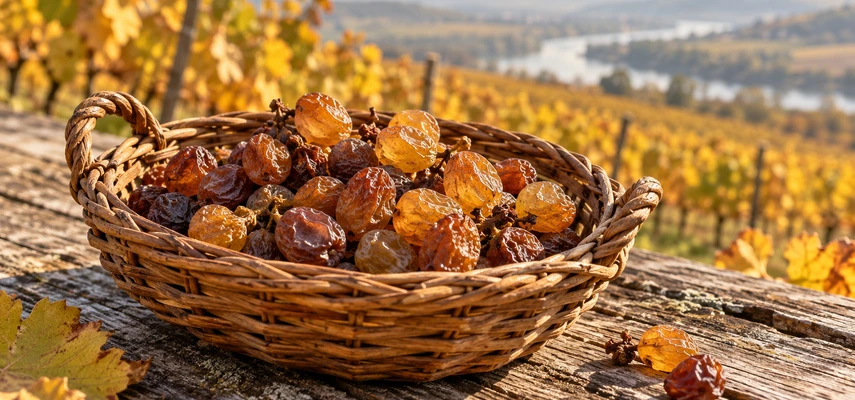
Noble rot involves the fungus Botrytis cinerea. Under suitable conditions, it affects ripe grapes, makes their skins more permeable and allows water to escape. The berries shrivel. Less water means greater concentration of the material remaining in the fruit, including sugar. Botrytis also changes aroma and flavour, rather than merely acting as a tiny drying machine.
The Tokaj wine region’s explanation describes the relationship between fungal activity, berry changes and conditions in the vineyard. Humidity helps the fungus develop; subsequent drier conditions help water loss and discourage destructive deterioration. Persistent wet weather can produce damaging rot instead. “Fungus present” is therefore an incomplete explanation of quality.
You don’t need to turn this into a biology examination. Keep the causal chain clear: suitable ripe berries plus appropriate conditions allow beneficial botrytis development; water loss concentrates the fruit; altered aromas add another layer; careful selection brings suitable berries into the winery. Remove the conditions or the selection and the desired result isn’t guaranteed.
Concentration is not the same as fermentation
Here’s a useful pause. A shrivelled berry has concentrated sugar before fermentation. That tells you about the raw material, not automatically the final alcohol or sweetness. Yeast can convert sugar into alcohol, but the producer’s process and the amount of sugar available determine how much remains. Sweet wine contains residual sugar because not all of that sugar has been fermented away.
Avoid the shortcut that “riper fruit always means sweeter wine.” Very ripe fruit fermented dry can instead produce higher alcohol. With concentrated sweet-wine fruit, substantial sugar can remain alongside alcohol. Track the stages in order: vineyard concentration, extraction, fermentation, finished balance. That little timeline is more reliable than matching one ripe-fruit word to one sweetness category.
Noble rot also differs from freezing grapes for icewine or simply drying them after harvest. All can concentrate grapes, but the mechanisms and resulting flavours aren’t interchangeable. For Tokaji Aszú, the relevant link is botrytis-affected berries. An exam question that swaps in freezing is changing the production method, not offering a synonym.
What happens when Aszú berries reach the winery?
The highly concentrated berries are selected and used to enrich a base of must, fermenting must or wine through maceration. This extracts their sugar and flavour. Fermentation and maturation then develop the finished wine. The precise choices vary by producer, so don’t confuse one estate’s detailed recipe with the definition of every Aszú.
Disznókő’s account of its harvests provides a practical example of separate picking for suitable Aszú berries and other fruit used in production. It makes the selection problem tangible: not every bunch is simply swept into the same press on the same day. Labour, low usable yields and careful handling help explain why these wines can command higher prices.
The important economic chain is work and risk leading to limited suitable material, rather than “sweet wine costs more because sugar is expensive.” The sugar comes from the grapes. What is difficult is obtaining the right grapes in the right condition and converting them into a balanced, stable wine.
Recognising the finished styles
Dry Furmint can show fresh apple and citrus, with pear or riper stone fruit as appropriate. Its high acidity is a structural anchor. Oak use, lees handling and maturity may influence texture and flavour, but an individual producer’s choices shouldn’t replace the basic profile. Don’t demand sweetness merely because the label also identifies Tokaj.
Tokaji Aszú is sweet, concentrated and high in acidity. Apricot, dried fruit, honey and citrus-related notes are useful expectations, with development adding complexity in suitable examples. Those are flavour descriptions, not ingredients. A honey aroma doesn’t mean honey has been poured into the wine, just as an apricot note doesn’t turn it into fruit wine.
When explaining quality, connect concentration to balance and persistence. A powerful aroma alone doesn’t prove excellence. Ask whether sweetness and acidity work together, whether flavours have definition and whether the finish lasts. Suitable high-quality sweet wines can age, developing further complexity while retaining enough structure to support the richness.
Three comparisons that prevent muddled answers
First compare dry Furmint with Aszú. Both can have high acidity; residual sugar and botrytis-related concentration distinguish the sweet style. Second compare Aszú with a dry, high-alcohol white made from ripe fruit. Both began with sugar, but more of the latter’s sugar was converted into alcohol. Third compare noble rot with damaging rot. The organism alone doesn’t tell the whole story; weather, berry condition and selection matter.
Try explaining the wine to someone who has never heard the name: “It’s a sweet Hungarian white made with carefully selected, concentrated, noble-rot-affected grapes, with high acidity keeping it fresh.” That sentence contains geography, style, mechanism and balance. Add Furmint and Tokaji Aszú to attach the names to an explanation you already understand.
Keep historical sweetness scales and detailed regulatory numbers in perspective. For this article’s Level 2 task, the dependable relationship is Furmint–Tokaj–Aszú, supported by high acidity, botrytis and sweetness. A number learned without context is easier to misapply than a well-understood production chain.
Related study guides
Knowledge check: Furmint and Tokaj
Choose one answer for each question before reading the explanations.
1. Which country is the prescribed association for Tokaj?
- Hungary
- Portugal
- Germany
- Chile
2. Which natural characteristic makes Furmint especially useful in balanced sweet wine?
- Very low acidity
- High acidity
- Red skin pigments
- Naturally sparkling juice
3. A bottle is labelled dry Furmint from Tokaj. Which conclusion is reasonable?
- The label must be wrong
- It must contain added honey
- Tokaj also produces dry wine
- It must be fortified
4. What is the relevant grape condition for Tokaji Aszú?
- Frozen berries only
- Completely unripe berries
- Red grapes dried in a kiln
- Suitable noble-rot-affected berries
5. What happens when water escapes from suitable botrytised berries?
- Remaining grape material becomes more concentrated
- All sugar becomes alcohol immediately
- Acidity must disappear
- The grapes become a different variety
6. Why may producers make repeated selective passes through a vineyard?
- Every berry is ready on the same morning
- Suitable berry condition develops unevenly
- Fermentation occurs only on the vine
- Aszú requires red and white layers
7. What does an apricot aroma in Aszú establish?
- Apricot juice was added
- The wine contains no grapes
- A flavour resemblance, without proving an added ingredient
- The wine is necessarily dry
8. Which statement correctly relates sugar and fermentation?
- Concentration immediately creates alcohol
- High acidity removes residual sugar
- All ripe grapes must yield sweet wine
- Sugar fermented by yeast is converted into alcohol
9. Why isn’t the presence of Botrytis alone a guarantee of fine sweet wine?
- Weather, fruit condition and selection also matter
- It cannot affect white grapes
- It always eliminates acidity
- It replaces the need for grapes
10. Which description best fits Tokaji Aszú at this level?
- Dry red, low acid, tannic
- Sweet white, concentrated, high acid
- Dry sparkling rosé from Spain
- Oxidatively aged fortified red
Answers and explanations
1. A — Geography; LO4. Tokaj’s prescribed country association is Hungary. Keeping place and country together gives the grape and style a reliable location rather than leaving Tokaj as an isolated label word.
2. B — Structure and balance; LO4. Furmint’s high acidity provides freshness alongside residual sugar. It doesn’t remove that sugar; both sensations can coexist in the same wine.
3. C — Style range; LO4. Tokaj makes dry wines as well as sweet styles. Neither the place name nor Furmint’s grape identity independently proves the finished wine’s sweetness.
4. D — Aszú production; LO4. Selected noble-rot-affected berries supply the distinctive concentration and flavours for Aszú. Freezing is a different concentration method associated with icewine.
5. A — Concentration; LO4. Water loss concentrates what remains in the berry. Alcohol production requires a later fermentation process; dehydration doesn’t itself convert sugar into alcohol.
6. B — Harvest and quality; LO4. Berries become suitable at different times, so selective passes allow producers to collect appropriate fruit. That adds labour and helps explain production cost.
7. C — Describing flavour; LO4. Tasting vocabulary expresses resemblance. Apricot and honey notes can arise from grape, botrytis and maturation effects without those foods being added.
8. D — Fermentation; LO2/LO4. Yeast converts fermentable sugar into alcohol. Concentrated grapes can yield residual sweetness when not all sugar is fermented; ripeness alone doesn’t settle finished style.
9. A — Noble rot conditions; LO4. Beneficial botrytis requires appropriate conditions and suitable fruit selection. Persistent wet conditions can cause destructive deterioration instead of the desired concentration.
10. B — Tokaji Aszú profile; LO4. Sweetness, concentration and high acidity belong together in the core profile. The alternatives confuse colour, region, production or structure.
One-page revision summary
| Anchor | Remember | Explain it |
|---|---|---|
| Grape | Furmint | Naturally high acidity; dry and sweet styles |
| Country and place | Hungary; Tokaj | Region in north-east Hungary |
| Dry style | High-acid white | Apple/citrus through riper fruit; production varies |
| Famous sweet style | Tokaji Aszú | Selected noble-rot-affected berries |
| Noble rot | Botrytis cinerea | Suitable conditions allow berry water loss and flavour change |
| Selection | Repeated passes can be needed | Suitable berries develop unevenly |
| Concentration | Less water in berries | More concentrated sugar and flavour, before fermentation |
| Sweetness | Residual sugar | Sugar remaining after fermentation |
| Balance | High acidity with sweetness | Freshness without making the wine dry |
| Flavours | Apricot, dried fruit, honey, citrus | Descriptors, not proof of added ingredients |
| Quality/cost | Suitable fruit, selection, balance, length | Labour and risk matter; sweetness alone isn’t quality |
| Avoid | All Tokaj is sweet; all rot is noble | Separate place, style, conditions and production |
Study this independent guide alongside the current WSET materials and your approved course. The questions are original practice material, not official examination questions.












