










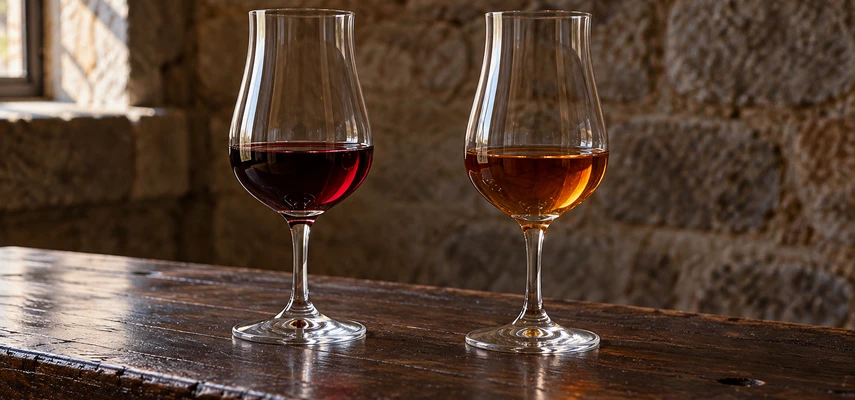

Adding grape spirit to wine raises its alcohol. The crucial question is when you add it. Fortified wine explained through that timing turns Port and Sherry from a confusing shelf of names into two understandable production stories. Add spirit while yeast is still working and you can preserve grape sugar. Add it after a dry fermentation and you begin with a different result.
This is Article #21 of The TFE Guide to WSET Level 2 Wine, Part IV: Sparkling and Fortified Wines. We’ll connect Port with Portugal and Sherry with Spain, then use maturation to explain their styles. Colour, sweetness and age all matter, but none works as a complete description on its own.
What WSET Level 2 expects you to know
The current WSET specification includes fortified wines in Learning Outcome 5. You need the key production processes, the regional associations and the principal styles. For Port, learn Ruby, Reserve Ruby, Late Bottled Vintage or LBV, Vintage and Tawny. For Sherry, learn Fino, Amontillado, Oloroso, Pale Cream, Medium, Cream and Pedro Ximénez or PX.
The first split is production timing; the next is maturation. Was sugar retained because fermentation stopped? Did the wine mature with significant oxygen exposure, under a protective yeast layer, or largely in bottle? Follow those questions and the style names start to describe consequences rather than demand heroic memorisation.
Port: stop fermentation while sugar remains
Port comes from Portugal’s Douro region. For the red styles central to this lesson, black grapes are crushed and fermented with their skins. Colour, tannin and flavour must be extracted over a relatively short fermentation. The producer adds grape spirit before the yeast has consumed all the sugar. The sudden alcohol increase stops fermentation, leaving a sweet, fortified wine.
The Port and Douro Wines Institute explains that sweetness depends on the point of spirit addition. Spirit supplies alcohol; it doesn’t have to supply the sweetness. That sweetness largely represents grape sugar that the interrupted fermentation has left behind. It’s a useful example of two characteristics coming from different parts of the process.
Now compare a dry, high-alcohol red with Port. Ripe grapes can produce substantial alcohol when their sugar ferments. Port combines fermentation-derived alcohol with added spirit, while retaining sugar. “High alcohol” alone therefore doesn’t prove fortification, and “sweet” alone doesn’t explain the timing. You need the mechanism, not just the finished description.
Ruby styles: preserve the fruit
Ruby Port is intended to retain a deep red colour and youthful berry or plum fruit. Storage that limits oxygen exposure helps preserve that character. Ordinary Ruby is generally ready to drink when released; putting every inexpensive bottle away for decades isn’t a reliable route to improvement. The producer has already aimed at an accessible style.
Reserve Ruby is a selection offering greater intensity and quality within the fruit-focused family. The term doesn’t turn it into Vintage Port. Think of Ruby and Reserve Ruby as related styles whose identity centres on red colour and fruit, rather than on the long oxidative development associated with aged Tawny.
This distinction is about the effect of maturation, not simply whether a vessel contains wood. A large vat allows a different relationship between wine and oxygen than a small cask. “Wood-aged” can describe several practical arrangements. Ask what the producer is trying to preserve or develop before predicting a nutty flavour from the word wood.
LBV and Vintage: both a year, different journeys
Late Bottled Vintage Port comes from a single harvest and spends longer in wood before bottling than Vintage Port. That additional pre-release maturation makes it more approachable when sold. Many examples are filtered and ready to serve without sediment removal, although unfiltered versions exist. Check the bottle rather than declaring that no LBV can ever need decanting.
Vintage Port also comes from a single harvest, selected for its quality and character. It is bottled after a comparatively short period of initial maturation and is intended to develop further in bottle. Over time, the fruit can evolve and sediment forms. Careful decanting of a mature bottle separates the clear wine from that deposit.
The Institute’s special-category explanations help distinguish these paths. “Late bottled” refers to when bottling occurs, not a promise that the wine has spent longer in the customer’s cupboard. Vintage and LBV aren’t interchangeable labels for old Port. Where the ageing happens is part of their meaning.
Tawny: a different direction of development
Tawny Port is a style family associated with paler tawny-brown colour and more developed flavours. In aged examples, extended cask maturation with oxygen exposure encourages dried-fruit, nut and caramel-like characters. Tannin becomes less prominent than in a youthful powerful Ruby-style wine. A Tawny with an age indication expresses an approved age-related character; it isn’t simply a single harvest date.
Be careful with ordinary inexpensive Tawny. Its colour and softer style don’t prove decades in a small barrel. The richest explanation of long oxidative development applies especially to aged Tawny styles. This is a useful general rule in wine study: don’t project the most elaborate production story onto every bottle sharing a family name.
Ruby and Tawny can both be sweet fortified reds, yet feel quite different. One emphasises youthful fruit, the other can emphasise development through oxygen and time. Their contrast makes maturation visible. You aren’t learning two unrelated products; you’re watching different choices act on a broadly related starting point.
Sherry: start by separating dry and sweet routes
Sherry comes from the Jerez area of Andalucía in southern Spain. The familiar dry styles begin with a white base wine, mainly from Palomino, fermented dry before fortification. Added spirit then helps establish the conditions for the intended ageing route. Unlike Port’s interruption, this doesn’t automatically leave a supply of unfermented grape sugar.
The official WSET educator notes provide the foundational comparison of these processes. The current specification controls the required scope. For the dry Sherry family, remember fermentation first, fortification afterwards, then biological ageing under flor, oxidative ageing, or a sequence involving both.
Sweet Sherry needs its own explanation. Some styles blend a dry wine with a sweet component. PX uses very sugar-rich dried Pedro Ximénez grapes to produce an intensely sweet wine. Don’t make the dry-base route into a claim that every Sherry starts and finishes dry. Equally, don’t let Cream’s sweetness convince you that Fino must be sweet too.
Flor is a yeast layer, not a flavouring
Flor forms a layer of yeast on the wine’s surface under suitable conditions. It protects the wine from much direct oxygen exposure while changing its composition and aromas. This biological ageing helps explain a pale, dry Fino with yeasty, almond-like and sometimes saline impressions. Those descriptors don’t mean almonds or salt have been added.
Fino’s pale colour isn’t evidence of weakness or lack of maturation. Its ageing environment is different from an oxygen-exposed wine’s. The yeast layer changes the direction of development. Connecting appearance with that protective mechanism is more useful than assuming all older wines must be dark brown.
Oloroso follows oxidative ageing without the protective flor layer. Oxygen exposure contributes to a deeper colour and nutty, dried-fruit and savoury complexity, with a fuller impression than Fino. Oloroso itself is dry. A dark colour or raisin-like aroma doesn’t prove sweetness; those are different observations and should be assessed separately.
Amontillado uses both ageing routes
Amontillado starts with biological ageing under flor and later continues oxidatively after flor is lost. It can therefore combine some of that earlier character with the colour and nutty complexity developed through oxygen exposure. Calling it simply “a Fino that stays under flor for ever” misses the change that defines the style.
The Sherry region’s style overview separates naturally dry, naturally sweet and blended sweet categories. That framework prevents an old-fashioned association between the word Sherry and a single sweet style from distorting the whole subject. Fino, Amontillado and Oloroso belong to the dry side of this comparison.
Solera maturation supports blending and continuity through fractional withdrawals and replenishment across groups of casks. It isn’t a process in which every barrel is emptied completely each year. At this level, understand the consistency and blending purpose rather than trying to memorise the plumbing of an individual bodega.
Put the sweet Sherry names in context
Pale Cream combines a pale, biologically aged wine character with sweetness. Medium commonly uses a more developed base and has a sweetness level between dry styles and the richest sweet blends, with variation within the category. Cream is a sweet, typically darker blend associated with an oxidative base. “Cream” doesn’t mean dairy cream has been added.
PX is the intensely sweet, dark, dried-grape style associated with Pedro Ximénez. Raisin, fig and treacle-like impressions can be pronounced. Its concentration comes from drying grapes and its production, not from a black grape’s skins. PX can also be used as a sweet component in blends, so grape, wine style and blending role should stay distinct.
To revise, draw two timelines. On Port’s line, put spirit before fermentation finishes. On dry Sherry’s line, put spirit after fermentation, then branch into flor, oxygen, or flor followed by oxygen. Add the sweet Sherry routes beside that second line. Those few arrows explain far more than a disconnected list of brown wines ever could.
Related study guides
Knowledge check: Port and Sherry
Choose one answer for each question.
1. Why does the familiar Port production process retain sweetness?
- Spirit stops fermentation before all sugar is consumed
- All sugar is added during decanting
- Flor turns alcohol into grape sugar
- Bottles are frozen for decades
2. Which country produces Port?
- Spain
- Portugal
- Italy
- Hungary
3. Which Port category is associated with long further development in bottle?
- Ordinary Ruby only
- Pale Cream
- Vintage
- Fino
4. Which description best suits aged Tawny Port?
- Always colourless and dry
- Sparkling and floral
- Protected by flor throughout
- Cask-developed, tawny-coloured, nutty and dried-fruited
5. When is a typical dry Sherry base wine fortified?
- After fermentation to dryness
- Before any grape juice exists
- Only after pouring into a glass
- While grapes remain on the vine
6. What is flor?
- Added powdered almonds
- A surface yeast layer
- A red grape pigment
- A category of Port sediment
7. Which Sherry has biological ageing followed by oxidative ageing?
- Fino kept continuously under flor
- Ruby
- Amontillado
- Prosecco
8. Which statement about Oloroso is correct?
- Its brown colour proves sweetness
- It must be sparkling
- It is protected by flor throughout ageing
- The unblended style is dry and oxidatively aged
9. Which association best describes PX?
- Pedro Ximénez; dried grapes; intensely sweet wine
- Pinot Noir; dry Champagne
- Glera; dry tank sparkling wine
- Palomino; mandatory red Port
10. What does Late Bottled Vintage indicate about Port?
- It has no harvest identity
- Single-harvest wine bottled after longer pre-bottling maturation than Vintage
- It is a sweetened Fino
- It must contain dairy cream
Answers and explanations
1. A — Fortification timing; LO5. Added spirit raises alcohol sufficiently to stop yeast before fermentation consumes all the grape sugar. Port’s sweetness therefore doesn’t require sugar to be supplied by the spirit.
2. B — Geography; LO5. Port’s regional association is Portugal’s Douro. Sherry is Spanish; keeping the two countries separate helps anchor their very different production stories.
3. C — Port maturation; LO5. Vintage Port is bottled relatively early and can develop for a long time in bottle. Sediment develops, making careful decanting relevant to mature examples.
4. D — Tawny style; LO5. Extended oxidative cask ageing in aged Tawny develops colour and nutty, dried-fruit characters. Don’t assume ordinary inexpensive Tawny necessarily received decades of ageing.
5. A — Dry Sherry production; LO5. The dry base wine completes fermentation before fortification. This differs from Port’s interruption while substantial grape sugar remains.
6. B — Biological ageing; LO5. Flor is a layer of yeast that influences flavour and protects wine from much direct oxygen exposure. Its presence explains part of Fino’s distinctive character.
7. C — Amontillado; LO5. Amontillado undergoes an initial biological phase, then oxidative ageing. That sequence separates it from continuously flor-protected Fino and oxidatively aged Oloroso.
8. D — Oloroso; LO5. Oloroso is a dry oxidative style. Darker colour and dried-fruit-like aromas do not themselves establish residual sweetness, although Oloroso can contribute to sweet blends.
9. A — Naturally sweet Sherry; LO5. Pedro Ximénez grapes are dried to concentrate their sugar and flavour. The resulting PX style is intensely sweet and can also serve as a blending component.
10. B — LBV; LO5. LBV retains a single-harvest identity while spending longer before bottling than Vintage Port. Many examples are approachable on release; filtration and sediment handling vary.
One-page revision summary
| Anchor | Production or maturation | Expected result |
|---|---|---|
| Port | Portugal; Douro; spirit during fermentation | Sweet fortified wine |
| Ruby | Preserve youthful character | Deep red; berry/plum fruit |
| Reserve Ruby | Selected fruit-focused quality | Greater intensity within Ruby family |
| LBV | Single harvest; longer pre-bottling maturation | More approachable on release; check filtration |
| Vintage | Single harvest; relatively early bottling | Long bottle development; sediment |
| Aged Tawny | Extended oxidative cask ageing | Tawny colour; nuts, dried fruit, caramel-like notes |
| Dry Sherry | Spain; Jerez; dry white base before fortification | Subsequent ageing defines style |
| Fino | Biological ageing under flor | Pale, dry, yeasty/almond-like |
| Amontillado | Biological then oxidative ageing | Dry; combines earlier and oxidative character |
| Oloroso | Oxidative ageing | Dry, deeper colour, fuller, nutty |
| Pale Cream | Sweetened pale biological style | Pale and sweet |
| Medium | Developed base; sweetened category | Variable medium sweetness |
| Cream | Sweet blend, typically oxidative base | Darker and sweet; no dairy implication |
| PX | Dried Pedro Ximénez grapes | Intensely sweet; raisin/fig/treacle-like |
| Solera | Fractional blending and replenishment | Continuity and consistency |
Use this independent guide with current WSET course materials. These original questions are practice material, not official examination questions.












