










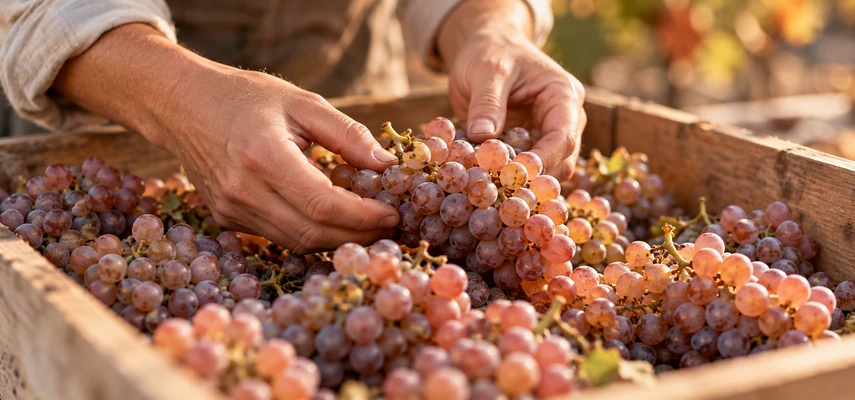

If Pinot Grigio and Pinot Gris were poured into identical glasses, could you always tell which name was on the label? No: Pinot Grigio vs. Pinot Gris is a comparison of naming traditions and familiar styles, not a contest between two separate grapes. Both names refer to the same variety. The differences become useful when you connect them to place, ripeness and production.
This is Article #7 of The TFE Guide to WSET Level 2 Wine, Part II: The Eight Principal Grape Varieties. We’ll compare the fresh Italian reference with fuller Alsace expressions, while keeping room for wines that cross that tidy boundary. A helpful study pattern shouldn’t become a rule that real bottles are forbidden to break.
What WSET Level 2 expects you to know
LO3 asks you to understand the variety’s characteristics, environmental and production influences, specified origins and style comparisons. The current specification names Veneto for PGI production, Delle Venezie and Friuli-Venezia Giulia in Italy, and Alsace in France. Those are the required homes for this lesson, even though the grape grows elsewhere too.
The first examinable distinction is actually an identity: Grigio and Gris are the same variety. The second is a comparison: a light, fresh, relatively restrained style is different from a fuller, riper, more textured style. You need to explain how those differences can arise without inventing a botanical divide.
Why two names don’t create two grapes
Grigio is Italian and Gris is French. Both connect to the grape’s greyish-pink skin appearance. It is classed among the principal white-wine varieties for this course, despite those pigments. Skin colour and the colour of a conventionally made finished wine aren’t identical questions.
Early separation of juice and skins helps produce a pale wine. More skin contact can supply additional colour and texture in some styles. You don’t need an advanced lesson on skin-contact wines to understand the basic point: the berry’s appearance doesn’t force every bottle to have the same colour.
WSET’s introduction to the two names confirms the shared variety. Keep that identity fixed while you explore the range. Otherwise every regional difference starts looking like evidence that a second grape must have entered the vineyard.
The classic light Italian reference
Many familiar Italian Pinot Grigios are dry, light-bodied and refreshing, with relatively restrained aromas. Pear, green apple and citrus are useful reference associations. The charm can lie in clarity and freshness rather than dramatic aromatic intensity or a long list of secondary flavours.
Acidity provides an important part of the structure, while alcohol is commonly moderate in the lighter reference style. Don’t describe the wine as full-bodied merely because it has recognizable fruit, and don’t call it sweet because pear smells like a sweet food. These are the same distinctions established in Article #1.
“Restrained” isn’t a synonym for faulty or worthless. A clean, balanced wine intended for uncomplicated early drinking has a different aim from a highly concentrated bottle intended for development. The correct comparison describes the difference first; it doesn’t smuggle a price judgment into every tasting word.
Ripeness, crop and harvest: how the style is encouraged
Growing and harvest decisions help explain the lighter expression. Picking at an appropriate point can retain freshness and avoid the greater sugar accumulation associated with riper fruit. That can support a lower potential alcohol than a later-picked counterpart, all else equal.
Yield and vine balance also matter. A producer seeking a readily accessible style may make different crop and harvest decisions from one seeking more concentration. But “large crop equals bad wine” is too crude. The relationship depends on the site, vine resources and whether the fruit reaches the condition required for its intended wine.
Weather remains important because the intended harvest point isn’t the only consideration. Growers must also assess fruit health and the season’s conditions. A style is created through decisions within constraints, rather than by selecting “Italian” on a winery control panel.
Winery choices that preserve freshness
Relatively cool fermentation and vessels such as stainless steel can help emphasize primary fruit without obvious oak flavours. Keeping the style straightforward and fresh may suit early release and early drinking. Not every wine needs a long cellar apprenticeship before it has something useful to say.
Malolactic conversion may be avoided when the objective is to retain acidity and the desired fruit character. Lees contact can be used to influence texture, but it doesn’t require pronounced toast or butter. Remember that lees, oak and malolactic conversion are separate choices even when producers combine them in other wines.
These decisions explain why a pale, dry Pinot Grigio can feel refreshing and relatively light. They don’t establish a universal rule that Italian producers must never use oak or that every wine bearing the name has an identical production history.
Veneto, Delle Venezie and Friuli-Venezia Giulia
Veneto is a prescribed PGI association. Delle Venezie is the important DOC name in the current study list. The official consortium’s overview explains the northeastern Italian production context. Keep the two names distinct rather than treating every occurrence of “Venezie” as interchangeable.
DOC is an Italian protected-origin category; it doesn’t directly tell you sweetness, oak treatment or whether you personally prefer the wine. Those questions require more information. We will compare the broader classification vocabulary in Article #25.
Friuli-Venezia Giulia, in Italy’s northeast, is also prescribed and can provide a more complex, fuller-bodied comparison with the light Italian reference. This matters because it prevents the country boundary from becoming the style boundary. A fuller Italian Pinot Grigio is entirely compatible with the lesson, not an exception that disproves the shared grape identity.
When revising, say the three associations aloud and attach a role to each: Veneto as the PGI reference, Delle Venezie as the DOC name, and Friuli-Venezia Giulia as an important source of more substantial examples. You’re building a usable map, not memorizing three similar-looking strings.
Alsace Pinot Gris: riper fruit and more weight
Alsace provides the prescribed French association and a classic fuller Pinot Gris reference. Riper fruit can support richer flavours, more alcohol if fermented dry and a broader palate impression. Peach, pear and spice-like or smoky associations can contribute to the description, depending on the wine.
The Alsace wine body’s Pinot Gris profile emphasizes its generous texture and range. Some examples retain sweetness; others are dry. “Gris” therefore isn’t a legally reliable synonym for sweet, just as “Grigio” isn’t a global guarantee of one particular acid level.
Acidity remains relevant, but the overall balance may feel softer and broader than in the light Italian comparison. Avoid describing that difference as “no acid.” Sugar, alcohol, fruit and texture can change how acidity is perceived without removing it from the wine.
Don’t confuse richness with oak or sweetness
A fuller wine can gain weight from ripe grapes, alcohol, sugar where present and production choices. A creamy or broad impression doesn’t prove the use of new oak. Nor does a spicy association establish an exact barrel treatment without other evidence.
Many Alsace expressions aim to preserve varietal character rather than make strong oak aromas the main event. Old wooden vessels and lees choices can play a role without giving a conspicuously woody profile. The useful question is what the wine actually shows, followed by which production choices could help explain it.
Similarly, ripe pear or peach character isn’t a sugar measurement. A dry, full-bodied Pinot Gris can coexist with a lighter dry Pinot Grigio; sweetness isn’t required to explain every difference between them. Separate fruit, sweetness and body before reaching for the regional comparison.
Labels: use clues without turning them into guarantees
Alsace Grand Cru is a relevant origin-classification term, not a declaration that every example must be sweet. Vendanges tardives means late harvest and is also useful when the discussion turns to riper material and concentrated styles. Detailed permissions and classifications belong to the relevant regional rules, not to a translation of the grape’s name.
The international naming habit can itself be a style clue: producers outside Italy and France may choose Grigio to suggest a fresher approach or Gris to suggest a fuller one. But that isn’t a universal legal formula. For this course, give priority to the prescribed regions and the style actually specified in the question.
If you see a familiar name on an unfamiliar bottle, resist filling in the entire tasting note in advance. The label provides context. The wine still supplies the evidence.
Ageing and quality: different aims need different measures
The lighter Italian style is generally intended for early drinking while its fresh fruit is central. More concentrated Alsace or other ambitious examples can have greater capacity to develop, depending on balance and the particular wine. No grape name guarantees a useful number of years in the cellar.
As fruit develops with age, honeyed, dried-fruit or other mature character may appear in suitable wines. That possibility shouldn’t be confused with a requirement that every Pinot Gris must show tertiary aromas. A youthful bottle can be successful on its own terms.
For a quality comparison, consider balance, concentration, complexity and persistence. A full-bodied wine isn’t automatically better than a light one, and a dry wine isn’t automatically more serious than one retaining sweetness. The aim is to justify a conclusion from relevant features rather than reward the loudest component.
Common mistakes and exam traps
Pinot Grigio and Pinot Gris are one grape. Italian examples aren’t all light, Alsace examples aren’t all sweet, and richness doesn’t prove new oak. Greyish-pink berries can produce pale white wine because production controls extraction. Finally, Delle Venezie and Friuli-Venezia Giulia aren’t interchangeable names for a single compulsory style.
Related study guides
- The WSET Level 2 tasting framework
- Climate, ripening and vineyard decisions
- Riesling: Germany, Alsace and Australia
- Understanding wine labels
Knowledge check: 10 original practice questions
Choose one answer each. These independent questions support LO3 and associated production comparisons.
1. What is the relationship between Pinot Grigio and Pinot Gris?
- Two names for the same grape variety.
- Two unrelated grapes.
- A red grape and a sparkling method.
- A grape and a barrel type.
2. Which description fits the classic light Italian reference?
- Mandatory sweetness and high tannin.
- Dry, relatively light and refreshing, with restrained fruit.
- Always heavily oaked.
- Always full-bodied and high in sugar.
3. Which region is the prescribed French association?
- Bordeaux.
- Beaujolais.
- Alsace.
- Chablis.
4. Which statement about Italian Pinot Grigio is correct?
- It cannot be fuller-bodied.
- It must be sweet.
- It must use new oak.
- Friuli-Venezia Giulia can provide more substantial, complex examples.
5. What does ripe pear character directly describe?
- An aroma or flavour resemblance, rather than guaranteed sugar.
- Exact residual sugar.
- Compulsory oak maturation.
- A fault caused by bottling.
6. Which name is the prescribed Italian DOC association?
- Mosel.
- Delle Venezie.
- Sancerre.
- Tokaj.
7. Why can greyish-pink grapes produce a pale white wine?
- Their skins must be painted.
- They must be blended with water.
- Early separation of juice and skins limits colour extraction.
- Fermentation always removes every pigment.
8. Which is a sound interpretation of the word Gris?
- A guarantee of sweetness worldwide.
- A requirement for new oak.
- A distinct grape from Grigio.
- A French name that may suggest a style context without guaranteeing one recipe.
9. Which factor can help explain a fuller wine without requiring sweetness?
- More alcohol from riper fruit fermented dry.
- The spelling of the grape name alone.
- The bottle’s weight.
- The complete absence of acidity.
10. Which statement about ageing is sound?
- Every Pinot Grigio must age for decades.
- Many light styles suit early drinking, while some concentrated examples can develop.
- Age always improves a weak wine.
- Only sweet wines can change in bottle.
Answers and explanations
1. A — Variety identity; LO3. Italian Grigio and French Gris refer to the same variety, despite familiar style differences.
2. B — Italian reference; LO3. The typical light comparison emphasizes freshness and primary fruit rather than obligatory richness.
3. C — France; LO3. Alsace is the required French association for this grape.
4. D — Regional variation; LO3. Friuli-Venezia Giulia prevents the simplistic assumption that every Italian example must be light.
5. A — Fruit versus sweetness; LO3 foundation. A fruit resemblance doesn’t directly measure remaining sugar.
6. B — Italy; LO3. Delle Venezie is the prescribed DOC name, distinct from Veneto’s PGI association.
7. C — Production; LO2/3. Separating skins and juice early limits the transfer of pigment into the wine.
8. D — Naming conventions; LO3. Style associations are clues, not universal legal guarantees about sweetness or oak.
9. A — Body; LO3. Alcohol can contribute weight even when the wine is dry, so sweetness isn’t required for fullness.
10. B — Ageing; LO3. Intended style and the particular wine determine useful development; the name alone doesn’t guarantee it.
One-page revision summary
| Association | Study reference | Don’t infer automatically |
|---|---|---|
| Grigio and Gris | Same grape, different language | Two botanical varieties |
| Veneto | Prescribed Italian PGI association | One exact finished profile |
| Delle Venezie | Prescribed Italian DOC name | Sweetness or mandatory oak |
| Friuli-Venezia Giulia | Important fuller Italian comparison | All Italian Pinot Grigio is light |
| Alsace | Fuller, riper Pinot Gris reference; sweetness varies | Gris always means sweet |
| Light style | Fresh fruit, relatively light body, early drinking | Low quality by definition |
| Fuller style | Riper fruit, more weight, possible development | Proof of sugar or new oak |
Keep the identity fixed, then explain the style. One grape can take different routes from vineyard to bottle without needing a new name in the botanical catalogue.












