










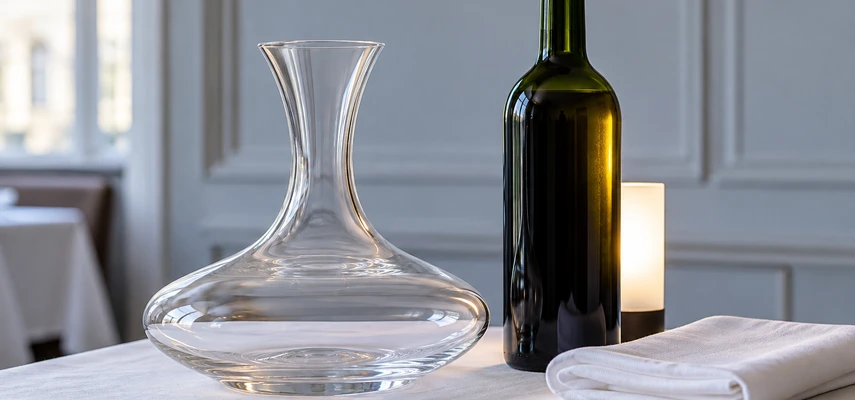

A well-made wine can have a disappointing evening if it spends the afternoon beside a radiator, arrives in a detergent-scented glass or is poured over its own sediment. Wine storage and service explained through a few practical principles help protect what the producer made. Most of the work is simple; the trick is knowing why it matters.
This is Article #22 of The TFE Guide to WSET Level 2 Wine. We’re now applying the wine knowledge to the bottle in front of you: where to keep it, how cold to serve it, how to open it and whether decanting will help. Good service makes the wine easier to enjoy without turning dinner into a technical demonstration.
What WSET Level 2 expects you to know
Learning Outcome 6 in the current WSET specification covers ideal storage conditions, preservation systems, recommended service temperatures, opening still and sparkling wine, decanting, glassware and checks on appearance and nose. Wine faults and food pairing receive their own articles, but the service checks start here.
Keep three questions separate. Storage concerns protecting wine before consumption, potentially for a long period. Preservation concerns slowing deterioration after opening. Service concerns presenting wine in good condition now. A refrigerator might help in all three settings for different reasons, but that doesn’t make their objectives identical.
Storage: stable, cool and away from light
Heat speeds up chemical change. Prolonged excessive warmth can make wine develop prematurely and lose fresh fruit; severe exposure may damage it. A stable, cool storage environment is therefore preferable to repeated heating and cooling. The kitchen shelf above the oven is convenient for finding the bottle and inconvenient for almost everything else.
Strong light is another avoidable influence. Keep stored wine away from direct sunlight and intense illumination. Darkness also helps prevent a sunny position from warming the bottle. You don’t need a romantic underground cave to apply the principle: a suitable cool, dark cupboard can be better than a bright decorative rack in a hot room.
For long storage, bottles sealed with natural cork are conventionally kept on their sides to keep wine in contact with the cork and help prevent drying. That rationale doesn’t apply in the same way to screwcaps. Position should follow closure and storage needs, rather than a blanket claim that every upright bottle has already been ruined.
Ageing isn’t a reward every wine wants
Most everyday wines are sold ready to drink and don’t require further cellaring. A simple fresh white can lose the very fruit that made it attractive if you wait too long. Storage protects a wine’s intended condition; it doesn’t automatically give a modest bottle the concentration, balance and structure needed for worthwhile development.
For wines intended to mature, suitable conditions let development proceed more predictably. Fruit may evolve and colour can change, but age isn’t itself a fault. The question is whether the wine remains balanced and appealing. Keep the producer’s intended style and the wine’s condition in mind rather than treating a birthday as a quality score.
Service temperature changes the impression
Cold can suppress aroma and make a wine seem less expressive. Excessive warmth can emphasise alcohol and reduce the sense of freshness. The right temperature depends on style: you are balancing refreshment with enough aromatic expression, rather than trying to make every bottle feel identical to the touch.
For Level 2, remember the categories first. Sparkling and sweet wines are served well chilled. Light- and medium-bodied whites and rosés are chilled; full-bodied whites are lightly chilled. Light-bodied reds can be lightly chilled, while medium- and full-bodied reds are served at room temperature in the traditional cool-room sense. A modern overheated room isn’t the intended target.
WSET’s temperature guidance gives useful practical context. A full-bodied oaked Chardonnay generally benefits from less chilling than a simple light Pinot Grigio. That allows its texture and aromas to emerge. A warm red can benefit from gentle cooling rather than a declaration that red wine must never enter a refrigerator.
Adjust temperature gradually and deliberately
An ice bucket containing both ice and water cools efficiently because the water contacts much of the bottle’s surface. Ice alone leaves insulating gaps. Once the wine reaches the intended condition, monitor it rather than leaving it to become progressively colder. Wine poured into a glass will also warm towards the surrounding temperature.
If wine is too cold, let it warm gradually. Don’t put it on a heater or use hot water to hurry matters. If it’s too warm, use controlled cooling. For revision, explain both the action and its purpose: changing temperature adjusts the wine’s expression; it doesn’t remove a fault or reverse serious past heat damage.
Glassware: clean, clear and useful
A clean, colourless glass makes it easier to assess appearance. A bowl with room for a modest pour lets aromas gather and allows gentle swirling when appropriate. A stem provides a place to hold it without rapidly warming the bowl or covering it with fingerprints. The exact designer shape is less important than a sound, clean glass that suits the task.
Detergent residue and stale cupboard smells can interfere with the nose. Check the empty glass if something seems wrong before blaming the wine. Sparkling wine also needs glassware that supports enjoyable aroma and retained sparkle; a narrow flute and a broader tulip offer different compromises. No glass can manufacture quality that the wine lacks.
Don’t fill a tasting glass to the brim. Leave room to move the wine and smell it without decorating your sleeve. Good presentation helps observation, but there is no reason to turn glass choice into an excuse for ignoring the much larger effects of temperature, cleanliness and the wine’s actual condition.
Opening still wine without drama
For a cork-sealed still wine, remove the capsule neatly below the lip and wipe the bottle neck. Centre the corkscrew in the cork and withdraw it steadily, avoiding unnecessary disturbance of the bottle. Wipe the lip again if needed. A sound screwcap simply needs controlled removal, with the neck kept clean.
An old cork may be fragile. Work carefully and avoid forcing fragments into the wine. A broken cork doesn’t automatically mean cork taint; physical breakage and chemical contamination are different problems. If sediment is present, disturbing the bottle vigorously makes subsequent separation harder. Handling should follow the bottle’s condition, rather than a single hurried opening routine.
Sparkling wine: control the cork throughout
Chill the bottle first and keep it pointed away from people and fragile objects. Avoid shaking it. Remove the foil, keep a hand over the cork and loosen the wire cage while maintaining control. Hold the bottle at an angle, around 45 degrees, grip the cork and turn the bottle gently, allowing the pressure to ease the cork out gradually.
Aim for a quiet release rather than a flying projectile. A cloth can help grip, but it doesn’t replace continuous control of the cork. The pressure remains present after the cage loosens. That is why you don’t set the bottle down with the cork unsecured while searching for glasses. Opening is a short sequence with one consistent priority: control.
Decanting has two different purposes
For a mature wine with sediment, decanting separates clear wine from the deposit. Let sediment settle beforehand, then pour slowly into a clean decanter while watching the wine near the bottle’s shoulder against a light. Stop before the sediment enters the decanter. The aim is separation, so a dramatic splash works against your purpose.
For some young wines, decanting deliberately increases air exposure and may help the wine become more expressive. That isn’t the same task as removing sediment. A delicate mature wine can fade with excessive exposure, so “decant everything for hours” is poor advice. Consider the wine and assess its response rather than following a fixed theatrical ritual.
WSET’s service and decanting discussion makes the practical distinction useful. Neither kind of decanting is a general repair kit for faulty wine. Pouring a cork-tainted wine into expensive glassware simply gives the fault more impressive accommodation.
After opening: slow deterioration
Opening exposes wine to air. Replace the closure and keep the wine cool between servings; lower temperature slows change. A vacuum system removes some air from a resealed still-wine bottle, while an inert gas system reduces the wine’s contact with oxygen. Neither approach promises indefinite freshness or restores a wine that has already deteriorated.
WSET’s preservation overview compares these options. Use a proper sparkling-wine stopper for an opened sparkling bottle and refrigerate it. A vacuum pump is unsuitable because it encourages loss of the gas you want to retain. A spoon balanced in the neck isn’t an effective substitute for a pressure-retaining closure.
Finally, check the wine’s appearance and nose before serving. Is its colour plausible for the style and age? Is sediment expected? Does it smell clean and characteristic, or suggest a problem? Observation comes before diagnosis. Put those checks beside sensible temperature, clean glasses and careful opening, and you have a service routine that earns its place at the table.
Related study guides
Knowledge check: storage and service
Choose one answer for each question.
1. Which is the best general long-term storage choice?
- Cool, stable and dark
- Beside an operating oven
- In direct sun
- Repeated daily heating and cooling
2. Why are natural-cork bottles conventionally stored horizontally?
- To create bubbles
- To keep wine in contact with the cork
- To remove all sediment
- To turn white wine red
3. Which style is normally served well chilled?
- Full-bodied tannic red
- Every wine regardless of style
- Sparkling wine
- Only wines with corks
4. What does excessive chilling tend to do to aroma expression?
- Guarantee complexity
- Remove cork taint
- Create oak aromas
- Suppress it
5. What is the main purpose of decanting a mature wine with sediment?
- Separate clear wine from the deposit
- Add sugar
- Repair heat damage
- Eliminate alcohol
6. When opening sparkling wine, what should happen after loosening the cage?
- Leave the cork unsecured
- Maintain control of the cork
- Point it towards guests
- Shake the bottle
7. What does an inert gas preservation system aim to reduce?
- The grape’s original acidity
- The bottle’s glass thickness
- Wine contact with oxygen
- All residual sugar
8. Why is a vacuum pump unsuitable for sparkling wine?
- It adds tannin
- It dries the grapes
- It creates sediment
- It promotes loss of dissolved gas
9. An aroma seems wrong in one glass. What is a useful preliminary check?
- Check the glass for contamination
- Assume all bottles are faulty
- Heat the wine strongly
- Add perfume
10. What does traditional room-temperature red-wine service imply?
- The hottest room available
- A suitable cool room, rather than excessive warmth
- Mandatory radiator heating
- The same temperature as well-chilled sparkling wine
Answers and explanations
1. A — Storage; LO6. Stable cool conditions and protection from light help preserve wine. Heat and repeated fluctuations encourage unwanted change rather than improving every bottle.
2. B — Bottle position; LO6. Wine contact helps prevent natural cork from drying during storage. The same rationale doesn’t apply in an identical way to a screwcap.
3. C — Temperature; LO6. Sparkling wines are normally well chilled. Service categories depend on style, so full-bodied reds and sparkling wines need different treatment.
4. D — Temperature effects; LO6. Very low temperature can make aromas less expressive. Letting an over-chilled wine warm gradually can reveal more of its character.
5. A — Decanting; LO6. Slow careful transfer leaves sediment in the original bottle. This differs from deliberate aeration of a young wine and doesn’t repair established faults.
6. B — Sparkling opening; LO6. Continuous cork control matters because the bottle remains pressurised. Keep it directed away from people and ease the cork out gradually.
7. C — Preservation; LO6. Inert gas systems limit oxygen contact. They slow deterioration of suitable wine rather than removing acidity or reversing previous damage.
8. D — Sparkle preservation; LO6. A vacuum encourages carbon dioxide to leave the wine, undermining the desired sparkle. Use an appropriate sparkling stopper and refrigeration instead.
9. A — Service checks; LO6. A contaminated glass can distort the wine’s nose. Checking equipment prevents an unsupported diagnosis and helps isolate the source of the problem.
10. B — Red-wine service; LO6. Traditional room temperature refers to a cool setting. Excessive modern room warmth can emphasise alcohol and make the wine feel less fresh.
One-page revision summary
| Task | Remember | Reason |
|---|---|---|
| Storage | Cool, stable, dark | Protect intended condition |
| Natural cork | Conventionally horizontal | Maintain wine contact with cork |
| Ageing | Only suitable wines benefit | Time doesn’t manufacture structure |
| Sparkling/sweet | Well chilled | Freshness and style balance |
| Light/medium white and rosé | Chilled | Refreshing presentation |
| Full-bodied white | Lightly chilled | Allow aroma and texture expression |
| Light red | Can be lightly chilled | Preserve freshness |
| Medium/full red | Cool room temperature | Avoid excessive alcohol emphasis |
| Glassware | Clean, colourless, room to swirl | Clear appearance and nose |
| Still opening | Neat capsule removal; steady cork extraction; clean lip | Protect condition and presentation |
| Sparkling opening | Chilled; point away; control cork; turn bottle gently | Controlled pressure release |
| Sediment decanting | Settle; pour slowly; stop at deposit | Separate clear wine |
| Aeration | Assess suitable wine | May increase expression; not universal |
| Open still wine | Reseal, cool; vacuum or inert gas as appropriate | Slow deterioration |
| Open sparkling wine | Proper stopper and cool storage | Retain gas; avoid vacuum |
| Service check | Appearance and nose | Identify possible condition problems |
This independent study guide complements current WSET course materials. Practice questions are original, not official examination material.












