










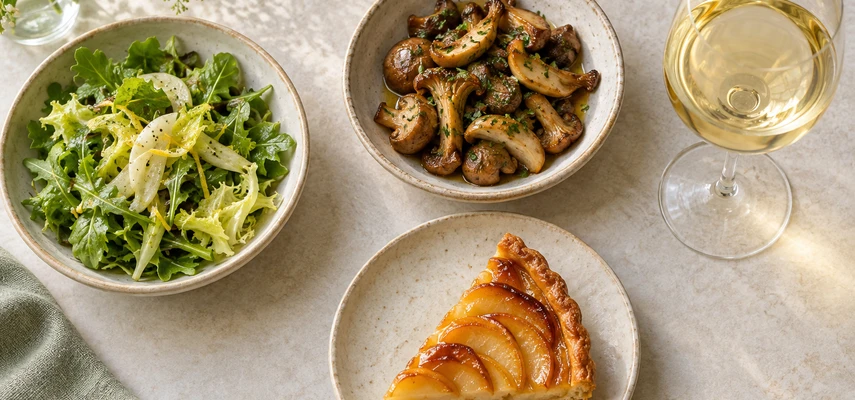

Take a sip of wine, eat something sweet, then try the same wine again. The liquid hasn’t changed, but your impression may have. Food and wine pairing explained through those shifts is much more useful than a rule that assigns every fish a white wine and every steak a red. The sauce can have a say, too.
This is Article #24 of The TFE Guide to WSET Level 2 Wine. We’ll examine sweetness, umami, acidity, salt, flavour intensity, fat and chilli heat in food, then connect them to what you perceive in the wine. The aim is a repeatable way of thinking, with room for personal preference and the actual dish on the plate.
What WSET Level 2 expects you to know
Learning Outcome 6 in the current WSET specification names those seven food components. It also identifies wine characteristics affected by food: sweetness, acidity, bitterness from tannins or oak, fruitiness and alcohol. You need to predict interactions, rather than memorise an enormous menu of supposedly perfect matches.
The wording matters: we’re talking about perception. A salty bite doesn’t physically remove the wine’s acid from the glass. A sweet dessert doesn’t drain its sugar. Your palate’s experience of the following sip changes. Once you keep that distinction clear, seemingly contradictory advice becomes easier to sort out.
Begin with the whole dish
Identify the strongest components before choosing a wine. Plain grilled chicken, chicken in a sweet glaze and chicken in a fiery chilli sauce share a protein but present different pairing problems. The main ingredient is a starting point; cooking, sauces, seasoning and accompaniments can change the dominant impression.
Likewise, “red wine” is too broad to predict a result. A light, fruity, low-tannin red behaves differently from a concentrated, tannic, high-alcohol red. Describe the wine’s structure as well as its colour. Pairing becomes more reliable when both sides of the comparison contain useful information instead of a broad category name.
Sweetness in food can make wine seem harder
Sweet food tends to make wine seem less sweet and less fruity, while acidity, bitterness and drying sensations can become more noticeable. Try imagining a dry red immediately after a very sweet mouthful of cake. The wine’s ripe fruit aroma doesn’t guarantee that it will feel sweet enough to hold its own.
This is why a common starting point for dessert is a wine at least as sweet as the dish. A suitable sweet wine can retain an appealing balance after the food, while a dry wine may seem thin or severe. WSET’s winter pairing discussion explains the direction of that interaction.
Separate fruitiness from sweetness here. A dry Gewürztraminer can smell intensely of lychee, and a dry red can smell of ripe blackberries. Those aromas don’t establish residual sugar. If the problem is a very sweet dish, choosing the fruitiest-smelling dry bottle doesn’t automatically solve the structural mismatch.
Umami can expose tannin and bitterness
Umami is the savoury taste associated with foods such as mushrooms and mature ingredients. It can make wine seem more bitter, more drying and more acidic, with less apparent sweetness, fruitiness and body. Tannic or strongly oaked wines can become particularly challenging when that interaction dominates the dish.
But foods rarely contain only one taste. Mature hard cheese can bring umami alongside salt and fat. Salt can soften some of the harder impressions that umami accentuates. That’s why a single food word doesn’t tell you everything: an unsalted mushroom preparation and a well-seasoned mushroom dish may lead you towards different choices.
For a dish dominated by umami without much balancing salt, start with a fruit-focused wine with lower tannin and modest oak influence. This is a direction for choosing, rather than a guarantee that everyone must prefer the same bottle. Your job is to explain the predicted effect and then assess the actual combination.
Acidity in food often makes wine seem softer
An acidic dish can make the wine seem less acidic and more fruity or sweet. A lemon-dressed salad therefore creates a different context from plain leaves. A wine with enough acidity can retain freshness alongside the dish; a low-acid wine may seem flat once the food has set a sharper reference point.
Think of tasting orange juice after something much more sour. The reference point changes the experience. With food and wine, an acidic sauce can make a high-acid wine feel more balanced. That doesn’t mean the sauce has neutralised the acid in the bottle. The interaction concerns the sip as you perceive it after the bite.
Acidic food can also soften perceived bitterness and drying character. Keep the main prediction clear for revision: food acidity tends to reduce the wine’s apparent acidity and enhance fruitiness. WSET’s pairing principles place this in the wider context of changing sensory reference points.
Salt usually makes wine easier to accommodate
Salt in food tends to soften perceived bitterness, tannin-related drying and acidity, while enhancing fruitiness and body. This helps explain why a wine that seems rather firm on its own can become more comfortable with a seasoned dish. The food hasn’t aged the wine instantly; the pairing changes how its structure comes across.
You don’t need to add ever more salt to make wine acceptable. The useful lesson is observational: notice whether the dish already contains a salty component and consider how that may counterbalance other tastes. A savoury aged cheese is a more complicated pairing partner than the word umami alone might suggest.
Salt and acidity in food are often described as helpful to wine because they can soften harder impressions. Sweetness and umami can make those impressions more obvious. Learn those two broad directions, then add the qualifications. It is a compact framework, but it still leaves room for several components operating at once.
Flavour intensity needs enough company
A delicate wine can be overwhelmed by a very strongly flavoured dish even when the structural interaction is comfortable. Conversely, a powerful wine can dominate subtle food. Match intensity as well as considering sweetness, acid and tannin. A gentle white beside a deeply reduced sauce may disappear into the background.
Intensity doesn’t mean alcohol alone. A modest-alcohol aromatic wine can have substantial flavour, while a high-alcohol wine isn’t automatically the most expressive choice. Think about aroma strength, concentration and the food’s dominant flavours. The useful question is whether both remain perceptible and enjoyable together, rather than which one wins.
You can complement flavours, such as a toasty wine with a roasted preparation, or create a contrast, such as fresh acidity beside richness. These are approaches to enjoyment, not additional laws that override structural problems. A shared aroma won’t rescue every excessively sweet or intensely hot pairing.
Fat and richness make freshness valuable
Fatty or oily food can make a high-acid wine feel softer, while the wine’s freshness provides a refreshing contrast to the food’s richness. That’s the practical meaning behind saying acidity “cuts through” fat. It isn’t a claim that the wine chemically dissolves the meal or that acidity changes the food’s nutritional composition.
Protein-rich foods can also change the experience of tannin, but don’t make “fat removes tannin” a universal explanation for every red-wine pairing. Food composition and preparation vary. For the Level 2 framework, identify richness, consider enough acidity and flavour intensity, then account for seasoning and any sweet or hot sauce.
For example, a creamy dish might suit a fuller white with adequate acidity. That still leaves choices about oak, aromatic intensity and the sauce. A light white with sharp acidity isn’t the only possible partner, and a full-bodied white doesn’t automatically lack freshness. Describe the relevant features rather than judging from colour or weight alone.
Chilli heat makes alcohol more noticeable
Chilli heat is a burning sensation rather than one of the basic tastes. It can make alcohol feel hotter and increase the wine’s perceived bitterness, while reducing apparent sweetness and fruit. A powerful high-alcohol red may therefore intensify a fiery dish rather than provide relief. More intensity isn’t always the right answer to heat.
A lower-alcohol, fruit-focused wine with some sweetness can be a useful starting point, especially if tannin is modest. WSET’s current spice discussion gives practical examples. Don’t turn that into a promise that sweet wine erases chilli or that all aromatic grapes are automatically sweet. Check the actual style.
Personal tolerance matters a great deal here. Someone who enjoys the extra burning sensation may prefer a combination another person finds uncomfortable. Explain the expected direction first, then consider the drinker’s preference. Predicting that alcohol becomes more noticeable is different from declaring that every person must dislike the result.
Use a repeatable pairing sequence
First identify the dominant food components. Next describe the candidate wine’s sweetness, acidity, tannin or oak bitterness, fruitiness, alcohol and intensity. Predict which impressions the food will amplify or soften. Finally assess whether both food and wine remain enjoyable. That sequence works for vegetarian dishes, seafood, meat and desserts alike.
For study, compare the same wine before and after a small bite rather than comparing unrelated wines with unrelated meals. You are looking for a change in perception, not trying to prove one fashionable match correct. Keep the experiment simple and the notes specific: fruit seems reduced, acid seems softer, or alcohol feels hotter.
In an exam question, identify the direction of the interaction before being distracted by attractive dish names. Sweet food making a dry wine taste sweeter is the wrong direction. Chilli making high alcohol disappear is another reversal. Understanding those causes and effects gives you a dependable answer even when the particular meal is unfamiliar.
Related study guides
- The WSET Level 2 tasting framework
- Riesling: Germany, Alsace and Australia
- Cabernet Sauvignon: Bordeaux and Napa
- Furmint and Tokaj
- Sparkling wines and their methods
- Port, Sherry and fortification
- Wine storage, service and decanting
Knowledge check: food and wine
Choose one answer for each question.
1. What does sweet food tend to do to a dry wine’s apparent fruitiness?
- Reduce it
- Guarantee an increase
- Turn it into carbonation
- Remove the wine’s alcohol
2. Which is a useful starting point for a sweet dessert?
- The driest wine available regardless of dish
- A wine at least as sweet as the dish
- Any wine with a fruit aroma
- A wine chosen only by colour
3. Which food component can make tannic wine seem more bitter and drying?
- Salt only
- Acidity only
- Umami
- Plain water
4. What does acidity in food tend to do to wine’s perceived acidity?
- Always double it
- Create it from nothing
- Turn it into alcohol
- Make it seem lower
5. What is a common effect of salt in food?
- Softer perceived bitterness and enhanced fruitiness
- Guaranteed loss of all body
- Increased TCA contamination
- Physical removal of all wine acids
6. Why can high alcohol be challenging with chilli-hot food?
- It always freezes the palate
- The burning sensation can become more noticeable
- It removes flavour intensity
- It converts chilli to sugar
7. Which detail can change the pairing for the same main protein?
- Only the plate’s colour
- Only the bottle’s shape
- Sauce and seasoning
- The printed font alone
8. A wine smells strongly of ripe fruit. What does that prove about sweetness?
- It must be sweet
- It must be fortified
- It contains added fruit juice
- Aroma alone doesn’t establish residual sugar
9. Why consider flavour intensity?
- Strong food can overwhelm a delicate wine
- It replaces all acidity considerations
- It is identical to alcohol level
- It identifies the grape with certainty
10. What is the most accurate description of pairing effects?
- Food always changes the chemical composition of the remaining bottle
- Food changes the perception of the following sip
- Wine removes all salt from a meal
- Everyone must like the same combinations
Answers and explanations
1. A — Sweetness interaction; LO6. Sweet food can make wine seem less fruity and less sweet, with harder structural impressions more noticeable. The direction is the key learning point.
2. B — Dessert pairing; LO6. Sufficient wine sweetness helps it retain balance after a sweet bite. Fruit aromas alone don’t provide the residual sugar needed for this comparison.
3. C — Umami; LO6. Umami can accentuate bitterness, acidity and drying while reducing apparent fruit and body. Salt elsewhere in the dish may modify the overall effect.
4. D — Food acidity; LO6. Acidic food tends to make wine seem less acidic and more fruity or sweet. A wine needs enough acidity to avoid seeming flat in that context.
5. A — Salt; LO6. Salt often softens perceived bitterness, drying and acidity while enhancing fruit and body. This is a sensory interaction, not removal of compounds from the wine.
6. B — Chilli heat; LO6. Chilli and alcohol can amplify the burning impression. Lower alcohol and suitable sweetness can be useful starting points, depending on preference and the dish.
7. C — Whole-dish assessment; LO6. Sweet glaze, acidic dressing or chilli sauce can dominate the interaction. Matching only the main protein ignores these influential components.
8. D — Fruit versus sugar; LO6. Aromatic fruitiness and residual sugar are different characteristics. A wine can smell strongly fruity and still be dry.
9. A — Intensity; LO6. A highly flavoured dish can obscure a delicate wine. Matching intensity helps both remain noticeable, while structural interactions still need consideration.
10. B — Perception; LO6. The experience of the next sip changes after food. This doesn’t mean food physically removes acid or alcohol from the wine remaining in the bottle.
One-page revision summary
| Food component | Wine can seem | Useful starting point |
|---|---|---|
| Sweetness | Less sweet/fruity; more acidic, bitter and drying | Wine at least as sweet as dish |
| Umami | More bitter/drying/acidic; less fruity, sweet and full | Lower tannin and restrained oak; assess salt too |
| Acidity | Less acidic, more fruity/sweet; softer bitterness | Enough wine acidity to retain freshness |
| Salt | Less bitter/drying/acidic; fruitier and fuller | Notice its balancing role within dish |
| High flavour intensity | Delicate wine overwhelmed | Comparable wine intensity |
| Fat/oil | Acidity can seem softer | Freshness and sufficient intensity |
| Chilli heat | Alcohol hotter; bitterness more noticeable; less fruit/sweetness | Lower alcohol, modest tannin, possible sweetness |
| Mixed components | Several effects operate together | Assess whole dish and sauce |
| Fruit aroma | Doesn’t prove sugar | Check dry/off-dry/sweet style |
| Preference | Responses and enjoyment vary | Explain direction, then assess drinker and dish |
This independent guide complements current WSET course materials. Its original questions are practice material, not official examination questions.












