










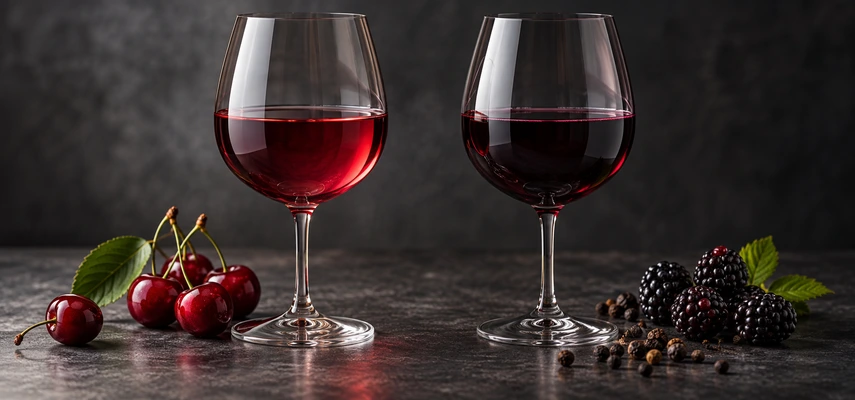

Hold a pale ruby red wine beside a much deeper purple-red example. The colour contrast is useful, but it doesn’t reveal everything. A lighter-looking wine can have pronounced acidity and vivid flavours; the darker wine may offer more tannin and weight.
Pinot Noir and Syrah/Shiraz explained together make a useful comparison between typical lighter and fuller red styles. They also clear up a naming puzzle: Syrah and Shiraz are two names for the same grape, not rival ingredients.
What WSET Level 1 expects you to know
Both are principal black varieties in Learning Outcome 2 of the official Issue 1.2 specification. Red Burgundy is also a prescribed named wine associated with a principal grape: Pinot Noir.
Learn typical flavour, tannin, acidity and body, and the identity of Syrah/Shiraz. Detailed regional classifications and lists of famous vineyards aren’t necessary. This independent TFE lesson isn’t affiliated with WSET, and its questions are original practice material.
Pinot Noir: red fruit with a lighter frame
Pinot Noir commonly makes dry red wine with relatively light colour, low to medium tannin and refreshing, often high acidity. Body is commonly light to medium in beginner examples. Typical fruit comparisons include strawberry, raspberry and red cherry.
Those features explain why a Pinot can feel delicate without being weak. The tannic grip may be gentle, while acidity and aroma remain clear. Weight, flavour intensity and tannin are separate dimensions rather than three names for strength.
Wine Australia’s Pinot Noir profile discusses the grape’s thin skins, growing sensitivities and stylistic range. The simple lesson isn’t that all Pinot must be pale and fragile, but that it supplies a useful reference for a less-tannic red style.
Why a pale red can still be expressive
Colour comes largely from extraction of skin pigments, while aromas involve many compounds and processes. A wine doesn’t need to look opaque to smell vivid. Pinot Noir is therefore a useful antidote to the idea that darkness equals flavour or quality.
Acidity can also make a lighter-bodied wine feel energetic. Imagine a dry Pinot with cherry-like fruit, noticeable freshness and relatively little drying grip. Calling it light-bodied describes its weight without denying the other sensations.
Oak can add additional character, and some Pinot develops earthy notes with age. These are helpful possibilities rather than mandatory features of every young example. The Level 1 priority remains the typical red fruit, freshness and gentler tannin profile.
Red Burgundy: the principal Pinot Noir association
Burgundy is a French wine region, not a grape. For the prescribed red Burgundy example, think Pinot Noir. For white Burgundy, the principal association is Chardonnay. The colour changes which connection is being tested.
The Burgundy wine body’s Pinot Noir guide provides the regional foundation. This beginner association doesn’t require pretending that every wine in the wider region is made from the same grape under every designation.
Beaujolais is a separate named example whose principal black grape is Gamay. It can also provide a lighter red style, but similarity of colour or body doesn’t make Beaujolais and the prescribed red Burgundy example interchangeable. Shared broad geography doesn’t erase their different grape associations.
Syrah and Shiraz: one grape, two familiar names
Syrah and Shiraz identify the same variety. Syrah is the name commonly encountered in France; Shiraz is especially familiar in Australia. Labels in other places may use either name, sometimes as a stylistic signal, but the word alone isn’t a complete production guarantee.
Wine Australia’s Shiraz profile explicitly presents Shiraz/Syrah as the same grape and describes medium- to full-bodied styles. This identity is one of the cleanest facts to retain in the whole red-grape comparison.
Don’t turn the two names into a fictional blend. A bottle labelled Shiraz hasn’t necessarily mixed Syrah with another grape, and changing the label word doesn’t alter the vine’s variety. Names can carry cultural and stylistic associations without defining separate biology.
Dark fruit, spice and a fuller impression
Syrah/Shiraz commonly produces dry reds with deeper colour, black-fruit character and medium to high tannin. Body often ranges from medium to full. Blackberry, black plum and pepper are useful flavour references, with ripeness and growing conditions influencing the expression.
Compared with the introductory Pinot profile, the overall impression is often fuller and more structured. That is a comparison of typical styles, not a claim that no Pinot can be full-bodied or no Syrah can be elegant and restrained.
Acidity can be medium to high, particularly in fresher expressions. A ripe warm-climate Shiraz may feel rounder and show very ripe black fruit, while a cooler expression can emphasize peppery freshness. Avoid memorizing “Shiraz has no acid” as a shortcut; it is false.
Ripeness changes the picture without changing identity
The same grape can express different fruit character under different growing conditions. Cooler Syrah can suggest fresher black fruit and pepper; warmer examples can suggest riper or cooked black fruit. Winery choices can add further differences.
These descriptions don’t establish sweetness. A wine can smell ripe or jam-like while remaining dry. More grape sugar may have fermented into alcohol, helping explain a warmer and fuller sensation rather than residual sweetness.
Likewise, Pinot grown under different conditions can vary in ripeness, body and alcohol. Use the classic comparison to understand a pattern, then keep the words typically and often in the explanation where they belong.
Put the two reference styles side by side
| Feature | Pinot Noir | Syrah/Shiraz |
|---|---|---|
| Typical sweetness | Dry | Dry |
| Colour | Often paler ruby | Often deeper red/purple |
| Fruit | Strawberry, raspberry, red cherry | Blackberry, black plum |
| Other useful note | Earthy development may occur | Pepper/spice can occur |
| Tannin | Low to medium | Medium to high |
| Acidity | Often high | Medium to high, style-dependent |
| Body | Often light to medium | Often medium to full |
The overlapping words aren’t an invitation to abandon the comparison. They show that grape identity supplies tendencies rather than mechanical boundaries. The most reliable single naming fact is that Syrah and Shiraz are one variety; the main regional association here is Pinot Noir and red Burgundy.
A useful way to practise the comparison
Imagine two invented wine descriptions. One says dry, pale ruby, cherry, high acidity and gentle tannin. The other says dry, deep red, blackberry, pepper and firmer tannin. The first fits a typical Pinot reference; the second fits a typical Syrah reference.
The task isn’t to claim certainty about anonymous real wines. It is to connect a set of characteristics with a taught profile. In an examination, read the whole description rather than grabbing one adjective and ignoring the rest.
Common misconceptions and exam traps
Pinot Noir isn’t Pinot Grigio. Syrah and Shiraz aren’t separate grapes. Red Burgundy isn’t the principal Cabernet Sauvignon association, and Beaujolais isn’t simply another name for Pinot Noir.
Pale colour doesn’t establish poor quality, while deeper colour doesn’t establish sweetness. A fuller body doesn’t automatically mean more acidity. Ask which dimension is being compared before choosing an answer.
Read the whole description before identifying a reference
If a question mentions cherry alone, several red wines could fit. Add pale colour, high acidity, relatively gentle tannin and the red Burgundy association, and the taught Pinot Noir reference becomes much clearer. Each additional feature narrows the intended comparison.
The same reasoning applies to Syrah/Shiraz. Black fruit alone isn’t enough to distinguish it from Cabernet Sauvignon or some Merlot. Pepper character, fuller body and the two-name clue supply a more specific reference. Recognizing the cluster of features is more useful than treating one aroma as a fingerprint.
This also prevents price and reputation from taking over the description. A lighter Pinot isn’t automatically less serious, and a deep Shiraz isn’t automatically more complex. Those are judgements requiring evidence beyond colour and weight.
For revision, practise two directions. Given red Burgundy, supply Pinot Noir and its typical profile. Given Syrah, supply Shiraz and a plausible black-fruit/spice profile. Then distinguish both from the neighbouring lessons: Cabernet is the firmer blackcurrant reference, while Beaujolais supplies the Gamay association. The purpose is a connected set of comparisons, not a contest in which only one grape is allowed to have fruit, acidity or body.
Knowledge check: 10 original questions
1. Syrah and Shiraz are what?
- Two names for the same grape
- Separate grapes always blended together
- Names for Pinot Noir
- Two Burgundy villages
2. Which grape is the principal red Burgundy association?
- Riesling
- Pinot Noir
- Cabernet Sauvignon
- Gamay for this prescribed example
3. Which fruit set best fits the typical Pinot Noir reference?
- Only blackcurrant and mint
- Only raisins and caramel
- Strawberry, raspberry and cherry
- Only pineapple and mango
4. Which body comparison is a useful beginner tendency?
- Pinot always fuller than every Shiraz
- Both must be identical
- Only white wines have body
- Pinot often lighter; Syrah/Shiraz often fuller
5. Which note is a useful Syrah/Shiraz association?
- Black pepper
- Only lime zest
- Only pear drop
- Only gooseberry
6. Does pale red colour prove poor quality?
- Only in France
- No, colour depth is not a quality verdict
- Yes, always
- Only for Pinot Noir
7. Which tannin comparison fits typical introductory examples?
- Syrah cannot contain tannin
- Both have exactly zero tannin
- Pinot low/medium; Syrah medium/high
- Pinot has no grape skins
8. Which name should not be substituted for Pinot Noir in the red Burgundy example?
- Pinot Noir itself
- The principal red grape association
- A black grape variety
- Gamay
9. A dry Shiraz smells of ripe blackberry. Is sweetness required?
- No, ripe fruit aroma can occur in dry wine
- Yes, blackberries always mean sugar
- Only if it is rosé
- Only if it has no alcohol
10. Which statement about acidity is sound?
- Acidity means tannin
- Syrah/Shiraz can have medium to high acidity
- Every Shiraz has no acidity
- Pinot cannot be refreshing
Answers and explanations
1. A — Two names for the same grape. The variety has two familiar names, especially associated with French and Australian usage.
2. B — Pinot Noir. The prescribed red Burgundy example connects with Pinot Noir.
3. C — Strawberry, raspberry and cherry. Red fruit provides a useful Pinot Noir flavour anchor.
4. D — Pinot often lighter; Syrah/Shiraz often fuller. Typical styles differ in weight, although real examples can overlap.
5. A — Black pepper. Pepper/spice can accompany Syrah’s black-fruit character.
6. B — No, colour depth is not a quality verdict. A pale red can have expressive aroma, freshness and quality.
7. C — Pinot low/medium; Syrah medium/high. The comparison concerns typical extraction and structure, not absolute limits.
8. D — Gamay. Gamay is the principal Beaujolais association, a different named example.
9. A — No, ripe fruit aroma can occur in dry wine. Fruit character and residual sweetness are separate.
10. B — Syrah/Shiraz can have medium to high acidity. Acidity varies with style; neither grape’s identity removes the need for a qualified description.
One-page revision summary
Pinot Noir: dry, often lighter red, red-fruit flavours, refreshing acidity and relatively gentle tannin; red Burgundy is the principal named association. Syrah/Shiraz: one variety under two names, often deeper and fuller, with black fruit, possible pepper and more tannic structure. Typical style comparisons guide understanding without replacing the actual bottle’s description.












