










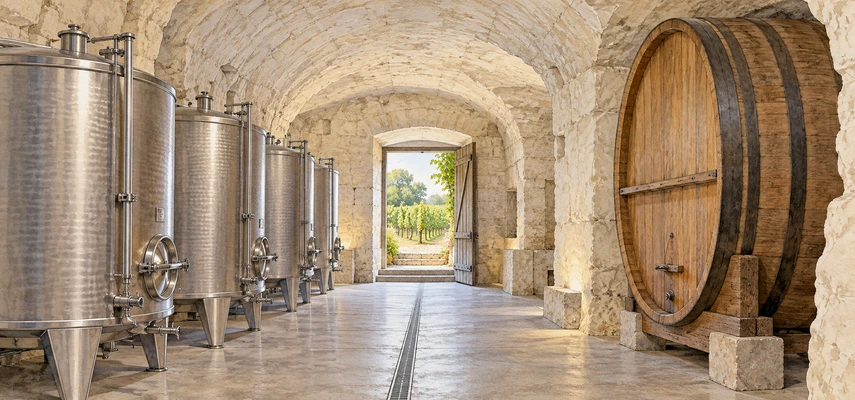

Loire Valley wines are a good reminder that following one river doesn’t mean following one style. Near the Atlantic, Muscadet is dry and understated. Farther inland, Chenin can become a taut dry white or a honeyed sweet wine. Cabernet Franc supplies fresh reds, while the eastern vineyards make Sauvignon Blanc that smells unmistakably like itself.
The river gives us a route, not a universal recipe. This independent lesson follows the still-wine regions, grapes and label terms in the WSET Level 3 specification. Its practice questions and written exercises are original educational material, not official WSET assessment content.
Loire Valley wines: organise the journey west to east
Start with the Nantais, around Nantes near the Atlantic. Move inland through Anjou-Saumur, then Touraine around Tours, and finally the Central Vineyards, including Sancerre and Pouilly-Fumé. The eastern wine districts aren’t all planted directly along one continuous riverbank. Some lie around tributaries and neighbouring hills.
Ocean influence is strongest in the west, bringing moderation alongside rain and humidity. Inland, continental influences increase, with greater temperature contrasts and spring frost risk. Local slopes, exposure and shelter modify those broad patterns. Anjou includes sheltered areas where late-season ripening and concentration can be particularly successful; “west is always wettest at every site” is too crude.
Soils also change. Crystalline rocks feature in the Nantais and parts of Anjou; chalky tuffeau is important around Saumur and Touraine. The Central Vineyards include limestone, marl, clay and flint-bearing soils. These affect rooting, drainage and water supply. A flinty tasting note isn’t proof that the vine has pumped the smell of flint from the ground into the grapes.
Muscadet: a quiet grape with an interesting cellar life
Muscadet comes from Melon Blanc, also called Melon de Bourgogne. It isn’t Muscat, and the similar name doesn’t imply perfume or sweetness. The typical wine is dry, high in acidity and relatively light in body, with restrained apple, citrus or floral character. A maritime setting allows the grape to ripen while retaining freshness, but frost and disease can still damage the crop.
Muscadet is the broader appellation. Muscadet Sèvre et Maine occupies important vineyard country south-east of Nantes, associated with the Sèvre Nantaise and Maine rivers. Gneiss, granite, schist and gabbro contribute varied sites; not every bottle comes from identical ground. The Nantes growers’ appellation account describes that diversity.
For a fresh style, growers aim at healthy fruit and sufficient flavour without excessive sugar. Protective juice handling, controlled fermentation and neutral vessels preserve delicate aromas. Keeping the wine sur lie, or on its fine lees, can add texture and subtle yeasty complexity. A little retained carbon dioxide may give a slight prickle, but the wine remains a still-wine style rather than a sparkling appellation.
Sur lie is also a regulated label designation, with maturation and bottling conditions; it doesn’t simply mean the producer stirred the tank once. INAO’s Muscadet account connects the designation with fine-lees retention and bottling arrangements. Exact rules should be checked for the appellation concerned. Some longer-matured Muscadet styles can be concentrated and ageworthy, so “light, cheap and drink immediately” doesn’t describe the entire region.
Chenin Blanc: one grape, several harvest decisions
Chenin Blanc retains high acidity and can ripen unevenly. With suitable maturity, it gives apple, quince, citrus or stone-fruit flavours; development can add honey and waxy complexity. Earlier healthy fruit may suit dry or sparkling production. Riper fruit can support fuller dry wines, while late-harvest concentration and, in suitable conditions, noble rot can produce sweet wines.
The grape doesn’t decide the residual sugar by itself. The grower selects a harvest point and the winemaker manages fermentation towards the intended balance. A ripe grape can make a dry wine if its sugar is fermented; a sweet wine needs sugar remaining in the finished product. Acidity is particularly valuable when it balances concentrated sweetness.
| Appellation | Location, site and Chenin connection |
|---|---|
| Anjou | Around Angers and its surrounding districts. Chenin-based whites and Cabernet-based reds are important still styles, with varied soils and production ambitions. |
| Coteaux du Layon | Slopes beside the Layon south of Angers. Sweet Chenin from overripe fruit can gain concentration through drying and noble rot, with selective harvest adding labour. |
| Savennières | Near Angers on the Loire’s northern side, with important schist sites. Especially known for concentrated dry Chenin with acidity and development potential; don’t assume every Chenin wine is sweet. |
| Saumur | Around Saumur and its tuffeau country. Still white Chenin and red Cabernet Franc contexts coexist with a separate important sparkling sector. |
| Vouvray | East of Tours, on the Loire’s right-bank side. Chenin produces dry, medium-dry and sweet still wines as well as sparkling styles, depending on fruit and production choices. |
The Savennières growers’ account emphasises Chenin and schist, while the Vouvray syndicate describes its different expressions. These names aren’t interchangeable sweetness categories. Vintage conditions affect which styles are practical, particularly where sweet wines depend on extra ripeness or noble rot.
In the Layon, morning humidity can encourage botrytis, while dry intervals allow useful concentration. Persistent wetness risks destructive rot instead. Picking selected bunches or berries over successive visits increases labour and reduces saleable volume. Dry Chenin may use tank, large old wood or barrels, with lees and malolactic decisions shaped by acidity and intended style. New-oak flavour isn’t obligatory in a serious Loire white.
Cabernet Franc: freshness with a range of structures
Cabernet Franc ripens earlier than Cabernet Sauvignon, helping it succeed where later-ripening grapes could struggle. It can give raspberry, redcurrant or floral aromas, refreshing acidity and leafy or herbal notes. Insufficient ripeness can leave harsh green character, while suitable fruit and extraction can make concentrated, structured wines. A delicate aroma doesn’t mean the wine lacks tannin.
| Appellation | Red-wine reference |
|---|---|
| Saumur-Champigny | Tuffeau-based sites around Saumur. Cabernet Franc dominates reds that range from fragrant and supple to concentrated and capable of development. |
| Bourgueil | North of the Loire, west of Tours. Sand and gravel terraces often give accessible fruit-led wines; clay-limestone slopes can support greater structure. |
| Chinon | Around the Vienne south of the Loire, also west of Tours. Cabernet Franc reds vary from light and fruity to firm and ageworthy, reflecting terrace and slope sites. |
| Touraine | A broad inland appellation around and beyond Tours. Sauvignon whites, reds and rosés provide several styles; it isn’t simply another name for Chinon or Vouvray. |
The Saumur-Champigny syndicate identifies its red Cabernet Franc focus. The Chinon account of sites explains terrace and tuffeau variation; its grape guide also confirms rosé and small dry-white Chenin production. Knowing Chinon mainly for reds doesn’t make it red-only. Bourgueil likewise makes rosé.
Growers manage canopy and yield to achieve flavour ripeness in a marginal season. Warm, well-exposed sites can help; excessive shading or crop can delay maturity. In the cellar, gentler extraction and neutral vessels may favour early fruit, while concentrated lots can support more extraction and longer maturation. Oak should fit the fruit rather than provide an artificial badge of seriousness.
Three rosé names: sweetness changes the answer
Grolleau commonly contributes light colour and red-fruit character to Anjou rosé blends. Its role differs from Cabernet Franc and Cabernet Sauvignon, which can add more structure. Later-ripening Cabernet Sauvignon needs suitable conditions; its name on a regional grape list doesn’t make it equally successful in every cool site.
| Appellation | Useful style and grape distinction |
|---|---|
| Rosé d’Anjou | Anjou rosé, commonly medium-dry in study descriptions, with Grolleau important. Expect approachable red fruit and some sweetness, rather than assuming dry because it is pale. |
| Cabernet d’Anjou | Anjou rosé from Cabernet Franc and Cabernet Sauvignon. Often more noticeably sweet, with acidity needed to balance the ripe fruit and residual sugar. |
| Rosé de Loire | A dry rosé appellation covering eligible Anjou and Touraine origins, using permitted black-grape varieties. Its geographical breadth and dry style distinguish it from the two Anjou names above. |
The Loire wine council’s rosé guide explains these contrasts. Direct pressing or short skin contact limits colour and tannin extraction. Fermentation management determines how much sugar remains, and microbial stability matters when fermentable sugar is left. Colour intensity isn’t a reliable sweetness scale.
Sauvignon Blanc in the Central Vineyards
Farther east, cooler continental conditions make site and vintage important to Sauvignon Blanc ripening. The grape can give pronounced citrus, green fruit and herbaceous aromas with high acidity. Warmer or riper examples may show more stone or tropical fruit. Protecting fruit and juice from unwanted oxidation, then using controlled fermentation and neutral vessels, can retain aromatic definition. Some producers use oak or longer lees maturation instead.
| Appellation | Geography and style |
|---|---|
| Sancerre | Hills on the Loire’s left-bank side, with limestone, marl and flint-bearing sites. Famous for dry Sauvignon Blanc, but Pinot Noir reds and rosés also exist. |
| Pouilly-Fumé | Across the Loire on its right-bank side, around Pouilly-sur-Loire. Dry Sauvignon Blanc; it isn’t Chardonnay Pouilly-Fuissé or Chasselas-based Pouilly-sur-Loire. |
| Menetou-Salon | Around Bourges, south-west of Sancerre, with important limestone and marl sites. Dry Sauvignon Blanc whites coexist with Pinot Noir reds and rosés. |
The Central-Loire wine board documents Sancerre, Pouilly-Fumé and Menetou-Salon separately. Fumé doesn’t require the wine to be smoked or strongly oaked. Nor does every flint-grown wine display an identical smoky aroma. Describe the actual fruit, structure and maturation evidence before guessing the origin.
Quality and price: follow the decisions
Appellation rules define origin, grapes and production requirements; they don’t create one Loire-wide quality ladder. A regional name alone won’t tell you whether the wine is dry, sweet, white or red. Learn the specific designation and then read the producer’s style information where needed.
Vineyard land, crop size, disease management and harvesting influence grape costs. Repeated sweet-wine selection, new barrels, longer lees maturation and holding stock add production costs. Tanks and earlier release can reduce some expenses without making a wine inferior. Transport, storage, applicable taxes and trade margins shape retail prices, while reputation and limited supply can add a demand premium.
Assess balance, intensity, complexity and length. Dry Chenin needs enough fruit to match its acidity; sweet Chenin needs freshness to balance sugar. Cabernet Franc needs ripe, integrated structure; Sauvignon should be judged beyond the loudness of its aroma. Different styles succeed in different ways, but every good explanation connects the growing conditions and decisions to what you find in the glass.
Knowledge check: 10 original questions
Choose one answer per question. These are independent study questions.
1. Which sequence moves broadly west to east?
2. What grape makes Muscadet?
3. What does sur lie principally describe?
4. Why can Chenin make balanced sweet wines?
5. Which rosé is characteristically dry?
6. What is Cabernet Franc’s useful advantage over Cabernet Sauvignon in many Loire sites?
7. Which statement about Vouvray is correct?
8. Which geographical comparison is correct?
9. Why can selective late harvest raise the cost per bottle?
10. Which conclusion should be avoided?
Answers and explanations
1. D — Follow the river inland. The Nantais lies near the Atlantic, followed inland by Anjou-Saumur, Touraine and the Central Vineyards. This sequence helps organise climate and grape patterns without pretending the entire region is a continuous riverbank planting.
2. B — Melon, not Muscat. Melon Blanc, also called Melon de Bourgogne, makes Muscadet. The similar sounding names don’t imply Muscat perfume or sweetness. Muscadet is characteristically a dry, fresh white wine.
3. C — Lees and a label term. Lees retention can add texture and complexity. When sur lie is used as the regulated designation, applicable maturation and bottling conditions also matter. It isn’t a synonym for new oak, drying or fortification.
4. A — Acidity and sweetness together. Chenin’s acidity can support a refreshing balance even when substantial residual sugar remains. Fruit quality and production decisions still matter. The grape also makes dry wines, so its identity doesn’t establish sweetness.
5. D — Rosé names matter. Rosé de Loire is the dry reference. Rosé d’Anjou and Cabernet d’Anjou generally carry sweetness in the studied styles. Colour alone doesn’t establish residual sugar, however pale the wine appears.
6. B — Ripening opportunity. Earlier ripening can help Cabernet Franc reach appropriate flavour maturity where later Cabernet Sauvignon faces a greater challenge. It still needs sound vineyard management and can show herbaceous character, especially with insufficient ripeness.
7. A — Chenin’s different expressions. Vouvray produces several styles from Chenin, with vintage and harvest decisions influencing the possibilities. It isn’t interchangeable with Savennières, and the name alone doesn’t mean sweet wine.
8. C — Opposite-bank Sauvignon contexts. Sancerre lies on the left-bank side and Pouilly-Fumé on the right-bank side of the Loire. Pouilly-Fuissé is a separate Chardonnay origin in Burgundy; shared syllables don’t establish grape identity.
9. D — Labour and volume. Selective passes require time and hand labour. Water loss and rejecting unsuitable fruit reduce saleable juice, spreading costs across fewer bottles. Suitable concentration also depends on weather, so risk remains.
10. B — An aroma isn’t a production proof. Smoky or flinty impressions don’t establish heavy oak, a particular soil or a unique origin. Some Pouilly-Fumé sees oak and some doesn’t. The other statements correctly recognise regional diversity.
Written exercise 1: explain two Chenin styles
Question — 5 marks: Explain how a producer could use Chenin to make a fresh dry wine and a concentrated sweet wine, identifying five relevant decisions or mechanisms.
Indicative marking points: Award one mark each for earlier healthy harvest retaining acidity for dry wine; fermenting sugar towards dryness; later/selective harvest for sweet style; water loss or noble rot concentrating fruit under suitable conditions; and retaining residual sugar with appropriate fermentation and stability control.
Model answer: For a fresh dry wine, pick healthy fruit when flavour is adequate and acidity remains lively, then ferment most sugar into alcohol. For a sweet wine, select riper fruit through later or repeated picking. Suitable drying or noble rot can reduce water and concentrate the juice. Fermentation must leave the desired residual sugar, followed by appropriate stability measures. Chenin’s acidity can balance that sweetness, but the weather must allow the fruit-selection plan to succeed.
Why it earns credit: Five separate decisions or mechanisms connect harvest, composition and fermentation with the two styles. Saying “Chenin is versatile” identifies the outcome without explaining it.
Written exercise 2: explain site and red-wine style
Question — 5 marks: Compare an accessible Cabernet Franc from a sand/gravel terrace with a more structured wine from a clay-limestone slope. Give five possible site or production explanations.
Indicative marking points: Award one mark each for exposure affecting ripening; soil depth/water supply affecting growth; crop management affecting fruit; extraction choices affecting tannin; and maturation decisions affecting texture or complexity.
Model answer: The slope may have an exposure that supports greater flavour ripeness. Different soil depth and water reserves can alter vine growth and ripening, though the effect depends on the season. Crop management may favour more concentrated fruit for the structured wine. Greater but suitable extraction can then build tannin, while longer maturation can develop texture and complexity. These are possibilities to investigate rather than outcomes guaranteed by either soil name.
Why it earns credit: It distinguishes site factors from choices and supplies five possible causal explanations. Shared Cabernet Franc doesn’t require identical wines. These are indicative educational marking points, not an official WSET scheme.
One-page revision summary
| Topic | Connection to remember |
|---|---|
| Geography | Nantais, Anjou-Saumur, Touraine and Central Vineyards form a useful west-to-east route. |
| Climate and sites | Maritime influence declines inland; local shelter, exposure and water supply still matter. Frost and disease remain hazards. |
| Muscadet | Melon Blanc gives dry, fresh whites. Sèvre et Maine is a more specific origin; sur lie combines a technique with regulated conditions. |
| Chenin | Anjou, Layon, Savennières, Saumur and Vouvray illustrate different dry, sweet and sparkling contexts. Harvest and fermentation determine style. |
| Cabernet Franc | Earlier ripening than Cabernet Sauvignon helps in suitable Loire sites. Chinon, Bourgueil and Saumur-Champigny offer different red-wine contexts. |
| Touraine | A broad appellation with Sauvignon whites and varied red and rosé styles. It isn’t a synonym for every neighbouring name. |
| Rosé | Rosé de Loire is dry. Rosé d’Anjou and Cabernet d’Anjou generally offer sweetness; Grolleau and Cabernets play different roles. |
| Central Sauvignon | Sancerre, Pouilly-Fumé and Menetou-Salon are distinct origins. Sancerre and Menetou also make Pinot Noir reds and rosés. |
| Cellar | Neutral vessels, oak, lees, extraction and fermentation choices must fit fruit and intended style. Aroma alone doesn’t prove a technique. |
| Quality and price | Assess balance, intensity, complexity and length, then explain grape costs, labour, maturation, transport, margins and demand separately. |












