










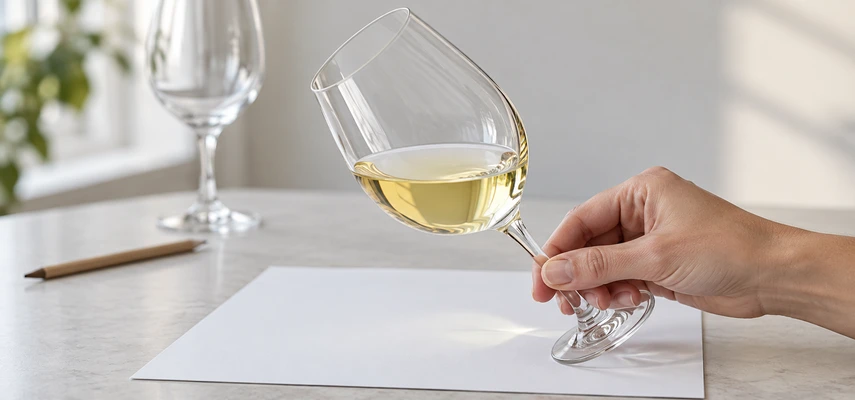

The WSET Level 3 Systematic Approach to Tasting gives your attention a reliable route through a glass of wine. You look, smell and taste, record what you find, then make a conclusion you can defend. The purpose is accuracy and completeness. Guessing a famous estate before assessing acidity is an entertaining way to lose track of the actual task.
Use this original teaching guide alongside WSET’s official Level 3 SAT reference. It explains how to approach the observations without reproducing the protected tasting sheet. The assigned qualification specification supplies the assessment framework; #45 develops quality and readiness, while #46 supplies worked practice.
Prepare a fair comparison before making a judgement
Start with clean glasses, a neutral-smelling room, good light and a white background. Strong perfume or a lingering coffee taste can distract from subtle differences. Use small samples, water and a spittoon, and allow breaks during practice. A tired palate rarely becomes more precise because you insist on another dozen wines.
Serve comparable wines at appropriate, similar temperatures when studying a particular feature. A heavily chilled aromatic white may seem quieter than the same wine as it warms. Temperature also changes the perception of alcohol and texture. Record the circumstances before concluding that a difference must have come from grape or region.
Later, compare your note with an educator’s feedback. WSET’s palate-training discussion treats tasting as a skill that improves through attention and practice. Keep the first independent note as well as the correction: otherwise hindsight can make it seem as though you recognised every feature immediately.
Appearance: separate clarity, depth and hue
Clarity concerns whether the liquid looks clear or hazy. Appearance intensity concerns how deeply coloured it looks. Colour concerns its hue. A pale wine can be completely clear, and a deeply coloured wine can also be clear. These are different observations, so give them separate attention.
Tilt the glass against white and look through an appropriate depth of liquid. With a white wine, consider whether the colour tends toward a youthful lemon shade or a deeper gold. For rosé, distinguish a pink impression from a more orange one; for red, notice purple, ruby or more evolved garnet tendencies. Choose the relevant official term after observing, rather than naming every possibility.
Other observations might include deposit, legs or tears, a slight pétillance, or evident bubbles. Sediment doesn’t automatically mean a fault; haze needs context rather than a reflex verdict. Legs aren’t a reliable quality score. Treat appearance as the beginning of the evidence, not a shortcut that reveals price, exact age or origin.
Nose: condition comes before an attractive description
Smell initially, swirl gently if useful, then return to the glass. Nose condition asks whether there is evidence of a problem; it isn’t your judgement of how much you personally like the style. A deliberately oxidative fortified wine needs a different interpretation from a young white whose intended fresh fruit has been damaged by oxidation.
Next assess nose intensity: how readily and strongly the aroma presents itself. This is separate from quality and complexity. A wine can be aromatic and straightforward, or subtle yet detailed. Don’t award extra quality simply because its perfume reaches you before you have lifted the glass fully.
Describe recognisable aroma characteristics with useful precision. “Fruit” communicates less than identifying lemon zest or black cherry, provided those are actually present. Avoid adding ten alternatives in the hope that one will match. WSET’s explanation of wine aromas connects these recognitions with aroma compounds, rather than fruit secretly added to the bottle.
Primary, secondary and tertiary describe likely origins
Primary characteristics relate to grapes and alcoholic fermentation: fruit, flowers and some herbal or spice impressions belong here. Secondary characteristics relate to subsequent winemaking, such as certain yeast-derived, malolactic or oak influences. Tertiary characteristics concern development during maturation. These categories help organise evidence, but every wine doesn’t need to show all three.
For example, fresh pear might lead a youthful white’s description. A buttery or vanilla impression may suggest a winemaking contribution. A mature wine may add dried-fruit or savoury development. However, a single descriptor doesn’t prove a production technique: toast isn’t a certificate stating that new oak was used. Remember the bottle-developed, unoaked Hunter Semillon in #36.
Nose development summarises the wine’s stage of evolution. Fruit-dominated youth differs from a wine combining fresh character with emerging maturity, or one showing substantial development. A mature wine can still be excellent. By contrast, fading fruit and a tired impression may suggest decline. Explain the observed state rather than treating every tertiary aroma as a fault.
Palate sweetness: taste sugar, not a fruit association
Take a modest sip and distribute it around the mouth before spitting. Sweetness concerns perceived sugar, rather than whether the aroma reminds you of ripe peaches. A dry wine can have abundant ripe fruit flavour; a wine with residual sugar may also have pronounced acidity that makes it seem fresher than expected.
Pause to distinguish sugar from other impressions. Alcohol and texture can suggest roundness, while a fruity aroma can create an expectation of sweetness. Your task is to assess the actual sensation. During practice, compare an educator-selected dry example with one containing noticeable residual sugar, keeping temperature and other variables as consistent as practical.
Acidity and tannin produce different sensations
Acidity is associated with sourness and a mouthwatering response. Assess that response rather than inferring acid solely from a lemon aroma. Sweetness can soften its prominence without removing it. WSET’s acidity guide explains why salivation remains useful even when sugar and acid coexist.
Tannin, particularly relevant to red wines, gives a drying or gripping sensation around gums and other surfaces. The amount and the texture are separate considerations: a substantial quantity of fine tannin differs from a smaller amount that feels coarse. Don’t call tannin acidity merely because both can make a wine feel firm.
After spitting, notice whether the mouth is watering, drying, or doing both. These observations help separate two independent structural features. Neither high acidity nor high tannin automatically proves quality. Their relationship with fruit and the rest of the wine matters, and repeated comparisons help establish what your chosen level actually means.
Alcohol, body and flavour intensity need separate decisions
Alcohol can contribute warmth, especially after spitting, as well as weight. Assess it in context: serving temperature and the wine’s other components affect perception. The Level 3 alcohol judgement uses a three-level scale, rather than adding intermediate plus and minus levels. For fortified alcohol, calibrate within the fortified category; a lower-strength fortified example isn’t comparable to a low-alcohol table wine.
Body is the overall impression of weight or fullness. Alcohol, sugar, extract and other structural features work together to create it. Body isn’t another word for flavour strength. WSET’s mouthfeel discussion separates the physical sensations that contribute to the experience.
Meanwhile, flavour intensity concerns how strongly flavour registers on the palate. A light-bodied wine can be strongly flavoured, while a broader wine may have relatively modest flavour definition. Keep each judgement independent, then check that the combined description makes sense. Writing “full” everywhere because the wine feels powerful conceals useful differences.
Describe flavour characteristics explicitly, even when they resemble the aromas already recorded. Smelling and tasting provide related evidence, but an assessor can’t read an unwritten list. Include relevant development if present, and notice any difference between the initial fruit and the finish. WSET’s structural-tasting advice emphasises this broader assessment beyond identifying aromas.
Finish is flavour persistence; mousse belongs to sparkling wine
After spitting, follow the persistence of recognisable, pleasant flavour. Finish isn’t the time until every trace of alcohol warmth or drying tannin disappears. A lingering burn with rapidly vanishing fruit doesn’t demonstrate a long, flavourful finish. Assess what remains and whether it supports the overall impression of the wine.
For sparkling practice, mousse describes the sensation of bubbles in the mouth. It differs from merely seeing bubbles in the glass. Record an appropriate tactile impression when relevant, but don’t invent a mousse description for a still wine. The Level 3 blind-tasting examination concerns still wines; the wider SAT can support study of other styles too.
Turn observations into a justified conclusion
Once the description is complete, assess quality through balance, length, intensity and complexity. For readiness for drinking, distinguish current enjoyment from the potential to improve further. Firm tannin alone doesn’t prove a wine will gain complexity, and existing maturity doesn’t prove it is already too old. #45 follows these decisions in depth.
The WSET tasting-exam advice highlights omissions, imprecise terminology and answers that hedge across multiple levels. Make one supported selection when one is requested. In your own reasoning, explain uncertainty; in the assessed category, don’t substitute a range for the required decision.
Finally, review the note for contradictions and missing categories. Does “dry” conflict with an unexplained claim of obvious sugar? Have you confused aroma intensity with body? Have you reached a conclusion without recording its evidence? A complete, defensible note is more useful than an impressive guess. It also gives your educator something specific to help you improve.
Knowledge check: Systematic tasting
1. What is the best starting point for an analytical conclusion?
2. Which sensation is most useful when assessing acidity?
3. Which statement separates body from flavour intensity?
4. What does tannin commonly contribute?
5. Which observation belongs to appearance rather than palate sweetness?
6. How should a strong peach aroma affect a sweetness decision?
7. What is the most defensible description of finish?
8. Which approach to primary, secondary and tertiary characteristics is sound?
9. How should an assessed single-level structural decision be recorded?
10. Why retain an initial practice note before receiving feedback?
Answers and explanations
1. C — Evidence before conclusion. Sensory observations support quality and readiness judgements. Price and a guessed identity can’t replace that evidence.
2. B — Salivation is a useful cue. Acidity produces a mouthwatering response. This differs from tannin’s drying grip and alcohol’s warmth.
3. D — Independent characteristics. Body describes physical weight, whereas flavour intensity describes strength of flavour. A light wine can still taste intense.
4. A — Tactile grip or dryness. Tannin affects the surfaces of the mouth. Its amount and texture should be considered separately from acidity.
5. C — A visual observation. Deposit can be seen in the glass and doesn’t automatically indicate a fault. Sweetness is assessed on the palate.
6. B — Aroma isn’t sugar. A dry wine can smell strongly of ripe peaches. Assess the actual sugar sensation rather than an expectation created by fruit.
7. D — Follow the flavour. Alcohol warmth or tannin can linger without persistent fruit or developed flavour. Those sensations alone don’t establish a long finish.
8. A — Describe what is present. A youthful wine needn’t show mature development. Adding unsupported descriptors makes the note less accurate.
9. C — Make the required decision. Choosing one appropriate level communicates a clear judgement. Hedging between levels doesn’t fulfil a single-choice requirement.
10. B — Track the calibration gap. Comparing your first judgement with feedback reveals recurring errors. Rewriting from hindsight alone hides them.
Written exercise 1: Separate three structural sensations (5 marks)
In an original practice sample, the taster notices salivation, drying gums and warmth after spitting. Explain what each suggests, then give two ways to improve the reliability of the assessment.
Model answer: Salivation supports an acidity assessment. Drying gums suggest tannin, whose texture can be considered separately from its amount. Warmth after spitting can indicate alcohol, assessed with serving temperature in mind. Compare educator-selected reference wines under consistent conditions. Record an independent judgement before discussing differences and calibrating against feedback.
Why it earns credit: Award one mark each for (1) acidity cue, (2) tannin cue, (3) alcohol cue with context, (4) controlled comparison and (5) independent recording plus feedback. These are practice credits, not an official tasting mark scheme.
Written exercise 2: Repair an unsupported practice note (5 marks)
A learner writes: “Expensive white; peach smell, therefore sweet; heavy, therefore intense; burn lasts, therefore long finish; probably famous, so outstanding.” Give five specific repairs.
Model answer: Remove price as sensory evidence and record the wine’s actual characteristics. Taste sugar separately from peach aroma before selecting sweetness. Assess weight and flavour strength independently rather than using body as proof of intensity. Follow flavour persistence after spitting instead of timing alcohol burn. Judge quality from balance, length, intensity and complexity rather than a guessed reputation.
Why it earns credit: Award one mark each for (1) replacing price, (2) separating aroma from sugar, (3) separating body from intensity, (4) correcting finish and (5) supporting quality. The aim is to improve the reasoning, not guess the wine’s identity.
One-page revision summary
| Task | Attend to | Avoid |
|---|---|---|
| Set-up | Glass, light, background, temperature and clean sensory conditions | Comparing uncontrolled conditions as though only wine differed |
| Appearance | Clarity, colour depth, hue and relevant additional observations | Using legs or sediment as a quality shortcut |
| Nose | Condition, intensity, recognisable aromas and development | Confusing liking with condition or power with quality |
| Aroma origins | Grape/fermentation, subsequent winemaking, maturation | Forcing all three categories into every wine |
| Sweetness | Actual sugar sensation | Calling ripe fruit aroma proof of sugar |
| Acidity | Mouthwatering response | Treating lemon aroma as a measurement |
| Tannin | Drying grip, amount and texture | Confusing it with acidity |
| Alcohol | Warmth and context, using the proper category | Applying table-wine expectations unchanged to fortified wine |
| Body | Overall weight | Equating it with flavour intensity |
| Palate flavours | Explicit, accurate descriptors | Leaving the description unwritten because it resembles the nose |
| Finish | Persistent recognisable flavour | Timing burn or dryness alone |
| Mousse | Relevant sparkling-wine mouthfeel | Inventing bubbles in still wine |
| Conclusions | Observations supporting quality and readiness | Price, fame or a guessed label as proof |
| Practice | Independent note, comparison, feedback and repeated calibration | Replacing the first note with hindsight |
Try the method with one white and one red. Circle one category where your confidence is low, explain the sensory cue you used, and ask an educator to help calibrate that specific judgement.












