











Northern Spanish wines offer a rather effective geography lesson in three glasses. Rioja can combine ripe red fruit with the savoury complexity of maturation. Ribera del Duero often brings a darker, more concentrated Tempranillo expression. Then Rías Baixas changes the conversation entirely with fresh, aromatic Albariño from the Atlantic coast. “Spanish wine” suddenly becomes a less useful tasting note.
For WSET Level 3, explain those contrasts through environment, grapes and production choices. This guide follows the northern Spanish origins in the WSET specification, then unpacks Spain’s important origin and ageing terms. The questions and worked exercises are original educational material, not official examination questions.
Three places, three different growing problems
Rioja lies in northern Spain around the Ebro valley, with vineyards extending across more than the administrative region called La Rioja. Ribera del Duero lies farther south-west, along the Duero in the elevated interior of Castilla y León. Rías Baixas is in Galicia in the far north-west, close to the Atlantic and the Portuguese border. Locate the rivers and ocean before memorising barrel periods.
In Rioja, Atlantic and Mediterranean influences interact with elevation and shelter. Ribera has a strongly continental character: hot summer days, cold winters and relatively low rainfall. Rías Baixas has a milder, wetter maritime setting. Those differences influence disease pressure, water supply, frost risk and the time available for ripening.
A fresh wine from a warm country isn’t a contradiction. Higher elevation or maritime influence can moderate temperatures and help retain acidity. Equally, a rainy region doesn’t guarantee thin wine: suitable varieties, exposure, crop balance and harvest decisions can produce ripe, concentrated fruit. The useful answer explains the mechanism instead of repeating a latitude.
Rioja: follow the valley, then look up the slopes
Rioja has three zones: Rioja Alta, Rioja Alavesa and Rioja Oriental, the last formerly called Rioja Baja. Alta and Alavesa generally have stronger Atlantic influence, while lower sites in Oriental tend to be warmer and drier, with more Mediterranean influence. The Rioja academy’s zone comparison provides the broad framework.
Elevation and aspect complicate that simple west-to-east pattern. A high Oriental vineyard can be cooler than a low site elsewhere. The Rioja Alta profile describes the effect of altitude on ripening and the area’s varied soils. Avoid assigning one flavour or fixed quality level to an entire zone.
Clay-limestone, clay-rich and alluvial soils have different water-holding and drainage properties. Their practical importance includes root access to water and the vigour they support. In a dry season, adequate available water sustains vine function; excessive vigour can create shading and dilute fruit unless managed. Soil doesn’t deliver limestone or iron as a ready-made wine aroma.
Growers choose training and canopy management for the site. Bush vines occur, alongside trellised vineyards that can facilitate mechanisation. A dense canopy may need opening for light and airflow, but overexposure can cause sunburn. Crop control and picking dates should produce ripe fruit and tannins without excessive sugar accumulation or loss of freshness. Individual vineyard work costs money whether or not the eventual label names the site.
Rioja’s grapes have different jobs
Tempranillo is the principal black grape. It can contribute red cherry, plum or darker fruit, with enough tannin and acidity for structured wines when suitably grown. Its relatively early ripening is useful compared with later varieties, but doesn’t remove the need to match exposure and crop load to the season. Colour and concentration vary by site and production decisions.
Garnacha can contribute ripe fruit, body and alcohol, particularly in suitable warmer settings. Graciano can add acidity, colour and aromatic intensity. Mazuelo, also known as Carignan, can contribute acidity, tannin and colour. The Rioja grape descriptions explain these complementary roles. They are blending possibilities, not a requirement that every red contain all four.
Viura is an important white grape. Neutral-vessel fermentation can preserve relatively restrained citrus and orchard fruit, while barrel fermentation, lees work and maturation can create a broader, more complex style. Some long-matured examples develop nutty, savoury character. The Rioja white-wine profile describes the range from young fruit-led wines to developed styles. White Rioja isn’t automatically either heavily oaked or an imitation of Albariño.
Extraction and maturation change the red-wine picture
A young fruit-led red may use moderate extraction and relatively early release. Some producers use whole-bunch or semi-carbonic approaches to emphasise bright fruit and a softer impression. More structured wines can involve different fermentation temperatures, cap management and skin-contact periods. Extracting more isn’t always better: tannin needs sufficient ripe fruit to support it.
Oak choice adds another dimension. American oak can contribute conspicuous coconut or vanilla notes; French oak may contribute different spice and toast characteristics, depending on the barrel. Size, age, seasoning and toasting matter alongside origin. Large or older vessels generally contribute less obvious new-wood aroma than small new barrels.
Maturation also allows controlled oxygen exposure and structural changes, followed by further development in bottle. Fruit can evolve towards dried-fruit, tobacco or leather notes in suitable reds. These processes are related but not identical: barrel flavour, tannin integration and bottle-ageing aromas shouldn’t all be described as “more oak”. Excessive wood or oxidation can overwhelm the fruit rather than improve it.
Crianza, Reserva and Gran Reserva: read the actual rule
Spain uses regulated ageing terms, but appellations can impose stricter requirements than the national baseline. Rioja red Crianza therefore shouldn’t be used as a universal rule for every Spanish colour and origin. The Rioja classification page distinguishes maturation categories from geographical indications.
| Rioja red category | Minimum total maturation | Minimum time within that total |
|---|---|---|
| Crianza | 24 months | 12 months in oak barrel |
| Reserva | 36 months | 12 months in oak barrel and 6 months in bottle |
| Gran Reserva | 60 months | 24 months in oak barrel and 24 months in bottle |
The vessel periods are included in the total, not added again. White and rosé requirements differ, so don’t apply this red table to them. Producers may exceed a minimum, and the category doesn’t specify that every barrel must be new or American.
Joven generally suggests a young, fruit-led wine. It doesn’t establish a universal legal promise of zero wood contact. Rioja’s generic certification can also include wines made outside the named ageing categories, including deliberately matured wines. Nor does a longer legal period guarantee that you will prefer the wine. Judge balance, intensity, length and complexity in the bottle rather than treating time as a tasting score.
Ribera del Duero: hot days on a high plateau
Ribera del Duero is an elevated inland region. The regional altitude account locates vineyards on the northern plateau, with sites rising above 1,000 metres. Warm summer days can develop ripe fruit and sugar, while cooler nights and altitude can help preserve acidity. The climate description highlights cold winters, dry summers and substantial temperature contrasts.
The growing season brings risks as well as opportunities. Spring frost can damage new growth, while autumn cold can interrupt final ripening. Low rainfall makes water availability important. Suitable site selection, rootstocks, crop balance and canopy management help vines ripen their fruit within that season. High elevation doesn’t automatically guarantee ideal acidity, perfect tannin or immunity to heat.
Tempranillo, locally called Tinto Fino or Tinta del País, leads the reds. The Ribera production specification establishes its central role. Typical examples can show deep colour, ripe black fruit, substantial tannin, body and alcohol, often with oak-derived spice. Compare this tendency with Rioja rather than assuming two wines made from Tempranillo must be identical.
Extraction should match fruit maturity and concentration. Careful handling can avoid a coarse finish; maturation in oak and bottle can integrate structure and develop complexity. Earlier-release and more ambitious styles coexist. The appellation also has provisions for other wine types, including white wine, so “famous for red” mustn’t become “legally red only”. Nor does every producer follow one fixed barrel formula.
Rías Baixas: Albariño meets the Atlantic
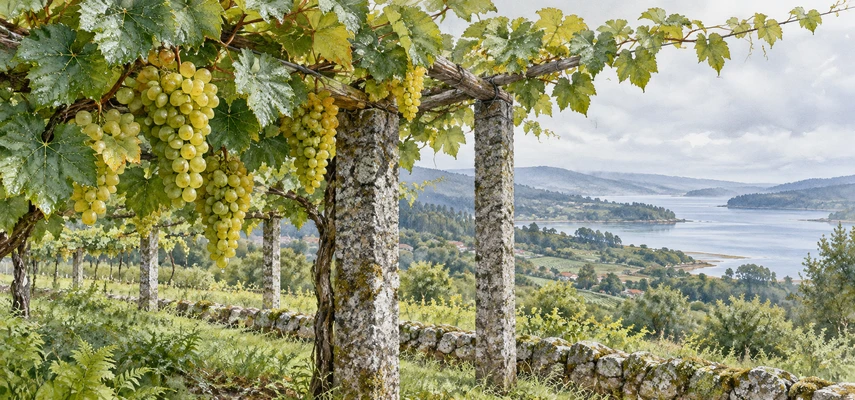
Rías Baixas is a maritime contrast in Galicia. Rainfall and humidity make fungal disease management important. The regional wine account describes small holdings and the traditional raised emparrado training system. Elevating the canopy helps separate fruit from damp ground and can improve airflow. It doesn’t remove the need to manage vigorous growth or protect the crop.
Many small parcels require substantial manual work, increasing grape costs compared with an easily mechanised large vineyard. Trellised alternatives also occur; don’t assume every vine must be trained identically. Canopy balance, healthy fruit and a well-chosen harvest date are important to both clean flavours and sufficient ripeness in the maritime season.
Albariño typically gives dry whites with high acidity, citrus, peach or other stone-fruit character and floral notes. It is the leading grape, but the Rías Baixas explanation of its other wines makes clear that the whole appellation isn’t exclusively single-varietal Albariño. Blending traditions and local conditions vary between subzones.
For an aromatic fruit-led style, gentle pressing and temperature-controlled fermentation in neutral vessels preserve freshness. Managing oxygen helps protect delicate aromas. Lees contact can add texture and complexity without conspicuous oak flavour; some producers use wood or extended maturation. The correct generalisation is that unoaked fresh styles are familiar, not that barrel use is forbidden. High acidity can support development when sufficient fruit and balance are present.
Origin categories aren’t barrel recipes
DO, Denominación de Origen, is a protected origin framework. DOCa, Denominación de Origen Calificada, is a further regulated category used by Rioja; DOQ is the Catalan form encountered in Priorat. These sit within the protected-designation-of-origin system. Vino de la Tierra, often abbreviated VdlT, is associated with protected geographical indication rather than the same framework as DO.
Vinos de Pago identify qualifying individual estate or site-based protected origins under their specific rules. The ordinary word pago on a brand or vineyard name isn’t sufficient evidence of that status. The Spanish agriculture ministry’s classification guidance distinguishes the traditional terms and their legal conditions. A protected origin tells you something about entitlement and production; it doesn’t certify that every bottle is more enjoyable than every wine in another category.
For price, separate five mechanisms. Grape costs reflect land, growing labour, yield and demand for fruit. Production costs include fermentation equipment, barrels, staffing and years of stockholding. Transport adds freight and distribution expenditure. Distributor and retailer margins pay for their services and commercial risks. Market forces relate available supply to consumer demand; limited wines from sought-after sites can command a premium beyond direct extra costs. Taxes may add another market-specific effect.
For further study, revisit vineyard decisions in #4, red and white winemaking in #6 and #5, and maturation in #8. Article #28 covers other Spanish regions, while #49 compares classification systems internationally. Build an answer from conditions to choices to consequences; the label terms will then have something useful to organise.
Knowledge check: 10 original practice questions
Choose one correct answer per question.
1. Which variety is central to both Rioja and Ribera del Duero reds?
2. Which broad Rioja comparison is most defensible?
3. Which contribution is particularly associated with Graciano?
4. What is an important white Rioja grape?
5. Which minimum total period applies to Rioja red Reserva?
6. How does the oak period relate to a minimum total maturation period?
7. Which is a relevant Ribera del Duero vineyard risk?
8. Why can raised emparrado training be useful in Rías Baixas?
9. Which statement about Rías Baixas is correct?
10. Which label claim needs more evidence than the word pago in a brand name?
Answers and explanations
1. C — Tempranillo. Both regions rely heavily on it for reds, while environment, blending and production choices create different expressions. Shared variety doesn’t require identical style.
2. B — A qualified regional tendency. Lower eastern sites generally have stronger warm, dry influence. Elevation and exposure create overlap, making absolute zone-to-zone statements unreliable.
3. D — Freshness and intensity. Graciano can complement a blend through acidity, colour and aroma. It isn’t required in every Rioja red and doesn’t establish residual sugar.
4. A — Viura. It is important in white Rioja, where production choices support both fresh fruit-led and more developed styles. It should not be confused with Albariño’s leading role in Rías Baixas.
5. C — 36 months. Rioja red Reserva also requires time in both oak and bottle within that total. The table is specific to Rioja reds rather than all Spanish wine.
6. B — Included time. Vessel minima form part of the overall period. Adding the same months again would inflate the requirement, while substituting another vessel would not satisfy an oak-specific condition.
7. D — Seasonal risk. An elevated continental setting combines useful ripening warmth with cold-weather risks. Altitude doesn’t remove frost or guarantee fully ripe tannins.
8. A — Fruit position and airflow. These features can help in a damp maritime environment. Canopy work and disease management remain necessary rather than being replaced by the training system.
9. C — Dominant grape, broader appellation. Albariño is central, but other permitted varieties and wine types exist. Neutral vessels are common choices, not a ban on oak.
10. B — Recognised legal status. Vino de Pago has specific protected-origin requirements. A familiar Spanish word within a commercial name doesn’t prove that those conditions have been met.
Written exercise 1: compare two growing environments
Give five linked observations comparing vineyard decisions in Ribera del Duero and Rías Baixas. Cover water, disease, training, ripening and labour. Five marks.
Model answer: Ribera’s low rainfall makes soil water availability and drought management important, whereas Atlantic rainfall makes excess moisture a more frequent concern in Rías Baixas. Humidity in Rías Baixas increases fungal disease pressure, making canopy drying and crop protection important. Raised emparrado can separate fruit from damp ground and improve airflow in Galicia. In Ribera, suitable exposure and crop balance help Tempranillo complete ripening within a season constrained by cold-weather risks. Small parcels and manually worked training systems in Rías Baixas can increase labour cost per unit of fruit compared with an easily mechanised vineyard.
Why it earns credit: One mark each for water supply, disease pressure, training mechanism, ripening decisions and labour consequences. These are separate points. Neither region is uniform, so a conditional comparison is stronger than claiming that one system or risk applies to every vineyard.
Written exercise 2: distinguish maturation from quality
Explain five separate consequences or limitations of extended maturation in a structured Rioja red. Five marks.
Model answer: Oak can contribute spice, toast or vanilla aromas depending on the vessel. Structural changes during maturation can help tannins feel more integrated. Suitable fruit can develop savoury bottle-ageing complexity beyond its youthful primary aromas. Holding stock before sale adds cellar and capital costs. A longer period doesn’t automatically improve quality if fruit is insufficient or oak and oxidation become excessive.
Why it earns credit: One mark each for oak-derived aroma, tannin integration, bottle development, stockholding cost and the balance limitation. These explain different mechanisms. Repeating three oak aromas would still cover only the first point, while stating that Gran Reserva must always taste best would miss the limitation.
One-page revision summary
| Topic | Remember | Explain the consequence |
|---|---|---|
| Rioja | Ebro valley; Alta, Alavesa, Oriental | Broad Atlantic-to-Mediterranean pattern qualified by altitude and aspect |
| Rioja red grapes | Tempranillo, Garnacha, Graciano, Mazuelo | Complementary fruit, body, acidity, colour and tannin roles |
| Rioja whites | Viura important | Neutral fermentation versus lees/oak/maturation shapes different styles |
| Rioja red Crianza | 24 months total, at least 12 in oak | An origin-specific minimum, not the national rule for every colour |
| Rioja red Reserva | 36 total, at least 12 oak and 6 bottle | Included vessel periods; not guaranteed superiority |
| Rioja red Gran Reserva | 60 total, at least 24 oak and 24 bottle | Extra stockholding and development opportunities |
| Joven/generic | Young fruit-led association; category can be broader | Don’t infer universal zero oak or inferior quality |
| Ribera del Duero | Elevated continental Duero setting; Tempranillo | Ripe fruit plus structure; frost and water risks require management |
| Rías Baixas | Atlantic Galicia; Albariño leads | Acidity/aromas; humidity, canopy and manual work matter |
| Origin terms | DO/DOCa/DOQ versus VdlT; Vinos de Pago have specific status | Geographical entitlement is distinct from an ageing category |
| Commerce | Grapes, production, transport, margins, market forces | Give a separate causal price mechanism for each |
Try comparing an aromatic Albariño with a mature Rioja red using five sentences: one each for place, conditions, grape, cellar decisions and style. That turns a map and a label into an explanation someone could actually use.












