











Central and southern Italian wines are a good place to abandon the idea that travelling south simply makes wine heavier. Yes, there are generous reds with ripe plum fruit and substantial alcohol. There are also mountain-grown whites, firmly structured Aglianico and surprisingly pale reds from a Sicilian volcano. Latitude starts the explanation; elevation, sea influence, grape variety and human decisions finish it.
This guide follows the central and southern origins assigned in the WSET Level 3 specification. Work down the peninsula, then cross to Sicily. For each stop, connect growing conditions and production choices with style, quality and price. The practice questions are original study material, not official examination questions.
Read the landscape before choosing the grape
The Apennines run along the peninsula, creating higher, cooler vineyard settings surprisingly close to warm coastal land. The Adriatic lies to the east and the Tyrrhenian Sea to the west. Sea influence can moderate temperatures and provide breezes; inland valleys can experience greater temperature extremes. A shaded high site and an exposed coastal plain need different management even when both are described as Mediterranean.
Warm, dry summers help grapes ripen and can reduce some fungal disease pressure. Severe drought, however, can restrict photosynthesis and interrupt ripening. Water availability depends on rainfall, soil depth and water retention as well as heat. Choosing rootstocks, managing competing vegetation and retaining an appropriate canopy help growers adapt. Removing every leaf around a bunch may improve airflow but expose berries to damaging sun.
Altitude can moderate heat and help preserve acidity, although very cool sites may struggle to ripen late varieties. Aspect alters exposure, while slopes affect drainage, erosion and machinery access. Volcanic materials occur in important places, but this entire half of Italy isn’t one volcanic soil. Explain rooting conditions and water supply rather than claiming that rocks pass a ready-made smoky flavour into wine.
Marche: Verdicchio dei Castelli di Jesi
Marche lies on the Adriatic side of central Italy. Verdicchio dei Castelli di Jesi comes from hills inland of Ancona, where maritime and inland influences interact. Its principal grape, Verdicchio, typically combines fresh acidity with citrus, orchard fruit and sometimes a characteristic almond-like finish. The regional institute’s Verdicchio profile describes both fresh expressions and wines capable of greater structure and development.
Balanced cropping helps preserve flavour concentration, while harvest timing weighs ripe fruit against acid retention. Gentle pressing, temperature-controlled fermentation and neutral vessels can keep primary fruit clear. Lees contact can add texture; more ambitious wines may develop complexity through additional maturation. Don’t assume every example needs oak or that every bottle should be stored for years.
The origin’s Classico indication identifies its historic area, rather than an automatic sensory score. Specific additional categories carry their own requirements. Limited yields, selection and longer storage can raise costs, while a clean, refreshing earlier-release wine can provide quality without the same investment. Judge balance and length, not the decorative shape of the bottle.
Umbria and Lazio: two white-wine comparisons
Umbria is landlocked central Italy, west of the Apennine spine. Orvieto DOC is associated principally with its south-western hills and also extends into neighbouring Lazio. Grechetto and Trebbiano Toscano, locally called Procanico, are important to its white blends. The Umbria tourism authority’s Orvieto account describes these varieties and the local setting.
Grechetto can contribute body, flavour and texture, while the blend and harvest choices shape freshness. Many familiar examples are dry, with restrained citrus or orchard fruit; the appellation also accommodates sweeter styles, so check the label rather than making dryness universal. For dry fruit-led wine, protective handling and neutral fermentation can preserve freshness. More concentrated fruit and lees work can support a fuller texture and a higher production cost.
Lazio surrounds Rome. Frascati comes from hills to the city’s south-east, in the Castelli Romani area, with important volcanic-derived soils. Malvasia varieties are central to its whites, with Trebbiano and other permitted grapes contributing to blends. Fontana Candida’s variety description provides a producer-level account of the traditional mix.
Expect generally fresh, light-to-medium-bodied white styles with citrus, floral or orchard-fruit notes, depending on the blend. Crop balance and timely picking help avoid a dilute or tired result. Gentle pressing and controlled fermentation can retain delicate aromas; selected fruit can support greater concentration. Frascati and Frascati Superiore have different legal frameworks, so the additional word isn’t a decoration that any producer can borrow. Malvasia is also a family of names, not one internationally identical grape or a guarantee of sweetness.
Abruzzo: Montepulciano d’Abruzzo
Abruzzo lies on the Adriatic side south of Marche, with vineyards between mountain areas and the coast. Montepulciano d’Abruzzo is a red wine based on the Montepulciano grape. Unlike Vino Nobile di Montepulciano in Tuscany, this name really does identify that variety. The Abruzzo consortium sets out the region’s protected origins.
Montepulciano commonly gives deeply coloured wine with cherry, plum or blackberry fruit, noticeable tannin and useful acidity. Warmer sites help ripening; cooler elevations can preserve freshness but require appropriate exposure and crop management. High production volumes can reduce unit costs, while selective harvesting and lower saleable yields can make a more concentrated wine expensive to produce.
Extraction and maturation distinguish accessible young reds from structured examples intended for development. Neutral vessels can preserve fruit, while oak can add spice and structural influence. Neither deep colour nor a famous producer’s reputation establishes the quality of every bottle. Look for ripe fruit, integrated tannins and a satisfying finish rather than an intimidating shade of purple alone.
Campania: three origins from inland Irpinia
Campania includes the warm coast around Naples, but important premium vineyards lie inland in the hills of Irpinia around Avellino. Elevation, variable exposure and relatively cool nights can slow ripening and preserve acidity. The Irpinia consortium’s regional introduction highlights the distinction between this mountainous setting and a uniformly hot picture of southern Italy.
Taurasi DOCG is based on Aglianico, a late-ripening black grape. It can produce deeply coloured, full-bodied reds with high acidity and tannin, dark fruit and substantial ageing potential. Suitable exposure and crop control help tannins and flavours ripen; excessive extraction from under-ripe fruit can leave a hard wine. Maturation can develop complexity and integrate structure, while mandatory ageing and stockholding raise costs. The Taurasi profile outlines its regional identity. Avoid turning a comparison with Barolo into a claim that Aglianico is Nebbiolo.
Fiano di Avellino DOCG centres on Fiano. Typical dry whites can combine citrus or orchard fruit, floral notes and a nutty character, with enough acidity and concentration for some examples to develop in bottle. Gentle handling and neutral vessels can preserve the grape’s character; lees maturation can build texture without requiring strong oak aroma. The Fiano appellation account provides the origin and variety context. Nutty aromas do not automatically indicate a fault or intentional oxidative winemaking.
Greco di Tufo DOCG is based on Greco and comes from a separate defined area around Tufo. It commonly gives a firm, high-acid white with citrus or stone fruit and appreciable texture. The Greco profile notes its phenolic character, making careful pressing useful to limit unwanted bitterness. Preserve freshness and handle oxygen deliberately; don’t assume all three Irpinian appellations share the same grape, vineyard or cellar method.
Basilicata: Aglianico del Vulture
Basilicata lies between Campania, Puglia and Calabria. Aglianico del Vulture comes from the area around the extinct volcanic massif of Monte Vulture in its north. The Vulture consortium describes the variety’s late ripening and local hillside setting. Higher vineyards can give a long season with cooler conditions than the southern latitude might suggest.
The grape can deliver substantial tannin, high acidity and dark fruit, with savoury complexity as suitable wines mature. Growers need enough warmth and time for ripeness; cellar extraction should suit the fruit’s maturity. Wood maturation and longer storage can support development and raise production costs. Aglianico del Vulture DOC and its Superiore DOCG framework are not interchangeable labels, and Vulture is a different origin from Taurasi even though they share the important grape.
Puglia: Negroamaro and Primitivo
Puglia forms the heel of Italy. Much production comes from warm plains and low hills, with sea influence varying by location. Its broad workable land can support efficient production, but old bush vines and demanding individual parcels can require considerably more manual labour. Low training can shade fruit; modern trellises can improve access. Each system must fit the site and intended crop.
Salice Salentino DOC lies in the Salento area and is especially associated with Negroamaro-based reds and rosés. Reds can show deep colour, ripe dark fruit, substantial body and a savoury or slightly bitter edge. Controlled extraction and earlier release can emphasise fruit; oak and longer maturation can support more structured examples. Leone de Castris’s Salice Salentino Riserva illustrates one producer’s more concentrated approach, rather than a compulsory recipe for every wine in the origin.
Primitivo is another major Puglian grape, distinct from Negroamaro. Its name relates to relatively early ripening. The Primitivo consortium’s territory and variety account describes this seasonal characteristic. Ripe berry and plum fruit, high alcohol and a full body are common tendencies. Harvest timing and water management help avoid excessive sugar or dried-out fruit; severe drought isn’t an automatic quality improvement. Ripe fruit aromas also don’t establish residual sugar: dry and explicitly sweet styles must be distinguished.
Sicilia: regional freedom and local identity
Sicilia is the large island off Italy’s southern tip. Warm, dry conditions favour ripe fruit, but altitude, coast and exposure create important variation. Nero d’Avola is a key local black grape, producing wines that can combine deep colour, plum or black-cherry fruit, tannin and fresh acidity. Earlier-release examples may emphasise clean fruit; concentrated selections and maturation can support greater complexity.
Syrah and Chardonnay also matter. Syrah can give ripe dark fruit, spice and substantial body; Chardonnay can range from fresh fruit-led wines to broader examples shaped by lees or oak. Suitable cooler or higher sites and timely harvesting can help retain acidity. The Sicilia DOC consortium represents a broad protected origin, not one single wine style.
Terre Siciliane IGT is a separate regional geographical indication, with its own production specification. It is not simply another spelling of Sicilia DOC. Both frameworks have rules, and permitted grape labelling can change: don’t assume every regional category allows every variety indefinitely. A broad indication doesn’t establish low quality, just as DOC letters don’t make every bottle exceptional.
Etna: a mountain on the island
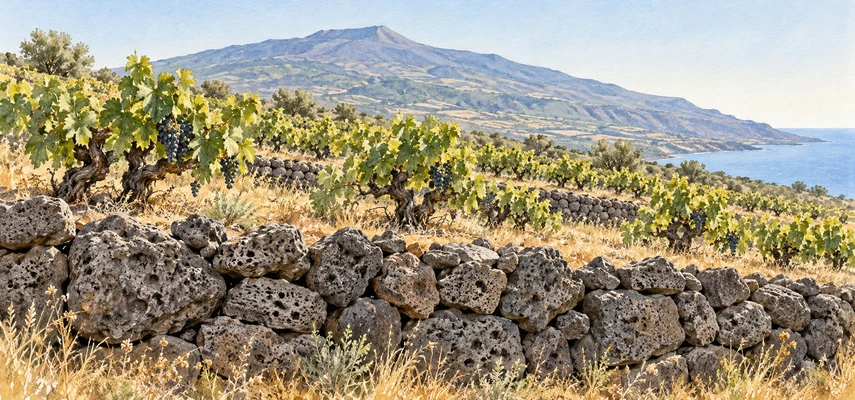
Etna DOC occupies defined slopes of the active volcano in eastern Sicily. The Etna terroir account describes contrasts of elevation, rainfall, exposure and volcanic materials. Cooler higher sites can retain acidity and extend ripening. Terraces and old bush vines can restrict machinery, increasing labour costs. Exposed or wetter slopes still require careful canopy and disease management: “volcanic” doesn’t mean risk-free.
Nerello Mascalese leads the reds, often with Nerello Cappuccio, while Carricante leads the whites. These additional grapes are essential to understanding the origin even though they aren’t the regional variety list’s main memorisation targets. The Etna wine profiles describe their roles. Reds can be relatively pale yet firm in acidity and tannin; whites can offer citrus, fresh acidity and a taut profile.
Careful extraction and appropriate maturation help preserve red fruit and avoid excessive grip. Protective white winemaking can retain Carricante’s freshness, while lees or further maturation can shape texture. Neither colour nor the word mineral proves quality. Evaluate balance and persistence, and explain vineyard conditions through vine responses rather than literal lava flavours.
Put commerce beside the tasting evidence
Use five separate categories. Grape costs depend on land, growing labour, yield and demand for fruit. Winery production costs include equipment, staffing, barrels and stock held during maturation. Transport adds freight and distribution expenditure. Margins pay distributors and retailers for their services and risks. Market forces link available supply with consumer demand; scarce wines from fashionable sites can command premiums beyond their direct extra costs.
For revision, compare Verdicchio with Greco, Montepulciano with Aglianico, and Negroamaro with Primitivo. Revisit environment and production in articles #2, #4, #5, #6 and #8, then compare Tuscany in #25 and classification systems in #49. A useful answer explains a mechanism before attaching a quality or price conclusion.
Knowledge check: 10 original practice questions
Choose one correct answer per question. These questions are independent educational material.
1. Which variety principally identifies Verdicchio dei Castelli di Jesi?
2. Which pairing fits Orvieto?
3. Which statement about Frascati is correct?
4. How does Montepulciano d’Abruzzo differ from Vino Nobile di Montepulciano?
5. Which grape underpins Taurasi and Aglianico del Vulture?
6. Which origin is associated with a Greco-based white?
7. Which grape is particularly associated with Salice Salentino reds?
8. Which statement about Primitivo is sound?
9. Which pair correctly describes important Etna grapes?
10. Which explanation directly links terraced vineyard work to cost?
Answers and explanations
1. C — Verdicchio. This is the leading variety of the Marche origin. Its fresh acidity can support both accessible young wines and more concentrated examples with development potential.
2. B — Grechetto and Procanico. Procanico is the local name used for Trebbiano Toscano. Blend choices and winemaking affect texture and freshness; the name Orvieto alone doesn’t guarantee dryness.
3. D — Malvasia-led white blends. Frascati belongs to Lazio near Rome. Supporting grapes and individual production choices vary, so neither one universal blend nor a compulsory oak profile should be assumed.
4. A — Grape versus place. Montepulciano is a variety in the Abruzzo wine’s name. In the Tuscan name, it identifies the town associated with a Sangiovese-based wine.
5. C — Aglianico. This late-ripening grape can supply high acidity and tannin in both origins. Shared variety does not make the two protected areas interchangeable.
6. B — Greco di Tufo. It is a Campanian white origin distinct from Fiano di Avellino. Taurasi is the important Aglianico-based red in the same wider inland region.
7. D — Negroamaro. It is central to Salice Salentino’s familiar red identity. Primitivo is another important Puglian variety, but the names aren’t synonyms.
8. A — A distinct, earlier-ripening variety. Neither early maturity nor ripe fruit establishes the finished wine’s sugar level. Drought can obstruct ripening when stress becomes severe.
9. C — Nerello Mascalese and Carricante. These varieties help explain why Etna differs from a broad Nero d’Avola-led picture of Sicily. Cooler elevated sites contribute to the contrast.
10. B — Additional labour. Terraces and awkward plots can limit machines and increase working time. That is a production mechanism, unlike an unsupported assumption about colour or margins.
Written exercise 1: explain a high-acid southern white
A producer makes a fresh, dry white from an elevated southern Italian vineyard. Explain five separate environmental or production considerations that can support that style. Five marks.
Model answer: Elevation can moderate temperatures and help preserve acidity during ripening. Matching crop load to the vine’s capacity supports adequate flavour concentration rather than dilution. Choosing harvest time before excessive acid loss can retain freshness while seeking ripe fruit. Gentle pressing limits unwanted phenolic bitterness. Temperature-controlled fermentation in a neutral vessel can preserve primary fruit without adding prominent oak aroma.
Why it earns credit: One mark each for elevation, crop balance, harvest timing, pressing and fermentation, linked to a relevant result. The question does not imply that elevation alone guarantees either ripeness or quality, or that every southern white must avoid oak.
Written exercise 2: explain price through five categories
Explain how a scarce, terraced-site wine held for maturation might cost more than a large-volume early-release wine. Address grapes, winery production, transport, margins and market forces separately. Five marks.
Model answer: Restricted machinery access and manual picking can increase the cost of grapes. Longer maturation adds cellar space and capital costs after harvest. Small shipments to distant customers can raise transport cost per bottle. Distributor and retailer margins add payment for handling, selling and commercial risks. Strong demand relative to a limited supply can support a higher price beyond the direct extra costs.
Why it earns credit: The five points cover five separate commercial categories. Manual vineyard labour belongs to grape cost; later cellar storage belongs to winery production. The example allows possible differences rather than asserting that every small estate necessarily travels farther or bears a larger margin.
One-page revision summary
| Region or origin | Main association | Useful explanation |
|---|---|---|
| Marche: Verdicchio dei Castelli di Jesi | Verdicchio white | Fresh acid, citrus and possible almond; selection and maturation vary |
| Umbria: Orvieto | Grechetto and Procanico/Trebbiano blends | Common dry styles plus sweeter possibilities; check label |
| Lazio: Frascati | Malvasia-led white blends with supporting grapes | Crop balance and protective handling support clean fruit |
| Abruzzo: Montepulciano d’Abruzzo | Montepulciano red | Deep colour, ripe fruit and structure; different from Tuscan town wine |
| Campania: Taurasi | Aglianico | Long-season ripening, firm acid/tannin and maturation potential |
| Campania: Fiano di Avellino | Fiano | Fruit, floral/nutty character and potential texture/development |
| Campania: Greco di Tufo | Greco | High acid and phenolic texture make pressing decisions relevant |
| Basilicata: Aglianico del Vulture | Aglianico around Monte Vulture | Elevation and exposure qualify southern warmth |
| Puglia: Salice Salentino | Negroamaro reds and rosés | Warm ripening; extraction and maturation shape body and grip |
| Puglia: Primitivo | Earlier-ripening black grape | Ripe fruit and alcohol need balance; not automatically sweet |
| Sicilia and Terre Siciliane | Nero d’Avola, Syrah, Chardonnay among important grapes | Distinct DOC/IGT frameworks; broad stylistic range |
| Etna | Nerello Mascalese reds; Carricante whites | Altitude, slopes and terraces influence style and labour costs |
| Commerce | Grapes, production, transport, margins, market forces | Link each category to an actual mechanism |
Once the names are familiar, practise explaining why a high-acid Greco and a full-bodied Primitivo can both be thoroughly southern Italian. That single comparison tests geography, variety and production more effectively than treating the south as one flavour.












