










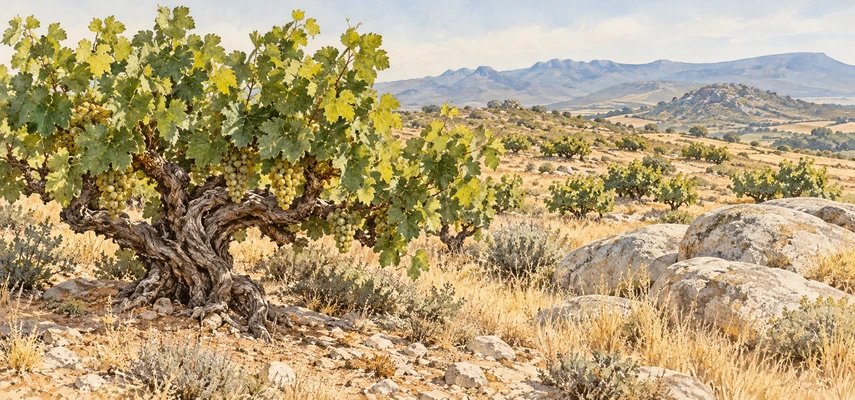

South African wines make more sense once you stop treating the Cape as one warm vineyard. A sheltered inland site and a windy slope facing ocean air can produce very different fruit. Chenin Blanc might become a crisp, uncomplicated white or a layered, barrel-fermented wine. Pinot Noir needs a different home from a Cabernet Sauvignon intended for long ageing. The country gives growers plenty of choices; choosing well is the interesting part.
For WSET Level 3, explain those choices through environment, grape growing, winemaking and commerce. This guide follows the South African origins and grapes in the WSET specification. Start with the Cape’s climate, then use the regions to explain contrasts rather than memorising a list of names.
Sunshine, winter rain and cooling air
Much of the Cape has a Mediterranean pattern: warm, dry summers and rainfall concentrated in winter. Summer dryness can limit fungal disease pressure, but vines still need enough water to ripen a crop. Stored soil moisture and irrigation, where available and permitted, become important as the season progresses. A dry vineyard isn’t automatically an easy vineyard.
The cold Benguela Current influences the Atlantic side, while maritime air and sea breezes moderate suitable coastal locations. Altitude, slope and aspect add local differences. A warmer, sheltered parcel can ripen Cabernet Sauvignon more reliably than an exposed, cool site. By contrast, that cooler location may suit fresh Sauvignon Blanc or slower-ripening Chardonnay. Don’t turn proximity to the ocean into a temperature guarantee for every hillside.
Strong southeasterly winds can dry bunches and reduce humid conditions favourable to disease. At the same time, they can damage shoots, interfere with flowering or increase water loss. Growers therefore choose shelter, canopy management and planting positions accordingly. The same wind can be useful on one day and expensive on another. Wines of South Africa’s regional guide provides the geographical framework; the exam answer needs the resulting effect on the vine.
Understand the Wine of Origin address
Western Cape is a geographical unit. Within it, Coastal Region, Breede River Valley and Cape South Coast are regions. Districts and smaller wards provide more specific addresses. That hierarchy describes origin, not a ladder of guaranteed quality.
Under the Wine of Origin scheme, grapes must come entirely from the area claimed as origin. A varietal claim normally requires at least 85% of the named cultivar, a separate question from geographical origin. The official explanation of cultivar labelling makes that distinction useful: reading “Chenin Blanc” doesn’t tell you whether the address is broad or narrow.
An Estate claim concerns an eligible production unit, which can comprise bordering farms managed together, with grapes grown and wine made and bottled there. It doesn’t mean one single vineyard. Neither “Estate” nor a ward name promises new oak, low yields or a particular tasting score.
Use the current production-area table when checking ranks. Constantia and Durbanville are wards within Cape Town district. Elgin is a district; Elim is a ward within Cape Agulhas district. These are easy places to lose a mark by remembering an older map too confidently.
Stellenbosch and Paarl: structure from ripe fruit
Stellenbosch, in Coastal Region, combines mountains, slopes and varying exposure to marine air. Cabernet Sauvignon is a key reference: suitable sites can deliver ripe blackcurrant fruit, firm tannins and enough acidity for balance. Merlot can contribute plum fruit and a different tannin profile in blends. Variety, site and harvest decisions matter more than assuming every blend has identical proportions.
For a structured red, growers need healthy, sufficiently ripe skins and seeds without sacrificing all freshness. Fermentation on skins extracts colour and tannin; extraction must suit the fruit. After the alcoholic fermentation, malolactic conversion can soften acidity, while oak maturation can add spice and allow gradual development. New barrels cost more, and extra time occupies cellar space. Neither greater extraction nor more new wood automatically improves balance.
Paarl, north of Stellenbosch, includes warm inland sites as well as varied slopes and exposures. Cabernet Sauvignon, Merlot, Pinotage and Syrah can produce ripe reds; Chenin Blanc and Chardonnay also matter. In warmer parcels, canopy shade and timely picking help avoid excessive sugar accumulation and loss of acidity. Adequate water supports functioning leaves, rather than merely enlarging berries.
Chenin Blanc and Pinotage: two useful Cape anchors
Chenin Blanc, historically also called Steen, has naturally useful acidity and considerable stylistic range. Earlier-picked, carefully handled fruit can yield fresh apple and pear flavours in a dry, fruit-led wine. Riper fruit, lees work and barrel fermentation can give a fuller texture and more layered orchard or tropical fruit. Sweet examples are possible too; the grape name alone doesn’t settle sweetness. The national white-variety guide is a helpful starting point for that versatility.
Pinotage is a cross of Pinot Noir and Cinsaut, not a synonym for either parent. Cinsaut’s old local name, Hermitage, helps explain its name, as described in WOSA’s Pinotage history. Pinotage can show ripe berry or plum fruit, substantial colour and tannin. Crop level, ripeness, extraction and maturation influence whether it feels approachable or firmly structured. A smoky or coffee-like character isn’t compulsory, and a fault shouldn’t become a national tasting descriptor.
Swartland: dry conditions, different cellar possibilities
Swartland is another Coastal Region district, with warm, dry conditions and important Chenin Blanc and Syrah plantings. Old bush-vine parcels are a useful reference, although neither old age nor dry farming describes every vineyard. Low training can protect fruit within the canopy; managing crop and water demand remains essential. Low yields can raise grape costs because fewer bottles carry the vineyard’s annual expenditure.
Granite and shale sites differ in properties such as drainage and water availability. Those effects on roots and vine growth are worth explaining; dissolved rock doesn’t travel into the glass as a ready-made flavour. Swartland Chenin can be textured and concentrated, while Syrah can combine dark fruit, spice and tannin. From there, extraction and oak choices shape the final balance. WOSA’s Swartland Chenin examples show why one regional label shouldn’t imply one cellar recipe.
Constantia and Durbanville: coastal freshness
Constantia and Durbanville bring cooler marine influences into the comparison. Sauvignon Blanc is a valuable anchor: suitable cooler sites can preserve acidity and fresh citrus, green-fruit or herbaceous characters. Harvesting too early can leave harsh green flavours; excessive delay can lose the freshness the producer wants. “Cool” still requires a ripening decision.
Gentle pressing and protection from oxidation help preserve delicate aromas. Cool fermentation in neutral vessels supports a fruit-led style; later, lees ageing or some oak can add texture where intended. Chardonnay offers another contrast: malolactic conversion can soften acidity and introduce buttery notes, while lees and barrels change texture and flavour. These are production options, not effects automatically caused by the coast.
Breede River Valley: water, scale and site
The inland Breede River Valley region includes Worcester and Robertson districts. Warm, dry growing conditions make water management important. Irrigation can support reliable production where water is available; however, its use must account for supply, timing and vine needs. Larger workable sites and efficient production can reduce costs per bottle without proving poor quality.
Worcester is a useful reference for Chenin Blanc and productive white-wine growing. Managing yields protects flavour concentration and ripening; aiming for sound, fresh, inexpensive wine requires a different budget from selecting tiny premium parcels. Robertson is especially useful for Chardonnay, alongside other white and red grapes. Individual sites receive cooling breezes, so don’t describe the entire inland valley as uniformly hot. De Wetshof’s estate account gives a concrete Robertson Chardonnay example rather than a rule for every producer.
Cape South Coast: cooler homes for demanding grapes
Within Cape South Coast, Walker Bay district includes the separate Hemel-en-Aarde Valley, Upper Hemel-en-Aarde Valley and Hemel-en-Aarde Ridge wards. “Hemel-en-Aarde” is a useful collective reference, but those three names aren’t interchangeable legal addresses. Pinot Noir and Chardonnay are key study grapes here.
Cool maritime conditions can extend ripening and retain acidity. Pinot Noir can develop red-fruit flavours with relatively light colour and fine tannins when grown and handled appropriately. Gentle extraction helps avoid overwhelming delicate fruit; barrel ageing can add complexity without becoming the main flavour. Chardonnay can combine freshness with the texture produced by lees, barrels or malolactic conversion. Hamilton Russell’s estate background illustrates a specific coastal Pinot Noir and Chardonnay setting.
Elgin offers another cool-climate comparison, with elevated vineyards and a long growing season in suitable locations. Sauvignon Blanc, Chardonnay and Pinot Noir can retain freshness while flavours develop. Paul Cluver’s discussion of Elgin connects that environment to Chardonnay and Pinot Noir. It doesn’t mean later picking is always safe: weather, rot pressure and fruit condition still influence harvest.
Elim, in Cape Agulhas district, is strongly influenced by cooling maritime winds. Sauvignon Blanc is an important reference for fresh acidity and aromatic definition. Wind exposure can restrain growth and complicate vineyard work as well as cooling vines. Strandveld’s vineyard description provides an individual Elim example. A fresh Sauvignon Blanc and a ripe inland Syrah can therefore both be convincing Cape wines, for quite different reasons.
Connect quality and price to actual costs
Separate five commercial categories. Grapes carry vineyard labour, yields, irrigation infrastructure and any premium for scarce parcels. Winery production includes fermentation equipment, barrels, storage, packaging and maturation time. Transport adds shipping, freight handling and delivery. Margins pay for the work and viability of producers, importers, distributors and retailers. Market forces, including demand, reputation, competition and exchange rates, affect achievable prices.
A limited old-vine Chenin can cost more because grape supply is small and cellar work intensive; a famous name may add demand pressure separately. In contrast, an efficiently produced broad-origin wine can offer sound quality at a lower price. Price isn’t a tasting note, and a narrow origin isn’t proof of balance, length or complexity.
For revision, reconnect this lesson with climate in #2, vineyard choices in #4, white and red production in #5 and #6, and maturation in #8. Article #49 compares label systems across countries.
Knowledge check: South African wines
1. Which statement best describes Western Cape on a Wine of Origin label?
2. Why can strong southeasterly wind create a vineyard tradeoff?
3. Which comparison is most useful for Sauvignon Blanc freshness?
4. Pinotage originated as which cross?
5. What is the most defensible explanation for a low-yield parcel’s higher grape cost?
6. Which statement about Hemel-en-Aarde is correct?
7. What can malolactic conversion contribute to Chardonnay?
8. What does an Estate claim mean in this context?
9. Which cost belongs most directly to winery production?
10. Which statement best describes Chenin Blanc?
Answers and explanations
1. C — Origin hierarchy. Western Cape is a geographical unit. The narrower regions, districts and wards identify different levels of origin, without guaranteeing a quality rank.
2. B — Wind has costs and benefits. Drying can reduce humid conditions favourable to disease, while physical damage, flowering disruption and water loss can cause problems.
3. D — Cooling can preserve freshness. Appropriate coastal sites can retain acidity and develop fresh flavours. Site and picking decisions still matter.
4. A — The parent grapes are distinct. Pinotage is the Pinot Noir–Cinsaut cross. It isn’t Syrah, nor does the cross dictate one compulsory flavour profile.
5. C — Costs must be recovered. A smaller crop spreads vineyard expenditure across fewer saleable bottles; the result must still be evaluated for quality.
6. B — Three separate wards. Hemel-en-Aarde Valley, Upper Hemel-en-Aarde Valley and Hemel-en-Aarde Ridge sit within Walker Bay district.
7. D — A cellar influence. Malolactic conversion changes acidity and can produce buttery character. It doesn’t determine origin or guarantee sweetness.
8. A — A production-unit claim. Estate requirements link growing, making and bottling to an eligible unit, which can include bordering farms managed together.
9. C — A cellar cost. Barrels and storage are production costs. Freight, retail margin and demand belong to other commercial categories.
10. B — Versatility with explanation. Chenin’s acidity is useful across styles, while ripeness, fermentation, lees and oak choices shape the particular result.
Written exercise 1: Warm Swartland Chenin Blanc (5 marks)
A producer wants concentrated, dry Chenin Blanc from a warm, dry Swartland parcel. Explain five vineyard or cellar considerations that could help achieve a balanced, textured wine.
Model answer: Maintain an appropriate crop so fruit can develop sufficient flavour rather than becoming diluted. Manage the canopy to protect bunches from excessive sun exposure while maintaining healthy leaves. Monitor vine water needs and available supply so severe stress doesn’t stop useful ripening. Choose harvest timing that balances developed fruit with retained acidity, rather than chasing maximum sugar. Use suitable lees work or barrel fermentation to build texture without overwhelming the fruit with wood.
Why it earns credit: Award one mark each for (1) crop balance linked to flavour, (2) canopy linked to exposure, (3) water linked to vine function, (4) picking linked to flavour/acidity balance, and (5) an explained cellar technique linked to texture. Merely listing “sun, water, barrels” doesn’t establish the required connections.
Written exercise 2: Explain a Cape price difference (5 marks)
A small-production estate Chardonnay costs more than an efficiently made broad-origin Chardonnay. Give one plausible explanation in each of the five commercial categories. Do not assume the dearer wine must taste better.
Model answer: Grapes may cost more if a small, labour-intensive parcel produces a low yield. Winery production can cost more through barrel purchases and longer maturation occupying cellar space. Transport costs can rise through small shipments or additional handling. Importers and retailers add margins to cover their operations and profit. Market forces can support a higher selling price when limited supply meets strong demand for the producer.
Why it earns credit: Award one mark each for a plausible explanation covering (1) grapes, (2) winery production, (3) transport, (4) margins and (5) market forces. Keep the categories distinct: using two barrel examples doesn’t answer the grape-cost or demand parts.
One-page revision summary
| Place or idea | Anchor | Explain the consequence |
|---|---|---|
| Western Cape | Geographical unit | Broad origin, not a quality guarantee |
| Coastal Region | Includes Stellenbosch, Paarl and Swartland districts | Exposure and inland position create varied conditions |
| Stellenbosch / Paarl | Cabernet Sauvignon, Merlot, Pinotage; white grapes too | Ripeness, tannin and freshness depend on site and decisions |
| Chenin Blanc / Steen | Acidity and versatility | Fresh dry, textured barrel/lees styles or sweet examples |
| Pinotage | Pinot Noir × Cinsaut | Crop, extraction and maturation shape fruit and tannin |
| Swartland | Warm dry settings; Chenin and Syrah | Water, canopy, crop and old-parcel costs need explaining |
| Constantia / Durbanville | Cape Town district wards | Maritime influence can suit fresh Sauvignon Blanc |
| Breede River Valley | Region containing Worcester and Robertson | Water and efficient production matter; not uniformly hot |
| Worcester / Robertson | Chenin / Chardonnay useful anchors | Intended style determines crop, picking and cellar budget |
| Cape South Coast | Region with cooler maritime locations | Freshness and longer ripening can support suitable grapes |
| Walker Bay / Hemel-en-Aarde | District / three distinct wards | Pinot Noir and Chardonnay; avoid merging legal addresses |
| Elgin / Elim | District / ward in Cape Agulhas district | Cool settings, with altitude or wind influencing growth |
| Wine of Origin / Estate | Origin / eligible production unit | Separate geography, cultivar percentage and estate rules |
| Price | Grapes, production, transport, margins, market forces | Cost and demand explanations differ from tasting quality |
Compare a fresh coastal Sauvignon Blanc with a structured Stellenbosch Cabernet Sauvignon. For each, connect a site feature to a vineyard decision and then a cellar choice. That causal chain is more useful than calling both “South African style.”












