










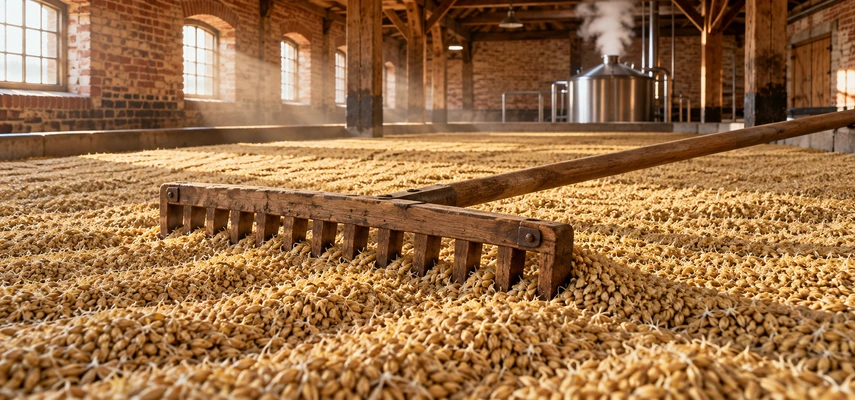

The grain arrives carrying energy, but much of it is locked into starch. Brewing needs some of that energy in a form yeast can use. Malting and mashing solve different parts of that problem, which is why they should never be treated as two names for the same operation.
Malting prepares the grain. Mashing uses prepared grain and water to obtain a sugary brewing liquid. One happens while the grain is being made into malt; the other belongs in the brewhouse. Keeping that division clear makes the rest of the production sequence easier to follow.
The grain is a living storehouse
A cereal grain contains material that can support a new plant. Starch is an important energy reserve, but brewing yeast cannot simply consume a whole grain’s starch in the way it consumes fermentable sugars. Something has to make the reserve accessible and convert it into smaller useful components.
The grain’s own germination machinery provides part of the answer. Malting encourages controlled biological changes, then stops the growing process at a useful stage. The intention is not to grow a field inside a building. It is to prepare an ingredient that will behave usefully during brewing.
The Cicerone brewing introduction connects this preparation with later starch conversion. The useful causal chain is grain preparation, then sugar production in the mash, then fermentation. Each stage creates conditions or material needed by the next, rather than all three doing the same job simultaneously.
Steeping supplies water
Steeping is the controlled wetting of grain to raise its moisture and begin the malting process. The grain takes up water, which allows germination to start. Maltsters manage the conditions rather than leaving grain submerged indefinitely. Water is a trigger for the seed’s activity, not a substitute for subsequent stages.
This is different from mashing even though both involve grain and water. During steeping, the objective is to start controlled germination in intact grain. During mashing, prepared crushed malt is mixed with water so useful conversion and extraction can occur. Similar materials do not imply an identical process.
For an everyday comparison, soaking a seed before planting and cooking a grain into porridge both involve water, yet their aims differ. Brewing has its own technical details, but the comparison helps prevent the beginner’s mistake of labeling every wet-grain stage as a mash.
Germination prepares access to the reserves
Germination is the beginning of growth. As the grain responds, enzymes and structural changes help prepare its stored material for use. The interior becomes more suitable for later brewing operations. This preparation is a reason malt differs functionally from an untreated handful of grain.
Enzymes are biological catalysts: they help chemical changes happen without being the main material consumed in the reaction. In brewing, some enzymes help break starch into smaller carbohydrate molecules, including sugars that yeast can ferment. Their role is specific; they do not simply turn everything in the grain into alcohol.
The maltster controls germination so the grain reaches a useful condition without allowing the developing plant to use up too much of the material the brewer wants. Timing therefore matters. Letting growth continue indefinitely would serve the seed’s future rather better than the brewer’s recipe.
Kilning dries and shapes the malt
Kilning dries the germinated grain and stops further growth. It also helps develop color and flavor, with the outcome influenced by the treatment. Pale malt and more deeply colored malt offer different starting points for a recipe because preparation changes the ingredient itself.
Drying conditions also affect enzyme survival. Excessively intense heat for a particular purpose can reduce useful enzyme activity, so brewers do not assume every dark specialty malt supplies the same enzymatic capacity as a pale base malt. A grain bill combines ingredients with different roles.
At Level 1, memorize the purpose before the detail: steep to supply water, germinate to prepare the grain, kiln to dry and stop growth while shaping character. Exact times and equipment vary. The official specification identifies these central stages without requiring a maltster’s full operating manual.
Malting is complete before the mash begins
The dried product is malt. It can be transported and stored before brewing, which is one reason malting and brewing may happen at different businesses. A brewery doesn’t have to sprout every batch of grain beside its fermentation vessels. Buying malt still leaves a great deal of brewing work to do.
The earlier ingredient chapter explains base and specialty malt choices. This chapter explains why the ingredient is ready for a particular job. Connecting the two prevents a recipe list from becoming a disconnected collection of colors and names.
For revision, draw a boundary after kilning. On one side, place grain becoming malt. On the other, place the brewery’s conversion of that malt into wort. A clear boundary is especially helpful when an examination option confuses germination with fermentation or drying with mashing.
Milling opens the grain
Before mashing, brewers mill the malt. Milling crushes it to expose the interior and produces material often called grist. The aim is access, not alcoholic fermentation. Grain that remains completely intact would be harder for water and enzymes to work through effectively.
Milling also has practical consequences for handling and separation. Brewers aim for a suitable crush rather than assuming the finest possible powder must always be best. The details depend on equipment and grain, but the central purpose remains to make the prepared material available for the mash.
The name grist is worth attaching to the action. Malt is the prepared grain ingredient; grist is the milled material going into the mash. These are not new ingredients arriving from unrelated sources. They describe the same material at different points in its journey.
Mashing brings water and enzymes together
The mash is the mixture of crushed grain and water held under controlled conditions. Water makes contact with the grain’s interior, while suitable conditions allow enzymes to act on starch. The result includes sugars that can later support fermentation, alongside other substances that contribute to the beer.
Temperature is important because enzymes work differently under different conditions. The brewer wants useful activity, not simply the hottest possible mixture. Boiling the mash as a universal first step would misunderstand the purpose of this stage. Mashing and wort boiling perform different jobs.
The American Homebrewers Association brewing-process poster describes crushed malt, hot water and natural enzymes converting grain starches to sugars. Its simplified sequence is useful here, provided the later stages are kept distinct. Sugar production comes before yeast consumes those sugars.
Wort is the liquid result
Wort is the sugary liquid obtained from the mash and separated from the grain. It contains dissolved material useful for brewing. It is not yet finished beer, because the principal alcoholic fermentation has not occurred. Calling it beer too early obscures the job still waiting for yeast.
Separation leaves spent grain behind while the wort moves onward, commonly toward boiling. The grain is called spent in relation to this brewing extraction, not because every possible substance has vanished from it. The word describes a practical stage of use.
Mashing can therefore be understood as both conversion and extraction. Enzymes create useful smaller carbohydrate molecules, and water carries dissolved substances into the liquid stream. These are related activities, but neither should be confused with the yeast’s later production of alcohol and carbon dioxide.
A change in sugars can change the beer
The mash doesn’t merely determine whether fermentation can happen. Its results help influence how much material yeast can consume and what remains in the finished beer. The grain bill, enzyme activity and process conditions interact. A beer’s body and sweetness cannot be predicted from malt color alone.
For a hypothetical comparison, imagine two worts with similar starting sugar concentration but different mixtures of fermentable and less-fermentable carbohydrate. Yeast may not use them to the same extent. That can affect the final balance without requiring either batch to contain more dark malt.
No detailed enzyme-temperature chart is necessary for this qualification. The important mechanism is that starch conversion makes fermentation possible, and the materials produced influence the later result. The brewer controls a sequence, not a magic instant in which a bag of grain becomes beer.
Keep the three transformations separate
Try explaining the process without looking at the stage names. First, a maltster prepares grain through controlled wetting, growth and drying. Next, a brewer crushes the malt and uses a mash to obtain a useful sugary liquid. Later, yeast transforms fermentable sugar into alcohol and carbon dioxide.
Now put the names back: steeping, germination and kilning belong to malting; milling precedes mashing; wort is the liquid prepared for the following stages. Fermentation is a separate transformation performed by microorganisms. If an option swaps those purposes, it should stand out immediately.
One-page revision summary
Malting prepares grain through steeping, germination and kilning. Milling produces grist and exposes the interior. Mashing mixes crushed material and water under controlled conditions so enzymes can convert starch and useful substances can enter the liquid. The separated sugary liquid is wort.
Remember the direction of travel: starch becomes suitable sugars before alcoholic fermentation. Enzymes are not yeast, wort is not yet finished beer, and boiling is not another name for mashing. Understanding those distinctions provides the foundation for the full brewing sequence in the next chapter.
Knowledge check: 10 original practice questions
Independent TFE questions, not official WSET examination items. Choose one answer per question; explanations follow separately.
1. What begins controlled wetting in malting?
- Packaging
- Steeping
- Dry hopping
- Fermentation
2. What is germination?
- The beginning of grain growth
- The settling of yeast after fermentation
- The dissolution of carbon dioxide
- The filling of a keg
3. What is a principal purpose of kilning?
- Adding cultured yeast to wort
- Dissolving hop aroma in beer
- Opening a crown-cap bottle
- Drying grain and stopping growth
4. What does milling produce?
- Finished lager
- Hop extract
- Grist
- Carbon dioxide
5. What is the mash?
- Only the foam above finished beer
- Crushed grain mixed with water under controlled conditions
- Dry hops before harvest
- The sealed bottle after packaging
6. What role do enzymes play here?
- Helping convert starch into smaller carbohydrates including sugars
- Performing all alcoholic fermentation themselves
- Creating glass packaging
- Replacing every grain ingredient
7. What is wort?
- Unmilled dry malt
- A type of lager yeast
- The sediment beneath a stored bottle only
- Sugary brewing liquid before principal fermentation
8. Which stage comes first in malting?
- Kilning
- Packaging
- Steeping
- Alcoholic fermentation
9. Why is mashing not simply another name for fermentation?
- Both always use identical microorganisms
- Mashing obtains sugars; fermentation consumes suitable sugars
- Mashing fills the package while fermentation mills grain
- Fermentation happens only in dry malt
10. Why is the hottest possible mash not automatically best?
- Enzyme activity depends on suitable conditions
- Heat has no effect on enzymes
- Mashing requires every starch to remain untouched
- Boiling and mashing must always be identical
Answers and explanations
1. B — Steeping. Steeping supplies moisture that allows germination to begin; the other actions occur in different contexts. Mapping: LO1.
2. A — The beginning of grain growth. Germination prepares grain through controlled biological changes before drying stops further growth. Mapping: LO1.
3. D — Drying grain and stopping growth. Kilning completes malt preparation and also influences color, flavor and useful enzyme activity. Mapping: LO1.
4. C — Grist. Milling crushes malt to expose its interior; grist names the resulting milled material. Mapping: LO1.
5. B — Crushed grain mixed with water under controlled conditions. The mash provides the mixture and conditions for useful conversion and extraction before fermentation. Mapping: LO1.
6. A — Helping convert starch into smaller carbohydrates including sugars. Enzymes catalyze conversion; yeast later consumes suitable sugars to produce alcohol and carbon dioxide. Mapping: LO1.
7. D — Sugary brewing liquid before principal fermentation. Wort is the liquid prepared through brewing before the principal yeast transformation into beer. Mapping: LO1.
8. C — Steeping. Steeping supplies water before controlled germination, with drying through kilning later in the sequence. Mapping: LO1.
9. B — Mashing obtains sugars; fermentation consumes suitable sugars. The stages have distinct materials, purposes and transformations, despite their connection in the brewing sequence. Mapping: LO1.
10. A — Enzyme activity depends on suitable conditions. The brewer manages conditions for conversion; more heat is not a universal improvement to enzyme performance. Mapping: LO1.












