










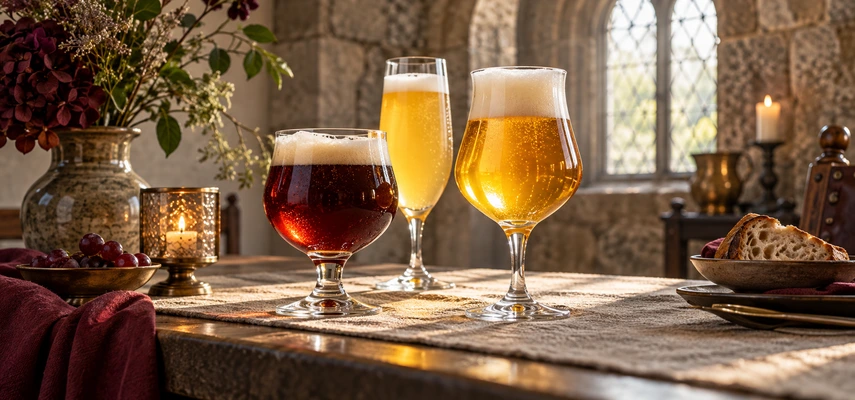

A deep brown beer, a strong golden beer and a remarkably dry pale ale can all belong in a chapter about expressive Belgian fermentation. Belgian ales explained only by color or strength would miss their shared interest: yeast can contribute fruit and spice that become central to the experience.
The prescribed styles are dubbel, tripel and saison. They don’t share a single recipe, and they aren’t interchangeable names for strong beer. The useful task is to understand how fermentation character works with each style’s malt background, finish and texture.
Yeast-driven doesn’t mean malt-free
The official specification places these styles among yeast-driven ales. That directs attention toward fermentation-derived aromas, not away from every other ingredient. Malt, hops, sugars and process remain important. A yeast-led explanation is a focus, not an exclusion rule.
Fruit-like esters and spicy phenolic compounds help explain familiar descriptions. Their presence doesn’t automatically establish that fruit or spice was added. The earlier yeast chapter supplies the mechanism; the style comparison shows how that mechanism becomes recognizable in different finished beers.
Read aroma words alongside balance. A raisin-like dubbel and a citrus-like tripel may both be fruity, yet their appearance, malt expression and finish differ. A peppery saison may share spice with tripel while feeling much leaner and drier. Similar vocabulary is the start of comparison, not proof of identity.
Dubbel: darker malt with fruit and gentle spice
Dubbel commonly appears dark amber, copper or reddish-brown, usually with an off-white head and an attractive depth of color. It can be clear despite its dark appearance. Aroma often combines rich bread-like malt or caramelized-sugar associations with dark or dried fruit and a gentle spicy note.
Flavor can suggest toast, caramel, raisins, plums or related fruit-like impressions, with yeast adding complexity. Strong coffee roast or burnt character is not the defining target. This matters when comparing dubbel with porter or stout: a similar shade does not guarantee a similar flavor source.
Bitterness is usually supportive, around low-to-moderate or moderate in impression, leaving malt and fermentation character prominent. Sweetness can seem rounded or rich, but the beer commonly finishes drier than its aroma might imply. Body is often medium to medium-full, with lively carbonation preventing the impression from becoming simply syrupy.
The BJCP dubbel reference describes expressive Belgian yeast alongside malt and sugar contributions. Some traditional recipes are less complicated than the aroma suggests: a long ingredient list isn’t necessary for complexity. Fermentation can add layers that a recipe list alone doesn’t reveal.
Why dubbel differs from a malt-driven brown ale
Both can be brown and suggest caramel or toast. The useful question is how strongly fermentation fruit and spice shape the identity. A traditional brown ale often keeps those contributions more restrained, while dubbel can make them an important part of the whole.
Neither distinction means brown ale has no yeast-derived character or dubbel has no malt character. These are differences in emphasis. A good explanation connects the darker foundation with the expressive fermentation rather than treating the official teaching categories as sealed boxes.
For revision, picture rich bread and dried fruit with a reasonably dry finish, not black roast and maximum sweetness. That combination is more useful than assuming that the word dubbel guarantees twice the alcohol of some unspecified reference beer.
Tripel: pale, strong and comparatively dry
Tripel commonly appears yellow to gold or pale amber, often clear and topped with persistent white foam. Its pale appearance is an excellent reminder that color cannot measure alcohol. A strong beer need not look like a stout or a dark barley wine.
Aroma can combine citrus-like or other fruit-like fermentation notes with peppery, sometimes clove-like spice. Pale malt contributes a lighter grain or gently honey-like background, while hops may add subtle floral or spicy character. The overall profile should be interpreted as a blend rather than a demand for every listed aroma.
Flavor commonly includes expressive yeast character, supportive pale malt and noticeable balancing bitterness. Sweetness is low in a dry finish rather than cloying, despite substantial alcohol. Body often feels medium-light to medium, surprisingly lean relative to the strength, with high carbonation adding lift.
The ingredients commonly involve pale malt and sometimes pale sugar additions, suitable hops and expressive Belgian yeast. Fermentable sugar can help build alcohol without leaving matching residual sweetness when yeast consumes it. The BJCP tripel reference makes this pale, strong and relatively dry combination especially clear.
Strong isn’t a flavor description
Actual alcohol content should come from a verified producer statement or label. Sensory warmth can be a clue, but a smooth tripel need not advertise its strength through an obvious burning sensation. Appearance and ease of drinking are poor tools for calculating a particular bottle’s ABV.
The style name also shouldn’t be interpreted as a literal threefold recipe instruction. It identifies a tradition, not a mathematics question with a fixed baseline. For this course, prioritize pale appearance, fruit-and-spice fermentation, a comparatively dry finish and strength as the meaningful combination.
Compare tripel with barley wine. Both can be strong, but the classic tripel pattern is generally lighter in body and more explicitly shaped by spicy-fruity yeast than a rich, malt-led barley wine. Shared strength does not erase differences in texture and sensory emphasis.
Saison: dryness and a peppery-fruity edge
Saison is a varied family, but the useful introductory pattern is a pale gold to amber beer with white foam, variable clarity and a lively appearance. Some examples are hazy. Darker and stronger interpretations exist, so don’t make pale color the only fact you remember.
Aroma often combines fruit-like fermentation with peppery spice, sometimes alongside herbal or floral hops and gentle grain. The spice impression may come from yeast rather than an actual handful of peppercorns. Grain choices and occasional additions can create variation, but they don’t remove fermentation from the explanation.
Flavor is typically dry, with noticeable bitterness and a lean, highly drinkable impression. Sweetness is low, body often light to medium-light, and carbonation high. This can make a beer feel brisk even when its aroma is quite expressive. A big aroma doesn’t require a thick texture.
The BJCP saison reference describes pale malt, possible additional cereals and a suitable saison yeast as characteristic ingredients. Production aims at extensive fermentation and a dry finish. Understanding that purpose is more helpful than assuming a rustic name means unmanaged or spontaneous fermentation.
Farmhouse language needs careful handling
Saison is associated with farmhouse traditions, but modern production is not defined by a requirement to take place on a small farm. Nor is every saison sour, wild or spontaneously fermented. Those claims need evidence about the actual beer and method.
Some interpretations vary in acidity or microbial approach, but the core introductory pattern does not require pronounced sourness. In the prescribed study framework, Berliner weisse and geuze provide the dedicated sour-style comparison. Keeping that distinction clear avoids turning every unfamiliar yeast aroma into a sour-beer diagnosis.
Saison also differs from tripel in the broad lean, dry, often rustic-grain or peppery emphasis. Their strength ranges can overlap in the wider world, so don’t invent an absolute rule that every saison is weaker. Use the complete profile and verified product information.
Compare the three without oversimplifying
| Style | Visual direction | Useful aroma clue | Finish and body clue |
|---|---|---|---|
| Dubbel | Amber to reddish-brown | Rich malt with dark or dried fruit and spice | Rounded, often medium to fuller, not necessarily sweet |
| Tripel | Yellow to gold or pale amber | Spicy-fruity yeast over pale malt | Strong yet comparatively dry and lifted |
| Saison | Often gold to amber, clarity variable | Peppery-fruity fermentation, gentle grain | Very dry, leaner and highly carbonated |
Use the table to ask better questions. If an unknown description mentions dark fruit and reddish malt richness, dubbel is a more useful starting point than tripel. If it emphasizes a very dry, lean, peppery profile, saison becomes more plausible. One word such as spicy can’t do the entire identification.
For a paper exercise, assign each listed characteristic to an ingredient or production influence where the cause is known. Mark uncertain sources honestly. A honey-like impression could be descriptive rather than evidence of added honey; a pepper note could be fermentation-derived rather than a recipe addition.
A hypothetical golden sample with strong peppery-fruity aroma could resemble more than one of these styles. Ask about finish, body and verified strength before deciding. The extra observations narrow the comparison; repeating the word Belgian does not. This is why good notes record structure as well as aroma.
One-page revision summary
Dubbel joins darker malt and sugar-derived richness with fruit-like and spicy fermentation. Tripel demonstrates that strong beer can be pale, comparatively lean and dry. Saison often emphasizes peppery-fruity yeast, extensive fermentation, low sweetness and lively carbonation.
The connecting idea is expressive yeast working within different recipes. Don’t infer actual ingredients from aroma resemblance, alcohol from color, or spontaneous fermentation from a farmhouse image. These styles reward an explanation of causes as much as a memory of characteristic words.
Knowledge check: 10 original practice questions
Independent TFE questions, not official WSET examination items. Choose one answer per question; explanations follow separately.
1. Which is a useful dubbel combination?
- Pale neutral lager with minimal aroma
- Reddish-brown color, rich malt and dried-fruit fermentation notes
- Black coffee roast as its only identity
- Mandatory intense lactic acidity
2. Which style illustrates pale color with substantial strength and a dry finish?
- Tripel
- Only a modest pale lager
- Only a dry stout
- Only an unfermented wort
3. Which profile is a useful saison starting point?
- Always sugary and low in carbonation
- Always black and strongly roasted
- Always spontaneously fermented
- Peppery-fruity, very dry and lively
4. Do these styles require fruit or spice additions to explain every fruit or spice note?
- Yes, every aroma word is an ingredient
- Yes, yeast contributes no aroma
- No, yeast can create such aromas
- Only hops can produce any aroma
5. What does yeast-driven mean?
- No malt is present
- Fermentation character importantly shapes identity
- No hops can be used
- Only yeast remains in the package
6. Why can sugar be used in a relatively dry tripel?
- Yeast can ferment it rather than leave it as sweetness
- Sugar cannot dissolve
- Sugar always becomes grain starch
- Boiling removes every sugar molecule
7. Which claim about saison needs verification rather than assumption?
- That yeast can contribute aroma
- That body and color are different observations
- That carbonation influences mouthfeel
- That the particular beer is spontaneously fermented
8. Compared with a rich malt-led barley wine, tripel often feels what?
- Necessarily blacker
- Always much sweeter
- Lighter-bodied and more explicitly spicy-fruity from yeast
- Entirely without alcohol
9. What best establishes a particular bottle’s alcohol content?
- Its pale appearance
- Verified producer or label information
- The absence of obvious warmth
- The number implied by its style name
10. Which feature helps distinguish dubbel from a traditional brown ale?
- A more prominent expressive fermentation-fruit and spice contribution
- The presence of any grain
- The use of any water
- A guarantee of identical roast
Answers and explanations
1. B — Reddish-brown color, rich malt and dried-fruit fermentation notes. Dubbel combines darker richness with expressive fermentation rather than being defined by coffee roast or sourness. Mapping: LO2.
2. A — Tripel. Tripel challenges the assumption that strong beer must be dark, sweet or heavy. Mapping: LO2.
3. D — Peppery-fruity, very dry and lively. Saison commonly emphasizes dry fermentation, expressive yeast and high carbonation, with producer variation. Mapping: LO2.
4. C — No, yeast can create such aromas. Fermentation creates characteristic compounds; actual additions require separate recipe evidence. Mapping: LO2.
5. B — Fermentation character importantly shapes identity. The educational category highlights emphasis without excluding other ingredients and sensory contributions. Mapping: LO2.
6. A — Yeast can ferment it rather than leave it as sweetness. Fermentable additions can contribute alcohol while the final sweetness depends on the complete fermentation and recipe. Mapping: LO2.
7. D — That the particular beer is spontaneously fermented. Farmhouse associations do not prove the actual inoculation method or microbial approach. Mapping: LO2.
8. C — Lighter-bodied and more explicitly spicy-fruity from yeast. Shared strength does not make their sensory emphasis and texture identical. Mapping: LO2.
9. B — Verified producer or label information. Color, smoothness and style names cannot measure an individual product’s ABV. Mapping: LO2.
10. A — A more prominent expressive fermentation-fruit and spice contribution. Both can be brown and malty, but the role of yeast-derived character can change the overall identity. Mapping: LO2.











