










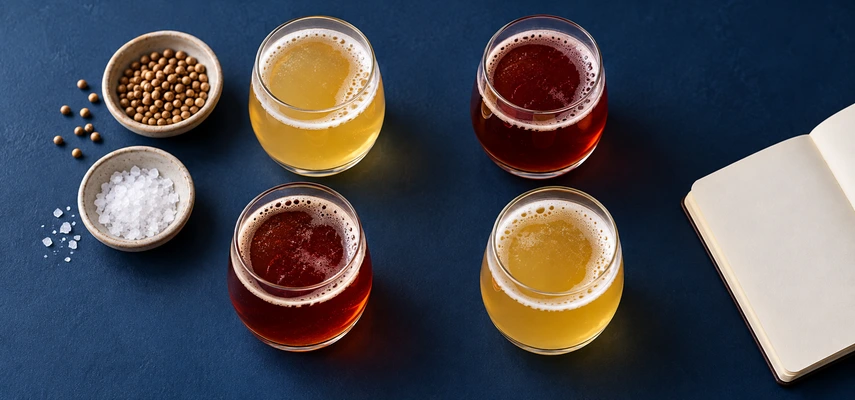

Sour beer is a useful description of a sensation, but an incomplete explanation of a drink. Berliner Weisse and oud bruin can both be tart while differing in grain, color, strength, texture and the route taken to get there. Gose adds another clue: salt and coriander can matter as much as the word sour.
This lesson compares four prescribed references from the WSET Level 2 Beer syllabus. Mixed-fermentation sour beers introduce useful microbial relationships, but contemporary products can use different souring sequences. Learn the style profile and the confirmed method separately.
Sourness does not identify an inoculation method
Lactic acid bacteria can make a beer tart whether they entered through a deliberately selected culture or a more complex traditional community. Lactobacillus is a familiar brewing reference, while other organisms and strain-specific behavior also matter. A sour taste alone cannot tell the complete microbial history.
Spontaneous fermentation describes environmental acquisition of the inoculum, as introduced with lambic. Mixed fermentation describes participation by different organisms. A brewer can deliberately pitch a mixed culture, so the two terms overlap in some production but are not interchangeable.
Likewise, Brettanomyces can contribute distinctive fermentation aromas without being the sole explanation of acidity. Separate who supplied the acid from who supplied the earthy or fruity expression. That distinction prevents several style errors before the first comparison begins.
Kettle souring puts acid production earlier
In a conventional kettle-souring sequence, bacteria acidify unhopped or suitably prepared wort before the main brewing yeast fermentation. A subsequent boil stops that bacterial stage, after which the brewer proceeds with the chosen yeast. Lallemand’s recommended procedure illustrates the sequence.
By contrast, bacteria and yeast can also be used sequentially or together in co-fermentation, without the same intervening boil. Lallemand’s souring-method discussion explains these alternatives. Culture selection, hop tolerance and temperature require method-specific control.
Therefore, a modern tart wheat beer need not have spent years with a diverse living culture in wood. Kettle souring can create a relatively direct acidity, while extended mixed fermentation can create another aromatic result. Neither method automatically determines quality; each must fit the intended beer.
Berliner Weisse: a pale and light reference
Typical Berliner Weisse is very pale, often with some haze, low bitterness and a light body. Lively carbonation and clean acidity create a brisk impression. Grain can suggest light bread or dough, while alcohol is generally low and sweetness restrained in the unsweetened base reference.
Wheat alongside barley and lactic fermentation provide important production anchors. Traditional and modern cultures or souring sequences can differ. Do not require every present-day example to share one fixed fermentation schedule merely because the label is the same.
Compared with weissbier, the acid balance matters more than a classic banana-and-clove profile. Compared with a stronger Belgian sour, the lighter alcohol and body are useful clues. Syrups served with the beer can change sweetness and aroma, so distinguish the original base from a modified serving.
Gose: acidity with a savory-spicy edge
Gose is a pale wheat-containing sour reference with coriander and salt associations. It is commonly hazy, with restrained bitterness, relatively light body and lively carbonation. Alcohol is generally modest; acidity and a dry finish support refreshment rather than heavy sweetness.
Coriander can add citrusy or spicy aroma, and salt can create a subtle savory impression. Neither should be assumed to dominate like a brine or a spice paste. Grain and fermentation still supply the beer beneath those additions.
Compared with Berliner Weisse, the salt-and-coriander connection is particularly useful. Compared with witbier, acidity and the gose balance distinguish the profile despite possible overlap in wheat and coriander. A shared ingredient does not collapse two styles into one, and a modern fruit addition adds another variable to assess separately.
Flanders red ale: tartness with a red-brown malt base
Flanders red ale commonly appears reddish to brown, with fruit-like aromas that can suggest red fruit even without literal fruit additions. Malt development, fermentation and maturation interact. The palate can combine acidity with some balancing sweetness and restrained hop bitterness.
Body is often medium-light to medium, carbonation moderate and alcohol generally moderate. The overall impression can seem wine-like, but that analogy describes a sensory relationship rather than proving grapes were added. Acetic notes may form part of some expressions, yet aggressive vinegar should not become the universal target.
Mixed fermentation, extended maturation and blending are useful production references, often with large wood vessels in traditional examples. Compared with lambic, the grain and regional style context differ. Compared with oud bruin, the red reference generally emphasizes a sharper, more fruit-and-acid-led balance.
Oud bruin: darker malt joins the acid balance
Oud bruin commonly ranges through reddish-brown to darker brown. Caramel, toast or darker fruit associations can accompany a malty, gently acidic profile. Hop bitterness is supportive rather than IPA-like, and sweetness may provide more cushioning than in a lean pale sour.
Body is typically medium through fuller interpretations, carbonation moderate and alcohol variable, sometimes stronger than the light German sour references. Avoid treating every example as equally strong. The sensory anchor is a darker malt-and-acid relationship, not black roast or obligatory heavy alcohol.
Mixed fermentation and maturation develop the profile, but wood is not a compulsory explanation for every producer. Compared with Flanders red, the brown reference generally places more emphasis on malt and less on sharp acetic expression. These are useful contrasts within a related Belgian family rather than hard borders that erase variation.
Acidity, sweetness and bitterness are three observations
Acidity can provide balance where hop bitterness is low. That does not turn acid into bitterness: they remain different sensations with different causes. A tart beer can also contain residual sweetness, creating a balance that neither word captures alone.
Meanwhile, aroma can suggest cherry, plum or citrus without identifying a literal fruit ingredient. Fermentation products and malt development offer alternative explanations. Confirm recipe details before turning a tasting association into a production fact.
For revision, write a separate line for each dimension. A statement such as tart, medium-bodied, gently sweet and moderately carbonated is more informative than merely sour. It also gives enough evidence to compare a Flanders-style beer with a lighter wheat sour.
Time and vessels influence the result without doing all the work
Longer maturation gives cultures time to develop the intended profile, but elapsed months alone do not determine the flavor. The organisms, available substrate, temperature, oxygen and blending decisions all matter. An empty calendar cannot brew the beer.
Wooden vessels can provide a maturation environment without necessarily contributing strong new-oak vanilla. Stainless steel can also be part of sour-beer production. Therefore, neither a woody aroma nor its absence establishes the entire vessel history by itself.
Blending can combine acidity, maturity and malt balance from different components. It is a deliberate finishing tool rather than a guarantee that every batch was defective. As with geuze, ask what each component contributes and whether further fermentation is intended afterward.
Intentional character and faults still need a boundary
Calling a beer sour does not mean every unpleasant aroma becomes acceptable. Excessive acetic harshness, unintended fermentation, oxidation or poor dispense can still disrupt the intended balance. Style context helps interpret a finding; it does not remove the need to assess condition.
A pale kettle-soured beer with clean lactic acidity need not show the mature earthy character expected in another process. Conversely, a complex mixed-fermentation beer should not be dismissed simply because it differs from a clean pale ale. Use the producer’s intended style and method alongside the actual observations.
Avoid diagnosing organisms from one smell alone. Several causes can overlap, and a theory exercise rarely supplies laboratory confirmation. State the plausible mechanism and its limits rather than inventing certainty about a microscopic culprit.
A four-way revision exercise
Create four anonymous written profiles. Give one low alcohol, very pale grain and lively tartness; give another wheat, coriander and subtle salt. Build a third around reddish malt, fruit-like complexity and sharper acid, and a fourth around darker malt with a rounder acidic balance.
Identify the likely styles, then name the evidence that could change the conclusion. A fruit-flavored modern product may blur an aroma comparison, for example. Confirmed salt and coriander help with gose, while alcohol and malt development help separate the light wheat references from richer Belgian ones.
Next describe two possible routes to a tart pale beer: bacterial souring before a boil and a fermentation involving yeast and bacteria without that same stopping step. This checks production understanding without pretending the finished acidity reveals every stage. Written exercises are sufficient; drinking is optional and restricted to legally eligible readers.
One-page revision summary
Berliner Weisse anchors light pale tartness; gose adds the salt-and-coriander connection. Flanders red generally emphasizes fruit-like acidity over a red-brown malt base, while oud bruin generally brings darker, rounder malt into the balance.
Keep sourness, spontaneous inoculation, mixed cultures and kettle souring distinct. Then connect the actual beer’s grain, cultures, time, vessels and finishing with its separate sweetness, acidity, body and aroma observations.
Continue your beer studies
Explore the related lessons on beer finishing alongside lambic and geuze alongside specialty beers to extend the ingredient, process or sensory reasoning in this article.
Knowledge check: 10 original practice questions
Independent TFE questions, not official WSET examination items. Choose one answer per question; explanations follow separately.
1. Which description most strongly supports gose?
- Dark roast and nitrogen texture
- Pale wheat, acidity, coriander and subtle salt
- Neutral strong lager with no acidity
- Barleywine with oak only
2. What happens between bacterial souring and main yeast fermentation in a conventional kettle-sour sequence?
- Years of bottle ageing
- Distillation
- A boil that stops the bacterial stage
- Mandatory spontaneous inoculation
3. Which is the light low-alcohol pale sour reference?
- Berliner Weisse
- Oud bruin
- Doppelbock
- Flanders red solely because it is sour
4. Which comparison best describes oud bruin relative to Flanders red?
- Always more acetic
- Always paler
- Always lower alcohol
- Generally maltier and less sharply acetic
5. What can red-fruit aroma establish without recipe evidence?
- A sensory association rather than proof of fruit addition
- Mandatory cherry use
- Mandatory raspberry use
- Spontaneous inoculation
6. Why are spontaneous and mixed fermentation different terms?
- One means no fermentation
- One describes inoculum acquisition and the other organism participation
- Both always mean kettle souring
- Mixed means blending only finished beer
7. Which observation should be recorded separately from acidity?
- Tartness only
- Lactic sourness only
- Sweetness
- Another word for sourness
8. What does a wooden vessel guarantee?
- Strong fresh vanilla
- A specific bacterial species
- A fixed maturation duration
- No single exact aroma without further context
9. Which ingredient overlap does not make gose identical to witbier?
- Wheat and coriander
- Only dark roast
- Only spirit barrels
- Only nitrogen
10. Why can a sour beer still be faulty?
- Every acid is a fault
- Unintended harshness or poor handling can disrupt its intended balance
- Every mixed culture is contamination
- All wood maturation is oxidation damage
Answers and explanations
1. B — Pale wheat, acidity, coriander and subtle salt. Gose combines a tart pale wheat base with the salt-and-coriander reference; neither salt nor spice needs to overwhelm. Mapping: LO3 AC1/AC2.
2. C — A boil that stops the bacterial stage. The intervening boil distinguishes the conventional sequence from methods retaining bacteria into the main fermentation. Mapping: LO3 AC3.
3. A — Berliner Weisse. Berliner Weisse has the pale, light and lower-strength anchor compared with the richer Belgian references. Mapping: LO3 AC1.
4. D — Generally maltier and less sharply acetic. The brown reference generally emphasizes darker malt and a rounder acid balance, while allowing producer variation. Mapping: LO3 AC1.
5. A — A sensory association rather than proof of fruit addition. Malt, fermentation and maturation can create fruit-like associations; an ingredient claim needs separate evidence. Mapping: LO3 AC1/AC2.
6. B — One describes inoculum acquisition and the other organism participation. A brewer can deliberately pitch a mixed culture, so multiple organisms do not necessarily imply environmental inoculation. Mapping: LO3 AC3.
7. C — Sweetness. A beer can be acidic and sweet simultaneously; separate observations describe the balance more accurately. Mapping: LO3 AC1.
8. D — No single exact aroma without further context. Old and new wood and different cultures behave differently; vessel identity alone does not dictate a fixed profile. Mapping: LO3 AC3.
9. A — Wheat and coriander. The styles can share ingredients while differing in acidity, salt association, fermentation and overall balance. Mapping: LO3 AC1/AC2.
10. B — Unintended harshness or poor handling can disrupt its intended balance. Intentional acidity does not make every off-character acceptable; the result must still suit the intended product. Mapping: LO3 AC1/AC3.












