










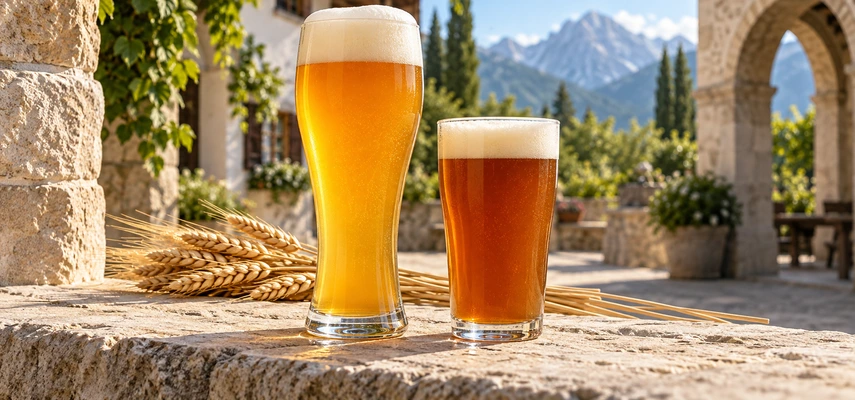

German wheat beers make a useful detective exercise because the grain name tells only part of the story. A cloudy golden glass, a clear golden glass and a deep brown one can belong to the same wider family. Meanwhile, two equally cloudy wheat beers can smell strikingly different.
The four references in this lesson are weissbier, dunkelweizen, kristallweizen and weizenbock. They sit within the WSET Level 2 Beer syllabus. Learn them as related production choices rather than four isolated lists. Grain, yeast, color, clarification and original strength each answer a different question.
Wheat is the foundation, not the banana
Malted wheat supplies extract and contributes bread-like or dough-like grain character. Barley malt commonly shares the grist. A wheat-containing recipe can also influence foam and texture, but it does not independently prescribe every aroma in the finished beer.
The familiar banana-and-clove association depends especially on the selected weizen yeast and fermentation conditions. Banana-like esters and clove-like phenolic expression are fermentation products; neither descriptor proves bananas or cloves went into the vessel. Lallemand’s wheat yeast reference provides a practical example of a culture selected for this expression.
That distinction explains why American wheat ale or Belgian witbier need not resemble Bavarian wheat beer. They can share a cereal while using different cultures and aromatic additions. The ingredient family gives a starting point; the process completes the explanation.
Weissbier: the pale family reference
Typical weissbier is pale straw to gold, often hazy, with generous white foam. Bread-like grain supports a fruity-spicy fermentation character. Bitterness is low, body usually medium-light to medium, and lively carbonation brings a buoyant finish. Alcohol generally sits in the ordinary-strength range rather than dominating with warmth.
The palate can feel soft without finishing heavily sweet. Low bitterness changes the balance, while gas gives a brisk sensation. Hefeweizen is a familiar related name, with hefe referring to yeast. Clarity varies with settling and presentation, so cloudiness should be described rather than treated as proof of quality.
The production anchor is wheat malt with barley malt and a suitable expressive ale culture. Compared with a pale lager, fermentation aroma is more central; compared with witbier, banana and clove are more useful expectations than coriander and peel. These are tendencies to test against the actual product.
Dunkelweizen adds a different malt conversation
Dunkelweizen, also called dunkles weissbier, retains the wheat-and-weizen connection while moving toward copper or brown. Foam can be off-white, and haze may remain. Toasted bread, crust and sometimes caramel-like notes give the grain a richer voice alongside fruity-spicy yeast expression.
Bitterness remains restrained, carbonation lively and body generally medium-light through moderately fuller examples. The malt may suggest sweetness, but a reasonably light finish distinguishes richness from syrupiness. Alcohol commonly resembles ordinary weissbier rather than automatically increasing because the liquid is darker.
More developed malts explain the added color and bread-crust character. This is not simply weissbier with stout-like burnt roast. Compared with Munich dunkel lager, the additional weizen fermentation signature matters. Compared with pale weissbier, the richer grain can make the same yeast associations seem less exposed.
Kristallweizen: clarification changes the view
Kristallweizen offers the clearest challenge to the claim that all wheat beer must be cloudy. Filtration removes suspended material to produce a bright presentation. It does not rewrite the recipe into an all-barley lager, nor does it remove every dissolved aroma compound produced during fermentation.
Expect a pale to golden appearance, white foam, bread-like grain and a possible fruity-spicy family resemblance, with low bitterness, a relatively light body and lively carbonation. Exact aroma balance depends on the producer. Alcohol is commonly ordinary strength; clarity does not establish a lower alcohol level or a sweeter finish.
Weihenstephan’s Kristall specification explicitly identifies filtration as the source of clarity and describes retained banana and citrus aroma. That is useful producer evidence, not a universal requirement that all wheat products use its exact process. Compare kristall with hefeweizen by asking what was removed from suspension and what remains in solution.
Weizenbock turns up strength and richness
Weizenbock combines wheat-beer fermentation expression with a stronger, richer malt base. Pale and dark versions exist. A pale example can be gold to amber; a dark one can move into ruby-brown. Foam is substantial, with color influenced by the beer beneath it.
Bread-like malt, banana and spice may combine with toast or darker fruit associations in darker interpretations. Bitterness is generally supportive, body fuller, carbonation moderate to high, and alcohol more evident than in standard weissbier. Rich malt can suggest sweetness without requiring a sticky finish or harsh alcohol.
A higher-extract wort provides the foundation for greater strength, while malt selection explains pale versus dark expression. The name bock does not make this a neutral lager fermentation. Compared with lager doppelbock, yeast-derived wheat-beer aromas are a key distinction. Compared with dunkelweizen, strength and concentration matter beyond color alone.
Four independent decisions prevent four common mistakes
Start with the cereal decision: wheat malt and barley malt can share the grist. Next consider culture, which determines whether characteristic weizen expression is a reasonable expectation. Then consider the malt’s development, which helps explain pale versus darker grain character.
Finally, separate original strength from clarification. A filtered sample can still have ordinary alcohol, and a dark sample need not be the strongest. These variables interact in the finished glass, but none should stand in for every other one.
For example, a clear golden wheat beer description plus confirmed filtration supports kristallweizen. A dark brown sample with standard alcohol and bread-crust notes supports a different conclusion from a similarly colored sample with fuller body and stronger alcohol. The extra evidence resolves the ambiguity that color leaves behind.
Fermentation needs control, even when yeast is expressive
An aromatic yeast is not permission for an uncontrolled fermentation. Culture health, pitching, oxygen management before fermentation and temperature influence both performance and aroma. The appropriate settings depend on the strain and recipe; hotter does not automatically mean more authentic.
Attenuation also matters. A fermentation that leaves a lighter finish changes how malt richness and bitterness are perceived. Meanwhile, maturation can help yeast reduce unwanted fermentation by-products. These mechanisms apply even when the brewer intends noticeable esters and phenols.
In revision answers, connect one process change to a plausible result. A culture change can alter fermentation aroma; a darker malt blend can alter bread-crust character; filtration can alter clarity. Claiming any one change explains all three outcomes misses the value of the comparison.
Foam and haze deserve separate notes
A tall head can look impressive, but it is not a direct measurement of alcohol or quality. Grain composition, carbonation, glass condition and pouring all contribute. An oily or poorly rinsed glass can disrupt presentation even when the beer itself was made correctly.
Haze can involve suspended yeast and protein-related material. Sediment may settle, and a producer may advise a particular pour. Therefore, record the observed clarity and follow product guidance rather than aggressively stirring every bottle to meet an imagined universal wheat-beer rule.
Likewise, avoid turning smooth texture into a sugar measurement. Body, carbonation and sweetness are distinct observations. A sample can feel rounded yet finish relatively dry, or feel leaner after filtration without having lost all of its original grain identity.
A useful comparison without compulsory drinking
Build a written grid with columns for color, clarity, aroma, bitterness, sweetness, body, alcohol and carbonation. Fill one row for each style using qualified language. Add a final column naming the production decision that most clearly distinguishes that row.
Then hide the names. Identify a filtered pale reference, an ordinary-strength darker wheat reference and a stronger fuller reference. Explain why an American wheat ale could share the cereal column while differing in fermentation aroma. This tests relationships rather than memorized adjectives.
Optional tasting by legally eligible readers can illustrate those relationships, but it is not necessary for the theory exercise. If comparing samples, keep glass condition and serving conditions consistent. A stale or poorly served beer can otherwise turn a production lesson into a comparison of handling mistakes.
Read a label in two passes
On the first pass, collect facts the producer actually supplies: the named style, alcohol, filtration statement and ingredients. On the second pass, predict a sensory profile from those facts. Keep the prediction separate from the evidence, especially when a label offers only a broad wheat-beer name.
For example, confirmed filtration supports a clarity expectation but says little about how strongly the yeast expressed clove. Confirmed higher alcohol supports the strength comparison but cannot decide whether the malt is pale or dark. This habit also helps with unfamiliar products: leave missing information open rather than filling it with the most familiar example.
One-page revision summary
Weissbier anchors the pale, expressive wheat family; dunkelweizen adds darker bread-and-toast malt character. Kristallweizen demonstrates filtration and bright clarity without erasing wheat or every fermentation aroma. Weizenbock adds strength and richness and can be pale or dark.
Keep cereal, culture, malt development, clarification and original strength separate in the explanation. Banana is an aroma association rather than a required fruit addition. Brown is a color rather than a strength guarantee. Clear is an observation rather than evidence that the brewer forgot the wheat.
Continue your beer studies
Explore the related lessons on brewing adjuncts alongside beer yeast alongside beer fermentation to extend the ingredient, process or sensory reasoning in this article.
Knowledge check: 10 original practice questions
Independent TFE questions, not official WSET examination items. Choose one answer per question; explanations follow separately.
1. A pale wheat beer is filtered to brightness. Which reference fits best?
- Dunkelweizen
- Kristallweizen
- Weizenbock solely because it is clear
- Munich dunkel
2. Which change best explains bread-crust richness in dunkelweizen?
- Removing yeast after fermentation
- Replacing carbon dioxide with nitrogen
- Using more developed malts
- Adding more pale aroma hops alone
3. What most directly explains typical weissbier banana aroma?
- Yeast-derived esters
- Unmalted wheat starch alone
- Dark roasting
- Filtration
4. Which evidence best distinguishes weizenbock from ordinary dunkelweizen?
- Brown color alone
- Any visible haze
- Any wheat in the recipe
- Greater strength and fuller malt concentration
5. Which statement about weizenbock color is accurate?
- Pale and dark interpretations exist
- It must always be black
- It must always be straw
- Color determines its exact alcohol
6. What does filtration remove most directly?
- All alcohol
- Suspended material
- Every dissolved ester
- The historical grain bill
7. Which comparison best separates weissbier from a typical American wheat ale?
- Only the presence of wheat
- Only the glass height
- More characteristic banana/clove fermentation expression
- Mandatory higher alcohol
8. Why is darker wheat beer not necessarily more alcoholic?
- Dark malt prevents fermentation
- Clarity sets alcohol
- Carbonation sets original gravity
- Color and original wort strength are separate recipe decisions
9. Which observation should be separated from sweetness?
- Body
- Residual sugar only
- A sweet taste only
- A direct sugar assay
10. A dark wheat beer has toast, restrained bitterness and banana/clove at ordinary strength. Which is the strongest match?
- Imperial stout
- Dunkelweizen
- German pilsner
- Kristallweizen
Answers and explanations
1. B — Kristallweizen. Kristallweizen identifies the bright filtered wheat reference; filtration does not change the grain into barley-only lager. Mapping: LO3 AC1/AC3.
2. C — Using more developed malts. More developed malt supplies darker color and toast or crust character, while the weizen fermentation remains relevant. Mapping: LO3 AC2/AC3.
3. A — Yeast-derived esters. The banana association is a fermentation ester expression; wheat by itself does not require this aroma. Mapping: LO3 AC2/AC3.
4. D — Greater strength and fuller malt concentration. Weizenbock is the stronger richer reference, while both can be dark and show weizen fermentation character. Mapping: LO3 AC1.
5. A — Pale and dark interpretations exist. Pale and dark versions are recognized; strength and wheat fermentation identity matter independently of color. Mapping: LO3 AC1.
6. B — Suspended material. Filtration clarifies through removal of suspended material; it does not imply removal of all dissolved flavors. Mapping: LO3 AC3.
7. C — More characteristic banana/clove fermentation expression. Both can contain wheat; the selected culture and resulting aroma provide the more useful distinction. Mapping: LO3 AC1/AC2.
8. D — Color and original wort strength are separate recipe decisions. Malt development controls color while fermentable extract and attenuation influence alcohol; darkness is not an ABV measurement. Mapping: LO3 AC1/AC3.
9. A — Body. Body is the perceived weight or fullness; it can be rounded even when the finish is relatively dry. Mapping: LO3 AC1.
10. B — Dunkelweizen. Dunkelweizen brings darker developed malt and weizen fermentation without requiring bock-level strength. Mapping: LO3 AC1.











