











Two bottles have been pasteurised once, yet they can have spent their storage period in very different conditions. Nama sake terminology makes that difference visible. The key is not simply counting heat treatments; it is locating them on the production timeline.
Nama-zake has no pasteurisation. Nama-chozō is stored without pasteurisation, then heat-treated before shipment. Nama-zume is heat-treated before storage, then bottled or shipped without the later second treatment. Those three statements sound close enough to muddle, but they describe distinct histories with practical consequences.
Nama sake describes heat-treatment history
Pasteurisation uses controlled heat to manage relevant microorganisms and enzymes in sake. It improves stability by limiting continuing biological changes. Omitting it preserves a different product condition, often valued for fresh or lively character, but also leaves the producer and drinker with different handling needs.
The official specification distinguishes unpasteurised nama-zake from the once-pasteurised nama-chozō and nama-zume variations. A lesson that calls all three simply unpasteurised would therefore lose a prescribed production distinction.
Fresh is a useful style association, not a guarantee that the bottle was made yesterday or will remain unchanged indefinitely. The term concerns treatment, while the filling date and storage history answer other questions. A recently purchased bottle can still have been handled poorly; an older bottle can have had carefully managed conditions.
Nama-zake omits pasteurisation entirely
In nama-zake, the sake is not subjected to the usual heat treatment after production. The National Tax Agency’s standard defines the label term through the absence of such heating. Do not replace that meaning with raw rice, unfinished fermentation or no filtration.
The rice was still prepared, kōji was still made and yeast still fermented sugars. The liquid can also have been separated and clarified. Nama concerns a later stability decision, not a claim that none of the earlier production work happened.
Remaining enzymes can continue to change components if conditions allow. Microbial activity is another consideration. These possibilities explain why suitable cold handling matters. Unpasteurised is not a synonym for faulty, but it is also not a promise that the liquid is immune to deterioration.
Nama-chozō is stored before its one heat treatment
Chozō refers to storage. For nama-chozō, the sake is kept without prior pasteurisation, then pasteurised before it leaves the brewery. The storage phase therefore occurs while the liquid remains in the unpasteurised condition. The later heating changes its condition before distribution.
The official Japanese standard defines this sequence, and the NRIB label glossary explains the term in English. The useful memory aid is to attach unheated to the storage period, not to every stage of the bottle’s life.
If you read once-pasteurised and assume it was heated before storage, you have described the wrong route. Both once-treated variations can have one treatment, but the treatment occupies a different place on the timeline. Counting to one is insufficient; you also have to ask when.
Nama-zume is heated before storage
Nama-zume takes the other once-pasteurised route. The sake is heat-treated before storage, then does not receive the usual later treatment at bottling or shipment. It has therefore spent its storage period after pasteurisation, unlike nama-chozō.
The term should not be translated into a claim that the sake has never been heated. Its omission concerns the later treatment. The earlier heat step is essential to understanding the difference. A label description that hides it would give the reader the wrong production history.
The Masumi explanation of sake types shows how heat-treatment terminology sits alongside other production choices. Read those descriptions as parts of a process. The words are much easier to remember when attached to storage and bottling than when memorized as three similar spellings.
A timeline is better than a loose translation
| Style | Before storage | After storage, before shipment |
|---|---|---|
| Nama-zake | No pasteurisation | No pasteurisation |
| Nama-chozō | No pasteurisation | One pasteurisation |
| Nama-zume | One pasteurisation | No second pasteurisation |
This table shows the standard teaching distinctions. Actual breweries can organize heating and filling equipment differently, but the sequence described by each term remains the important concept. Bulk versus in-bottle treatment is a related equipment question, not a replacement for the timing question.
For example, a statement about in-bottle pasteurisation tells you where the liquid was when heated. It doesn’t by itself tell you every earlier treatment. To reconstruct the complete history, combine method and timing information. One word rarely carries the whole production record.
Why the timing can influence the result
During storage, an unpasteurised sake can retain active enzymes and a different potential for biological change from one already heat-treated. Temperature and duration therefore matter to the path it follows. A later pasteurisation doesn’t retroactively make its earlier storage history identical to that of a pre-storage-treated sake.
Likewise, omitting a second treatment changes exposure to heat later in the process. Producers may use these routes to balance freshness-related character with stability aims. The decision is a production tool, rather than an automatic statement that one style is always better or tastes fresher to every drinker.
The NRIB question on nama connects its relative instability with the continued activity of enzymes and storage conditions. This explains the mechanism without requiring a learner to identify every enzyme or microorganism involved in a particular commercial bottle.
Potential freshness does not prescribe one aroma
Nama styles are often associated with fresh, vivid or lively impressions. However, rice, kōji, yeast, fermentation and finishing remain influential. A delicate aromatic nama and a fuller savory nama can both make sense. No heat treatment does not replace the rest of the style explanation.
Nor does nama guarantee sweetness or carbonation. Continued activity can be relevant to certain products, but bubbles are not a universal requirement. A still nama should not be regarded as defective merely because another unpasteurised example was lightly sparkling.
When tasting, describe aroma, palate and finish first. Then use treatment history to consider plausible explanations. Avoid discovering an obligatory fresh note simply because the label says nama. Expectations can be persuasive even when the liquid offers a more complicated story.
Cold handling follows from what remains active
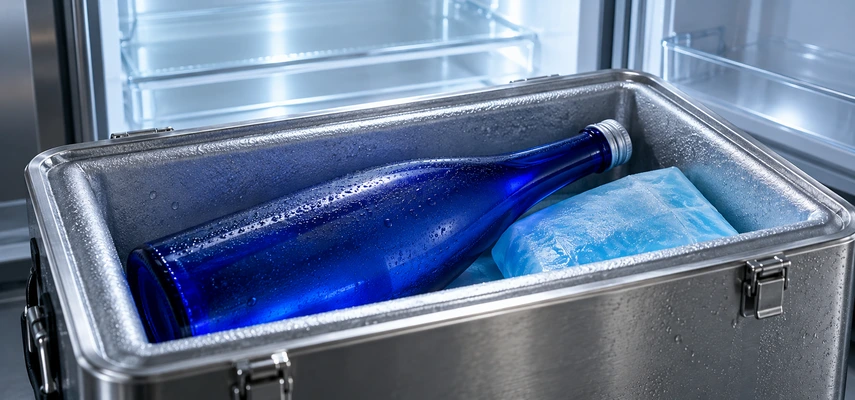
Unpasteurised sake generally needs refrigeration and protection from bright light, with attention to producer instructions and prompt consumption. A short trip from shop to home is part of that handling history too. A refrigerator at the destination cannot erase an extended period in unsuitable warmth beforehand.
Once-pasteurised products should also be stored according to their specific directions. Don’t infer a universal unrefrigerated life merely from the number one. The producer knows the actual process, packaging and intended condition. General style knowledge helps interpret those directions rather than override them.
After opening, exposure and handling add further variables. Close the bottle, keep it appropriately cold and avoid assuming a fixed lifespan applies to every product. A precise day count without product-specific evidence would be less useful than understanding why the drink can change and checking its condition.
Keep treatment, grade and appearance separate
A nama can also be junmai ginjō, nigori or genshu. Each term answers a different question: ingredients and production branch, retained particles, or dilution history. A clear appearance doesn’t prove pasteurisation, and an unpasteurised statement doesn’t establish a polishing ratio.
This is a useful exercise with a hypothetical label. Read junmai, nama and genshu one at a time. Write no added brewing alcohol, no pasteurisation and no routine dilution as separate facts. None tells you exact sweetness. None alone tells you the actual alcohol percentage. The strength declaration and reliable product information remain necessary.
Reconstruct three hypothetical production records
Record A says the brewery pressed the sake, kept it cold without heating, filled it under suitable conditions and shipped it without pasteurisation. That sequence fits nama-zake. The storage temperature supports handling, but the absence of heating is what establishes the term. Cold storage alone would not prove it if a prior heat treatment had occurred.
Record B says the sake was stored unheated, then pasteurised as part of its final pre-shipment handling. That fits nama-chozō. Record C says the sake was pasteurised before its storage period, then bottled without the later second treatment. That fits nama-zume. Both B and C have one heat treatment, yet the storage history differs.
Now remove the timing information from B and C, leaving only pasteurised once. You can no longer distinguish them reliably. This is a useful discipline for label interpretation: an incomplete production statement should produce an appropriately limited conclusion. Ask for the missing timing evidence rather than guessing from color, aroma, price or the number of syllables in the name.
One-page revision summary
Nama-zake has no pasteurisation. Nama-chozō is unpasteurised during storage and heated afterward. Nama-zume is heated before storage and omits the later second treatment. Timing matters because the liquid experiences storage in different conditions. Freshness-related character is a tendency, not one compulsory aroma. Suitable cold handling and producer directions protect the intended result, while grades, cloudiness and dilution remain separate descriptions.
Knowledge check: 10 original practice questions
Independent TFE questions, not official WSET examination items. Choose one answer per question; explanations follow separately.
1. Which style has no pasteurisation?
- Every genshu
- Nama-zake
- Every nigori
- Honjōzō by definition
2. When is nama-chozō pasteurised in the standard sequence?
- Before rice polishing
- Before storage only
- After unpasteurised storage, before shipment
- Never
3. Which sequence fits nama-zume?
- Pasteurise before storage, omit the later second treatment
- Never heat at any point
- Add milk before storage
- Distil after bottling
4. Why does counting heat treatments alone fail to distinguish the once-treated styles?
- Both are necessarily distilled
- Both are premium grades
- Neither has storage
- The one treatment happens at different stages
5. Why does cold handling matter for nama?
- It changes the rice variety
- Remaining biological activity can alter the sake
- It guarantees no future changes
- It adds a premium grade
6. Does nama mean the rice was never steamed?
- Yes
- Only if cloudy
- No, it concerns later heat treatment of the sake
- Only in winter
7. Can a nama also be junmai ginjō?
- Yes, the terms describe different production facts
- No, the terms conflict
- Only after distillation
- Only if no yeast was used
8. What does nama alone fail to establish?
- That heat history matters
- That handling matters
- A style distinction
- Exact sweetness and alcohol strength
9. Is sparkling character required in every nama?
- Yes, always
- No, it can be still
- Only after storage
- Only in glass bottles
10. Which handling principle is most defensible?
- Ignore the producer if the bottle looks clear
- All once-treated bottles last indefinitely
- Use appropriate cold storage and product-specific instructions
- Warm every nama before storing
Answers and explanations
1. B — Nama-zake. Nama-zake identifies the omission of heat treatment, unlike the once-pasteurised variants. Mapping: LO2.
2. C — After unpasteurised storage, before shipment. Nama-chozō is stored unheated, then receives its one treatment later. Mapping: LO2.
3. A — Pasteurise before storage, omit the later second treatment. Nama-zume differs from nama-chozō through the timing of its single pasteurisation. Mapping: LO2.
4. D — The one treatment happens at different stages. The storage period occurs before treatment in one route and after treatment in the other. Mapping: LO2.
5. B — Remaining biological activity can alter the sake. Temperature affects the potential for enzyme and microbial changes in unpasteurised sake. Mapping: LO3.
6. C — No, it concerns later heat treatment of the sake. Rice preparation and sake pasteurisation are different stages of production. Mapping: LO2.
7. A — Yes, the terms describe different production facts. The premium branch and heat-treatment history can be combined in one product. Mapping: LO2.
8. D — Exact sweetness and alcohol strength. Those properties require additional composition, sensory or label information. Mapping: LO2.
9. B — No, it can be still. Pasteurisation history does not prescribe carbonation as a universal feature. Mapping: LO2.
10. C — Use appropriate cold storage and product-specific instructions. Actual process and packaging affect needs, so general terminology cannot supply a universal lifespan. Mapping: LO3.
Continue studying sake
Article #10: Sake Pasteurisation and Finishing Explained: Charcoal Fining, Storage, and Dilution · Article #11: Sake Categories Explained: Futsū-shu, Premium Sake, and Classification Rules · Article #16: Nigori Sake Explained: Cloudiness, Filtration, and Texture · Article #21: How to Store Sake Properly: Freshness, Light, Temperature, and Ageing












