










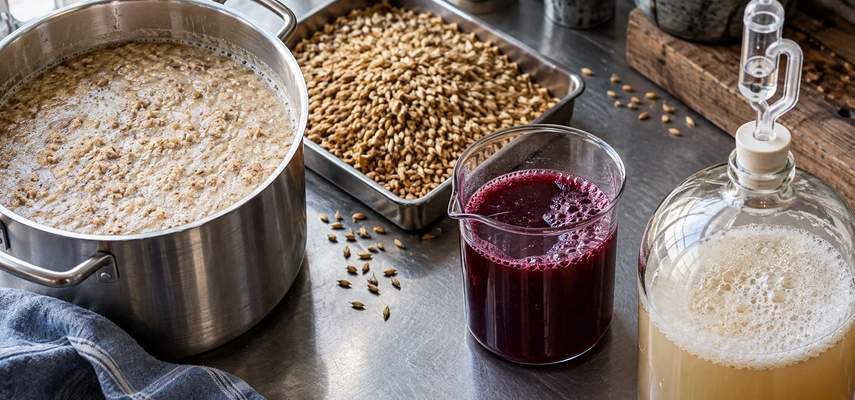

A grape can offer yeast a meal almost straight from the press. A grain of barley makes yeast wait. Both can become the starting point for a spirit, but one carries readily available sugar while the other stores much of its energy as starch. Before a distiller thinks about the still, that difference has to be solved.
This is where the spirits story begins: with preparing food for yeast. The first two production stages are processing a raw material into a sugary liquid and using alcoholic fermentation to create an alcoholic liquid. They fit together so neatly that they’re easy to muddle. Separating them makes the rest of production much easier to follow.
The raw material sets the first problem
Yeast needs fermentable sugar. It doesn’t read a category label or care whether the future drink is called whisky, rum or brandy. The producer’s first job is to turn an agricultural starting material into a suitable fermentation medium. That may require pressing, crushing, dilution, cooking, enzyme action, or several operations together.
Think of a grain’s starch as energy packed into long chains. Those chains are useful to the plant, but ordinary spirits-fermentation yeast cannot simply consume intact starch in the way it consumes fermentable sugars. A conversion step breaks suitable carbohydrate material into smaller sugars. Once those are available in liquid, fermentation has something to work with.
The distinction is chemical rather than culinary. A potato may be edible after cooking, but that doesn’t mean a yeast can turn its starch directly into alcohol. Likewise, crushing barley produces smaller pieces of barley rather than automatically making a fermentable sugar solution. Physical processing and sugar conversion can help each other while doing different jobs.
Grapes: sugar already in reach
Grapes contain sugars in their juice. Pressing releases that juice, which can then undergo fermentation. The resulting wine becomes the alcoholic base for grape-based spirits such as Cognac. This is a direct route to a sugary liquid, compared with the extra conversion work required by starch-rich ingredients.
That doesn’t make the grape route effortless. The condition of the fruit and the handling of the juice still influence the fermentation. The Cognac production account follows grapes through pressing and winemaking before double distillation. The sequence matters: Cognac isn’t produced by putting unfermented grape juice into a still and asking it to manufacture alcohol.
Nor should the finished spirit be expected to smell exactly like fresh grape juice. Fermentation changes the material, distillation changes the balance of volatile compounds, and later maturation may add further character. Raw material is an influence running through a process, rather than a flavour label that must survive unchanged.
Grains: unpacking starch with enzymes
In malt whisky production, barley is malted before mashing. Malting involves controlled germination followed by drying. This develops the grain’s enzyme system for the next operation. The useful beginner’s distinction is that malting prepares the machinery; mashing uses the malt with water to help create a sugary liquid.
Enzymes are biological catalysts. In this setting they help break starch into smaller carbohydrate units, including fermentable sugars. They aren’t the same organisms as the yeast added for alcoholic fermentation. If enzymes are the cutters opening the food parcels, yeast is the worker using the food afterwards.
During mashing, ground malted barley is mixed with water under conditions suited to conversion and extraction. The resulting sugary liquid is called wort in whisky production. The official Scotch Whisky technical file describes that liquid being separated and passed to fermentation vessels.
Other grains also supply starch. Corn, rye and wheat can appear in different whisky styles, while grains are also common vodka ingredients. Their processing needs depend on the material and category. The general principle stays stable: make the starch accessible, convert it into fermentable sugars, and supply a suitable liquid for fermentation.
Potato-based vodka follows that same broad logic of starch conversion rather than the direct grape-juice route. It doesn’t follow that every vodka is made from potato, or that every grain spirit must become whisky. A raw material identifies one part of the story; distillation choices and category requirements decide what follows.
Cane and agave take different routes
Sugar cane offers sugar in its juice. Molasses, a product of sugar manufacture, also provides fermentable sugars and is widely used in rum production. These materials need suitable preparation for fermentation, including adjustment with water where appropriate. They should not be described as interchangeable simply because both originate in cane.
Juice and molasses differ in composition, and those differences help establish different starting conditions. Later fermentation and distillation choices can widen or narrow the sensory contrast. This is why “made from sugar cane” is a useful category clue without being a complete prediction of rum’s aroma, colour or sweetness.
Blue agave presents another carbohydrate-conversion problem. Its stored carbohydrates include fructans rather than the cereal starch discussed above. Cooking helps hydrolyse those carbohydrates into fermentable sugars. The Tequila Regulatory Council’s production overview explains the movement from agave processing through sugar extraction and fermentation.
For Level 1, the key comparison is straightforward. Grapes offer sugar in juice; grains and potatoes require starch conversion; agave requires suitable processing to make its stored carbohydrate fermentable. Cooking agave and mashing barley belong to the same broad production stage, but that doesn’t make them the same biochemical operation.
Yeast changes the job description
Once a sugary liquid is ready, yeast can begin alcoholic fermentation. It consumes fermentable sugars and produces ethanol and carbon dioxide. The ethanol remains in the alcoholic liquid that will feed the still. Carbon dioxide is released as gas. The exact handling of the fermentation varies with the producer and beverage.
Sugar preparation therefore creates the opportunity for alcohol production; fermentation performs that production. This is the causal link to keep clear in an examination. If a question asks why grain starch is converted, the answer is to provide fermentable sugars. If it asks which stage creates ethanol, the answer is alcoholic fermentation.
Yeast also produces compounds that contribute to aroma. The fermented base isn’t just water and ethanol waiting for a barrel to make it interesting. Raw material and fermentation together supply a chemical starting point that distillation will reshape. Some characteristics will carry through more noticeably than others.
Fermentation conditions influence the process. Temperature management, the yeast used and the time allowed can affect its progress and the compounds produced. At this introductory level, understanding the direction of influence is more useful than learning one supposedly universal fermentation recipe. Different spirits traditions deliberately seek different results.
A producer making a relatively neutral base and a producer seeking a pronounced fermented character may therefore make different choices before distillation begins. Those decisions aren’t judgments about which spirit is better. They are ways of building the material needed for a particular style.
Follow two hypothetical batches
Imagine a grape batch first. Pressed juice supplies fermentable sugar; yeast converts it into an alcoholic wine. That wine now contains ethanol and an aroma profile shaped by grapes and fermentation. Distillation can concentrate alcohol from it. Oak ageing may follow, depending on the category and intended product.
Now imagine a malted-barley batch. Malt is ground and mashed with water so enzyme activity produces fermentable sugars. Yeast then ferments the sugary wort, creating an alcoholic wash. That wash feeds the still. The pathway is longer at the front, but the fermentation-to-distillation sequence remains the same.
The useful comparison isn’t that grapes are “natural” while grain requires “chemistry”. Both routes involve chemistry and biological material. The practical difference is the form in which carbohydrate arrives and the work needed to make it available. A clear explanation names that difference instead of hiding it behind a slogan.
Three shortcuts that cause trouble
First, a sweet-smelling finished spirit isn’t necessarily sweet because its original ingredient contained sugar. Much of that fermentable sugar has been used by yeast, and ordinary distillation doesn’t carry non-volatile sugar over as though the still were a ladle. Finished sweetness needs its own explanation, including permitted later additions.
Second, fermentation doesn’t make a finished distilled spirit on its own. It creates the alcoholic base. Distillation then concentrates ethanol and changes the mixture of volatile compounds. A wine and a grape spirit may share a raw material while belonging to different beverage groups because the processing continues.
Third, raw material doesn’t guarantee one unmistakable aroma. High-strength distillation can leave a much lighter impression of the starting material, while later oak or flavouring may add prominent characteristics. To explain the final drink, trace the whole chain rather than stopping at the farm gate.
Once fermentation has supplied the alcoholic liquid, connect it with distillation and Cognac.
What to remember
Keep two questions separate: How does the producer create a sugary liquid? How does yeast turn that into an alcoholic liquid? The answer to the first depends on the carbohydrate source. The answer to the second centres on alcoholic fermentation, ethanol and carbon dioxide.
When revising, practise a short explanation for grapes, grain, potato, cane and blue agave. Name the material, identify any conversion needed, and place fermentation before distillation. That foundation supports the later category lessons without requiring you to memorise every distillery’s equipment or operating schedule.
Knowledge check: 12 original practice questions
Independent TFE questions, not official WSET examination items. Choose one answer per question; explanations follow separately.
1. What does cooking blue agave help achieve?
- Conversion of stored carbohydrates into fermentable sugars
- Creation of barrel-derived colour
- Double distillation
- A finished cream liqueur
2. What is the main role of yeast in alcoholic fermentation?
- Charring oak
- Increasing grape acidity by pressing
- Turning fermentable sugars into ethanol and carbon dioxide
- Concentrating ethanol by evaporation
3. What else can fermentation contribute besides ethanol?
- New oak containers
- A legal geographical origin
- Aroma compounds
- A mandatory age statement
4. Which description of malting is most useful here?
- Controlled germination and drying that develops the grain enzyme system
- Adding caramel colour to wort
- Distilling a finished wash
- Sweetening a bottled spirit
5. What does mashing malted barley help produce?
- A finished bottle of vodka
- A sugary liquid called wort
- An aged spirit
- An agave heart
6. Which is a sugar cane material used for rum?
- Juniper
- Malted barley only
- Molasses
- Blue agave
7. Why can two spirits from the same raw material differ?
- Raw materials have no influence
- Fermentation is optional for spirits
- Their ingredients must have different names
- Fermentation, distillation and finishing decisions can differ
8. Why does grain starch need conversion before ordinary spirits fermentation?
- To create oak colour
- To supply fermentable sugars
- To remove ethanol
- To make a finished whisky
9. Which statement correctly distinguishes enzymes and yeast?
- Both are types of still
- Yeast makes starch by charring
- Enzymes are a finished spirit
- Enzymes aid conversion; yeast carries out alcoholic fermentation
10. Which material offers sugars in its juice?
- Grapes
- Dry barley starch
- Potato starch
- New oak
11. Which statement about vodka ingredients is accurate?
- Only potato is allowed
- All vodka uses grapes
- Grain cannot be used
- Potato and grain are traditional possibilities
12. Which stage must supply ethanol before distillation can concentrate it?
- Maturation
- Alcoholic fermentation
- Bottle labelling
- Colour adjustment
Answers and explanations
1. A — Conversion of stored carbohydrates into fermentable sugars. Cooking helps make agave carbohydrates available as fermentable sugars before alcoholic fermentation. Mapping: LO2.
2. C — Turning fermentable sugars into ethanol and carbon dioxide. Yeast produces ethanol and carbon dioxide through fermentation; concentration by distillation is a later operation. Mapping: LO1.
3. C — Aroma compounds. Fermentation produces compounds that help shape the aroma of the alcoholic base and subsequent spirit. Mapping: LO1.
4. A — Controlled germination and drying that develops the grain enzyme system. Malting prepares grain and its enzymes for the starch conversion involved in later mashing. Mapping: LO1.
5. B — A sugary liquid called wort. Mashing uses water and enzyme activity to produce the sugary wort that will be fermented. Mapping: LO1.
6. C — Molasses. Molasses derives from sugar production and supplies fermentable material for many rums. Mapping: LO2.
7. D — Fermentation, distillation and finishing decisions can differ. Raw material is one influence within a sequence of decisions, rather than a complete prediction of final character. Mapping: LO1.
8. B — To supply fermentable sugars. The conversion breaks suitable starch material into sugars that fermentation yeast can use. Mapping: LO1.
9. D — Enzymes aid conversion; yeast carries out alcoholic fermentation. Conversion enzymes and fermentation yeast have different roles in creating the alcoholic base. Mapping: LO1.
10. A — Grapes. Grapes supply fermentable sugars in their juice, unlike starch-rich grain or potato starting materials. Mapping: LO1.
11. D — Potato and grain are traditional possibilities. Both potato and grains are traditional vodka materials, but neither is the exclusive permitted starting point. Mapping: LO2.
12. B — Alcoholic fermentation. Fermentation creates the alcoholic liquid; the still cannot concentrate ethanol that was never produced. Mapping: LO1.












