










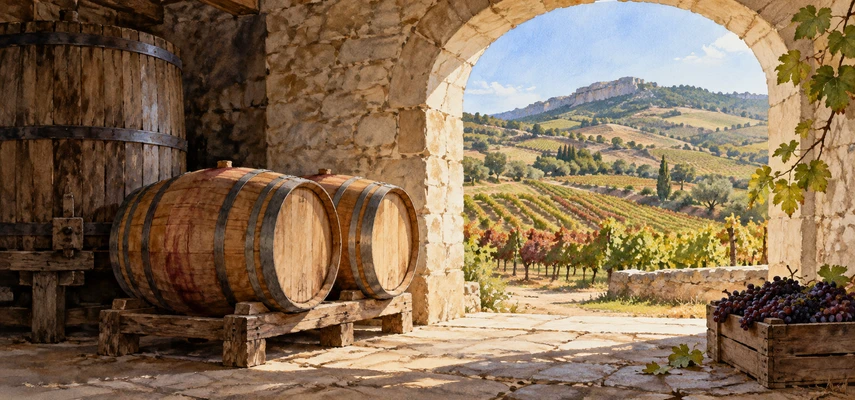

Rioja and Navarra make a useful northern Spanish comparison because familiar names can conceal quite different production decisions. Tempranillo and oak help introduce Rioja, while Garnacha rosado opens a conversation about Navarra. Neither introduction is a complete description. White wines, varied growing sites and different routes to maturity quickly complicate the shorthand.
For Diploma study, connect the vineyard with the intended wine and its market. Then keep geographical origin, maturation category and actual sensory quality separate. A Reserva label provides information, but it hasn’t tasted the wine for you.
Locate Rioja beyond the administrative map
Rioja follows the Ebro valley in northern Spain. Its protected wine territory crosses administrative boundaries rather than matching only the autonomous community of La Rioja. The regulatory council’s territory account identifies Rioja Alta, Rioja Alavesa and Rioja Oriental. Parts of the protected area lie in Navarra, but that doesn’t make Rioja DOCa and Navarra DO interchangeable names.
Atlantic and Mediterranean influences meet across the region, with elevation, aspect and shelter modifying the broad pattern. Western and northern settings generally offer cooler influences, while eastern settings can experience warmer, drier conditions. A high eastern parcel and a low sheltered western one still need individual assessment. The three zones are useful starting points, not three sealed climate boxes.
The council’s accounts of Rioja Alta, Rioja Alavesa and Rioja Oriental help place vineyards within that varied landscape. Calcareous clay, iron-rich clay and alluvial materials create different rooting and water conditions. Avoid turning soil colour or a zone name into an automatic tasting note.
Explain Rioja’s grapes and vineyard choices
Tempranillo leads Rioja’s red production, with Garnacha, Graciano, Mazuelo and Maturana Tinta providing other possibilities. The official variety account identifies their roles without requiring every wine to contain every grape. Graciano and Mazuelo can contribute acidity and structure to suitable blends; varietal name alone doesn’t establish the actual proportions or success of a wine.
Temperature affects growth, ripening and acid retention. Sunlight supports photosynthesis, while aspect and bunch exposure change fruit conditions. Water availability depends on rainfall, soil depth, drainage and rooting. Nutrient availability influences vigour and crop balance. For Tempranillo, harvest needs to balance sugar and flavour development with retained freshness, rather than waiting for a predetermined alcohol target.
Weather creates frost, hail, heat, drought and harvest-rain risks. Downy and powdery mildew and bunch rot remain possible, especially when wet conditions and a humid canopy coincide. Vineyard establishment considers exposure, drainage, access and training. Planting materials should match variety, soil and water conditions; a celebrated regional name doesn’t solve an unsuitable rootstock choice.
Nutrient and water management follows observation and analysis within applicable rules. Canopy management balances productive leaf area, airflow and bunch protection. Harvest timing balances flavour, sugar, acidity, phenolic maturity and health. Hazard management includes erosion control and appropriate frost precautions. Pest and disease management combines monitoring, canopy work and proportionate intervention. A cooler site may preserve freshness while requiring a different disease and harvest plan from a dry eastern parcel.
Give Navarra its own geographical argument
Navarra lies northeast of Rioja’s central references and includes several contrasting wine settings. The DO’s territory guide distinguishes Baja Montaña, Tierra Estella, Valdizarbe, Ribera Alta and Ribera Baja. Mountain influence, Atlantic moisture, inland conditions and increasing southern aridity create useful contrasts. The whole administrative region isn’t one uninterrupted vineyard or one uniform climate.
Garnacha provides both red and rosado opportunities, while Tempranillo, Cabernet Sauvignon, Merlot and other permitted grapes support different programmes. Chardonnay and other whites deserve attention too. The Navarra variety account is a starting point for plant material, not a promise that every wine will match a generic grape description.
Navarra’s vineyard decisions apply the same mechanisms through different local conditions. Temperature and sunlight affect sugar accumulation, flavour and acid retention; water availability and nutrient availability depend on the actual soil and season. Weather can bring frost, hail, heat, drought and harvest rain, while downy mildew, powdery mildew and bunch rot require monitoring. A southern dry parcel may need particular attention to water stress, whereas a cooler humid site can require more work on airflow and fruit health.
For vineyard establishment, compare slope, drainage, access and training before selecting planting materials. Nutrient and water management should follow observations and legal conditions. Canopy management balances exposed leaves with protection against excessive heat. Harvest timing for refreshing rosado can differ from picking material for a structured red. Hazard management and pest and disease management must suit the parcel rather than the regional stereotype. Different intended wines begin to diverge well before grapes reach the winery.
Follow red, white and rosado fruit through the cellar
Winemaking approaches begin with the target style in both regions. Careful grape transportation limits crushing, oxidation and unwanted fermentation. Reception should separate origins, varieties, ripeness and health. Processing and pressing affect yield, phenolic pickup and the material available for different wines. A producer can’t repair poor traceability by choosing a more attractive geographical label later.
For Rioja reds and Navarra reds, alcoholic fermentation decisions include yeast, temperature, vessel and nutrient management. Extraction and pressing should suit skin and seed maturity. Malolactic conversion and subsequent maturation need to fit acidity, texture and microbial stability. Navarra rosado requires colour and phenolic decisions appropriate to a lighter wine; a red-wine extraction programme cannot simply be reused because the grapes share a variety.
The Navarra specification supplied by its certification body distinguishes ordinary rosado from Rosado Tradición. The former permits juice obtained through draining or pressing within its conditions. The latter requires Garnacha Tinta and gravity draining without mechanical assistance. Don’t turn the special term’s narrower requirements into a claim that every Navarra rosado must follow that route.
For whites, pre-fermentation clarification adjusts solids for the intended fermentation. Must adjustments require analysis and legal permission. Lees maturation can build texture in suitable Rioja or Navarra whites, with oxygen and microbiological condition monitored. Protected juice handling and cool fermentation can support fresh styles; barrel fermentation or maturation creates other possibilities. None of these choices alone proves quality.
Blending eligible lots can improve balance while preserving origin and category entitlement. Finishing adjustments, sulfur dioxide and filtration depend on analysis and stability needs. Post-fermentation clarification removes unwanted material; stabilisation considers protein and tartrate risks. Microbiological safeguards should fit analysis, retained sugar and distribution. Packaging and closures should protect the intended drinking period, and wine transportation requires suitable temperature management. An early-release rosado and a long-matured red expose stock to different risks and timescales.
Explain oak as a set of choices
American oak has an important Rioja association, but French oak and other vessel programmes also appear. Species, seasoning, toast, barrel age, size and time affect the result. Older wood can supply a different balance of oxygen exposure and flavour contribution from new small barrels. A vanilla note isn’t a legal requirement, and stronger wood flavour isn’t an independent quality grade.
Traditional and modern Rioja are useful style comparisons rather than watertight statutory opposites. Some wines emphasise extended maturation and developed savoury character; others place greater weight on ripe fruit, concentration or a different wood programme. Producers can combine approaches. Avoid inventing a rule that all traditional wines use only old American barrels or all modern wines require new French oak.
White Rioja also ranges from fresh, protected styles to barrel-influenced or extended-maturation wines. The council’s wine-type account makes that breadth clear. Navarra likewise has fresh whites, matured whites, reds and rosados in its official wine directory. Compare the actual production aim before deciding whether development, freshness or wood influence is appropriate.
Read Rioja ageing and geographical classifications separately
The council’s classification account presents origin and ageing as separate dimensions. For Rioja reds, Crianza requires at least two years’ ageing including one year in barrel. Reserva requires at least three years in total, including one year in barrel and six months in bottle. Gran Reserva requires at least five years overall, including two in barrel and two in bottle. The remaining total time shouldn’t quietly disappear from an explanation.
White and rosado requirements differ from those red-wine figures. Use the applicable category rather than applying a red Reserva timetable to every colour. Generic Rioja can also include wines outside the named maturation categories; it isn’t proof that the wine received no maturation or lacks ambition. Minimum time describes a production condition, not the amount of obvious oak or the bottle’s remaining life.
Zone and municipality references communicate more detailed origin under their own conditions. Viñedo Singular requires a recognised, delimited site and additional controls. The official category account includes a minimum vineyard age of 35 years, manual harvesting and two qualitative assessments. Those controls support a specific claim; they aren’t permission to assign every bottle a predetermined Diploma tasting grade.
Navarra’s current specification also distinguishes Vino de… from Viñedo en… municipal references through production-location conditions. A Navarra producer must meet Navarra’s framework, not borrow Rioja’s entitlements. More precise origin, a maturation term and a producer’s brand can therefore describe different aspects of the same purchase.
Connect origin protection and business decisions
International and EU protection frameworks, national Spanish law and local appellation specifications interact. Industry associations such as the regulatory councils communicate and defend origin, while authorised controls establish compliance. A geographical indication links place with prescribed conditions. Rioja DOCa and Navarra DO operate within the PDO framework; PGI wines have separate requirements, and wines without GI cannot borrow protected names.
Supply depends on suitable fruit, weather losses, permitted yields and stocks held for maturation. Demand differs between fresh Navarra rosado, accessible reds, specialist geographical wines and mature Rioja. Costs include vineyard labour, sorting, vessels, storage and finance. Legislation affects production and release choices; currency exchange changes export returns. A long maturation programme can need funding for years before a sale supports cash flow.
A grower may supply fruit, while an estate can coordinate vineyard and cellar decisions. A broker connects parties; a merchant sources wine or grapes; a winery provides production capacity. A virtual winery contracts production, and a custom crush facility supplies agreed services. A cooperative can share equipment and market access; a conglomerate may coordinate businesses. These are possible functions, not a claim that every model is equally common in each designation. Rioja sourcing and Navarra rosado contracts still need their own quality, traceability and payment terms.
Importing adds freight, compliance and currency exposure. Retail needs clear origin, style and maturity information; HoReCa buyers require service training. Direct-to-consumer sales can retain revenue but add hospitality and fulfilment costs. Mature and emerging markets contain varied customers, so neither Rioja recognition nor Navarra’s rosado reputation guarantees demand for every new release.
Wine brands can lead with producer, place or category. Marketing concepts begin with a target customer; marketing options include comparative flights, technical notes and vineyard visits. The five Ps connect product, price, people, place and promotion. A well-explained Garnacha rosado may need a different drinking occasion from a developed Reserva. Both still depend on sound wine reaching the customer in suitable condition.
Compare the evidence here with Castilla y León and Galicia as a regional case, then apply the regional comparison framework to the comparison. Compare growing conditions, production decisions, style, quality and the commercial reasons for price. Establish the differences rather than assuming that one familiar name must be better.
Original Diploma practice
These original exercises practise explanation and evaluation. They aren’t official examination questions, marking schemes or accounts of actual bottles tasted.
Question 1: compare two Rioja maturation plans
A buyer ranks Gran Reserva above every other Rioja purely because of its minimum ageing. Evaluate the method and propose a better comparison.
Reasoned outline: Establish the red-wine time requirements, then compare fruit quality, extraction, vessel choices and actual integration. Consider retained fruit, development, price and customer needs. Assess further ageing separately from time already spent in the cellar. More compulsory storage doesn’t remove the need to assess balance and condition.
Question 2: evaluate a Navarra rosado claim
A merchant says every Navarra rosado must be entirely Garnacha and made only through gravity draining. Assess the claim using the current distinction between general rosado and Rosado Tradición.
Reasoned outline: Identify the particular category before applying its conditions. Explain colour extraction, draining or pressing, fermentation without skins, freshness and stability. Discuss fruit selection and commercial positioning rather than treating a narrower traditional term as the whole DO. A specific protected expression needs its own production evidence.
Question 3: compare northern Spanish vineyard risks
Compare decisions for a cooler humid parcel and a warmer, drier parcel intended for red wine in Rioja or Navarra.
Reasoned outline: Explain temperature, sunlight, water supply, crop and soil conditions. Compare canopy exposure, disease monitoring, drought precautions and harvest timing. Connect resulting fruit with extraction and maturation plans, then costs and likely style. A broad zone name begins the explanation rather than completing it.
Analytical tasting preparation: separate maturity from quality
The official recommended-sample programme, printed page 23, includes traditional Rioja Reserva or Gran Reserva and modern-style Rioja reds, each at very good or outstanding quality. Its white selection includes Reserva or modern-style oaked Rioja at those quality levels. Unoaked white Rioja at good or very good quality is optional. A Navarra rosado may support the optional any-DO rosé selection at acceptable or good quality, provided the actual bottle fits; it isn’t a separate compulsory Navarra row.
Write full systematic descriptions blind. Justify quality through balance, length, intensity and complexity using actual fruit, structure and development evidence. Assess bottle-ageing suitability separately, distinguishing developed complexity from fading fruit. Neither obvious vanilla nor a maturity category guarantees future improvement. These are proposed selections and methods, not actual tasting results or official bottle grades.












