










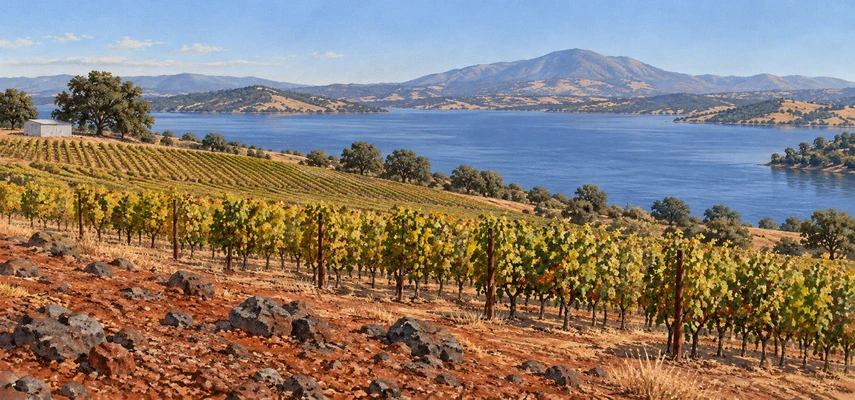

Northern California wine regions become much more interesting once Napa and Sonoma stop occupying the whole map. Mendocino and Lake County offer coastal influence, sheltered inland valleys, elevated vineyards and varied production businesses. They’re useful comparisons in their own right, rather than footnotes explaining where less expensive fruit comes from.
For Diploma study, begin with a specific site and grape. Anderson Valley Pinot Noir, an inland Mendocino red and Lake County Sauvignon Blanc don’t need one shared style to deserve attention. Explain the growing conditions, the producer’s response and the resulting wine before reaching a quality or price conclusion.
Locate Mendocino beyond its coastal image
Mendocino County lies north of Sonoma, extending from the Pacific coast into inland valleys and uplands. Maritime air, river orientation and mountain shelter create different growing conditions. Anderson Valley provides a major Pinot Noir and cool-climate white reference; Redwood Valley and other inland settings introduce a different balance of summer warmth and night cooling.
The Anderson Valley growers’ climate discussion describes Pacific influence along the Navarro River corridor, with the northwestern “Deep End” an important cooler reference. That doesn’t establish one daily temperature pattern for every parcel. Elevation, aspect and a site’s relationship with the fog can change sunlight and ripening opportunities.
The association’s grape account gives Pinot Noir, Chardonnay, Gewürztraminer, Pinot Gris and Riesling space within a varied regional picture. Pinot’s delicate fruit and tannin balance can reward careful harvest and extraction. Aromatic whites need their own decisions about sugar, acidity, flavour and intended sweetness. A cool site doesn’t require every wine to be light, dry or short-lived.
Inland Mendocino deserves separate attention. Barra’s vineyard account illustrates Redwood Valley plantings, different varieties and practical water use for frost protection and summer irrigation. The producer’s certified organic programme is a particular example, not evidence that every Mendocino vineyard follows the same certification or every inland parcel has identical water access.
Explain Lake County’s inland setting
Lake County lies inland, around Clear Lake and surrounding valleys and uplands. Greater distance and shelter from direct Pacific influence produce a different setting from Anderson Valley’s cooler coastal corridor. Elevation, lake proximity, aspect and soil still create local variation. An inland vineyard can have warm days and cool nights without being an uncomplicated place to grow grapes.
The Lake County commission’s terroir account connects height, sunlight and varied growing sites. Red Hills Lake County and High Valley provide important volcanic-influenced references, with Cabernet Sauvignon and other red material among the regional possibilities. Volcanic geology describes rooting and physical soil conditions; it doesn’t guarantee a mineral taste or an automatic quality grade.
Sauvignon Blanc supplies another important Lake County identity. The commission’s varietal discussion contrasts predominantly alluvial Big Valley District settings with other sites. Don’t describe every Lake County soil as volcanic simply because a red gravel landscape is memorable. Rooting depth, fertility and water supply can differ markedly between a valley floor and a stonier slope.
Clear Lake AVA isn’t interchangeable with the whole county, and smaller AVAs need their own boundaries. The TTB’s establishment record includes Upper Lake Valley, established in 2022. Older promotional menus may therefore omit a recognised area. Use current official geography when an answer depends on an exhaustive appellation list.
Connect climate and grape choice with vineyard work
Temperature affects growth, ripening and acid retention. Sunlight supports photosynthesis, with exposure also changing bunch heat and sunburn risk. Water availability depends on rainfall, soil depth, rooting, drainage and permitted irrigation. Nutrient availability influences vigour and crop balance. Compare a fog-influenced Pinot parcel, a warmer inland red source and an alluvial Sauvignon Blanc vineyard through those mechanisms rather than the county name alone.
Weather creates frost, hail, heat, drought and harvest-rain risks. Downy and powdery mildew and bunch rot remain possible where conditions allow. Vineyard establishment considers exposure, drainage, access, slope and training. Planting materials should match variety, clone, rootstock, soil and water conditions. An aromatic white variety, Pinot Noir and Cabernet need different suitability arguments; matching all three to one convenient parcel can create expensive compromises.
Nutrient and water management follows observation and analysis within applicable rules. Canopy management balances productive leaf area, airflow and fruit protection. Harvest timing balances flavour, sugar, acidity, phenolic maturity and health. Hazard management includes erosion control, appropriate frost precautions and access planning. Pest and disease management combines monitoring, canopy work and proportionate intervention. High-elevation sunlight can support ripening and increase exposure risk at the same time.
Smoke exposure adds a distinct assessment problem. UC Davis’s technical guidance recommends testing potentially exposed fruit. A regional fire report doesn’t establish the condition of every vineyard or bottle, while a smoky maturation note alone doesn’t diagnose smoke impact. Sampling, fruit condition and contract terms need evidence. Neither organic status nor a cooler site removes this risk automatically.
Follow the target style through the cellar
Winemaking approaches begin with the target style. Careful grape transportation limits crushing, oxidation and unwanted fermentation. Reception should separate origins, varieties, health and ripeness. Processing and pressing affect yield and phenolic pickup. Anderson Valley Pinot, a Lake County Cabernet and a fresh Sauvignon Blanc need different handling priorities even if one production facility receives them all.
For whites, pre-fermentation clarification adjusts white-juice solids for the intended fermentation. Must adjustments require analysis and legal permission. Alcoholic fermentation decisions include yeast, temperature, vessel and nutrient management. Protected handling and suitable temperatures can preserve Sauvignon Blanc or aromatic-white character; barrel or lees routes create other textural possibilities. A grassy or tropical description needs an actual wine, not a compulsory county tasting note.
Extraction and pressing should suit skin and seed maturity in reds. Whole-bunch use, maceration and cap management can alter Pinot texture and aroma, while a firmer Cabernet lot needs its own judgement. Malolactic conversion and subsequent maturation should fit acidity, texture and microbial stability. More heat, more extraction and more new wood aren’t a universal route to a better regional wine.
Lees maturation can build texture in suitable whites, with oxygen and microbiological condition monitored. Wood maturation involves vessel age, size, toast and time. Blending eligible lots can improve balance while preserving origin and category entitlement. A varietal wine may combine vineyards or maturation lots; an origin-led blend may combine grapes. Those choices should serve the intended wine rather than conceal unsuitable fruit.
Finishing adjustments, sulfur dioxide and filtration depend on analysis and stability needs. Post-fermentation clarification removes unwanted material; stabilisation considers protein and tartrate risks. Microbiological safeguards should fit analysis, retained sugar and distribution. Packaging and closures should protect the intended drinking period. Wine transportation requires suitable temperature management, including warm distribution facilities and final delivery. Freshness preserved during fermentation still needs protecting after bottling.
Distinguish origin and farming claims
An American Viticultural Area identifies a defined grape-growing origin, rather than a required grape-and-method recipe or official quality grade. The TTB’s appellation guidance explains the 85% minimum AVA-origin requirement alongside other conditions. A county claim and an AVA claim aren’t identical, and the winery’s postal address doesn’t establish where all its fruit grew.
International recognition and trade rules, national US law, California requirements and local controls interact. Industry associations and regional grower bodies promote and represent producers, while authorised agencies establish legal entitlement. A geographical indication communicates origin under conditions; PDO and PGI are EU frameworks rather than classifications automatically assigned to California AVAs. Wines without a specific GI claim still face applicable production and labelling rules. Varietal, vintage, Reserve and estate-related wording need their actual conditions.
Organic farming and organic-wine labelling also need separate reading. USDA’s organic alcohol guidance distinguishes wine eligible for the organic seal from wine labelled as made with organic grapes, including different treatment of added sulfites. Vineyard certification doesn’t by itself answer every finished-wine question. Neither expression establishes sensory superiority or a required winemaking style.
Barra also identifies a custom crush facility within its operations. That’s a useful concrete example of production services existing alongside estate fruit and branded wine. A wine made through contracted facilities still needs a clear account of sourcing, control, certification and responsibility. Brand ownership and ownership of a winery aren’t the same business decision.
Relate sourcing and scale to commercial value
Supply depends on suitable fruit, weather losses, available vineyards, contracts and stocks. Demand differs between regional blends, named-site Pinot, aromatic whites and Cabernet programmes. Costs include vineyard labour, frost and water management, sorting, vessels, storage, insurance and finance. Legislation affects sourcing, claims and distribution; currency exchange changes export returns. A less famous origin isn’t automatically a low-cost source once site, labour and contract conditions are considered.
The 2025 final California Grape Crush Report treats Mendocino and Lake as separate pricing districts. Its variety and purchased-fruit tables provide a better starting point for a dated sourcing comparison than an undated claim that one county is always cheaper. District statistics aren’t AVA boundaries, bottle prices or individual winery profit statements.
A grower may supply fruit, while an estate can coordinate vineyard and cellar decisions. A broker connects parties; a merchant sources wine or grapes; a winery provides production capacity. A virtual winery contracts production, and a custom crush facility supplies agreed services. A cooperative can share equipment and market access; a conglomerate may coordinate businesses. These are possible functions, not a claim of equal local prevalence. Contracts need to allocate fruit quality, origin evidence, smoke assessment, delivery and payment risk.
Importing into another market adds freight, compliance and currency exposure. Retail needs clear origin, style and price information; HoReCa buyers require service training. Direct-to-consumer sales can retain revenue but add hospitality, customer acquisition and fulfilment costs. Mature and emerging markets contain varied customers. A small origin-led Pinot and a broader commercial white may reach them through different channels without either model automatically winning on quality or margin.
Wine brands can lead with producer, grape, site or appellation. Marketing concepts begin with a target customer; marketing options include comparative flights, technical notes and vineyard visits. The five Ps connect product, price, people, place and promotion. Volcanic soils and organic farming can open a conversation, but the actual style, condition and value need to sustain it.
Compare the evidence here with central and southern California as a regional case, then apply the regional comparison framework to the comparison. Compare growing conditions, production decisions, style, quality and the commercial reasons for price. Establish the differences rather than assuming that one familiar name must be better.
Original Diploma practice
These original exercises practise explanation and evaluation. They aren’t official examination questions, marking schemes or accounts of actual bottles tasted.
Question 1: compare three northern sites
Compare vineyard and harvest decisions for Anderson Valley Pinot Noir, an inland Mendocino red and Lake County Sauvignon Blanc.
Reasoned outline: Establish actual temperature, sunlight, water, rooting, exposure and fruit health. Compare canopy, frost, disease, picking and transport, then connect the material with extraction or protected white fermentation. Include costs and intended customers. A county name doesn’t replace a site-and-variety argument.
Question 2: evaluate a volcanic buying claim
A buyer assumes every Lake County wine grows on volcanic soil and therefore deserves an outstanding quality grade. Evaluate the argument.
Reasoned outline: Distinguish volcanic-influenced slopes from alluvial settings and identify the actual vineyard. Explain rooting, drainage, water and crop before evaluating fermentation and maturation. Assess balance, length, intensity, complexity and condition in the bottle. Geological origin provides useful context without supplying a tasting grade.
Question 3: assess a contracted organic range
A brand plans to source certified organic fruit and use a custom crush facility, then label every bottle organic without further checks. Assess the proposal.
Reasoned outline: Separate vineyard certification, cellar responsibility, permitted practices and the intended finished-wine claim. Check sourcing, traceability, sulfite treatment, certification and label requirements. Discuss contracts, quality control, cost and customer communication. Outsourced production needs explicit responsibility rather than assumptions about a grape supplier’s certificate.
Analytical tasting preparation: compare northern California material
The official recommended-sample programme, printed page 23, includes California Pinot Noir, Chardonnay and Sauvignon Blanc, each at very good or outstanding quality from any AVA. Suitable Anderson Valley or Lake County wines can support those rows if the actual bottles qualify. Aromatic white varietals or blends at good or very good quality are optional. These choices don’t invent compulsory county-specific selections or replace the wider California Merlot, Zinfandel, contrasting Cabernet and high-volume requirements.
Write full systematic descriptions blind. Justify quality through balance, length, intensity and complexity using actual fruit, structure and development evidence. Assess bottle-ageing suitability separately, considering retained fruit and integration rather than oak, alcohol, certification or soil reputation alone. These are proposed selections and methods, not actual tasting results or official bottle grades.











