










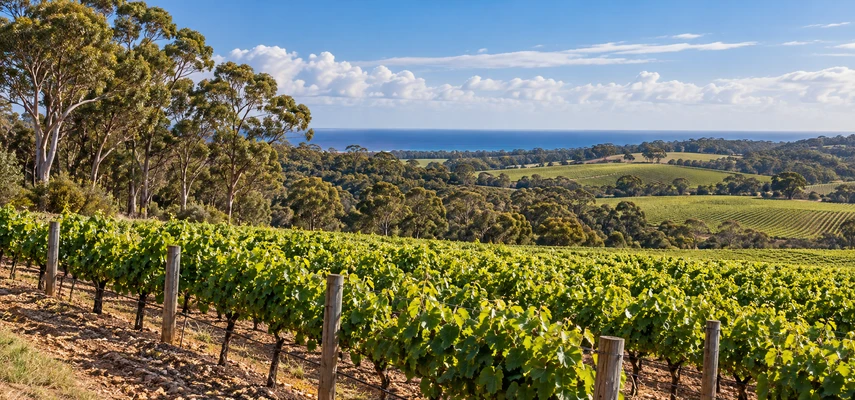

Western Australia is enormous, but its best-known wine country occupies a much smaller southwestern corner. That doesn’t make the vineyards interchangeable. A Cabernet parcel in Margaret River, an inland Great Southern Riesling site and a warm Swan District Chenin block need different explanations, even before the winemaker chooses a tank or barrel.
For Diploma study, use maritime influence as a question rather than an answer. How much cooling reaches the vines? When does rain fall? What can the soil store? The useful chain connects the actual site with grape, farming, production and commercial decisions, then tests the resulting wine against evidence.
Locate Western Australia’s main wine areas
Western Australia’s wine regions include Margaret River, Great Southern, Pemberton, Manjimup, Geographe, Blackwood Valley, Peel, Perth Hills and Swan District. Much production is concentrated in the state’s southwest and southern growing areas rather than across the entire western third of the continent.
The state overview gives that wider setting. Margaret River and Great Southern are distinct regions; Great Southern contains five registered subregions. South Eastern Australia is a separate broad zone that doesn’t include Western Australia. The familiar national map shouldn’t turn those different sourcing claims into synonyms.
The official GI register provides the legal hierarchy. A place mentioned in a producer’s vineyard story isn’t automatically a registered subregion. Equally, a winery’s address doesn’t establish the origin of fruit bought for every wine in its range.
Margaret River: explain the maritime opportunity
Margaret River’s southwestern position brings strong ocean influence, with a Mediterranean seasonal pattern and comparatively dry summers. Water moderates temperature, but exposure, latitude within the region, wind and soil create site differences. Maritime conditions don’t mean every season is identical or every vineyard has enough stored water for summer.
Wine Australia’s regional profile identifies Cabernet Sauvignon, Chardonnay, Sauvignon Blanc and Semillon as major references. Gravelly loams and underlying materials influence drainage and water storage. A well-drained soil can still need careful water management; free drainage isn’t a permanent supply of moisture.
Cabernet Sauvignon and Cabernet-led blends depend on sufficient season length and suitable fruit maturity. Merlot and other blending partners can change fruit, structure and balance, while harvest, extraction and maturation alter the result further. A Bordeaux comparison can be informative without making Margaret River a replica of Bordeaux or imposing French appellation rules on Australian vineyards.
Chardonnay: distinguish the clone from the finished style
Gingin is an important Chardonnay selection in Margaret River, associated with small bunches and uneven berry sizes. It is often discussed alongside Mendoza, but the names aren’t interchangeable. AWRI’s genetic research establishes the importance of checking identity rather than assuming similar bunch characteristics prove the same material.
The regional association’s research announcement distinguishes Gingin, Mendoza and Old Foundation material despite shared heritage. Clone choice can affect crop, bunch structure and the available fruit. It doesn’t guarantee outstanding quality, and millerandage isn’t automatically a desirable outcome in every variety, block or season.
Pressing, juice solids, fermentation vessel, malolactic conversion, lees, oxygen and maturation all shape the Chardonnay. A producer can seek richness with freshness, or a more restrained result, using fruit and methods suited to that objective. Comparing clone names without comparing harvest and cellar choices leaves half the explanation unfinished.
Sauvignon and Semillon deserve their own comparison
Sauvignon Blanc and Semillon can appear as varietal wines or blends, from fresh, fruit-focused releases to more textured examples. Proportions, ripeness, fermentation and maturation alter aroma and palate. Neither grape is merely a compulsory filler for a region whose only serious white is Chardonnay.
The Margaret River profile documents different approaches to these blends. Read the actual wine’s specification and label rather than assuming every release is unoaked or every bottle shares one recipe. A familiar blend can support accessible branding, selected parcels or restaurant positioning with different cost structures.
Great Southern: five subregions and a large climate range
Great Southern comprises Albany, Denmark, Frankland River, Mount Barker and Porongurup. Albany and Denmark provide more directly maritime southern references, while the inland subregions generally have greater continental influence. Elevation, aspect and local exposure still complicate any simple coast-to-interior line.
Wine Australia’s regional account describes that transition and the broad grape range. Riesling, Shiraz, Cabernet Sauvignon, Chardonnay and other whites and reds all belong in the study picture. A large geographical area isn’t the same thing as an equally large planted vineyard area, so avoid confusing the GI’s boundary with its production footprint.
More maritime influence can moderate extremes while bringing moisture and wind considerations. An inland site may combine warmer days with cooler nights and different frost exposure. Soil water, variety and season affect whether those conditions suit the intended maturity. The region’s diversity supports comparisons; it doesn’t make every site suitable for every grape.
Riesling and Shiraz connect site with cellar choices
Great Southern Riesling is an important Australian comparison, including examples from Frankland River, Mount Barker and Porongurup. Assess actual ripeness, acidity, fruit and texture rather than assuming all Riesling must taste austere in youth or needs the same number of years before drinking well.
Frankland Estate’s 2016 Isolation Ridge production account records cool fermentation, lees time and a small neutral-oak component. It’s a specific counterexample to the idea that Riesling production always means one short stainless-steel route. The vintage’s method and stated condition aren’t a fixed regional recipe or a report of a bottle tasted for this guide.
Shiraz supplies a red comparison across Great Southern’s sites and against Margaret River or South Australian examples. Cabernet can serve suitable warmer parcels, while Chardonnay and Pinot Noir add further references. Extraction, vessel and blending should fit fruit maturity and intended structure. A cooler reputation isn’t an instruction to compensate with aggressive extraction.
Add Pemberton and Swan District to the picture
Pemberton’s profile describes a forest-country setting with Chardonnay and other varieties. Winter and spring rain can support growth, but a dry late season can still draw down soil reserves. Moisture and fertile soils can also create vigour-management needs. A high annual rain total doesn’t answer the summer water question by itself.
Swan District provides a warmer northern comparison near Perth, with Chenin Blanc, Verdelho, Chardonnay and reds. Sea breezes can bring relief without making it the same climate as a southern maritime site. The broader district and the Swan Valley subregion also need their correct levels on the map.
Manjimup, Geographe, Blackwood Valley, Peel and Perth Hills further broaden the state inventory. Their existence matters to a complete origin discussion without establishing equal production scale or identical styles. Use actual sourcing records, site information and bottle evidence rather than extending Margaret River’s reputation to every Western Australian label.
Connect vineyard work with regional costs
Temperature affects growth, ripening and acid retention. Sunlight supports photosynthesis, while aspect and exposure change bunch temperature. Water availability depends on supply, soil storage, rooting and irrigation decisions. Nutrient availability influences vigour and crop balance. A warm Swan District block, maritime Margaret River parcel and inland Great Southern slope need different arguments about crop and canopy.
Weather creates frost, hail, heat, drought and harvest-rain risks. Downy and powdery mildew and bunch rot remain possible where conditions allow. Vineyard establishment considers exposure, drainage, access, slope and training. Planting materials should match variety, clone, rootstock, soil and water conditions. Healthy material matters to both a high-throughput supply programme and a selected Pinot parcel.
Nutrient and water management follows observation and analysis within applicable rules. Canopy management balances productive leaf area, airflow and fruit protection. Harvest timing balances flavour, sugar, acidity, phenolic maturity and health. Hazard management includes erosion control, appropriate frost precautions and access planning. Pest and disease management combines monitoring, canopy work and proportionate intervention. Heat, bushfire exposure, frost and water allocation add site-specific costs; smoke exposure needs assessment rather than an assumption that every nearby fire taints every wine.
Fit production to Cabernet, Chardonnay, blends and Riesling
Winemaking approaches begin with the target style. Careful grape transportation limits crushing, oxidation and unwanted fermentation. Reception should separate origins, varieties, health and ripeness. Processing and pressing affect yield and phenolic pickup. Efficient delivery and cooling can preserve fresh broad-origin whites; selected Shiraz needs equally deliberate handling of fragile fruit.
Pre-fermentation clarification adjusts white-juice solids for the intended fermentation. Must adjustments require analysis and legal permission. Alcoholic fermentation decisions include yeast, temperature, vessel and nutrient management. An aromatic white may prioritise fruit preservation, while selected Chardonnay may use barrel fermentation and lees work. Lees maturation can build texture, with oxygen and microbial condition monitored.
Extraction and pressing should suit skin and seed maturity. Malolactic conversion and subsequent maturation should fit acidity, texture and microbial stability. Wood maturation involves vessel age, size, toast and time. Blending eligible lots can improve balance while preserving origin and category entitlement. Shiraz, Pinot Noir and a structured Cabernet blend shouldn’t receive identical cap management simply because they share a state.
Finishing adjustments, sulfur dioxide and filtration depend on analysis and stability needs. Post-fermentation clarification removes unwanted material; stabilisation considers protein and tartrate risks. Microbiological safeguards should fit analysis, retained sugar and distribution. Packaging and closures should protect the intended drinking period. Wine transportation requires suitable temperature management, including warehouses and final delivery. Both accessible exports and selected estate wines need to arrive in sound condition.
Trace origin through the business
Wine Australia’s Label Integrity Program requires records supporting vintage, variety and origin claims through the supply chain. Its blending rules distinguish single claims from combinations. A single named variety, vintage or GI normally requires at least 85% from the stated source; don’t automatically extend that threshold to every multiple claim or export-market condition.
International recognition and trade rules, national Australian law, regional requirements and local controls interact. Industry associations and regional bodies promote and represent producers, while authorised agencies establish legal entitlement. A geographical indication communicates origin under conditions; PDO and PGI are EU frameworks rather than classifications automatically assigned to Australian GIs. Wines without a specific GI claim still face applicable production and labelling rules. Reserve, estate-related wording and sustainability expressions need their actual conditions rather than an automatic tasting grade.
Supply depends on healthy fruit, weather losses, contracts and stocks held for maturation. Demand differs between accessible regional whites, selected Cabernet, Chardonnay and Riesling. Costs include vineyard labour, water management, replacement material, selective harvest, vessels, storage, packaging and finance. Legislation affects sourcing, claims and distribution; currency exchange changes export returns. A favourable foreign-currency receipt can coexist with rising imported equipment costs.
A grower may supply fruit, while an estate can coordinate vineyard and cellar decisions. A broker connects parties; a merchant sources wine or grapes; a winery provides production capacity. A virtual winery contracts production, and a custom crush facility supplies agreed services. A cooperative can share equipment and market access; a conglomerate may coordinate businesses. These are possible functions, not equal-prevalence claims. Contracts need clear origin, health, maturity, delivery and payment terms.
Importing into another market adds freight, compliance and currency exposure. Retail needs clear origin, style and price information; HoReCa buyers require service training. Direct-to-consumer sales can retain revenue but add hospitality, customer acquisition and fulfilment costs. Mature and emerging markets contain varied customers. A larger inland supply contract and an overseas restaurant listing have different costs, volumes and margins.
Wine brands can lead with producer, grape, region, district or vineyard. Marketing concepts begin with a target customer; marketing options include comparative flights, technical notes and vineyard visits. The five Ps connect product, price, people, place and promotion. A convincing Western Australian story creates interest, while reliable condition, suitable style and demonstrated quality support repeat purchases.
Compare the evidence here with Marlborough and Nelson as a regional case, then apply the regional comparison framework to the comparison. Compare growing conditions, production decisions, style, quality and the commercial reasons for price. Establish the differences rather than assuming that one familiar name must be better.
Original Diploma practice
These original exercises practise explanation and evaluation. They aren’t official examination questions, marking schemes or accounts of actual bottles tasted.
Question 1: compare coastal and inland opportunities
Compare a maritime Margaret River vineyard with an inland Great Southern site, explaining why neither setting guarantees quality or removes water risks.
Reasoned outline: Establish actual heat, exposure, rainfall timing, soil storage, variety and intended style. Explain canopy, crop and harvest decisions, then production and costs. Maritime influence and inland variation create different management questions rather than automatic quality rankings.
Question 2: evaluate the Chardonnay clone claim
A seller describes Gingin and Mendoza as identical names and guarantees outstanding wine from either. Evaluate both parts of the claim.
Reasoned outline: Distinguish genetic identity from similar bunch characteristics. Consider site, health, crop, harvest, pressing, fermentation and maturation, then sensory evidence. A clone’s reputation doesn’t replace either correct identification or assessment of the finished wine.
Question 3: compare a regional price proposal
A retailer proposes one premium price for every Western Australian white because the state is geographically distant from eastern markets. Evaluate the approach.
Reasoned outline: Compare actual yield, labour, production, vessels, storage, freight, channel margins and customer demand. Distinguish accessible blends from selected Chardonnay or Riesling without assuming one origin fixes quality. Distance contributes to cost but doesn’t establish every bottle’s value.
Analytical tasting preparation: complete Australia’s contrasts
The official recommended-sample programme, printed page 24, specifies essential whites: South Eastern Australian Chardonnay at acceptable or good quality, Chardonnay from any region at very good or outstanding quality, Clare or Eden Valley Riesling at very good or outstanding quality, and Hunter Valley Semillon at very good or outstanding quality.
Essential red Group 1 contains South Eastern Australian Shiraz at acceptable or good quality, Barossa Valley Shiraz at very good or outstanding quality, contrasting-region Shiraz at very good or outstanding quality, and Grenache or GSM at very good or outstanding quality. Group 2 contains Pinot Noir and Cabernet Sauvignon, each from any region at very good or outstanding quality. Western Australian comparisons support this programme without replacing the other required origins.
Optional selections are Sauvignon Blanc or a white Bordeaux blend at very good quality; Chardonnay from a region contrasting with essential white wine 2 at very good or outstanding quality; a white Rhone varietal or blend at good or very good quality; Syrah/Viognier at very good quality; Cabernet Sauvignon or a blend contrasting with Group 2 wine 2 at very good or outstanding quality; and a red or white Italian-variety wine at good or very good quality.
Write full systematic descriptions blind. Justify quality through balance, length, intensity and complexity using actual fruit, structure and development evidence. Assess bottle-ageing suitability separately, considering retained fruit and integration rather than acidity, vine age or price alone. These are proposed selections and methods, not actual tasting results or predetermined official bottle grades.












