










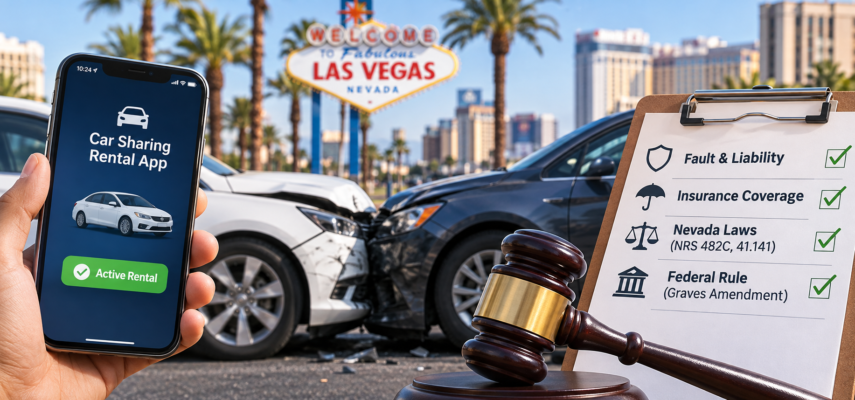
After an accident in a peer-to-peer rental car in Las Vegas, it can be confusing to figure out who’s responsible for the damage. State and federal laws help determine liability and which insurance policies may cover damages after a rental car accident. Here’s a quick breakdown of the most important ones to keep in mind:
How Nevada handles app-based car sharing
Peer-to-peer rental car accidents aren’t handled the same as accidents involving traditional rental cars. Nevada has laws and regulations in NRS Chapter 482C that apply specifically to peer-to-peer rental cars. This includes insurance coverage requirements and regulations on when peer-to-peer rental car app companies can be held responsible for an accident.
Whether you file a claim with:
- The peer-to-peer rental car owner’s insurance
- Your own insurance
- The rental app’s insurance
Can hinge on several factors, including, but not limited to, who was operating the vehicle at the time of the accident and whether the car was under an active rental at the time. What insurance applies depends on factors like whether the trip was active and who was driving, so determining who’s at fault matters.
How fault affects compensation
Nevada uses comparative fault rules. That means if you were partly at fault for a car accident, your compensation will be reduced by your percentage of fault. For example, if you’re found 20% responsible for an accident, the damages you’re awarded will be reduced by 20%. Under Nevada law, NRS 41.141, if you were as much or more at fault for a car accident than the other motorist, you won’t be able to recover any compensation for your damages.
After an accident in a peer-to-peer rental car in Las Vegas, figuring out who was at fault can get complicated. You and the person who reserved the rental car through the app (as well as any other at-fault drivers involved in the accident) could each be partly responsible.
Your actions will be considered when determining comparative fault, including your behavior while using the peer-to-peer rental app. Note that this is separate from any question of whether or not the peer-to-peer rental app company can be held liable for your injuries and other accident-related damages.
What the federal rule about rental companies says
A federal law known as the Graves Amendment, 49 U.S.C. § 30106, also makes it harder to hold a rental or leasing company liable for a motorist’s actions in a car accident. However, the Graves Amendment still doesn’t determine who was at fault in a rental car accident or shield other potentially at-fault parties from liability.
Whether the amendment applies in a peer-to-peer rental car accident depends on many factors, including the accident’s specific circumstances and the app-based rental company’s business model. Understanding the roles of the app company, the car owner, the driver, and the insurance companies can help, which is why talking with a Las Vegas lawyer can be helpful.
How a Las Vegas lawyer can help
After your accident, you likely already have enough on your plate dealing with medical bills, property damage repairs, and calls from insurance adjusters. Trying to navigate Nevada’s comparative fault rules, state regulations for app-based rental cars, and federal laws on rental car company liability on your own can make the stress worse.
A Las Vegas rental car accident lawyer can review the details of your accident and your use of a rental car app, assess which insurance policy may be responsible for paying your damages, and advise you on what evidence you can gather to support your claims.
The bottom line
Every Las Vegas car accident involving a shared rental car is different. That’s why it’s important to work with a Nevada attorney to understand your legal options and figure out the best course of action for your situation.
This article is for informational purposes and doesn’t constitute legal advice. App-based Las Vegas rental car accidents raise complicated legal and insurance issues. Please consult with a Nevada attorney for legal advice about your situation.












