










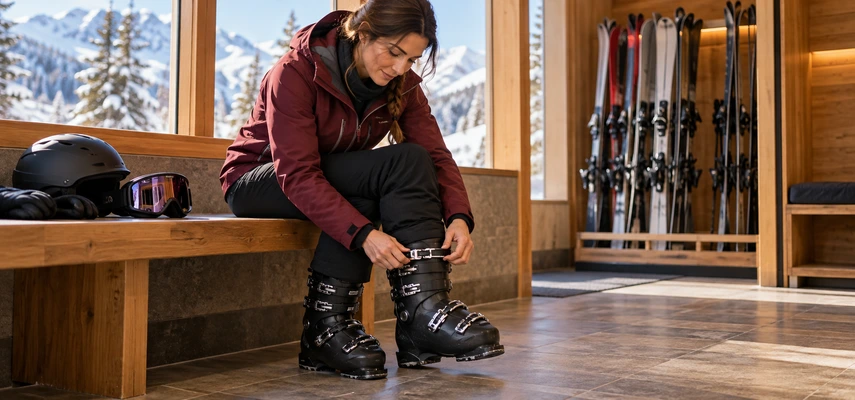

The first unfamiliar sensation may arrive before you touch snow. Ski boots change the way you walk, skis take up more room than your feet, and suddenly getting from a bench to a doorway deserves a little attention.
That’s normal. A first day introduces equipment, movement, places, and routines at once. The goal isn’t to look experienced by midmorning. It’s to make enough of those things familiar that you can begin learning to slide with control.
Your exact day will depend on the ski school, weather, lesson format, and your needs. Still, there is a recognizable sequence: arrive, get fitted, meet the instructor, practice small tasks, take breaks, and finish with a clearer idea of what to do next. Knowing that sequence helps remove a few unnecessary surprises.
Arrival is part of the day, not empty time before it
Give yourself the arrival time recommended by your ski school. You may need to collect an access product, complete paperwork, store belongings, fit equipment, and travel to the meeting point before the lesson starts.
Those jobs can take longer than a first-time visitor expects. A rental shop may be in a different building from the lesson desk, and winter footwear makes a long walk less casual than it looked on a map. Ask staff rather than spending your preparation time searching independently.
Gore Mountain’s beginner guide is one example of an operator spelling out arrival and fitting logistics. Follow the current instructions from your own area; don’t copy another resort’s timetable as if it were a mountain-wide convention.
Locate the toilets, a warm indoor space, and a place for your belongings before carrying everything onto the snow. Small practical questions become much easier when they aren’t competing with your first attempt at balancing on skis.
The rental fitting should involve a conversation
Expect staff to ask about your experience and the personal details needed to prepare equipment. Answer accurately. The technician is trying to match a setup to a real skier, not assess whether your hoped-for future ability sounds impressive.
Boots will feel different from everyday shoes. They support the foot and lower leg and connect your movement to the skis. A firm, close fit isn’t the same thing as ignoring pain, numbness, or a particular pressure point.
Tell the staff what you feel and where. Ask how to fasten the boots and how to recognize a problem that needs attention. The Canadian Ski Council’s rental advice emphasizes giving the shop honest information and discussing the equipment.
Let qualified staff handle binding setup and testing. Don’t alter safety-critical settings yourself. Before leaving the shop, know which equipment is yours, what is included, and where to return for adjustments or the final return.
Walking and carrying things may feel surprisingly technical
Long skis extend in front of and behind you. Carry them as the staff shows you, keep clear of other people, and watch the tips around doors and queues. An enthusiastic turn of the shoulder can become someone else’s unwanted introduction to your equipment.
Walk carefully in ski boots, particularly on stairs, icy paths, and slippery indoor surfaces. Use handrails and designated routes where appropriate. There is no need to hurry simply because people nearby seem accustomed to it.
Put on your helmet, goggles, and outer layers at a sensible point so you don’t overheat while waiting indoors. Keep loose items secured and avoid dangling clothing that could catch on equipment.
By the time you reach the lesson meeting place, you may already have learned quite a lot without taking a single run. That isn’t wasted time. Handling the setup calmly makes the snow portion easier to manage.
The instructor will want to know your actual starting point
Tell the instructor you’re new, explain any relevant needs, and mention anxiety or an equipment concern. A good first lesson begins with information about the person, not an assumption that everyone in a helmet needs the same task.
Groups may be organized by age, experience, and other program criteria. If you seem to be in the wrong group, raise the question early. A skier who can already stop and turn has different needs from someone who hasn’t stood on skis before.
You may hear a short explanation of the learning area, shared-space rules, and the plan for the session. Ask about unfamiliar terms. Ski instructors use words such as wedge and fall line because they’re useful; they shouldn’t expect you to arrive fluent.
There is also no obligation to hide discomfort to seem cooperative. Useful feedback helps the instructor adjust terrain, pace, or task. Silence can make a solvable issue look like a mysterious movement problem.
Early practice often happens on nearly level snow
You may begin by learning to put skis on and take them off, stand comfortably, move short distances, or step around. Some progressions use one ski at first. The sequence depends on the learner and teaching environment.
The strange part is that the feet can keep sliding. Everyday walking relies on a stable grip; skis ask you to coordinate a moving support. Familiarizing yourself with that sensation is a legitimate lesson objective.
Practice can look modest from a distance. A few controlled steps, a short glide, or a deliberate change of direction may matter more than a long uncontrolled descent. The size of the task isn’t the size of the learning taking place.
Avoid treating an instructor’s gentle terrain choice as a delay before the real skiing. It is the real skiing: the place where movement becomes understandable enough to repeat rather than simply survive.
Stopping and turning take priority over going higher
As the session develops, the instructor may introduce ways to manage speed, stop, and change direction. A wedge is common in beginner learning, but the teaching progression should fit the student rather than a fixed online script.
The important question is whether you can produce a controlled result on the selected terrain. One accidental stop isn’t the same as reliably choosing where and how to stop. Repetition helps the instructor see what is becoming dependable.
Vail’s lesson descriptions separate first-time balance and stopping from later turning and progression goals. They illustrate why a first day doesn’t need to include a full mountain descent to be successful.
Don’t compare your timetable with the fastest learner nearby. People bring different coordination, confidence, fitness, and previous movement experience. Progress is useful when it leaves you with a skill you can actually use, not merely a story about the lift you reached.
You may use a carpet or another beginner lift
Learning areas often use moving carpets or short surface lifts. Some programs introduce a chairlift when the skier and terrain make that appropriate. No particular lift is guaranteed on the first day.
The instructor and attendant should explain the procedure for the installation you’re using. Tell them if you haven’t done it before. Ask before joining a queue if you don’t know what happens at loading or unloading.
A lift ride isn’t just a reward for completing a task. It delivers you somewhere you must be able to leave appropriately. Know the route down and follow the school’s guidance about when you’re ready.
The NSAA responsibility code makes safe lift use a skier responsibility and specifically directs people to seek attendant assistance. It is much easier to ask while standing beside the lift than after uncertainty has turned into an event.
Expect effort, pauses, and some uneven progress
Learning unfamiliar movements can feel tiring even when the terrain is gentle. Standing in boots, getting up, carrying skis, and concentrating all add to the day. That doesn’t mean you need to train through discomfort to qualify as a skier.
Take the breaks the session provides, and speak up if fatigue or cold is affecting you. Eat, drink, and warm up as needed. Persistent pain or numbness deserves attention, not another run to see whether determination changes the fit.
You may find one turn direction easier than the other or feel confident during one exercise and awkward during the next. Describe what happened rather than concluding that the entire sport has delivered a verdict on your coordination.
If you fall, follow the instructor’s guidance and assess whether you are hurt before trying to continue. Ask for help if injury is possible. Don’t let the presence of other skiers pressure you into rushing an unfamiliar recovery.
After the lesson, get a specific plan
Before the instructor leaves, ask what you can practice independently and which exact open terrain is appropriate. Find out what you should avoid for now and what a useful next lesson would work on.
If the answer is to stay in the learning area, take it seriously. A friend’s invitation to an easy run may describe their ability rather than yours. Green ratings are relative to the resort, and a longer route adds navigation, fatigue, and traffic.
Use only terrain where you can maintain control and respect people ahead. If conditions have changed or the task feels harder without the instructor, return to a simpler option or finish. You don’t owe the ticket a final run.
A shared lunch with experienced friends can be a good way to reconnect without making your learning pace everyone else’s itinerary. Their successful morning and yours don’t need the same elevation gain.
Finish with something useful to remember
Return equipment according to the shop’s procedure and check that you have your belongings. Note any fitting issue and the instructor’s most useful cue while it’s still clear. Those details help with the next booking.
Measure the day by what became more intentional. Perhaps you can put on the skis calmly, glide without freezing up, or stop in a place you chose. Those are concrete changes, even if they don’t resemble a ski-film highlight.
The Canadian Ski Council’s first-day overview encourages treating the introduction as a learning experience. Your day doesn’t have to match anyone else’s sequence exactly to serve that purpose.
The first day makes a strange collection of objects and sensations a little more familiar. Somewhere within that process, a short slide may become a controlled turn. That’s a satisfying place to finish—and a very good starting point for coming back.












