










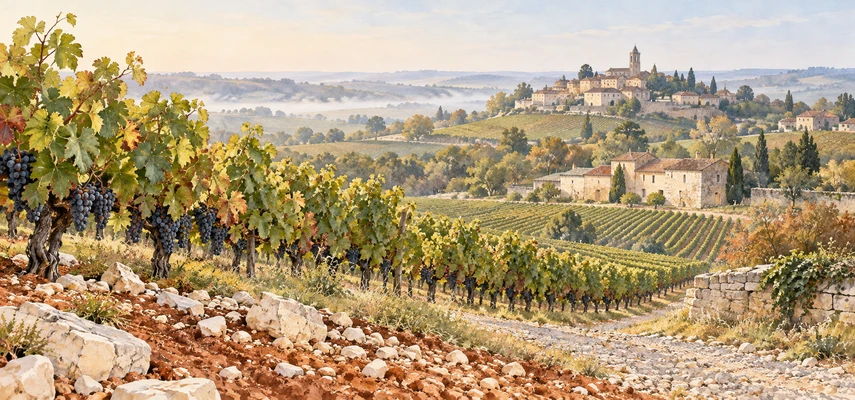

“Right Bank means Merlot on clay” is a useful first reminder and a poor final answer. Saint-Émilion includes limestone plateau, slopes, gravel and sand. Pomerol has important clay, but isn’t one uniform clay basin. Cabernet Franc matters greatly, and some exceptional Saint-Émilion sites give Cabernet Sauvignon a substantial role too.
Bordeaux Right Bank wines become more interesting when those variations replace the shorthand. Soil and water interact with ripening, growers choose varieties and management, and cellars shape the fruit through extraction, blending and maturation. The resulting style can be supple and accessible or structured and slow to unfold, with many positions in between.
For Diploma study, compare the mechanisms rather than assuming the river divides Bordeaux into two perfectly opposite wine personalities. The WSET specification requires regional explanation alongside quality, price and business evaluation. Saint-Émilion and Pomerol provide particularly good examples of why a classification rank and a sensory judgement must remain different things.
Locate the wines before comparing them
The Right Bank teaching shorthand centres on the Libournais, around the Dordogne and Isle river systems east of Bordeaux. Saint-Émilion and Pomerol are distinct appellations, with surrounding areas providing further comparisons. Nearby names such as Lalande-de-Pomerol and the Saint-Émilion satellites aren’t alternative labels for the same protected origin.
Saint-Émilion covers diverse plateau, slope and lower-ground settings. Pomerol is smaller, with a plateau and changing gravel, clay and sand profiles across its area. Don’t infer that every estate occupies the best-known soil or that a more affordable neighbouring designation must reproduce precisely the same conditions.
Geography establishes the starting questions: exposure, drainage, water reserves, air movement and variety suitability. An appellation map cannot supply all those answers at parcel scale. Combine it with authoritative descriptions and appropriately scoped producer evidence.
A maritime background still allows local differences
Oceanic influence remains important, although the Libournais lies farther inland than many estuary-facing Médoc sites. Temperature, sunshine and the distribution of rain shape the season. The Saint-Émilion wine council’s regional account emphasises variation in weather and the influence of exposure, soil, water and nitrogen on ripening.
Water availability isn’t simply the amount that fell from the sky. Clay, porous limestone, rooting and drainage affect access over time. A soil profile with useful reserves can help maintain vine function in a dry period, while poor drainage can create another problem in a wet one. Clay’s advantage is conditional, not a permanent promise of ideal water status.
Nutrient availability and water together affect vigour. Canopy density can change light interception and fruit-zone conditions, so a fertile lower site may need different management from a less vigorous parcel. Read the whole profile and vine response rather than equating a soil name with a fixed flavour.
Frost risk varies with bud development, topography and the weather event. Heat, drought, hail and harvest rain create different hazards. A plateau position may avoid some cold-air accumulation without being immune to every freeze, while a water-retentive soil doesn’t eliminate heat stress.
Merlot’s importance comes with tradeoffs
Merlot generally ripens earlier than Cabernet Sauvignon, which can help achieve suitable fruit in this climate. It can provide generous plum and other fruit character with substantial body and texture. Earlier ripening doesn’t remove risk: sugar, flavour, acid and tannin development still need to be judged together.
Warm conditions can make retaining freshness and suitable alcohol balance a concern. Earlier growth stages can also influence exposure to spring frost. Don’t turn “earlier ripening” into either a universal advantage or a prediction that every Merlot wine will be soft and ready immediately.
Cabernet Franc can add aromatic interest, freshness and structure in suitable sites and blends. Its importance is particularly evident in Saint-Émilion. Variety and site need matching: the UGCB profile of Figeac describes gravel rises over clay and significant plantings of both Cabernets. That example disproves the idea that every Right Bank estate must be overwhelmingly Merlot-planted.
Planting proportions aren’t the final blend. Selection and vintage can alter which parcels and varieties enter a wine. Nor should one estate’s planting be copied across a region. Use the example to explain diversity, then return to the actual wine and year being studied.
Vineyard choices turn potential into a crop
Vineyard establishment requires parcel assessment, suitable varieties and grafted planting material, drainage and training within the applicable rules. Rootstock choice must consider soil and water constraints, not simply whether the scion is Merlot. A slope can influence exposure and mechanisation costs at the same time.
Nutrient and water management should follow evidence of vine needs and permitted practices. Canopy work balances airflow and exposure with protection from excessive heat. The same leaf-removal intensity may help a shaded humid fruit zone while overexposing bunches elsewhere.
Humidity and rain can increase fungal-disease pressure, while grape pests require monitoring. Integrated decisions combine observation, canopy management, hygiene and appropriately timed permitted protection. The regional council’s biocontrol discussion describes alternatives within an evolving management system; no single method removes all disease risk.
Harvest timing weighs maturity against weather and fruit health. Parcel-by-parcel decisions, suitable picking methods, prompt grape transport and careful reception can help preserve selection options. Sorting reduces unwanted material but uses labour and can reduce principal-wine volume. An impressive sorting system can’t restore healthy fruit that was never grown.
Extraction and blending shape very different reds
Approaches to winemaking range with fruit, ambition and intended drinking horizon. Processing can include destemming, controlled crushing and decisions about berry integrity. Fermentation with skins develops colour and tannin, while temperature, cap management and maceration length influence the balance of extraction.
Riper fruit doesn’t justify unlimited extraction. A producer seeking concentration and ageworthy structure needs enough fruit and balance to support the tannin. Another may aim for an earlier-drinking style and choose a different extraction programme. “Modern” and “traditional” are less useful than explaining the actual operations.
Blending combines varieties and parcels rather than merely adding a little Cabernet to Merlot. A producer can select batches for different cuvées, affecting concentration, volume and price position. The desired result must be evaluated in the finished wine, not inferred from a prestigious blend percentage.
Maturation may include new or used oak and other vessels. Wood flavour, oxygen exposure, handling and time influence development, while inventory and equipment raise cost. A plush texture or vanilla note isn’t evidence that an expensive barrel programme has automatically improved the wine.
Compare Saint-Émilion’s terrain with Pomerol’s variety
Saint-Émilion’s limestone plateau and slopes can provide useful combinations of drainage and access to water, but the appellation also includes other profiles. Château Canon’s own terroir account gives one limestone-and-clay example. Its claims about that estate shouldn’t become a universal sensory description of all Saint-Émilion.
Pomerol’s regional profile highlights Merlot and distinctive soils, including iron-bearing material. Such geology doesn’t mean a taster drinks iron or can identify a precise subsoil from one aroma. Plateau clay, gravel and sand vary, and the resulting water regime and site suitability need explanation.
Both origins can produce dry reds with generous fruit, significant tannin and the capacity for complex development in suitable examples. Others are intended for earlier enjoyment or achieve more modest quality. Mature savoury or earthy notes depend on the wine and its development, not simply the bank of the river.
Compare concentration, freshness, tannin texture, oak integration and finish through actual notes. A supple entry can coexist with substantial structure; a young wine’s force isn’t the same as harmony. Quality and ageing suitability need evidence beyond the stereotype of a “soft Right Bank”.
Read Saint-Émilion’s extra words carefully
Saint-Émilion and Saint-Émilion Grand Cru are appellation categories with their own requirements. Grand Cru on its own isn’t the same as Grand Cru Classé. The regional council’s explanation distinguishes the appellations; the classification adds a separate recognition system for eligible wines.
The Saint-Émilion classification began in 1955 and is periodically reassessed rather than operating like the largely stable 1855 list. The official 2022 classification material distinguishes Grands Crus Classés and Premiers Grands Crus Classés, including the A category. Figeac and Pavie are the two A estates in that edition. Use the relevant edition rather than assuming an old list remains current.
National recognition and the detailed appellation framework govern the origin claim; classification status isn’t permission to ignore production rules. Equally, absence from a voluntary or periodically reviewed list isn’t proof of low quality. The exact label wording and the wine’s identity matter.
Pomerol has no official estate classification. That doesn’t mean it lacks appellation rules, excellent wines or a strong reputation hierarchy in the market. Expensive Pomerol can rival classified Bordeaux commercially without becoming an official 1855 first growth. Keep market comparisons separate from legal or classification claims.
Understand the alternatives to protected appellations
Within the wider regional industry, IGP Atlantique is a protected geographical indication with its own rules and broad area, as INAO’s account explains. It isn’t a Saint-Émilion classification tier or a fallback label that a producer can adopt without meeting its conditions.
Vin de France represents a different route without the same protected regional-origin claim. French government guidance explains certification of permitted variety or vintage claims for wines without geographical indication. Such a wine doesn’t become unregulated, and it cannot simply retain every reserved origin or estate-labelling expression.
These categories help explain producer choice and market communication, not an automatic sensory ladder. A business choosing a different sourcing or production approach must assess which claims it can legitimately make and what customers understand. Giving up a prestigious origin claim can affect recognition even when the liquid remains ambitious.
Compare the businesses behind the names
A grower may sell fruit or participate in a collective arrangement; an estate can coordinate vineyard and winery decisions while funding both. The Saint-Émilion Producers’ Union provides a real cooperative example. Shared technical resources and marketing can support members without requiring every bottle to be described as an identical anonymous blend.
Assess other production models by actual activities rather than assuming every château owns a complete isolated system. A virtual winery can coordinate a brand and contracted resources, while a custom crush facility provides agreed production services. Those models explain possible resource arrangements; they aren’t asserted here as the dominant structure of Pomerol or as permission to bypass estate-bottling rules.
A conglomerate can own several brands or estates and share capabilities, with potential scale benefits and coordination costs. Corporate ownership alone doesn’t establish a wine’s style or quality. Check the real company’s structure before applying the model to a named estate.
Supply, demand and cost explain price together. Small production, land, selective harvest, maturation and reputation can support a costly offer, but buyers must still accept the release price. Classification can help communication in Saint-Émilion, while Pomerol shows that strong demand needn’t depend on an official ranking. Neither route guarantees a profitable sale.
Make the regional proposition coherent
Marketing concepts begin with product, target customer, positioning and objectives. A collectible château and an accessible regional brand have different needs even if both sell Merlot-led reds. Compare actual demand, available volume and channel capability before choosing a campaign.
The five Ps connect wine and presentation, price, purchase route, people and promotion. Staff explanation and specialist tastings may help a complex estate proposition; clear style communication and reliable availability may be more relevant for a broader offer. Marketing options need budgets and evidence of response, not just an appealing château photograph.
Legislation shapes what can be claimed and sold, while customer expectations influence what those claims are worth. A sound Diploma answer links the site and decisions with style, then explains how quality evidence, costs, origin, reputation and market access interact. The Right Bank is a varied production and business landscape, not a single recipe with an expensive label.
Compare the evidence here with Bordeaux white and sweet wines as a regional case, then apply the regional comparison framework to the comparison. Compare growing conditions, production decisions, style, quality and the commercial reasons for price. Establish the differences rather than assuming that one familiar name must be better.
Original Diploma practice
These are original exercises, not official WSET questions or marking keys. No actual tasting or estate visit is claimed.
Question 1: challenge the Merlot shorthand
A student assumes every Saint-Émilion is a Merlot-dominated wine from clay. Explain why that assumption is unreliable and how to build a more accurate comparison.
Indicative answer points: terrain; limestone/gravel/sand; water; Cabernet Franc; Cabernet Sauvignon; plantings versus blend.
Outline answer: Examine the actual parcel profiles and water conditions rather than assigning one soil to the whole appellation. Merlot is important, but the Cabernets can make major contributions, as gravel-site examples demonstrate. Separate planting proportions from vintage selection and final blend. Compare the resulting wine through evidence instead of using the bank as a complete technical specification.
Question 2: distinguish origin and classification
Compare Saint-Émilion Grand Cru, Saint-Émilion Grand Cru Classé and Pomerol in terms of what their names do and don’t establish.
Indicative answer points: appellation; extra recognition; edition; Pomerol rules without ranking; sensory quality and price.
Outline answer: Saint-Émilion Grand Cru is an appellation claim, while Classé adds separate classification recognition under the relevant system. Pomerol is an appellation without an official estate classification. Verify wording and edition; none alone supplies a calibrated quality judgement for a particular bottle. Reputation and price may differ substantially without changing those distinctions.
Question 3: evaluate cooperative production
A grower believes joining a cooperative automatically produces a lower-quality wine than building a private winery. Evaluate the assumption in a Right Bank context.
Indicative answer points: pooled resources; expertise; fruit and incentives; control; funding; market and quality evidence.
Outline answer: A cooperative can provide facilities, expertise and commercial resources that an individual grower cannot readily fund. Quality depends on fruit, incentives, decisions and execution rather than ownership form alone. Private production offers control but requires capital, skills and buyers. Compare the actual cooperative’s service and member arrangements with a realistic private plan, then evaluate the wines and returns on evidence.
Analytical tasting preparation: compare origins and maturity
Prepare a blind comparison of a Saint-Émilion and a Pomerol selected at very good or outstanding quality, within the specification’s essential Bordeaux higher-quality red group. Add a similarly evaluated Haut-Médoc communal or Pessac-Léognan red for a cross-bank comparison if available. Contrasting vintages or a wine from that group with at least five years’ additional age are optional study extensions. This is part of the Bordeaux recommendations, not its complete sample list or an examination prediction.
Write the full systematic notes first. Compare fruit, condition, flavour intensity and development, acidity, alcohol, body, tannin amount and texture, and finish. Don’t make the quality assessment from the selected study label or assume the Merlot-led wine must have lower tannin.
Indicative review: Use concentration, integration, complexity and desirable flavour persistence to justify quality. Explain ageing separately through remaining fruit, structure, development and likely positive change. An older wine may be more complex yet have less future improvement ahead. The exercise gives no fabricated bottle notes, guaranteed identity markers or official grades; tutor or group calibration should test the actual observations.












