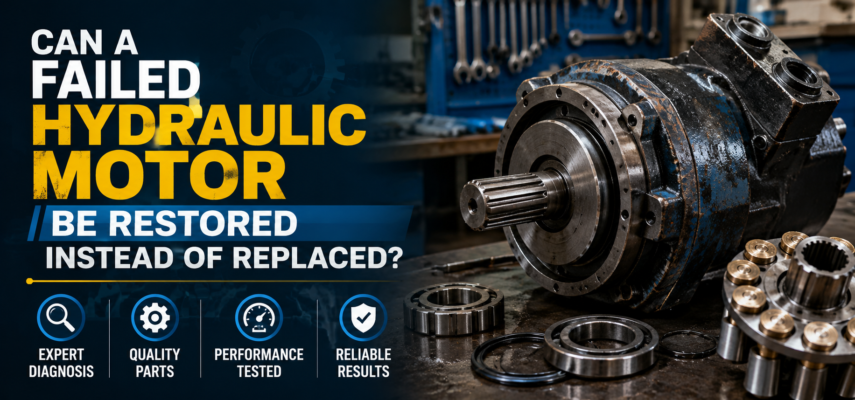
A hydraulic motor failure can bring equipment to a standstill, delaying production and increasing operating costs. Replacing the entire unit may seem like the only option, but that is not always necessary. In some cases, a professional evaluation shows that the motor can return to reliable operation through the right repair process.
Professional hydraulic motor repair helps determine the most practical solution based on the motor’s condition. This article explains when restoration is possible, what the repair process involves, and how businesses can make informed equipment decisions.
Damage Does Not Always Require Replacement
A hydraulic motor may stop performing properly because of worn seals, damaged bearings, contaminated fluid, or internal component wear. These issues can reduce efficiency without making the entire unit unusable. A detailed inspection helps identify which parts require attention. If the main housing and critical components remain in good condition, repairing the motor may restore reliable performance while reducing replacement costs.
Professional Inspection Reveals the Root Cause
Visible symptoms such as leaks, unusual noise, or reduced torque do not always identify the actual problem. Internal wear may develop gradually before equipment performance noticeably changes. Professional technicians disassemble the motor, inspect each component, and measure wear against manufacturer specifications. Accurate diagnosis allows repair decisions to focus on the true source of failure instead of replacing parts unnecessarily.
Quality Parts Restore Reliable Performance
Successful restoration depends on more than replacing damaged components. Every repaired motor should receive parts that meet the required performance standards for the application. Replacement seals, bearings, shafts, gears, and internal components must work together correctly after assembly. Careful rebuilding helps improve reliability and prepares the motor for continued operation under demanding conditions.
Performance Testing Confirms Repair Quality
A repaired hydraulic motor should demonstrate dependable operation before returning to service. Testing verifies that internal components perform correctly under expected operating conditions. Professional hydraulic motor repair includes performance testing that checks pressure, flow, efficiency, and overall functionality. This process helps identify any remaining issues before the motor returns to production equipment.
5. Early Repairs Can Reduce Future Downtime
Small performance changes should never be ignored. Reduced power, overheating, vibration, or external leaks may indicate developing internal wear that becomes more expensive if left unaddressed. Scheduling repairs when early warning signs appear helps reduce unexpected breakdowns. Preventive action also allows maintenance teams to plan service around production schedules instead of responding to emergency equipment failures.
How a Hydraulic Motor Repair Provider Supports Your Equipment
An experienced repair provider delivers more than replacement parts. Professional expertise helps businesses restore equipment safely and efficiently.
- Diagnose the exact cause of motor failure.
- Inspect internal components for hidden damage.
- Recommend repair or replacement based on condition.
- Replace worn components with quality parts.
- Test motor performance before returning it to service.
- Help extend equipment life through reliable repair solutions.
Steps Experts Follow During a Hydraulic Motor Repair
Professional repair follows a structured process to identify the problem, restore performance, and verify that the motor is ready for service.
- Receive the hydraulic motor and perform an initial condition assessment.
- Disassemble the unit and inspect every internal component.
- Clean all reusable parts and identify worn or damaged components.
- Replace seals, bearings, gears, shafts, or other parts as needed.
- Reassemble the motor according to manufacturer specifications.
- Test the repaired motor for pressure, flow, efficiency, and overall performance before returning it to service.
A failed hydraulic motor does not always require complete replacement. Professional inspection, accurate diagnosis, quality replacement parts, and performance testing can restore reliable operation in suitable cases. Addressing problems early and working with experienced repair specialists helps businesses reduce downtime, control maintenance costs, and extend the service life of valuable hydraulic equipment.