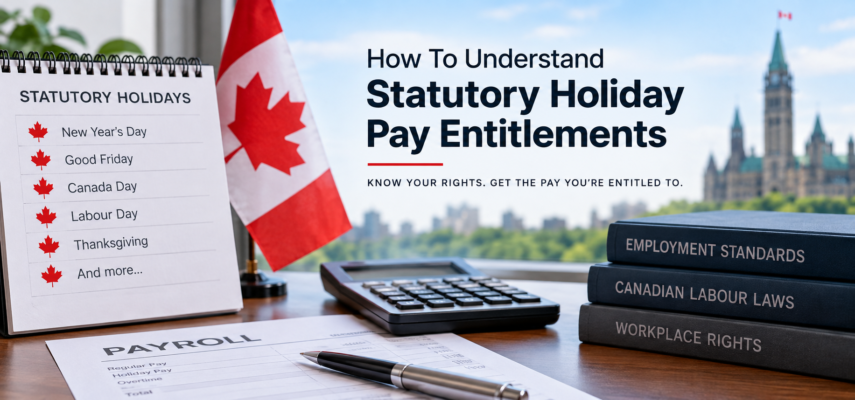
Employees are eligible to receive pay when they do not work on certain annual dates. Each Canadian province and territory has unique laws for these occasions. It is helpful for staff to examine the rules that apply to their specific location. People who understand how companies calculate pay and the criteria for eligibility can prevent errors – this information is useful because it helps ensure that payment matches legal requirements.
Understanding Statutory Holidays
Statutory holidays are specific dates when employers provide eligible staff with paid leave or additional compensation for hours worked – these requirements vary depending on the local jurisdiction. Canada Day besides Labour Day are standard holidays across regions, while other dates are specific to certain locations. Employment standards laws establish the minimum requirements for employers to ensure that workplace practices are consistent and that staff are protected. Organizations are permitted to offer benefits that exceed these legal standards but they are not allowed to offer less than the law requires.
Determining Employee Eligibility
Legislation in each province or territory sets the rules for who is eligible for holiday pay. Many areas require employees to meet standards for attendance, length of employment or scheduled shifts – these rules ensure that active employees receive the benefit. Workers are encouraged to read their employment contracts and company policies while also learning the local laws. Eligibility rules are very different depending on the location of the workplace. Knowing these rules helps employees avoid confusion before a holiday occurs.
Calculating Holiday Pay
The method for calculating holiday pay is a significant part of employee entitlements. Each jurisdiction uses its own formula. Some areas base pay on average daily earnings from a specific time before the holiday. Other areas use wages earned during a set timeframe. Employees should check their pay stubs against legal requirements. Because formulas are not the same everywhere, employees should not make assumptions. Using the correct formula is the way to confirm that pay is accurate.
Working On A Statutory Holiday
Operational needs in some industries require employees to work on holidays. Employment standards laws often require extra compensation for this work. Depending on the location, employees are entitled to premium pay for their hours, a different paid day off or both – these rules are complex because they are not uniform across Canada. Workers should understand how their province treats holiday shifts. Employers are expected to explain schedules and pay arrangements before the holiday starts.
Understanding Provincial Differences
Canada is a nation where holiday regulations for employees are not uniform. Each province and territory is responsible for its own laws regarding time off and pay. Workers in various regions are subject to different rules regardless of their job titles. It is important for individuals to be aware of these variations when they relocate or work for organizations with multiple offices. Only the statutes of the specific jurisdiction are relevant to a workplace. A Toronto employment lawyer is an appropriate person to consult if a worker is uncertain about their legal rights.
Addressing Common Disputes
Disagreements about pay for holidays occur frequently when companies categorize workers incorrectly or do not give full benefits – these problems are typically the result of unclear rules for eligibility or mistakes in how payroll is calculated. Employees who find a difference in their pay should collect their records and ask their employer for an explanation. If the employer does not fix the problem, individuals are able to speak with government labor offices or ask for help from lawyers. Resolving these concerns quickly is helpful because it stops more issues from occurring. A employment lawyer is a person who is able to describe legal rights and the steps an employee is able to take.
Reviewing Workplace Policies
Companies often write policies to explain how they manage statutory holidays – these documents describe how to schedule shifts, what to expect when working and how the company handles payroll. Employees should read these policies with care. While policies are helpful, they must follow the law. If a company policy is different from the law, employees should ask for more information. Knowing both the company rules and the law is a good way to protect workplace rights.
Conclusion
Knowledge of statutory holiday pay is a vital part of understanding workplace rights in Canada. Because rules are different in every jurisdiction, employees benefit when they learn the eligibility and pay rules for their situation. Workers who review laws, check their pay records and read company policies are more likely to receive their correct benefits. Understanding these rules creates transparency and supports fair treatment at work.